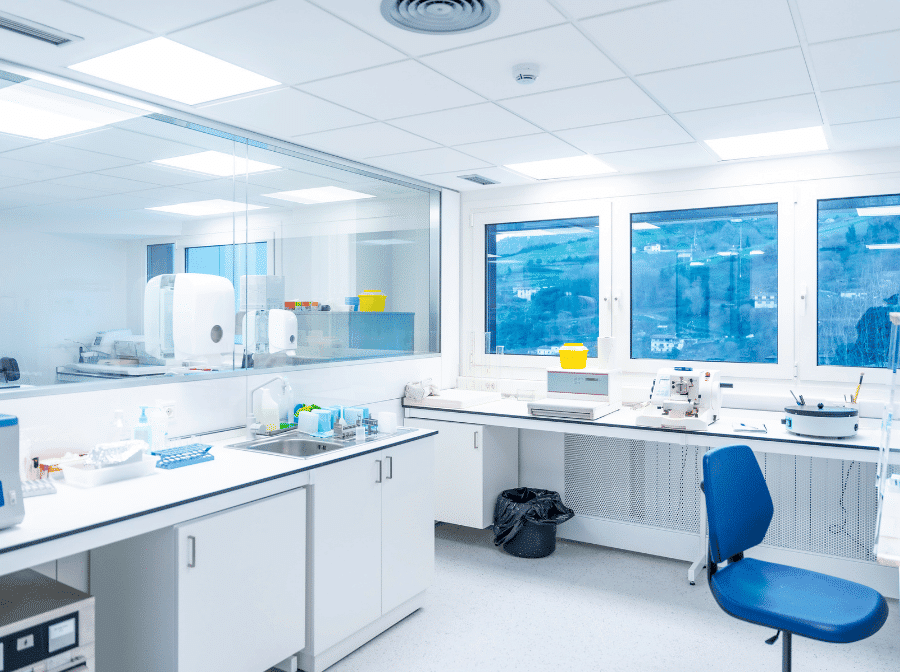
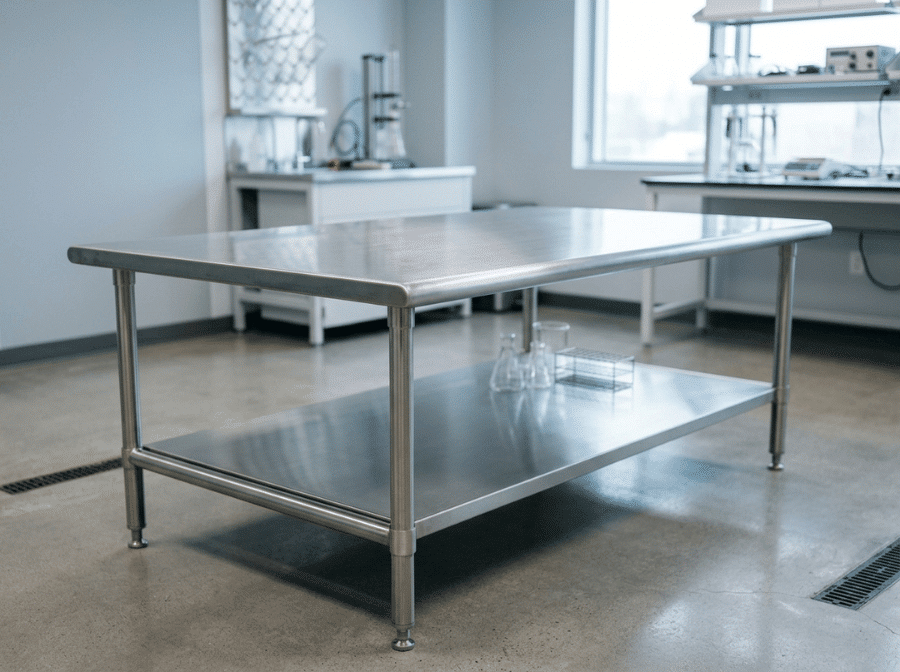
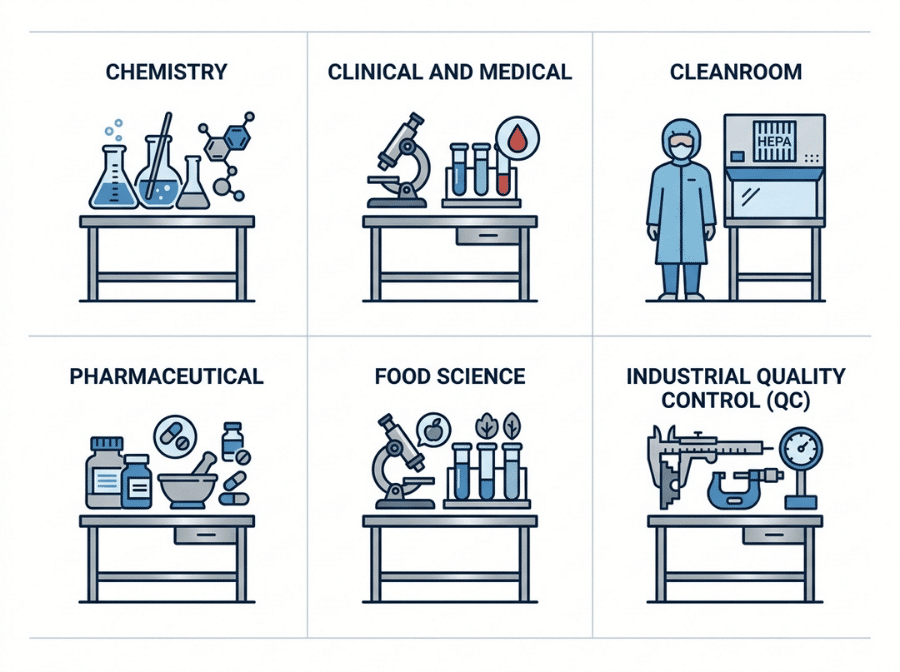
Stainless steel work tables are used across chemistry, clinical, cleanroom, pharmaceutical, food science, and industrial QC laboratories. Grade 304 suits most general lab environments; Grade 316/316L adds molybdenum for stronger resistance to chlorides and aggressive chemicals; Grade 430 is a cost-effective option for lower-exposure settings. Key selection factors include steel grade, gauge, weld finish, base style, load rating, and add-ons such as integrated sinks and shelving.
Few lab furniture decisions carry more long-term consequences than the choice of work surface. A table that corrodes, harbors contamination, or flexes under load doesn’t just inconvenience researchers — it can compromise experimental results, create compliance problems, and accelerate costly replacement cycles.
Stainless steel work tables are a standard specification in many laboratory environments precisely because they address these concerns in a way few other materials can. The surface is non-porous and easy to decontaminate. The construction can be welded to eliminate crevices where bacteria or chemical residues accumulate. And the alloy itself resists a broad range of chemicals, heat, and physical stress under most normal laboratory operating conditions.
That said, stainless steel is not a single material with uniform performance. Grade selection, gauge thickness, weld finish, and base configuration all affect how well a table performs in a specific application. A table specified correctly for a pharmaceutical cleanroom will differ significantly from one built for a food safety testing bench or an industrial QC station.
This guide covers where stainless steel lab tables are used, what makes them well-suited to those environments, how the most common grades compare, and what to evaluate when specifying one for a new or refurbished laboratory.
What Are Stainless Steel Work Tables Used For in Laboratories?
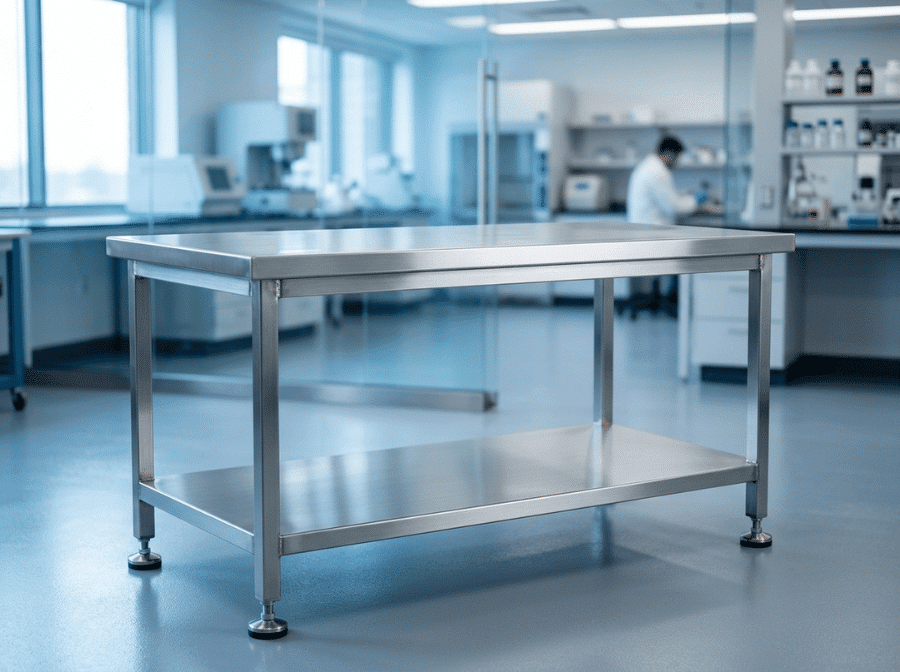
Stainless steel laboratory work tables serve as the primary work surface for activities that require a durable, chemically resistant, and cleanable platform. This includes routine analytical work, sample preparation, instrument staging, wet chemistry procedures, and processing tasks involving heat, solvents, or biological materials.
The design — typically a flat welded surface on an adjustable or fixed-height frame, with options for under-shelf storage, sink cutouts, and accessory rails — accommodates a wide range of workflows without requiring application-specific furniture for every task.
Common Applications Across Different Lab Types
Chemistry Laboratories
Chemistry labs regularly expose work surfaces to acids, bases, solvents, and oxidizing agents. Stainless steel handles this range of chemical exposure reasonably well, particularly in higher-corrosion-resistance grades. The smooth, non-porous surface also simplifies post-experiment cleanup, reducing cross-contamination risk between procedures.
Clinical and Medical Laboratories
Clinical environments prioritize decontamination speed and surface integrity. Stainless steel withstands repeated disinfection with hospital-grade cleaning agents and does not degrade under the alcohol or quaternary ammonium compound solutions commonly used in these settings. The lack of surface porosity limits pathogen retention compared to porous or laminate alternatives.
Cleanrooms and Controlled Environments
In cleanrooms, particulate generation is a primary concern. Stainless steel with a smooth or electropolished finish generates minimal particles during normal use and can be wiped down without shedding fibers or material. Welded, crevice-free construction reduces areas where contamination could accumulate. That said, cleanroom-grade stainless steel tables typically require specific surface finish specifications — this is not a standard offering across all suppliers, and procurement teams should confirm finish classification and outgassing characteristics with the manufacturer.
Pharmaceutical Manufacturing and Quality Control
Pharmaceutical environments frequently involve regulatory documentation requirements. Stainless steel tables in these settings are often specified to meet Good Manufacturing Practice (GMP) criteria, which typically include requirements for weld finish, surface roughness (Ra value), material traceability, and compatibility with Clean-In-Place (CIP) or sterilization-in-place (SIP) protocols. Grade 316L is commonly preferred in these applications due to its lower carbon content and stronger performance in sterilization cycles.
Food Science and Agricultural Testing Laboratories
Laboratories involved in food testing, agricultural analysis, or quality assurance work with organic materials, moisture, and cleaning chemicals that can accelerate corrosion in lower-grade steel. Stainless steel work tables in these environments benefit from coved (radiused) corners and welded edges that prevent food residue or moisture from accumulating at joints.
Industrial Quality Control
Industrial QC stations often need to support heavy instruments, testing rigs, or sample loads. Stainless steel frames with appropriate gauge thickness and reinforced shelving provide the structural capacity required, while the surface material tolerates the oils, cutting fluids, and cleaning agents common in manufacturing environments.
Why Stainless Steel Works: Key Performance Properties
Non-Porous Surface
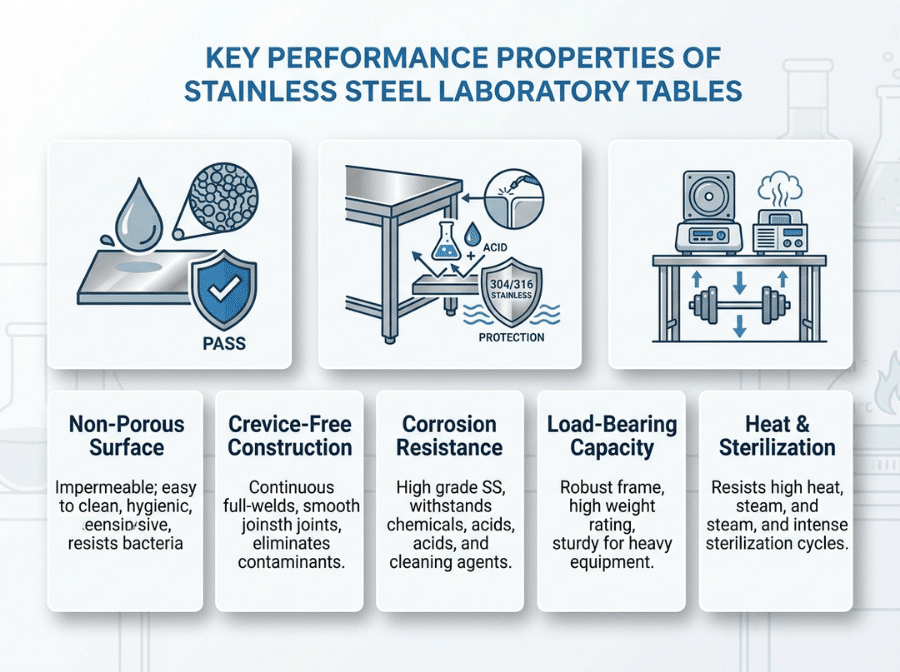
Unlike wood, laminate, or unsealed concrete, stainless steel does not absorb liquids. Spills remain on the surface, where they can be wiped away without penetrating the material. This matters for chemical spill containment, biological decontamination, and day-to-day cleaning efficiency.
Welded, Crevice-Free Construction
Tables fabricated with continuous welds rather than mechanical fasteners at joints eliminate the gaps where chemical residues, moisture, and biological material can accumulate. This is particularly important in clinical, food science, and pharmaceutical applications where hygiene standards are enforced. The weld finish itself — whether ground flush, brushed, or polished — affects both cleanability and compliance with specific hygiene standards.
Corrosion Resistance
Stainless steel resists corrosion through a passive chromium oxide layer that forms on the surface and self-repairs under normal conditions. The extent of this protection varies by grade and depends on the specific chemical environment, concentration, temperature, and exposure duration. No stainless steel grade is universally corrosion-proof, and specification should be based on the actual chemical profile of the application.
Load-Bearing Capacity
Well-constructed stainless steel tables — particularly those with reinforced frames and appropriate gauge thickness — can support substantial static and dynamic loads. This makes them suitable for heavy analytical instruments, centrifuges, autoclaves, and sample staging areas.
Heat and Sterilization Tolerance
Stainless steel tolerates dry heat, steam sterilization, and UV exposure without warping, cracking, or off-gassing. This makes it compatible with autoclave staging areas and environments where surface sterilization is performed routinely.
304 vs. 316/316L vs. 430: Which Grade Should You Choose?
The three grades most commonly found in laboratory stainless steel work tables differ primarily in their alloy composition, which determines corrosion resistance, weldability, and cost.
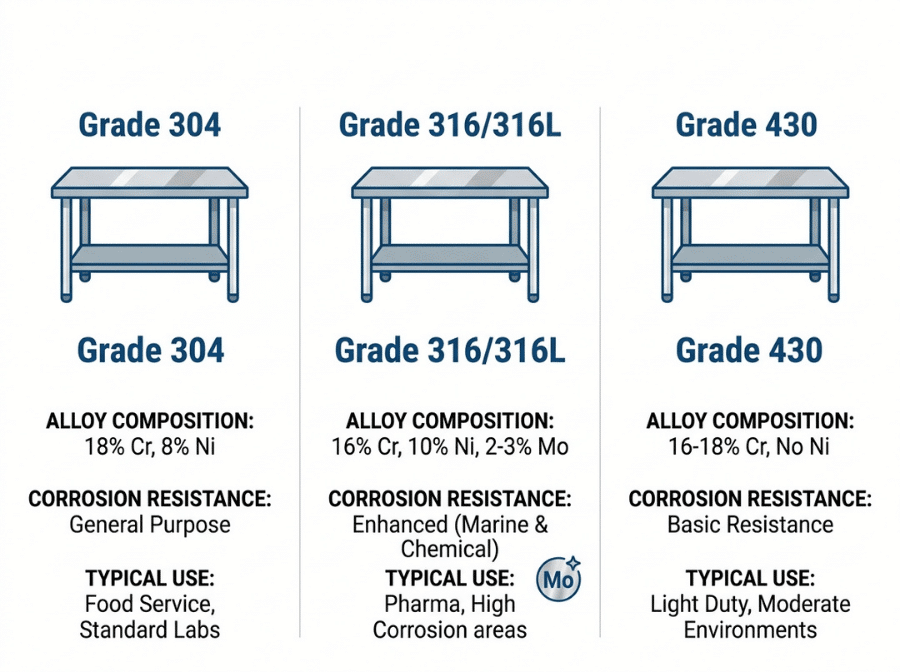
- Grade 304 contains approximately 18% chromium and 8% nickel. It is the most widely specified grade for laboratory furniture due to its balance of corrosion resistance, fabricability, and cost. Grade 304 performs well in most general-purpose laboratory environments and handles dilute acids, alkalis, and many organic solvents effectively. It is not well-suited to applications involving sustained exposure to chlorides (such as salt solutions or marine environments) or concentrated reducing acids.
- Grade 316 and 316L add 2–3% molybdenum to the 304 composition, which meaningfully improves resistance to chloride-induced pitting and crevice corrosion. Grade 316L further reduces carbon content to below 0.03%, which limits carbide precipitation at weld zones — a consideration in pharmaceutical and food-grade applications where weld integrity and corrosion resistance at joints must be maintained. Grade 316/316L is typically specified for pharmaceutical GMP environments, marine-adjacent labs, food processing areas, and applications involving chlorinated cleaning agents or halide-containing reagents.
- Grade 430 is a ferritic stainless steel with approximately 16–18% chromium and no nickel. It costs less than the 300-series grades and offers adequate corrosion resistance in mild, dry, or low-exposure environments. Grade 430 is less resistant to pitting and general corrosion than 304 or 316, and it is not recommended for applications involving prolonged exposure to acids, chlorides, or wet conditions. It may be an appropriate selection for dry storage surfaces, low-exposure support furniture, or budget-sensitive projects where chemical contact is minimal and easily controlled.
The table below summarizes the selection logic:
|
Grade |
Chromium |
Nickel |
Molybdenum |
Best Suited For |
|---|---|---|---|---|
|
304 |
~18% |
~8% |
None |
General lab use, most analytical environments |
|
316/316L |
~16–18% |
~10–14% |
2–3% |
Pharma GMP, food science, chloride exposure |
|
430 |
~16–18% |
None |
None |
Low-exposure, dry, or support applications |
How Does Stainless Steel Compare to Other Lab Work Surface Materials?
Stainless steel is one of several materials used for laboratory work surfaces, each with a different performance profile. The right choice depends on the specific application rather than an overall ranking.
- Epoxy resin is widely used in chemistry and teaching laboratories. It resists a broad range of acids, bases, solvents, and stains, and handles chemical spills well. However, epoxy resin can chip or crack under impact, and heavily damaged surfaces are difficult to restore. It is typically heavier than stainless steel and does not tolerate dry heat as well.
- Phenolic resin offers good chemical and moisture resistance at a lower cost than epoxy resin, making it a practical option for moderate-exposure environments such as general science labs and educational settings. It is less resistant to strong acids and concentrated solvents than epoxy resin and can be susceptible to scratching under abrasive use.
- Wood and laminate surfaces are sometimes used in low-exposure laboratory environments, such as research offices or instrument benches, where chemical contact is minimal. Wood absorbs moisture and chemicals unless heavily sealed, and laminate surfaces can delaminate over time. Neither is appropriate for wet chemistry, biological work, or environments where decontamination is regularly required.
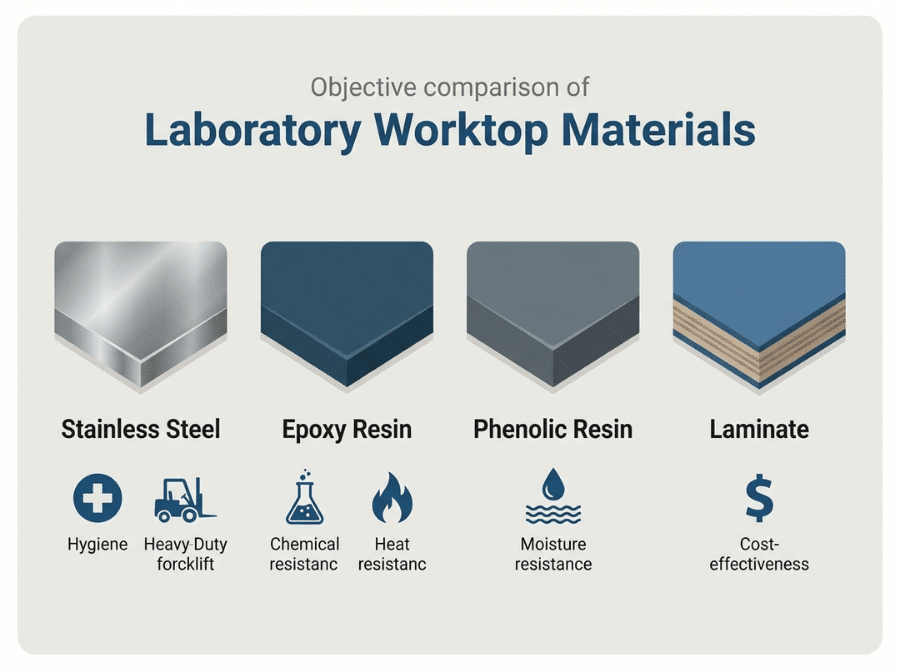
Stainless steel’s advantages over these alternatives are most pronounced in wet environments, sterile or hygiene-critical settings, and applications requiring heavy load support or repeated sterilization. Epoxy and phenolic resin may outperform stainless steel in broad-spectrum chemical resistance, particularly against certain acids where the passive layer on stainless steel can be compromised.
How to Choose the Right Stainless Steel Work Table: A Buyer’s Guide
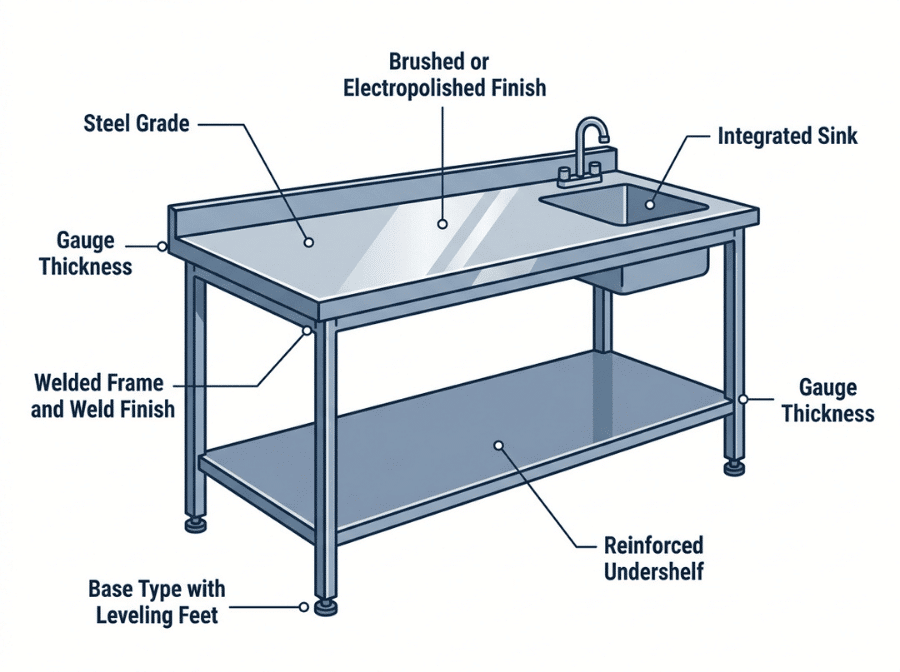
What steel grade does your application require?
Start with the chemical and environmental profile of the lab. Grade 304 covers most general-purpose needs. Specify 316L where chlorides, pharmaceutical GMP requirements, or high-frequency sterilization are involved. Consider Grade 430 only where chemical contact is genuinely minimal and budget constraints are a primary driver.
What gauge thickness is appropriate for your load requirements?
Gauge (thickness) directly affects the rigidity and load capacity of the table surface and frame. Thicker gauges — commonly 14 or 16 gauge for work surfaces — provide better resistance to deflection under heavy loads and are less susceptible to denting. Thinner gauges reduce material cost and weight but may not suit applications involving heavy instruments, sample processing equipment, or sustained static loads. Confirm the manufacturer’s stated load rating and ask whether it applies to distributed or point loads, as this distinction affects how useful the specification is in practice.
What are the dimensional requirements?
Table dimensions should be matched to the room layout, workflow, and the instruments or equipment the surface needs to accommodate. Custom dimensions are frequently necessary in laboratory fit-outs where standard furniture sizes would either waste space or create workflow bottlenecks. Confirm whether the supplier can manufacture to specification and whether custom sizing carries additional lead time.
What base type suits your floor and application?
Leg-based frames are the most common configuration, offering simplicity and ease of cleaning around and beneath the table. Cabinet bases integrate under-bench storage directly into the table structure, which is efficient for smaller labs or workflows requiring immediate access to consumables. Mobile bases with locking casters allow tables to be repositioned for reconfiguration or cleaning. H-frame and reinforced base designs add structural rigidity for heavy-instrument applications.
Does the table need sink integration?
Stainless steel tables can be fabricated with integrated sink cutouts and bowls, which consolidates wet work and glassware rinsing into the bench footprint. If sink integration is required, confirm bowl dimensions, drain configuration, faucet mounting options, and compatibility with the building’s plumbing rough-in before finalizing the specification.
What weld finish does your application require?
Weld finish is often overlooked in early specification stages but becomes relevant in hygiene-critical environments. A ground-flush weld eliminates the crevice between the weld bead and the parent material, reducing areas where contamination can accumulate. Pharmaceutical and food-grade applications often specify a defined surface roughness (Ra value) across both the base material and weld zones. Confirm finish specifications and whether the manufacturer can provide documentation.
What accessories or add-ons are required?
Reagent shelves, overhead storage rails, pegboards, electrical service channels, and under-shelf storage are common additions that affect the usability of the table in context. Consider whether these add-ons need to be fabricated from the same grade of stainless steel as the table itself, particularly in environments where mixing materials would create galvanic corrosion risk or compliance issues.
Does your project require documentation?
Pharmaceutical, food-grade, and internationally exported laboratory furniture frequently requires material certification (mill test certificates), dimensional drawings, weld inspection records, or surface finish documentation. Confirm what documentation the manufacturer provides as standard and what is available on request before placing an order.
Maintenance Best Practices for Stainless Steel Lab Tables
Stainless steel work tables maintain their performance and appearance longer when a routine maintenance approach is followed.
- Daily cleaning should involve wiping down the surface with a mild detergent or pH-neutral laboratory cleaner after use. Avoid leaving standing liquid, particularly chloride-containing solutions, on the surface for extended periods. Dry the surface after cleaning to prevent water spotting.
- Cleaning direction matters. Always wipe stainless steel in the direction of the grain (the visible brush marks on the surface). Wiping against the grain can create fine scratches that trap residue and, over time, reduce the surface’s cleanability.
- Avoid abrasive tools. Steel wool, abrasive pads, and wire brushes can scratch the surface and disrupt the passive layer, reducing corrosion resistance. Use non-scratching cloths or soft-bristle brushes for cleaning.
- Chemical compatibility requires attention. Strong oxidizing acids (concentrated nitric acid, hydrochloric acid) and bleach at high concentrations can attack the passive layer of stainless steel. If these substances are used on the bench, rinse thoroughly and promptly. Consult the alloy’s chemical resistance chart for your specific grade before exposing it to unfamiliar reagents.
- Periodic inspection should include checking welded joints and frame connections for signs of crevice corrosion or surface pitting, inspecting leveling feet for stability, and reviewing the condition of any integrated sink seals or plumbing connections.
- Passivation — the chemical treatment process that restores or strengthens the chromium oxide passive layer — may be appropriate after mechanical damage, heavy chemical exposure, or contamination with carbon steel particles. Consult with the manufacturer about recommended passivation procedures for the specific grade and finish.
Comprehensive Comparison Table: Stainless Steel Lab Tables by Lab Type
|
Lab Type |
Recommended Grade |
Key Concerns |
Suggested Features |
|---|---|---|---|
|
General chemistry |
304 |
Acid/base exposure, solvent resistance |
Coved corners, reagent shelf, 14-gauge surface |
|
Clinical/medical |
304 or 316 |
Disinfectant compatibility, decontamination speed |
Seamless welded top, integrated sink option |
|
Cleanroom |
316L |
Particulate generation, surface Ra, outgassing |
Electropolished finish, crevice-free weld |
|
Pharmaceutical GMP |
316L |
Regulatory documentation, sterilization cycles |
Low Ra surface, mill certification, CIP compatibility |
|
Food science |
316 |
Chloride exposure, moisture, hygienic joint design |
Coved corners, drain slope option, documented weld finish |
|
Industrial QC |
304 or 430 |
Heavy load capacity, impact resistance |
Heavy-gauge frame, reinforced shelf, H-frame base |
|
Educational/lower exposure |
430 |
Budget, moderate chemical contact |
Standard finish, leg-based frame, under-shelf storage |
Frequently Asked Questions
What is the difference between a stainless steel lab table and a standard lab bench?
A stainless steel lab table typically refers to a freestanding, all-stainless work surface — frame and top fabricated from the same material — whereas a lab bench is a broader term that can describe any work surface configuration, including those with wood or steel frames and separately specified worktops. In practice, the terms are often used interchangeably, but in a specification context it is worth clarifying whether the frame, the work surface, or both are required to be stainless steel.
Is Grade 304 stainless steel suitable for pharmaceutical laboratory use?
Grade 304 can be used in some pharmaceutical lab environments, but Grade 316L is more commonly specified for GMP-regulated areas. The lower carbon content of 316L reduces carbide precipitation at welds, and the molybdenum addition improves resistance to chloride-based cleaning agents used in pharmaceutical sanitation. If regulatory documentation or sterilization validation is required, confirm grade requirements with your compliance team before specifying.
How thick should a stainless steel lab table surface be?
Most laboratory-grade stainless steel work surfaces are fabricated from 14- or 16-gauge steel (approximately 1.6–2.0 mm for 16-gauge and 1.9–2.0 mm for 14-gauge, depending on the standard used). Heavier-duty applications — instrument staging, processing benches, or tables expected to carry substantial point loads — typically warrant 14 gauge or thicker. Confirm the manufacturer’s load rating, including whether it applies to static distributed loads or point loads, before specifying gauge for a load-critical application.
Can stainless steel lab tables be used in cleanrooms?
Yes, but cleanroom applications require specific surface finish specifications that are not standard on all stainless steel tables. Electropolished finishes are commonly specified in cleanrooms because they reduce surface roughness, minimize particle retention, and are easier to clean. Surface Ra (roughness average) values, outgassing characteristics, and weld finish quality should all be confirmed with the manufacturer. Standard brushed or mill-finish tables may not meet cleanroom classification requirements.
What cleaning products are safe to use on stainless steel lab tables?
Mild detergents, pH-neutral laboratory cleaners, and dilute isopropyl alcohol are generally safe for stainless steel surfaces. Chlorine-based bleach solutions can be used in some grades at low concentrations for short contact times, but should be rinsed off promptly. Avoid prolonged contact with hydrochloric acid, concentrated bleach, or solutions containing chlorides, particularly on Grade 304 surfaces. Always verify chemical compatibility with the specific grade before introducing unfamiliar reagents to the work surface.
Do stainless steel lab tables require any special installation considerations?
Most freestanding stainless steel lab tables are straightforward to install, but a few factors are worth planning for. Leveling feet should be adjusted on the final floor surface to prevent rocking under load. If the table includes an integrated sink, plumbing rough-in positions need to be confirmed before the table is positioned and fixed. In cleanroom installations, anchor methods and floor penetration seals may need to meet room classification requirements.
Specify the Right Table for Your Application
Stainless steel work tables perform reliably across a wide range of laboratory environments — but only when the specification matches the application. Grade selection, gauge, weld finish, base configuration, and documentation requirements all vary meaningfully between a general teaching lab and a pharmaceutical GMP cleanroom.
Starting with the right specification avoids the more expensive corrections that come from mismatched materials, inadequate load capacity, or non-compliant surface finishes discovered after installation.
Glorylab manufactures stainless steel lab tables and full laboratory furniture systems to project-specific requirements, with direct factory communication, material certification, and export documentation as standard. To discuss your project specifications or submit a technical drawing for review, contact the Glorylab team directly.