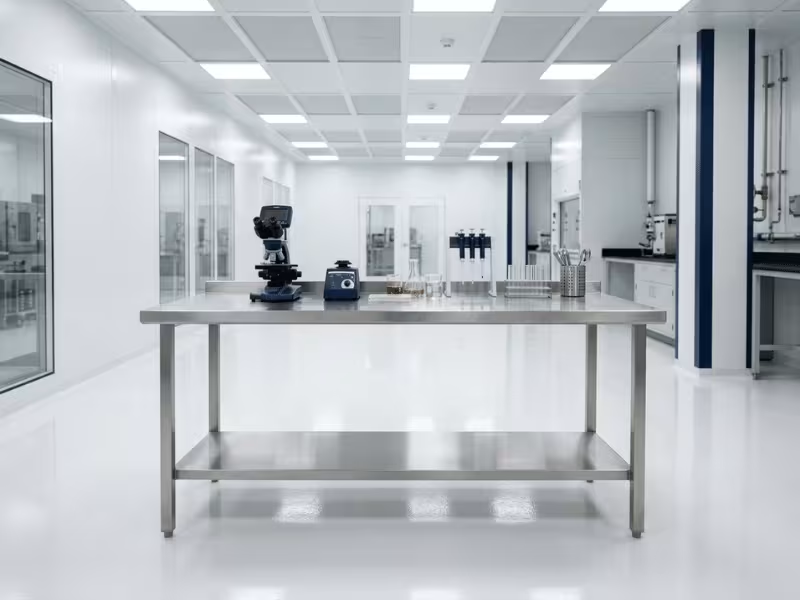
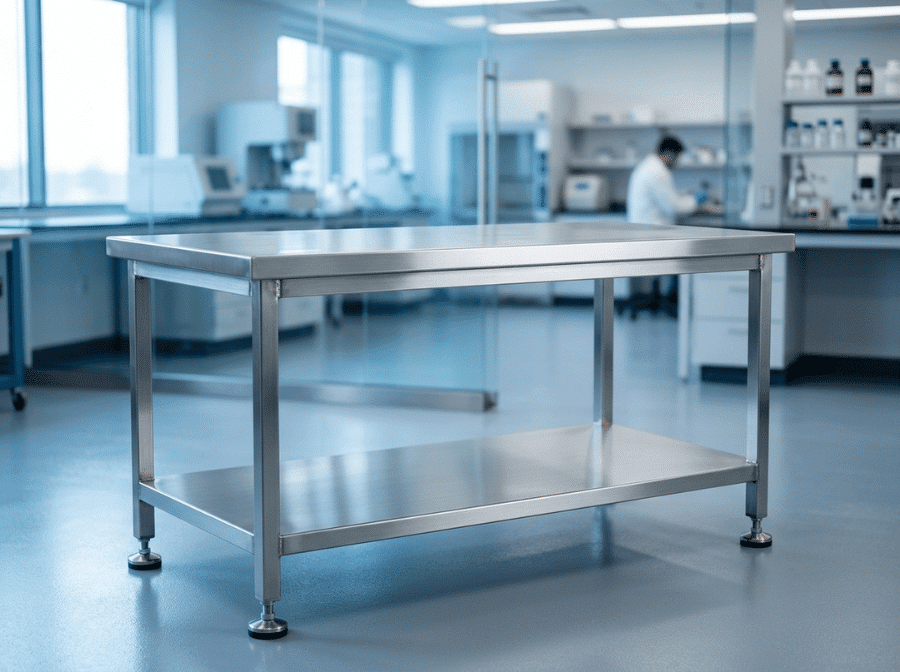
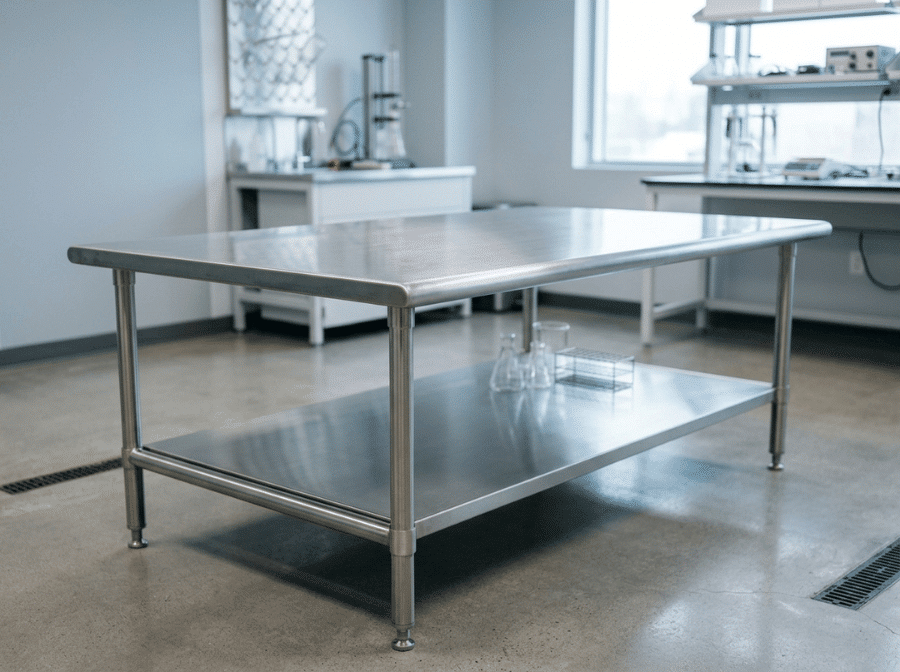
Stainless steel lab tables with drawers are widely used in pharmaceutical, clinical, and research settings because they combine a hygienic work surface with enclosed storage. However, selecting the right model requires careful evaluation of steel grade, drawer configuration, slide type, and frame construction. This guide helps procurement teams assess those variables and make more confident purchasing decisions.
What Are Stainless Steel Lab Tables with Drawers?
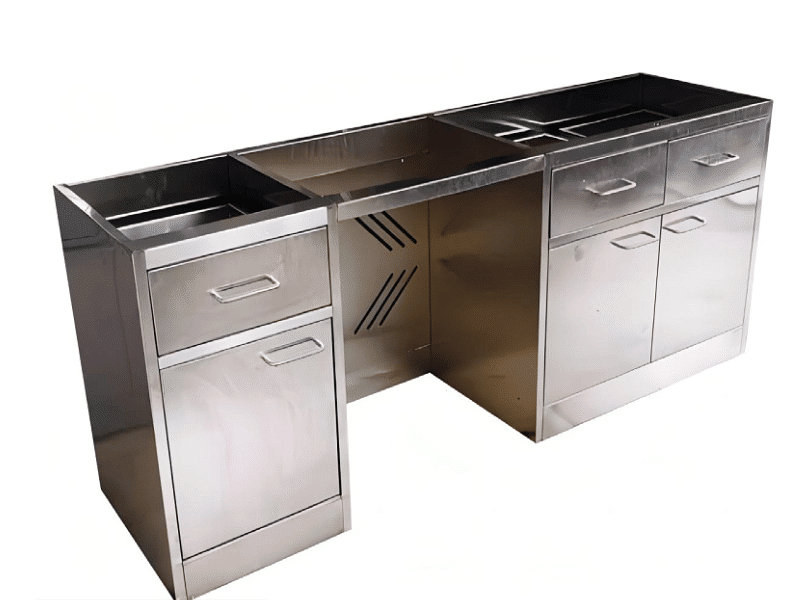
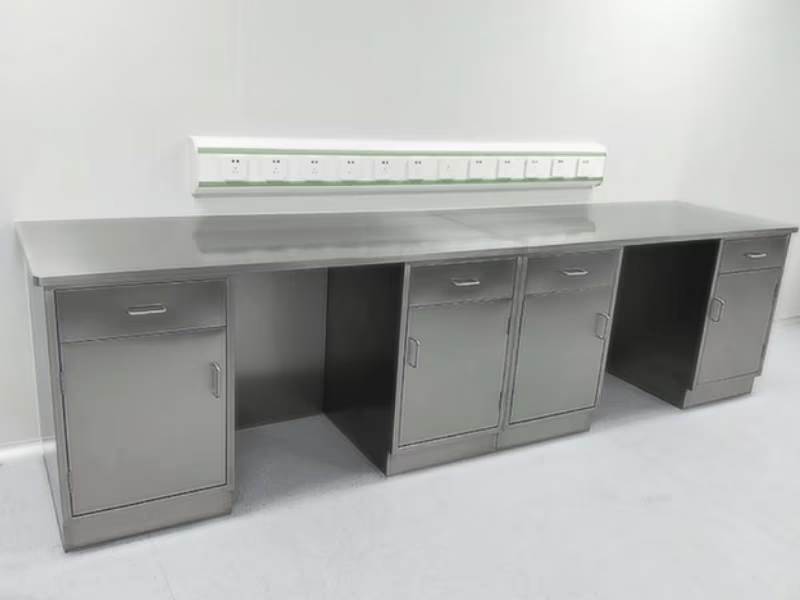
A stainless steel lab table with drawers is a freestanding or wall-mounted work surface constructed from austenitic stainless steel, with one or more integrated drawer units built into the underframe or pedestal base.
The work surface — typically 16 to 14 gauge (1.5 mm / 0.060 in to 2.0 mm / 0.078 in) — provides the primary working area. Beneath it, drawers are arranged in single-pedestal, double-pedestal, or full-span configurations depending on storage requirements. The frame is either fully welded for maximum rigidity or supplied as a knock-down (KD) assembly for easier shipping and on-site reconfiguration.
Drawer boxes are constructed from the same stainless steel as the frame or, in cost-sensitive configurations, from zinc-plated steel. Slide hardware — the mechanism that allows each drawer to open and close — varies by type, material, and extension length. These distinctions matter more than most buyers initially realize.
Standard dimensions typically range from 24 in × 48 in (600 mm × 1200 mm) to 30 in × 72 in (760 mm × 1830 mm) in surface footprint, with height options between 30 in and 36 in (762 mm to 914 mm), including adjustable-leg variants. Glorylab manufactures stainless lab tables to fully custom dimensions, accommodating non-standard room layouts and multi-bench configurations without added tooling charges.
Why Choose a Stainless Steel Lab Table with Drawers?
Corrosion Resistance
Stainless steel resists a broad range of laboratory chemicals, including dilute acids, alkalis, and alcohols. The passive chromium oxide layer that forms on the surface self-repairs when scratched, maintaining corrosion resistance over the product’s service life. This makes stainless steel a durable material choice for environments where chemical spills are routine, and surfaces must be decontaminated repeatedly.
Hygiene and Cleanability
The non-porous surface of stainless steel does not harbor bacteria or absorb contaminants. Seam construction — particularly in fully welded designs — eliminates the crevices where microbial growth occurs. This is a primary reason stainless steel lab tables are commonly specified in pharmaceutical manufacturing, clinical diagnostics, and food science environments.
Integrated Storage
Drawers beneath the work surface keep consumables, tools, and documentation within arm’s reach without consuming benchtop space. In high-density lab layouts, integrated drawer storage reduces the need for separate casework and contributes to a cleaner, more functional workspace.
Durability
A properly specified stainless steel lab table with welded construction and appropriate gauge steel typically delivers a service life measured in decades. Unlike painted steel, there is no coating to chip, blister, or corrode at cut edges. The material holds up under repeated cleaning with strong disinfectants, including bleach solutions, without surface degradation.
Compliance Support
Many regulated laboratory environments — GMP pharmaceutical facilities, accredited clinical labs, and ISO-certified research centers — require furniture that can be documented, traced, and tested. Glorylab provides Material Test Certificates (MTC) and SGS test documentation for stainless steel lab furniture, supporting procurement teams who need to demonstrate material compliance as part of facility qualification.
Cost Efficiency Over the Product Life Cycle
The upfront cost of a stainless steel lab table with drawers is higher than painted steel or wood-based alternatives. Over a 15 to 20-year service life, however, the elimination of refinishing, early replacement, and contamination-related downtime typically makes stainless steel the more cost-effective choice in demanding laboratory environments.
Best Applications by Lab Type
Different laboratory environments place different demands on work surface materials, drawer configurations, and structural design. The table below provides recommended configurations by application.
|
Lab Type |
Recommended Steel Grade |
Frame Construction |
Drawer Slide Type |
Additional Features |
|---|---|---|---|---|
|
Pharmaceutical / Biotech |
316 commonly preferred |
Fully welded |
Ball-bearing full-extension, stainless slide material |
Coved corners, integrated splashback, lockable drawers |
|
Hospital / Clinical |
304 or 316 depending on chemical use |
Fully welded |
Ball-bearing full-extension |
Antimicrobial considerations, lockable drawers |
|
Research (general) |
304 |
Welded or KD |
Ball-bearing or standard |
Custom dimensions, raceway integration |
|
Teaching Lab |
304 |
KD acceptable |
Standard or ball-bearing |
Cost efficiency, durability, open shelf option |
|
Cleanroom |
316 typically recommended |
Fully welded |
Ball-bearing full-extension, stainless slide material |
Crevice-free construction, electropolish option |
|
Wet Lab |
316 commonly specified |
Fully welded |
Ball-bearing full-extension |
Integrated sink, splashback, drain routing |
Not sure which configuration fits your lab type? Contact Glorylab’s technical team to request a drawer layout recommendation based on your specific application and environment.
304 vs. 316 Stainless Steel for Lab Tables with Drawers
Steel grade is the most consequential material decision in the specification process. Both 304 and 316 are austenitic stainless steels with similar mechanical properties, but they differ in chemical composition — and that difference directly affects corrosion performance.
|
Property |
304 Stainless Steel |
316 Stainless Steel |
|---|---|---|
|
Chromium content |
18% |
16–18% |
|
Nickel content |
8–10.5% |
10–14% |
|
Molybdenum content |
None |
2–3% |
|
Chloride resistance |
Moderate |
Significantly higher |
|
Resistance to pitting corrosion |
Good |
Better, particularly in saline or halide environments |
|
Resistance to crevice corrosion |
Good |
Better in high-chloride or acidic conditions |
|
Cost relative to 304 |
Baseline |
Approximately 20–30% higher |
|
Typical applications |
General research, teaching, clinical |
Pharma, biotech, cleanrooms, wet labs, coastal facilities |
|
Weldability |
Excellent |
Excellent |
|
Availability in custom dimensions |
Yes (Glorylab) |
Yes (Glorylab) |
The addition of molybdenum in 316 stainless steel is what drives its superior performance in chloride-containing environments. For labs that use saline solutions, bleach-based disinfectants, or operate near coastal environments, 316 is commonly preferred. For general research, teaching, and most clinical environments without high halide exposure, 304 typically performs well.
Glorylab manufactures stainless steel lab tables with drawers in both 304 and 316, with full MTC documentation available for both grades. If you’re unsure which grade fits your chemical exposure profile, send your reagent list or hazard assessment to our team, and we’ll provide a material recommendation.
Common Drawer Configurations and Storage Layouts
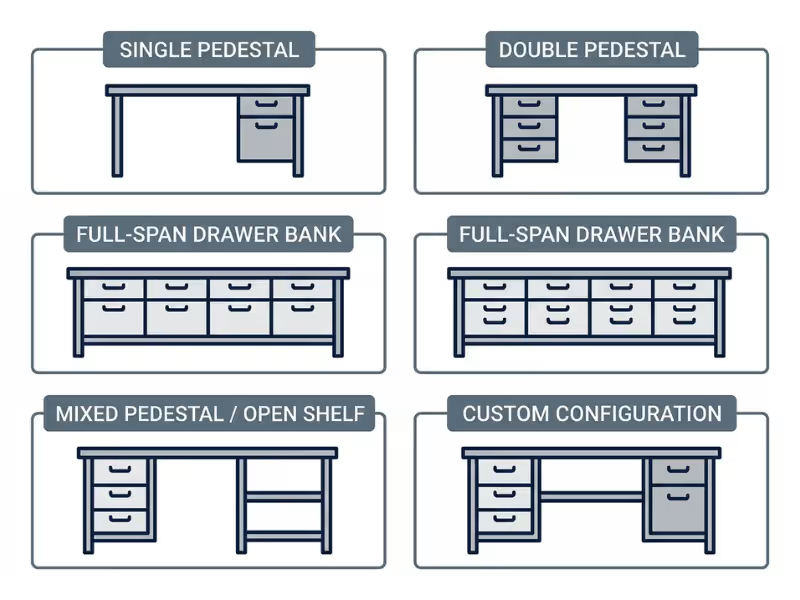
Drawer arrangements vary significantly between manufacturers. The main configurations are:
Single Pedestal: One bank of drawers on one side of the underframe, typically 2 to 5 drawers in a single column. The opposite side remains open, often accommodating a seated user or open shelving. Footprint: typically 24 in × 48 in to 24 in × 60 in (600 mm × 1200 mm to 600 mm × 1525 mm).
Double Pedestal: Two banks of drawers, one on each side of the underframe. Common in standing-height configurations or where centralized access from both sides is needed. Footprint: typically 30 in × 60 in to 30 in × 72 in (760 mm × 1525 mm to 760 mm × 1830 mm).
Full-Span Drawer Bank: A continuous run of drawers spanning the full width of the underframe, sometimes combined with a central open knee space. Used where maximum storage density is required without a separate cabinet.
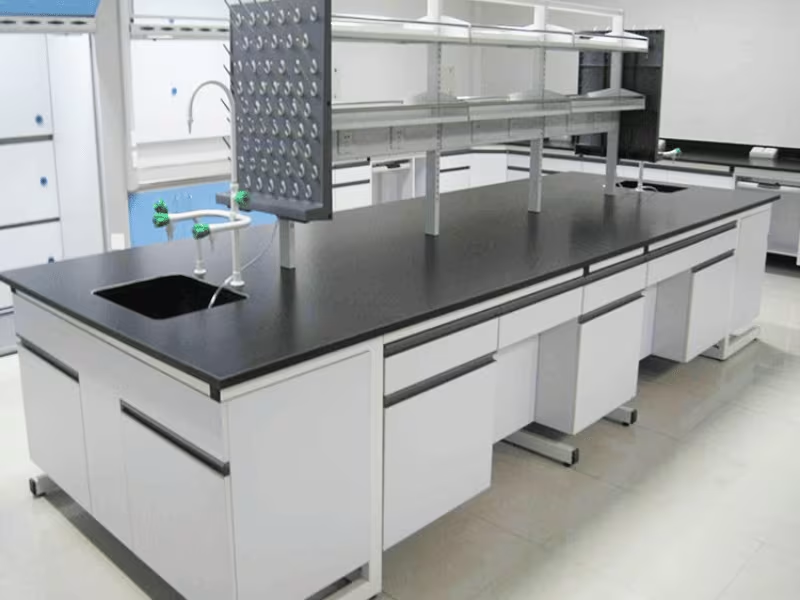
Mixed Pedestal / Open Shelf: One pedestal of drawers on one side, open shelving on the other. A practical balance between enclosed storage and accessible shelf space — common in clinical and research settings.
Custom Configurations: Glorylab fabricates stainless steel lab tables with custom drawer counts, mixed drawer heights (e.g., two shallow drawers above one deep drawer), and integrated features including sinks, splashbacks, and service raceways within the same frame. Submit your room dimensions and storage requirements to receive a recommended drawer layout for your lab.
Key Features to Look For When Specifying a Stainless Steel Lab Table with Drawers
Work Surface Gauge
Surface gauge (thickness) affects rigidity, load capacity, and resistance to denting. In laboratory applications, 14 gauge (approximately 2.0 mm / 0.078 in) is commonly specified for instrument-bearing surfaces. 16 gauge (approximately 1.5 mm / 0.060 in) is adequate for light bench work and administrative use. Verify the stated gauge against the manufacturer’s technical sheet — some quotes describe nominal rather than actual thickness.
Frame Construction: Welded vs. Knock-Down (KD)
A fully welded frame is fabricated as a single rigid assembly. Joints are welded and ground smooth, eliminating crevices where contamination can accumulate. Fully welded construction is typically recommended for GMP environments, cleanrooms, and wet labs.
A knock-down (KD) frame is assembled on-site using mechanical fasteners. KD construction reduces shipping volume and allows for reconfiguration. It is commonly suitable for teaching labs, general research, and environments where the layout is expected to change over time.
The choice between welded and KD construction depends on your environment and operational requirements. Glorylab offers both options and can advise based on your application.
Slide Material and Mechanism
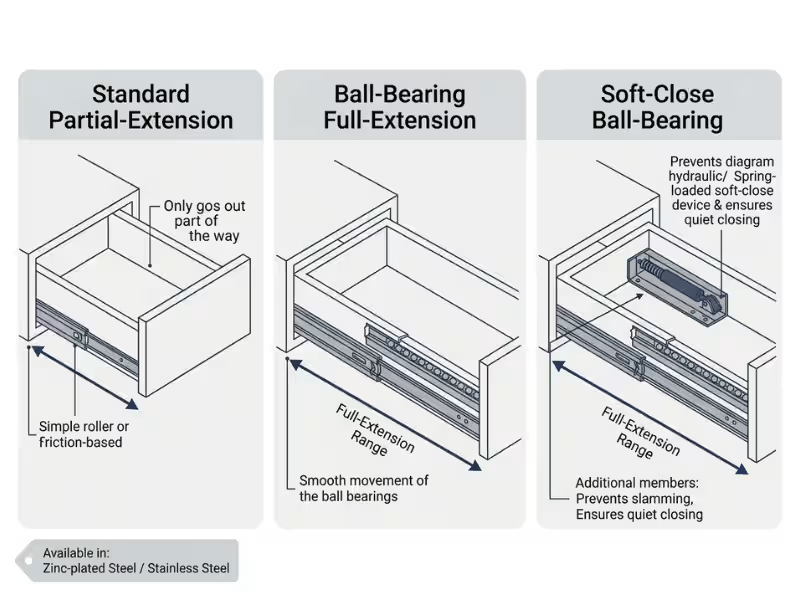
Drawer slide specifications involve two separate dimensions that buyers should evaluate independently:
Slide material:
- Zinc-plated steel slides are the standard option. They perform well in dry to moderately humid environments and offer good cost efficiency.
- Stainless steel slides are commonly preferred in wet labs, cleanrooms, and pharmaceutical manufacturing environments where moisture, cleaning agents, or contamination control protocols make a fully corrosion-resistant slide necessary.
Slide mechanism:
- Standard slides (also called side-mount or partial-extension slides) extend the drawer approximately 75% of its depth. Adequate for light-duty use in low-frequency access drawers.
- Ball-bearing full-extension slides extend the drawer 100% of its depth, providing full access to contents. Load ratings are typically higher, and operation is smoother under repeated use.
- Soft-close ball-bearing slides add a dampening mechanism that decelerates the drawer in the final inch of closure. These are commonly specified in clinical and pharmaceutical environments where vibration-sensitive instruments or open sample containers are stored in adjacent units.
Load Capacity
Drawer load ratings vary by slide type and drawer box construction. Ball-bearing slides typically support 50 kg to 100 kg (110 lb to 220 lb) per drawer depending on specification. Verify the rated load against the heaviest items you plan to store — particularly if drawers will hold analytical weights, instrument components, or dense consumable stocks.
Weight Capacity, Hardware, and Structural Considerations
The structural capacity of a stainless steel lab table with drawers is determined by the frame gauge, weld quality, and base configuration — not by the work surface alone.
For instrument-bearing applications, the relevant figure is the uniformly distributed load (UDL) rating for the work surface, expressed in kg/m² or lb/ft². A well-fabricated stainless steel lab table typically carries 200 kg to 400 kg (440 lb to 880 lb) distributed across the surface, depending on frame design. Point loads from heavy instruments require separate assessment.
Glorylab’s stainless steel lab tables are available with adjustable stainless steel feet (M10 leveling feet are standard) to accommodate uneven floors, and with optional heavy-duty casters for mobile configurations. If your lab involves precision balances or vibration-sensitive equipment, consider pairing a stainless steel lab table with an anti-vibration table insert or specifying a separate anti-vibration table for those instruments.
Planning to specify equipment loads? Send your instrument list and load data to Glorylab’s team, and we’ll confirm which frame and gauge specification is appropriate.
Lockable Drawers, Mobility, and Custom Options
Lockable Drawers
Lockable drawers are commonly specified in clinical, pharmaceutical, and multi-user research environments where controlled access to reagents, samples, or documentation is required. Options include:
- Individual drawer locks: Each drawer locks independently using a keyed cylinder. Suitable when different users need access to different drawers.
- Central locking bars: A single key locks all drawers in a pedestal simultaneously. More common in high-security or GMP storage applications.
- Combination lock systems: Available for specific procurement requirements — contact Glorylab for custom lock configurations.
Mobility Options
Mobile stainless steel lab tables with drawers are frequently used in clinical spaces, pathology labs, and flexible research environments where the workstation needs to be repositioned between tasks or rooms.
Glorylab manufactures mobile variants with 75 mm to 100 mm (3 in to 4 in) diameter swivel casters, with at least two locking casters per unit for stability during use. Total height including casters is typically 900 mm to 950 mm (35 in to 37 in) for standard working height.
Custom Options Available from Glorylab
- Custom surface dimensions (length × depth × height)
- Integrated sinks with drain routing
- Rear splashbacks (flush or coved)
- Service raceways for electrical, gas, or data
- Mixed drawer heights within a single pedestal
- Electropolished 316 surfaces for cleanroom applications
- OEM / private label fabrication for distributors
- MTC and SGS documentation for procurement and compliance
Drawers vs. Open Shelves vs. Cabinets: Which Storage Configuration Is Right?
|
Feature |
Drawers |
Open Shelves |
Cabinets (Hinged Door) |
|---|---|---|---|
|
Dust and contamination protection |
High |
Low |
High |
|
Access speed |
Fast (full-extension) |
Immediate |
Moderate |
|
Visibility of contents |
Low (closed) |
High |
Low (closed) |
|
Load capacity per unit |
Moderate (50–100 kg per drawer) |
High (shelf-dependent) |
High |
|
Suitability for tall or irregularly shaped items |
Low |
High |
High |
|
Security / lockability |
Available |
Not applicable |
Available |
|
Cleanability |
Good (smooth interior) |
Excellent |
Good |
|
Space efficiency under bench |
High |
High |
Moderate (door swing) |
|
Best for |
Small consumables, tools, documents |
Large containers, equipment |
Hazardous materials, secure storage |
The most effective configurations combine two or more of these options. A common layout pairs a single drawer pedestal on one side with an open shelf or cabinet on the other, providing fast access to frequently used items alongside protected storage for less-used materials.
8-Step Decision Framework for Specifying a Stainless Steel Lab Table with Drawers
Step 1: Define the lab environment
Identify your lab type (pharmaceutical, clinical, research, teaching, cleanroom, wet lab) and the primary hazards — chemicals, moisture, biological materials, or regulatory requirements.
Step 2: Determine steel grade
Assess chemical exposure. High chloride environments, pharmaceutical manufacturing, and cleanrooms commonly call for 316. General research, teaching, and standard clinical environments are typically well served by 304.
Step 3: Select frame construction
Choose fully welded for GMP, cleanroom, and wet lab applications. KD construction is typically appropriate for teaching labs and flexible research environments.
Step 4: Specify surface gauge
14 gauge (2.0 mm) for instrument-bearing surfaces and heavy use. 16 gauge (1.5 mm) for light bench work.
Step 5: Choose drawer configuration
Map your storage needs: quantity of drawers, drawer depth (shallow for documents and small consumables, deep for larger items), pedestal position (left, right, or both), and whether a mixed pedestal / open shelf combination is appropriate.
Step 6: Specify slide material and mechanism
Select stainless steel slides for wet, cleanroom, or pharmaceutical environments; zinc-plated for dry general use. Choose ball-bearing full-extension slides for high-frequency access. Specify soft-close if vibration or noise is a concern.
Step 7: Add required options
Lockable drawers, integrated sink, splashback, raceway, mobile casters, custom dimensions — confirm each against your lab’s operational requirements.
Step 8: Request documentation
For regulated environments, confirm that the manufacturer can provide MTC for steel grade verification and SGS or equivalent test reports. Contact Glorylab to request documentation before placing a purchase order.
Common Buying Mistakes to Avoid
Specifying steel grade without assessing chemical exposure. Selecting 304 for an environment with regular bleach cleaning or saline use can result in pitting corrosion within 12 to 24 months. Review the reagent list before finalizing the specification.
Overlooking slide material separately from slide mechanism. Many buyers focus on whether slides are ball-bearing without specifying the slide material. Zinc-plated slides in a wet lab will corrode. Always specify both dimensions independently.
Underestimating drawer load requirements. Slide ratings are often quoted for ideal conditions. If drawers will carry dense materials — glassware, analytical weights, or instrument accessories — verify the rated load with the manufacturer against actual storage weights.
Choosing KD construction for a GMP or cleanroom environment. KD frames have mechanical fastener joints that create crevices. In environments where cleaning protocols are rigorous and contamination control is critical, fully welded construction is typically the more appropriate choice.
Ignoring surface gauge. A 16-gauge surface on an instrument bench may deflect under load over time. Gauge affects long-term rigidity — not just initial feel.
Not requesting MTC or test documentation. In regulated environments, the absence of material traceability documentation can create problems during facility qualification audits. Request MTC upfront, not after delivery.
Purchasing standard dimensions for a non-standard room. Lab rooms rarely conform to catalog dimensions. Custom sizing from a factory-direct manufacturer like Glorylab typically adds no tooling cost and prevents the expensive workarounds that standard-size tables create.
Treating all manufacturers as equivalent. Trading companies acting as intermediaries often lack the technical depth to answer specification questions directly or provide accurate documentation. A factory-direct manufacturer can confirm steel grade, gauge, construction method, and slide specification from the production record.
Frequently Asked Questions About Stainless Steel Lab Tables with Drawers
What is the difference between 304 and 316 stainless steel in lab tables with drawers?
Both 304 and 316 are austenitic stainless steels with good corrosion resistance. The key difference is that 316 contains 2–3% molybdenum, which significantly improves resistance to chloride-induced pitting and crevice corrosion. For labs that use bleach disinfectants, saline solutions, or marine-adjacent environments, 316 is commonly preferred. For general research and teaching applications, 304 typically performs adequately.
What drawer slide types are available for stainless steel lab tables?
Drawer slides are specified across two dimensions: material (zinc-plated steel or stainless steel) and mechanism (standard partial-extension, ball-bearing full-extension, or soft-close ball-bearing). Stainless steel ball-bearing full-extension slides are the most durable option for wet labs and pharmaceutical environments. Standard zinc-plated slides suit dry, low-frequency-access applications.
How much weight can the drawers in a stainless steel lab table hold?
This depends on the slide type and drawer box construction. Ball-bearing slides in laboratory-grade tables typically carry 50 kg to 100 kg (110 lb to 220 lb) per drawer, depending on specification. Always verify the rated load for your configuration against the actual weight of stored items.
Should I specify a welded or knock-down (KD) stainless steel lab table?
Fully welded frames are typically recommended for GMP pharmaceutical, cleanroom, and wet lab environments where crevice-free construction and rigidity are critical. KD frames are suitable for teaching labs and general research environments where reconfiguration may be needed. The right choice depends on your environment and operational requirements.
Can stainless steel lab tables with drawers be ordered in custom dimensions?
Yes. Glorylab manufactures stainless steel lab tables with drawers to custom dimensions — including non-standard lengths, depths, and heights — as part of its standard production process. Custom sizing does not incur additional tooling charges. Submit your dimensions via the contact page to receive a quote.
What documentation is available for regulated procurement?
Glorylab provides Material Test Certificates (MTC) confirming steel grade, and SGS test documentation for furniture manufactured to international standards. These documents support procurement compliance and facility qualification processes. Documentation requirements can be confirmed before production begins.
Are lockable drawers available on stainless steel lab tables?
Yes. Glorylab offers individual drawer locks and central locking bar configurations. These are commonly specified for pharmaceutical manufacturing, clinical environments, and multi-user research labs where controlled access to reagents or samples is required.
What is the typical lead time for a custom stainless steel lab table with drawers?
Lead time depends on order volume, configuration complexity, and current production scheduling. As a factory-based manufacturer in Jiangsu Province, Glorylab can provide accurate lead time estimates at the inquiry stage. Contact the team with your specifications for a production timeline.
Ready to Specify Your Stainless Steel Lab Table with Drawers?
The decisions covered in this guide — steel grade, frame construction, slide specification, drawer layout, and documentation requirements — interact in ways that matter significantly over the service life of a lab fit-out. Getting them right at the specification stage is substantially easier than correcting them after installation.
Glorylab is a factory-based laboratory furniture manufacturer in Jiangsu Province, near Shanghai. Every stainless steel lab table with drawers is fabricated, quality-inspected, and documented at our own facility before export. There are no intermediaries — when you submit an inquiry, you’re communicating directly with the people who build the furniture.
We manufacture in 304 and 316 stainless steel, offer fully welded and KD construction, and support custom dimensions, integrated sinks, splashbacks, raceways, lockable drawer configurations, and OEM / private label production. MTC and SGS documentation is available for regulated procurement.
Next steps:
- Browse our lab bench and workstation range to explore related configurations
- View our countertop and worktop options to specify surface materials alongside your table
- Submit your room dimensions, drawer layout requirements, or documentation request — our team responds to initial inquiries within 12 to 24 hours