Most buyers walk in assuming any stainless steel table will do the job. Then an auditor flags the exposed fasteners as contamination traps, or the work surface starts pitting six months into a bleach routine. Now you’re swapping out furniture in a live cleanroom — which is about the most expensive way there is to learn a cheap lesson.
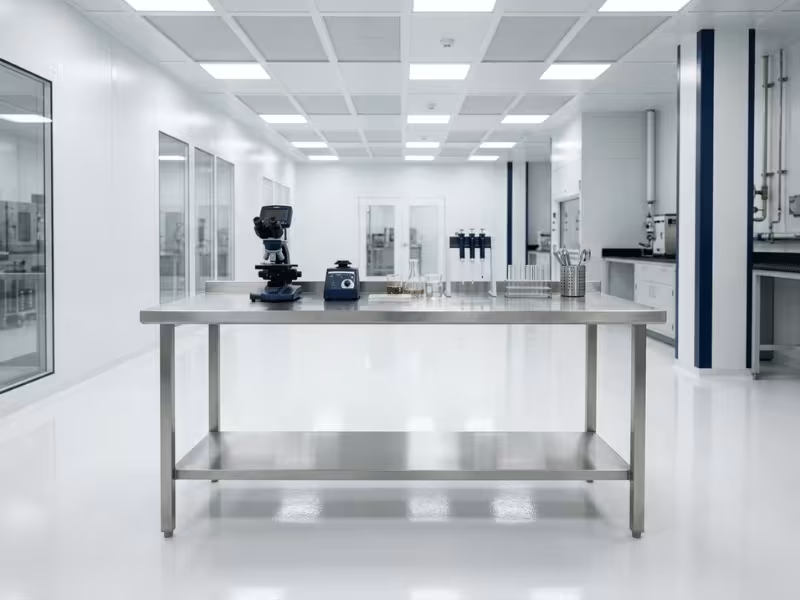
A cleanroom table isn’t defined by its metal. It’s defined by how that metal is welded, finished, and detailed so it can withstand constant cleaning without trapping particles or failing a compliance check. Miss those details, and you’ve bought a liability that happens to look great on delivery day.
This guide walks through the decisions that actually move the needle. By the end, you’ll be able to:
- Match material grade to your cleaning chemistry and cleanroom class
- Judge the construction details that pass or fail an audit
- Choose finishes, sizing, and accessories for real-world cleanability
- Sidestep the specification mistakes that quietly wreck a build
Quick Answer: How to Choose a Cleanroom Table
The right cleanroom table comes down to four matched decisions — not a single “buy stainless” call:
- Material grade matched to disinfectants — 304 handles most environments; 316 is for chlorides, bleach, and VHP exposure.
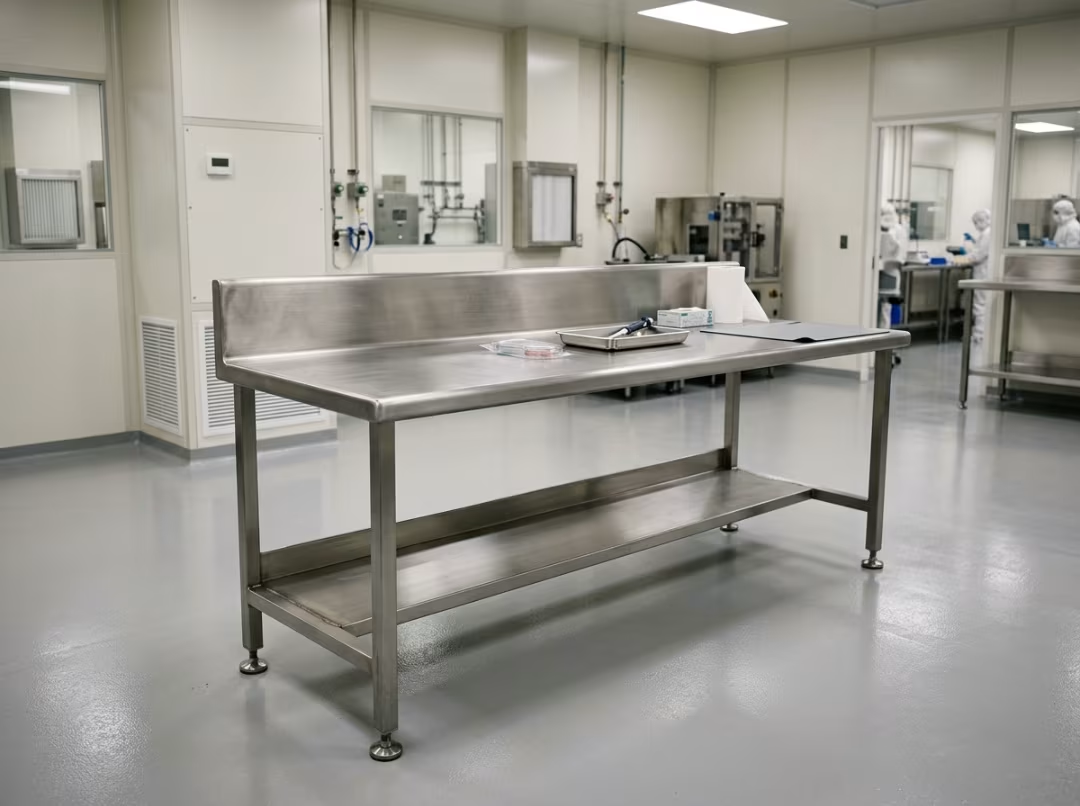
- Fully welded, seamless construction — no exposed screws, hollow legs, or sharp internal corners where particles collect.
- A surface finish suited to your cleaning intensity — #4 brushed hides wear; #8 mirror sanitizes most easily.
- ESD protection where static is the real risk — in electronics work, grounding often outranks corrosion resistance.
Here’s the nuance most guides gloss over: 316 stainless isn’t automatically better. What decides it is your cleaning chemistry, your corrosion exposure, and whether static control matters more than corrosion for the work you’re doing. Match the table to the room, not to the price tag.
Cleanroom Table vs. Standard Stainless Table
Stainless steel does not equal cleanroom-ready. A shop bench and a cleanroom table can be cut from the exact same grade of metal, but only one will pass validation. The difference lives in the design, not the alloy.
Particle Control and Crevice Minimization
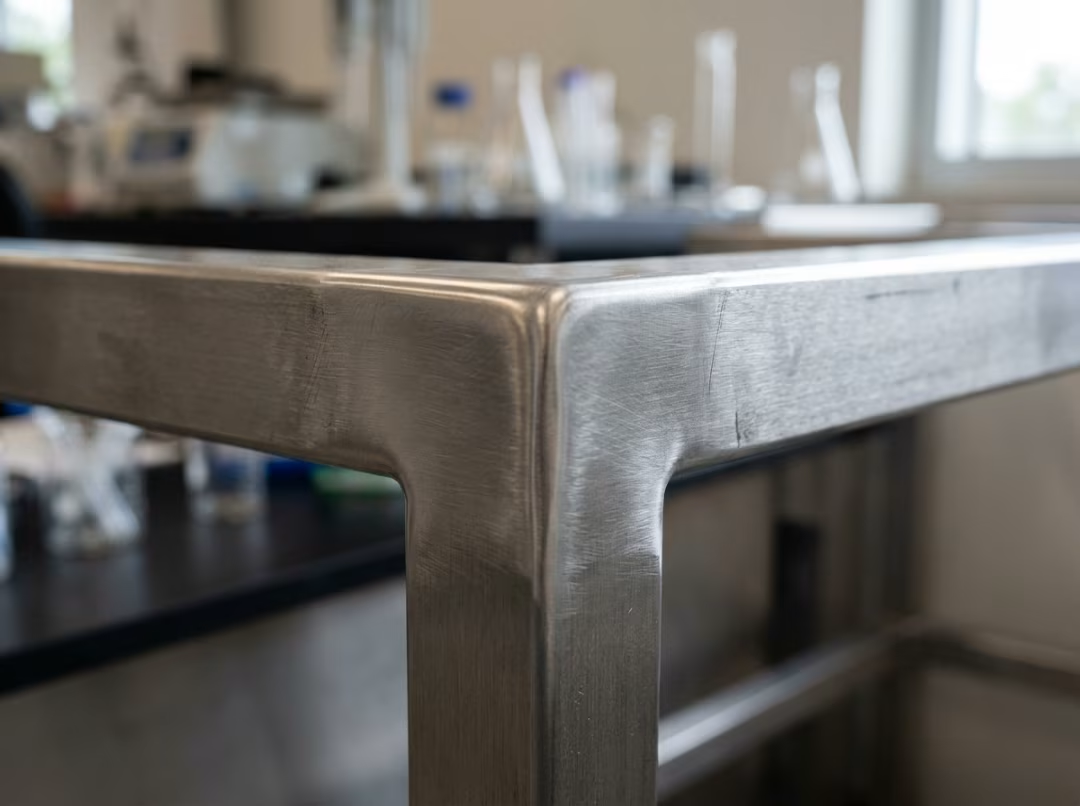
Every exposed screw head, bolted joint, hollow leg, and sharp internal corner is a place for particles and microbes to settle somewhere your cleaning cloth can’t reach. Standard tables are riddled with these hiding spots — not out of malice, just because nobody designed them out. Cleanroom construction removes them on purpose: sealed frames, closed profiles, and continuous surfaces that leave no contamination to hide.
Weld Quality and Seamless Surfaces
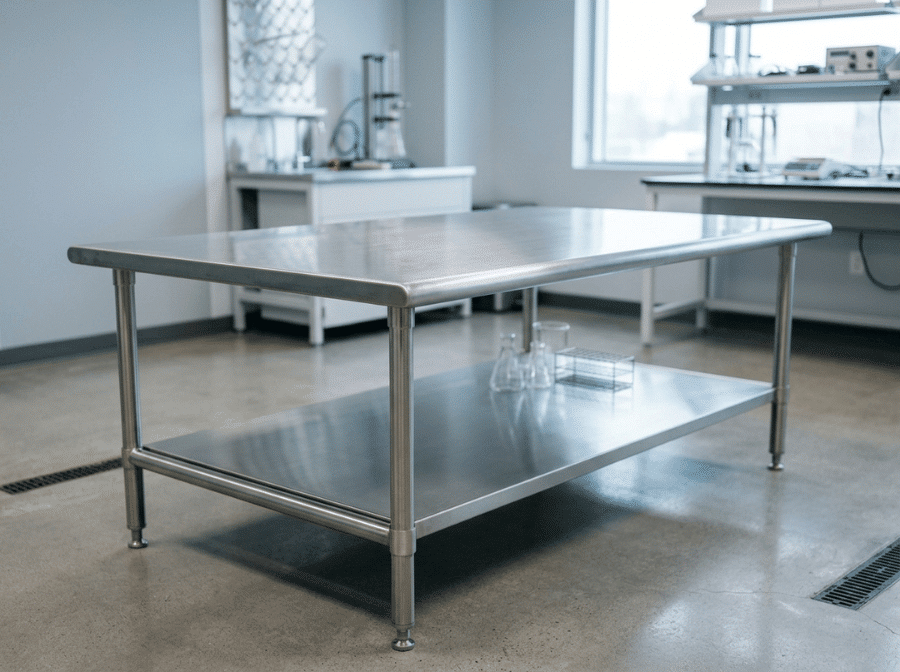
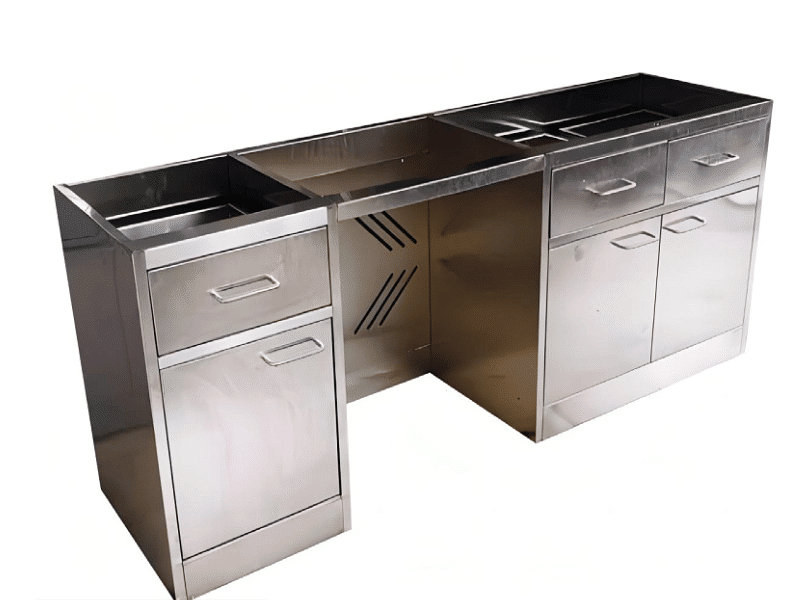
A proper cleanroom table uses fully welded, ground-smooth seams instead of mechanical fasteners. That continuous surface is far easier to sanitize and far less likely to shed particles as the years pile up. Bolted assemblies do the opposite — they create gaps that trap residue and loosen a little more with every cleaning cycle. That loosening is exactly what an auditor’s eye is trained to find.
Cleanability and Sanitization Compatibility
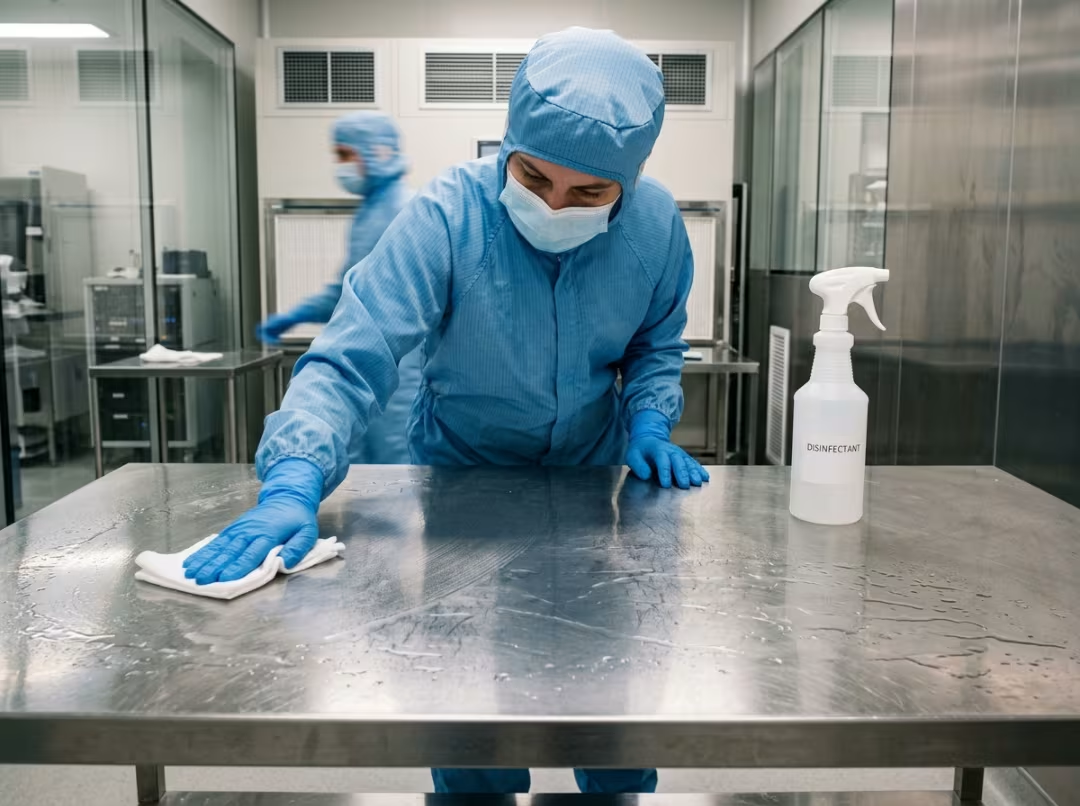
The table must withstand repeated disinfection without pitting, staining, or breaking down. This is about matching the surface to your actual cleaning frequency and chemistry — not slapping an “easy to clean” label on it and calling it done. A table wiped hourly with an aggressive agent needs a very different spec than one cleaned weekly with a milder agent. Treat those two the same and one of them will let you down.
The takeaway is simple: a cleanroom table is a design category, not a material choice.
304 vs. 316 Stainless: A Scenario-Based Decision
The grade question isn’t “which is better.” It’s “what touches this surface, and how often.” Ask it that way and the answer usually sorts itself out.
When 304 Is Enough
For general cleanrooms, electronics assembly, and moderate cleaning regimes, 304 stainless handles the exposure without complaint. It resists corrosion well under everyday lab conditions and standard disinfectants. Reaching for 316 in these rooms is spending money on protection the environment will never call on.
When 316 Is Worth the Upgrade
Move to 316 the moment aggressive disinfectants enter the picture — bleach, vaporized hydrogen peroxide (VHP), chlorides, high humidity. Chlorides are the real villain here: they pit 304 from the surface down, opening small, deep failure points that spread underneath where you won’t spot them until it’s too late. In GMP pharmaceutical and biotech spaces, where sanitization is both frequent and harsh, 316 is simply the honest long-term call.
When ESD Matters More Than Corrosion Resistance
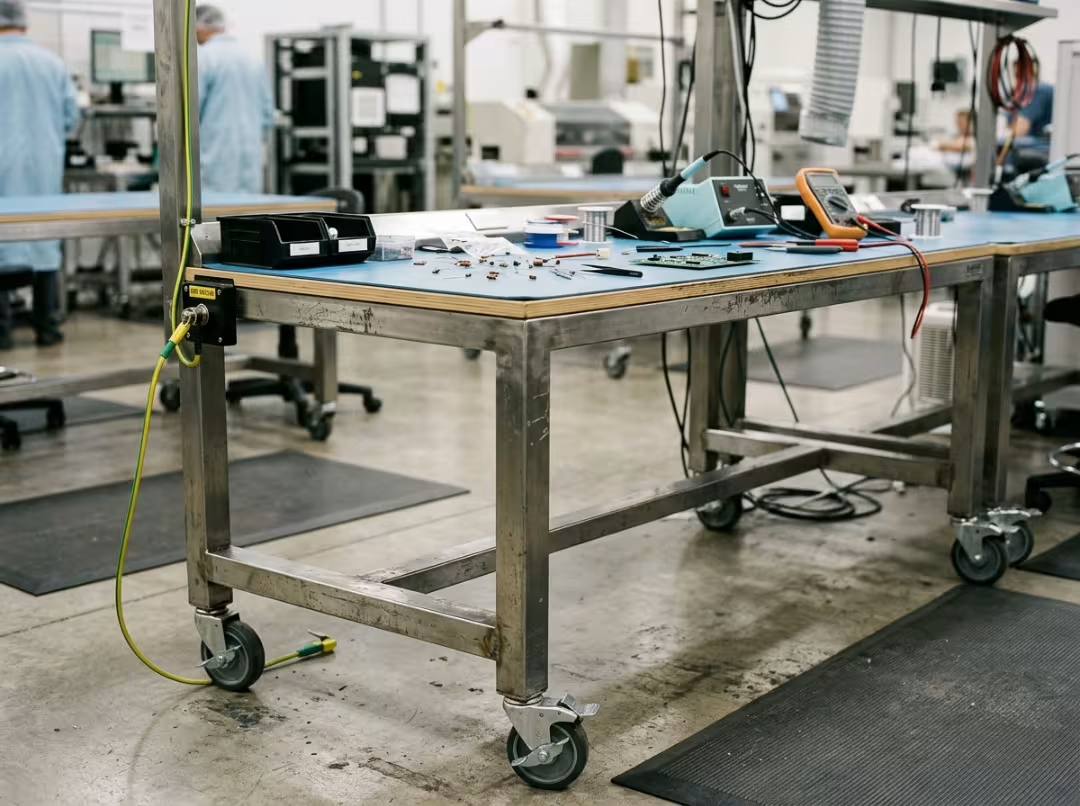
In electronics and sensitive assemblies, static discharge can kill a component, no matter what grade of steel it sits on. So the deciding spec here isn’t 304 versus 316 at all — it’s grounding and conductivity. An ESD cleanroom table with a genuine grounding point and conductive casters protects your work in a way a corrosion upgrade never touches. This is the part most buyers’ guides walk right past, and it’s the part that costs people the most.
How Cleaning Chemistry Drives the Decision
Anchor the grade decision to your cleaning protocol — not to prestige, and not to whichever number sounds more impressive. Ask a plain question: what disinfectants does the team actually use, and how often? If chlorides or VHP are on that list, 316 earns every dollar. If they’re not, 304 is the smarter spend, full stop.
|
Factor |
304 Stainless |
316 Stainless |
|---|---|---|
|
Corrosion resistance |
Excellent for general use |
Superior, especially vs. chlorides |
|
Cleaning chemistry fit |
Standard disinfectants |
Bleach, VHP, chloride-heavy routines |
|
Typical environment |
General cleanrooms, electronics |
GMP pharma, biotech, high-corrosion |
|
Cost |
More economical |
Higher upfront investment |
|
Best when |
Exposure is moderate |
Disinfectants are aggressive |
Construction Details That Decide Cleanability
These are the details that separate a table that still passes audits a decade in from one that becomes a contamination problem within a year. This is where real cleanroom quality actually lives — and where corners get cut when nobody’s checking.
Fully Welded vs. Bolted Frames
Fully welded, sealed joints eliminate the crevices a bolted assembly creates from day one. Bolted frames loosen under vibration and repeated cleaning, hold residue in every gap, and eventually trip up your cleaning validation. Welded construction costs more upfront. It also spares you the audit finding — and the mid-operation swap — later.
Rounded Corners and Crevice-Free Design
Sharp internal angles and lap joints collect particles and hang onto moisture. Rounded, continuous transitions clean out completely and dry completely, which is exactly what a controlled environment needs from a surface. When you’re inspecting a table, run your eye along every internal corner. Poor design always shows up there first.
Surface Finish: #4 Brushed vs. #8 Mirror
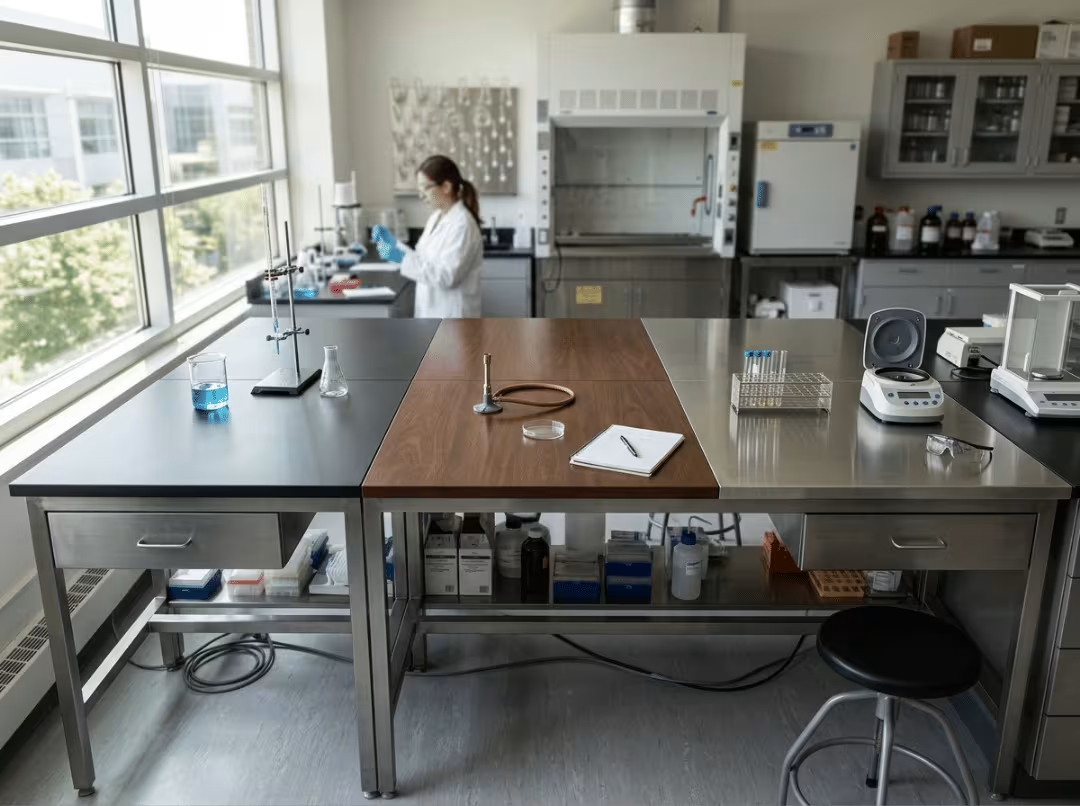
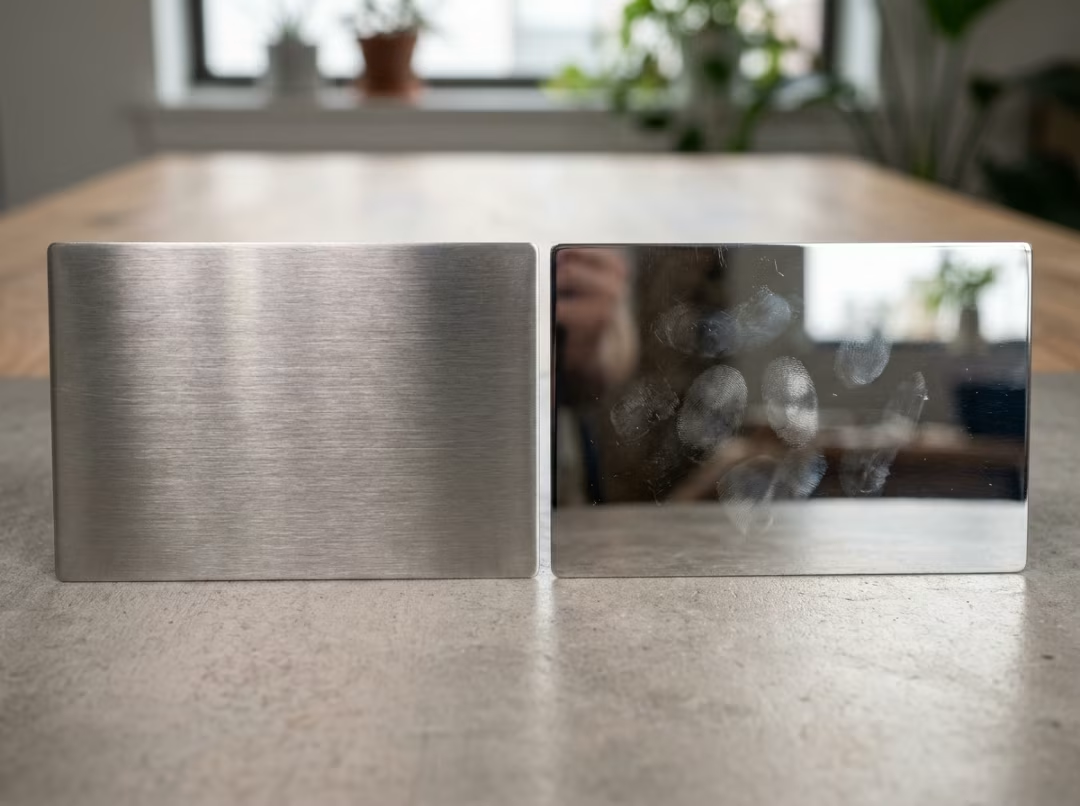
The finish is a trade-off, not a matter of taste. A #4 brushed finish cuts glare and hides minor scratches, making it easy to live with in a high-traffic space. A #8 mirror finish sanitizes most readily and gives contamination the fewest footholds — but it shows every fingerprint and scuff you put on it. Match the finish to how hard and how often you clean, not to which one looks better in the showroom.
Undershelves and Drawers as Contamination Traps
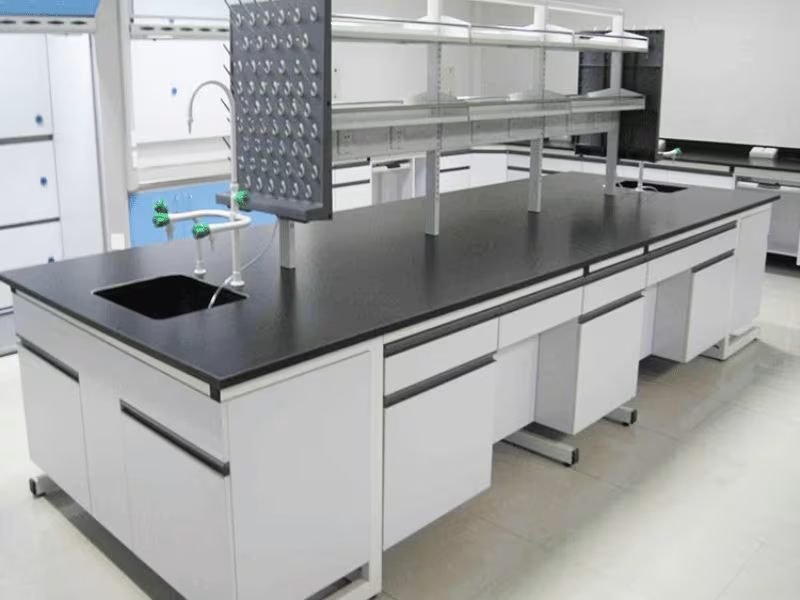
Here’s the counterintuitive one people get wrong constantly: added storage can quietly undercut cleanroom performance. Enclosed drawers and stacked shelves create surfaces you can’t easily reach, clean, or validate. Add storage only where the workflow genuinely demands it — because every extra surface is one more thing an auditor gets to check, and one more place a problem can hide.
Casters vs. Fixed Feet
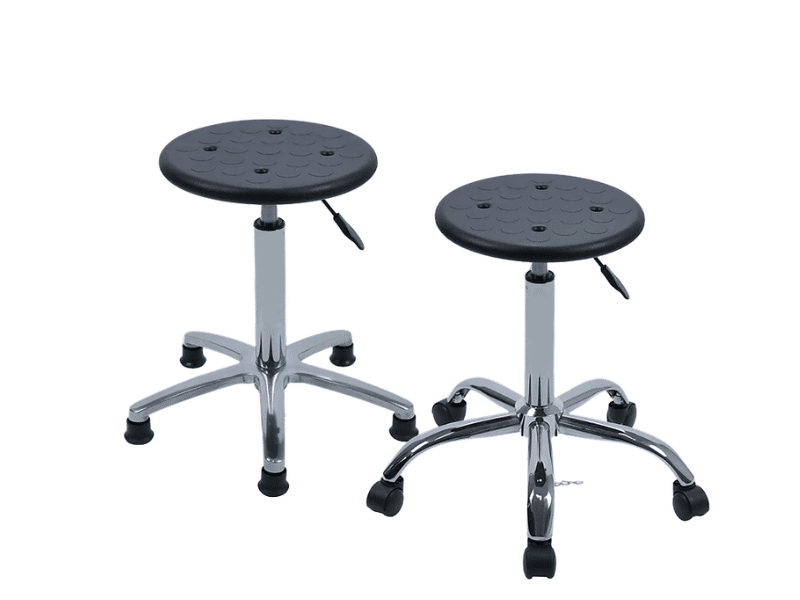
Conductive casters support ESD grounding and let you reconfigure a room without a forklift; leveling feet provide the rock-solid stability vibration-sensitive work depends on. If casters win, insist on a wheel designed to resist particle shedding — cheap ones defeat the whole point. Mobility is only worth the trade-off when the workflow actually asks for it.
Matching the Table to Your Application
Different cleanrooms want different things. One-size guidance is precisely where the generic buyer’s guides fall down — so match the spec to the work in front of you.
Pharmaceutical and Biotech Cleanrooms
These rooms call for 316 stainless steel, GMP-compatible sanitization, and corrosion resistance that holds up to VHP and bleach. Crevice-free, fully welded construction isn’t a preference here; it’s the price of entry. Your spec should tie straight back to your ISO 14644 class and your cleaning frequency. When disinfection runs constant and aggressive, the material and the construction both have to keep pace — or neither one does.
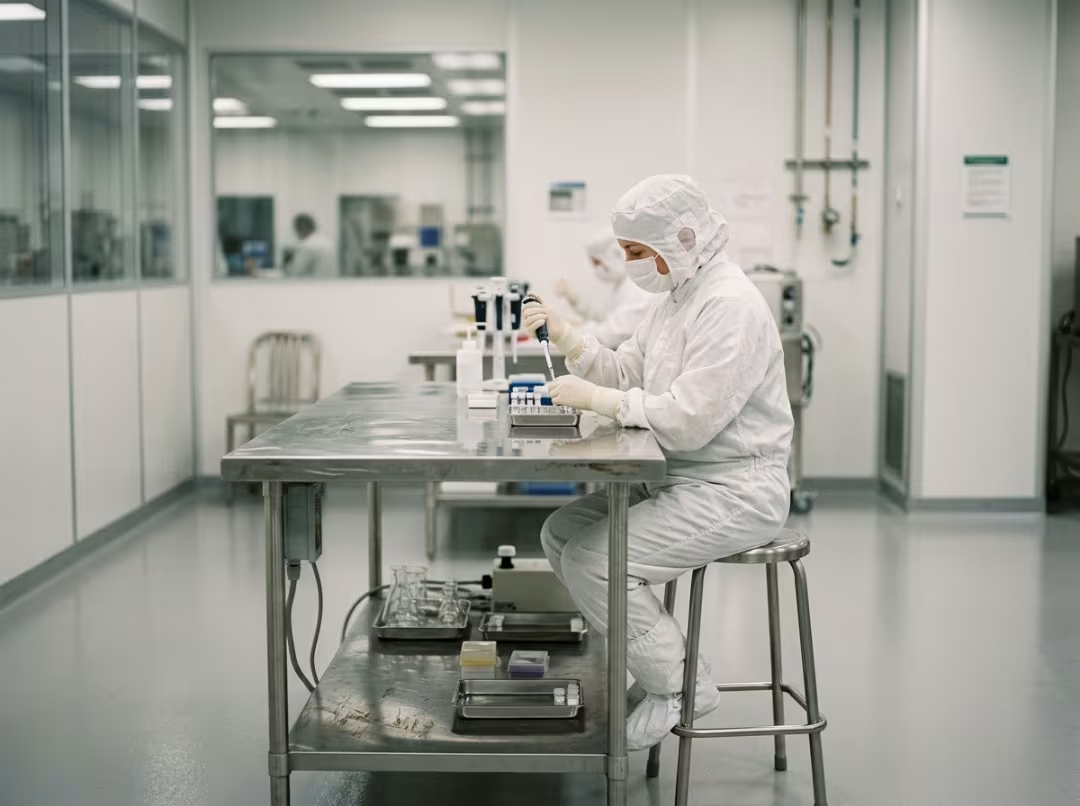
Electronics and ESD-Sensitive Assembly
Here, static control leads, and everything else follows. Prioritize grounded ESD tables, conductive surfaces, and conductive casters, all backed by solid particle control. And notice: 304 stainless is often plenty for corrosion in these rooms, because the real threat is discharge, not rust. Paying up for 316 while skimping on grounding gets the whole thing backward.
Pass-Through, Staging, and Material Transfer Areas
High-traffic transfer zones need mobility, real load capacity, and edges tough enough to shrug off constant movement. Layout fit and staging clearance matter as much as the table itself. Plan these against your broader lab design and planning guide so your transfer flow doesn’t become a bottleneck on the day you go live.
Sizing, Height, Load, and Accessories
Dimensioning is a workflow decision, not a floor-space calculation. Get it wrong, and you’ll choke airflow, cramp movement, or drag down productivity — sometimes all three.
Size and Workflow Clearance
Match the footprint to the task and the room, not just to the empty space you happen to have. Oversize it, and you crowd movement paths and disturb airflow; undersize it and you create bottlenecks. Picture how technicians actually move around the table, not only where the table parks.
Height and Ergonomics
Set height around standing versus seated work, and specify adjustable legs or leveling feet for floors that are never quite level. Good ergonomics cut fatigue and error rates across a long shift — a small line on the spec sheet with a payoff that shows up in the work.
Load Capacity and Vibration Stability
Match rated capacity to your equipment weight and leave yourself margin. Vibration-sensitive work — balances, microscopes, delicate instruments — takes casters off the table, literally. Those jobs want fixed, leveled feet and nothing that rolls.
Accessories Worth Adding — and Ones That Aren’t
Backsplashes, raised edges for spill containment, and grounding points earn their keep when the workflow needs them. Extra shelving and drawers usually don’t, because they smuggle back in the contamination traps you worked to design out. For items you’d otherwise pile on the bench, dedicated laboratory storage cabinets keep surfaces clear and easy to clean. Add function, not clutter.
Common Cleanroom Table Specification Mistakes
Nearly every cleanroom table regret I’ve seen traces back to the same short list. None of these are exotic — they’re the ordinary errors that look harmless on the quote and turn expensive in the room.
Assuming Any Stainless Table Is Cleanroom-Ready
Risk: A standard stainless bench fails validation on exposed fasteners and crevices — usually the first time an auditor looks closely. Fix: Specify cleanroom-grade design (welded, sealed, crevice-free), not just stainless material.
Over-Buying 316 When 304 Is Enough
Risk: Paying a premium for corrosion resistance the room will never demand. Fix: Match the grade to your actual cleaning chemistry; 304 covers most non-chloride routines without breaking a sweat.
Adding Drawers and Shelves Without Considering Cleanability
Risk: Storage becomes a contamination trap nobody can validate. Fix: Add storage only where the workflow requires it, and keep every surface reachable.
Ignoring ESD Requirements
Risk: Speccing on corrosion alone in a static-sensitive room, then watching components fail for no visible reason. Fix: Specify grounding and conductivity wherever static is the primary threat.
Picking a Finish Without Weighing Glare, Cleaning, and Scratch Visibility
Risk: A finish that fights your daily cleaning reality instead of supporting it. Fix: Match #4 brushed or #8 mirror to your cleaning intensity and your glare tolerance.
Sizing for the Table, Not the Workflow
Risk: Chasing dimensions while ignoring clearance and airflow. Fix: Size around technician movement and airflow first, then confirm the footprint fits the room.
When Custom Cleanroom Tables Are Worth It
Standard sizing works fine for many cleanrooms, and there’s no prize for over-engineering a simple setup. If a stock footprint fits your layout and your workflow, take it and move on.
Custom fabrication earns its cost when the standard options genuinely don’t fit — non-standard room layouts, pass-through configurations, specific ESD or load requirements, integrated features that a catalog can’t cover. Force a stock size into a space that fights it, and you’ll build in the gaps, bottlenecks, and daily workarounds you were trying to avoid in the first place.
So treat custom as a fit-and-function decision, not a reflex. The question worth asking isn’t “can this be customized” — almost anything can. It’s “does the workflow actually require it.” When the answer’s yes, custom pays you back in a table that works the way your space does.
Frequently Asked Questions
What is a cleanroom table?
A cleanroom table is a work surface built for contamination control in a controlled environment. It uses non-porous, seamless, easy-to-sanitize construction — typically fully welded stainless steel — that resists particle shedding and survives repeated disinfection without breaking down.
What’s the difference between a cleanroom table and a regular stainless steel table?
They can share the same metal but differ in design. A cleanroom table is fully welded, crevice-free, and finished for easy sanitization, with no exposed fasteners or hollow legs. A standard stainless table usually has bolted joints and gaps that trap particles and fail cleanroom validation.
Should I choose 304 or 316 stainless for a cleanroom table?
Match the grade to your cleaning chemistry. 304 handles general cleanrooms and standard disinfectants well. Choose 316 when you use bleach, VHP, chlorides, or work in GMP pharma and biotech spaces, since chlorides cause pitting corrosion in 304.
Do cleanroom tables need to be ESD-safe?
Only where static is a risk. In electronics and sensitive assembly, an ESD table with a grounding point and conductive casters protects components from discharge. In many pharma and general cleanrooms, ESD protection isn’t required — corrosion resistance and cleanability matter more.
Which surface finish is best for a cleanroom table?
It depends on your cleaning routine. A #4 brushed finish reduces glare and hides minor scratches, which makes it practical for busy spaces. An #8 mirror finish sanitizes most easily and leaves the fewest points of contamination, but it shows every mark.
Are welded cleanroom tables better than bolted ones?
Yes, for cleanroom use. Fully welded, sealed joints eliminate the crevices bolted frames create, resist loosening under cleaning and vibration, and pass cleaning validation far more reliably. Bolted assemblies trap residue and tend to fail audits over time.
What size and height should a cleanroom table be?
Size it around your workflow and airflow, not just the floor space you have, so you avoid bottlenecks and crowding. Set height for standing or seated work, with adjustable legs or leveling feet for uneven floors and technician ergonomics.
Conclusion
Specifying the right cleanroom table is a set of matched decisions, not a single material choice. Keep these in front of you:
- Match material grade to cleaning chemistry, not prestige — 304 for most routines, 316 for chlorides and VHP.
- Insist on fully welded, crevice-free construction that withstands cleaning validation.
- Choose finishes and accessories for cleanability, and avoid storage that becomes a contamination trap.
- Prioritize ESD protection where static is the real risk, even ahead of corrosion resistance.
- Segment the decision by application — pharma, electronics, and staging areas simply don’t want the same table.
Work through these in order, and the specification stops feeling complicated. It turns into a framework you can reuse on the next room.
Plan Your Cleanroom Table Specification
Every cleanroom starts from a different set of requirements — a specific ISO class, a particular cleaning protocol, an ESD need, or a layout that stock sizes just won’t accommodate. Getting the spec right the first time is a lot cheaper than a swap after you’re operational.
If you’re weighing material grade, finish, or ESD options for a specific cleanroom class, we’re happy to talk it through — no pressure to buy anything. Have a look at our stainless steel cleanroom table options and our broader ISO cleanroom furniture range, or send over your layout for a specification review or CAD drawing matched to your space. We’d rather help you get it right on paper than watch you fix it later.
This article is for general educational purposes only and does not constitute engineering, safety, or compliance advice. Cleanroom requirements, material specifications, and applicable standards vary by facility, cleanroom class, cleaning protocol, and jurisdiction. Always verify requirements for your specific cleanroom and applicable standards before specifying or purchasing equipment.