Ask ten buyers what a “cleanroom cabinet” does, and a good few will tell you it protects whatever’s inside. Then they read the spec sheet and the penny drops: it’s passive storage. No filter. No airflow. No containment. Others make the opposite bet — they buy passive storage for a job that genuinely needed filtration, and no clever material choice unwinds that later.
Here’s what most guides skip. Choosing the wrong cabinet category costs far more than choosing the wrong material. Picking 304 when 316L would have been nicer? You live with it. Buying a passive garment cabinet when your process required a ventilated or containment unit? That one you rip out and replace.
So this article works in the order that actually matters — category first, then material, then design, then compliance. By the end, you’ll be able to tell passive storage apart from filtered and containment units, match material to your cleaning chemistry, and sidestep the selection mistakes that fail audits or waste budget.
Start With the Category, Not the Cabinet
Before you compare finishes or shelving, settle one question: what job does this cabinet actually need to do? Get the category wrong and nothing downstream saves the purchase. In practice, this is where buyers most often go wrong — they fall in love with a stainless body and never ask whether they need airflow or containment in the first place.
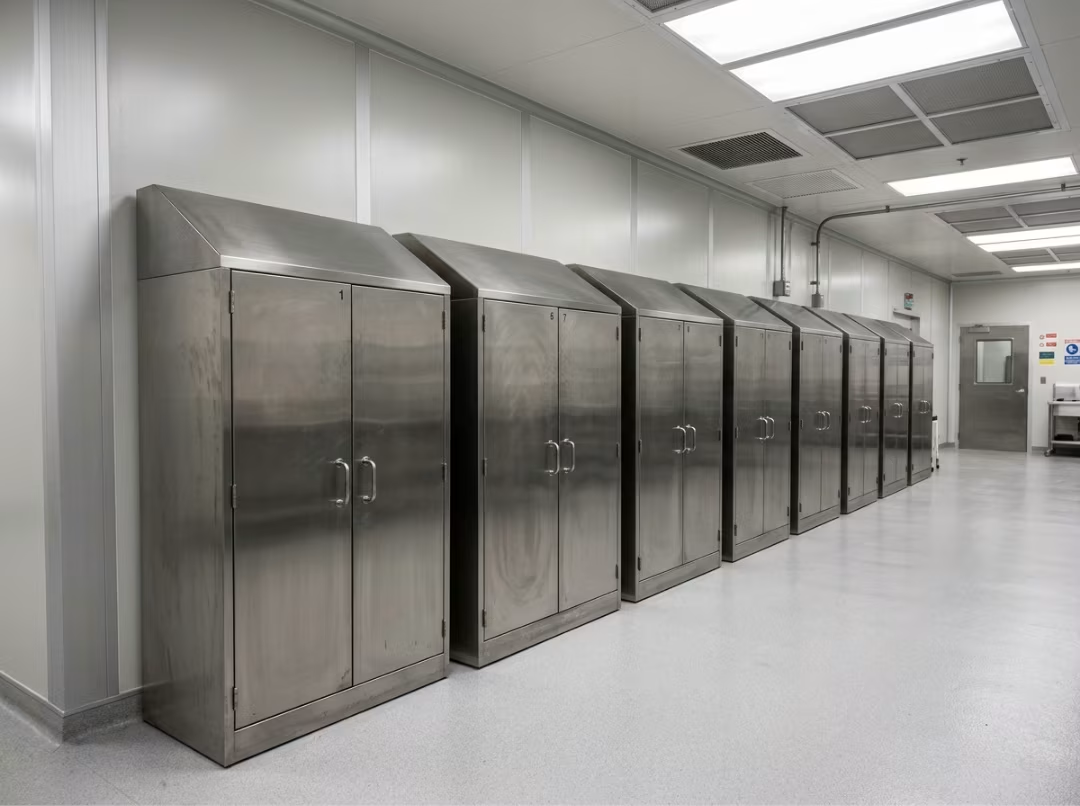
A standard cleanroom cabinet is passive storage. It keeps contents organized and shielded from general exposure. It does not filter air. It does not contain anything. Once you’ve confirmed that’s the job, the rest of the decision gets a lot simpler.
What a Passive Cleanroom Cabinet Does — and Does Not Do
This is the section worth slowing down for, because it’s the one that prevents the expensive mistakes.
What Passive Storage Actually Protects Against
A passive cleanroom cabinet shields its contents from general contamination exposure, settling dust, and plain disorganization. It does that through non-shedding, sanitizable surfaces and a sealed enclosure — not through airflow or filtration.
Think of it as contamination control by barrier and cleanability, not contamination removal. Keep garments, tools, or parts enclosed on smooth, wipeable surfaces, and they stop collecting the particles they’d otherwise gather sitting out in the open. That’s a real job, and a valuable one. It’s just a passive one.
What Passive Storage Does Not Do
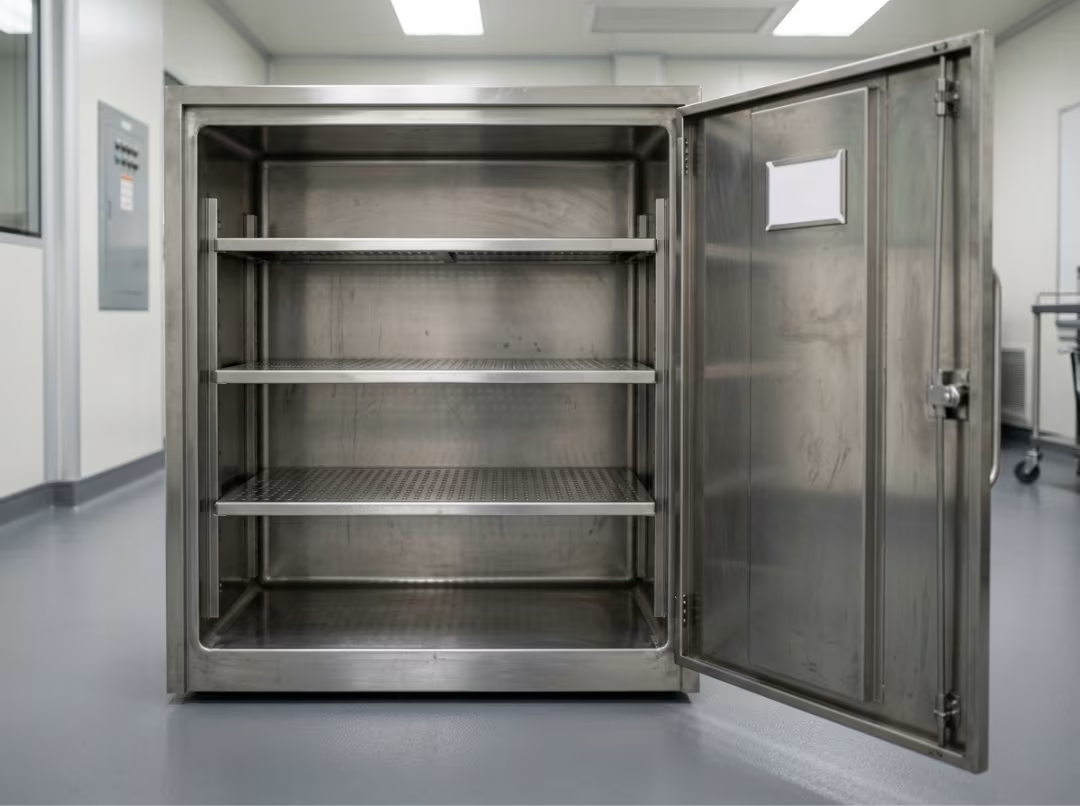
A passive cabinet gives you no HEPA or ULPA filtration. It moves no air. It contains no hazardous or biological material.
Which means it cannot serve as a laminar flow cabinet, a ventilated or exhausted storage unit, or a biosafety cabinet. If your application needs filtered air over the stored items, active containment of fumes, or protection of personnel from what’s inside, passive storage is the wrong tool — however well it’s built. Draw that boundary in your own head before you shop, and you dodge the single most expensive mistake in this whole category.
Here’s the failure scenario that plays out again and again: a lab buys a beautifully finished passive garment cabinet, only to discover during qualification that the application called for conditioned, filtered air over the gowns. The cabinet isn’t defective. It was simply never the right category. Now it’s a sunk cost, and the correct unit still has to be ordered.
Passive vs. Filtered vs. Ventilated vs. Biosafety
Four cabinets, four different jobs. Passive storage encloses and organizes. Laminar flow and garment-conditioning units push filtered air across the contents. Ventilated or exhausted cabinets pull fumes away from chemical storage. Biosafety cabinets contain biological hazards and protect the operator.
Read the reasoning first, then let the table serve as quick reference. It’s a shortcut, not a substitute for matching the category to your actual process.
|
Cabinet type |
Airflow / filtration |
Primary job |
|---|---|---|
|
Passive storage |
None |
Enclose and organize contents on cleanable surfaces |
|
Laminar flow / garment conditioning |
HEPA/ULPA + blower |
Bathe contents in filtered air |
|
Ventilated / exhausted |
Active exhaust |
Pull fumes away from stored chemicals |
|
Biosafety cabinet |
HEPA + containment |
Contain biological hazards, protect operator |
One caution worth stating plainly: a cabinet labeled “cleanroom” tells you nothing about which of these four it is. Confirm the airflow spec, not the marketing category, before you commit.
Match the Material to Your Cleaning Chemistry
Once the category is settled, material becomes the decision that quietly makes or breaks the cabinet over its service life. Material is a judgment call, not a menu pick — and the two questions that settle it are: what disinfectants does your team use, and what actually goes inside?
When 304 Stainless Is the Right Default
General cleanrooms, garment storage, parts storage, standard disinfectant routines — 304 stainless is the sensible default here. It’s durable, shrugs off everyday corrosion, and gives you smooth, non-porous surfaces that won’t shed particles.
Honestly, most cleanroom storage lives comfortably in this range. Reach for 316L in these rooms, and you’re paying for corrosion resistance the environment will never call on.
When 316L Is Worth the Upgrade
Step up to 316L the moment aggressive sterilants enter the picture — bleach, Spor-Klenz, chlorides, high humidity. The molybdenum in 316L resists pitting corrosion that would slowly chew into standard stainless steel.
Chlorides are the specific villain. They attack 304 from the surface down, opening small, deep pits that spread where you won’t catch them early. That sounds minor until cleaning frequency doubles — a cabinet wiped twice a shift with a chloride-based agent ages very differently from one cleaned weekly with IPA. In GMP and pharmaceutical settings, where sanitization runs frequent and harsh, 316L earns its higher price without much argument.
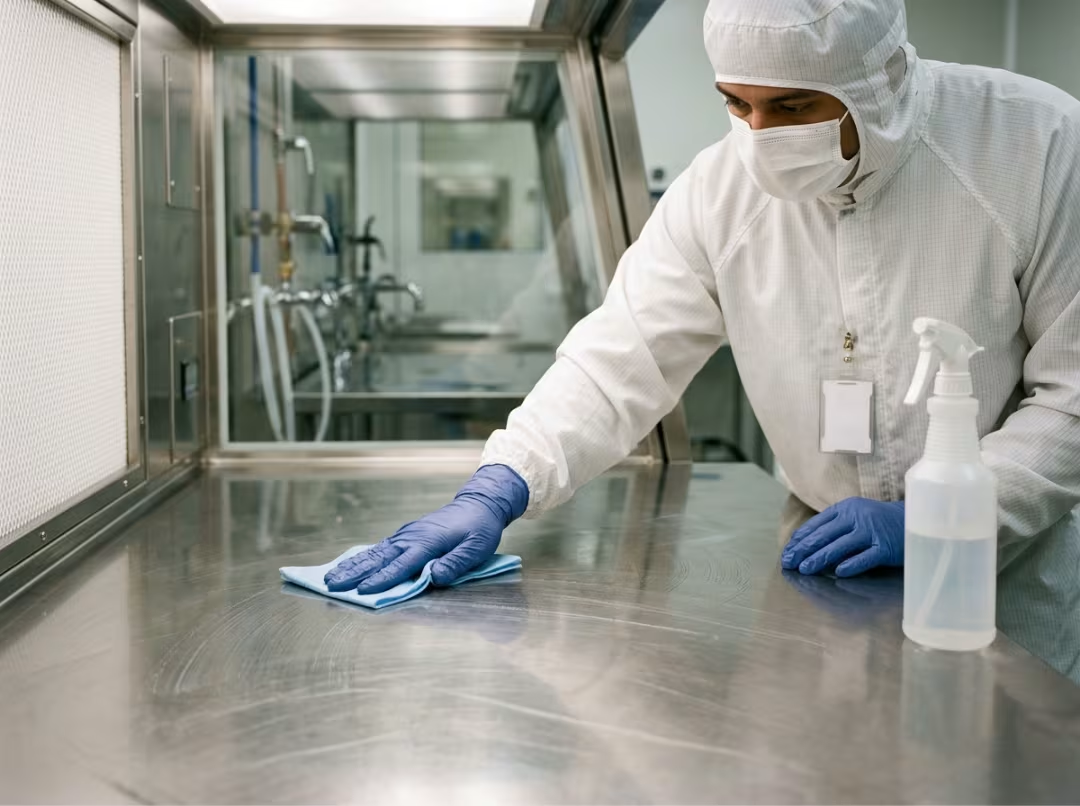
The real-world trap here is the split spec. A facility standardizes on 304 across the room, then quietly starts using a harsher sterilant in one corner to hit a new bioburden target. Six months on, only those cabinets show pitting, and nobody connects it to the change in chemistry until an auditor does. Match the grade to the most aggressive routine a cabinet will actually see, not the average one.
When Polymer (Polypropylene) Cabinets Make More Sense
For wet processing, acid and base storage, or corrosive chemical areas, polypropylene and polymer cabinets often beat metal flat out. They’re lightweight and chemically resistant right where stainless would corrode.
The trade-off is strength and load. Polymer won’t carry the weight or take the mechanical abuse steel shrugs off, so aim it at lighter contents and chemical-resistance needs — not heavy-duty storage. Store concentrated acids in a stainless cabinet to “keep it consistent” with the rest of the room, and you’ve built a corrosion problem into a unit that looked like the safe choice.
When Powder-Coated Steel Is Acceptable — and When It Isn’t
Powder-coated steel offers mechanical strength, low particle shedding, and easy-to-wipe surfaces, making it suitable for lower ISO classes and less demanding rooms. When budget matters and cleaning stays gentle, it’s a reasonable middle path.
Where it falls down: coatings that chip, and rooms where harsh cleaning never lets up. A chipped coating is a crevice and a corrosion point rolled into one. And laminated particle board? A non-starter in any cleanroom — it cracks, chips, and harbors contamination.
Use the table to sanity-check the logic, not to skip it.
|
Material |
Best cleaning fit |
Typical use |
|---|---|---|
|
304 stainless |
Standard disinfectants |
General cleanrooms, garments, parts |
|
316L stainless |
Bleach, Spor-Klenz, chlorides |
GMP, pharma, high-corrosion rooms |
|
Polypropylene / polymer |
Acids, bases, corrosives |
Wet processing, chemical storage |
|
Powder-coated steel |
Gentle, routine cleaning |
Lower ISO classes, budget builds |
Design Features — What Each One Is Actually For
Every feature has to earn its keep by doing a job — for cleanability, workflow, or compliance. More features aren’t automatically better. A few quietly work against you. Here’s what each one is for, and just as important, when it matters.
Seamless, Non-Porous Surfaces
This is the floor, not a feature you weigh. Crevices and porous materials trap particles and microbes where a cleaning cloth can’t reach. Seamless, non-porous construction leaves no place for contamination to settle. Skip it and nothing else about the cabinet holds up.
Sloping Tops
Sloping tops do two things: they discourage staff from stacking items on top and prevent particles from building up on a flat surface. That matters most in higher ISO classes and in rooms with strong overhead airflow, where a flat top becomes a collection point. In a lower-class room with lighter demands, a sloped top is a nice-to-have — not a decider.
Perforated vs. Solid Shelving
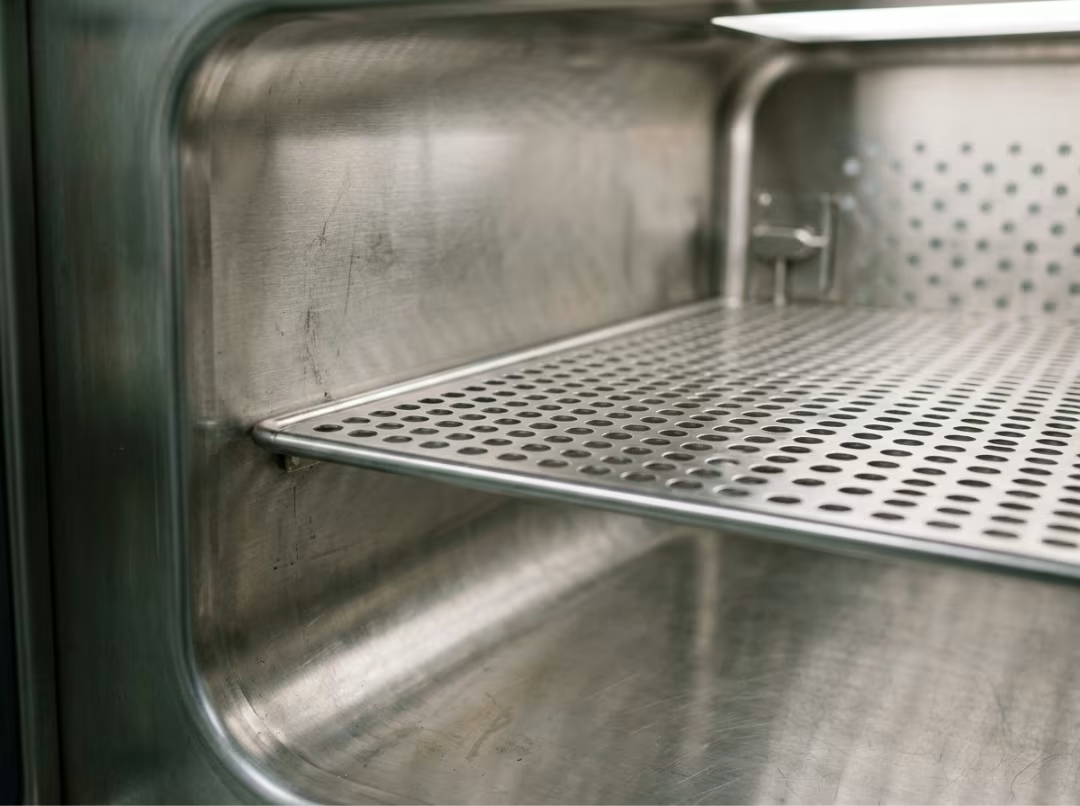
Perforated or wire shelving lets laminar airflow from the ceiling pass through, so dust doesn’t settle on stored items. Ideal for plenty of setups. But it isn’t right for everything — small parts, loose components, and tiny items shift or drop straight through. Match the shelving to what you store, not to a blanket rule.
Clear Doors vs. Solid Doors
Clear acrylic or glass doors let staff check inventory without opening the cabinet and stirring up the environment — a genuine plus. The catch: the door material must withstand repeated cleaning without clouding or crazing. Solid or gasketed doors win when security, cleaning intensity, or a specific compliance need outweighs visibility.
Adjustable Shelves and Storage Density
Adjustable shelves add flexibility for different contents, and that’s useful. Cram in too many, though, and you cut wipe-down access and create surfaces you can’t easily reach. Add capacity where you need it — just don’t quietly design cleanability out of the cabinet while you do.
Locking Mechanisms
Locks earn their place when you’re securing sensitive materials, or you need traceability for what’s stored. Specify them, and keep the hardware smooth and cleanable — otherwise you’ve reintroduced the very crevices you worked to eliminate everywhere else.
Matching the Cabinet to Your Application
Different contents, different rooms, different priorities. Generic “buy stainless, keep it clean” advice falls apart the second you set a garment cabinet next to a corrosive-storage unit. This is where spec’ing experience shows, so match the cabinet to the work.
Pharmaceutical and Biotech Rooms
These rooms run frequent, aggressive sanitization, so 316L and crevice-free, fully sealed construction stop being upgrades and become the baseline. Gaskets matter as much as the body here — a seal that degrades under VHP or bleach becomes a contamination path hidden inside a cabinet that still looks compliant. Tie the spec back to your ISO class and cleaning frequency, and confirm that anything called “USP 800 compliant” actually matches your handling before you trust the label. In these rooms, the quiet failures are almost always at the joints and seals, not the flat surfaces everyone inspects.
Electronics and ESD-Sensitive Environments
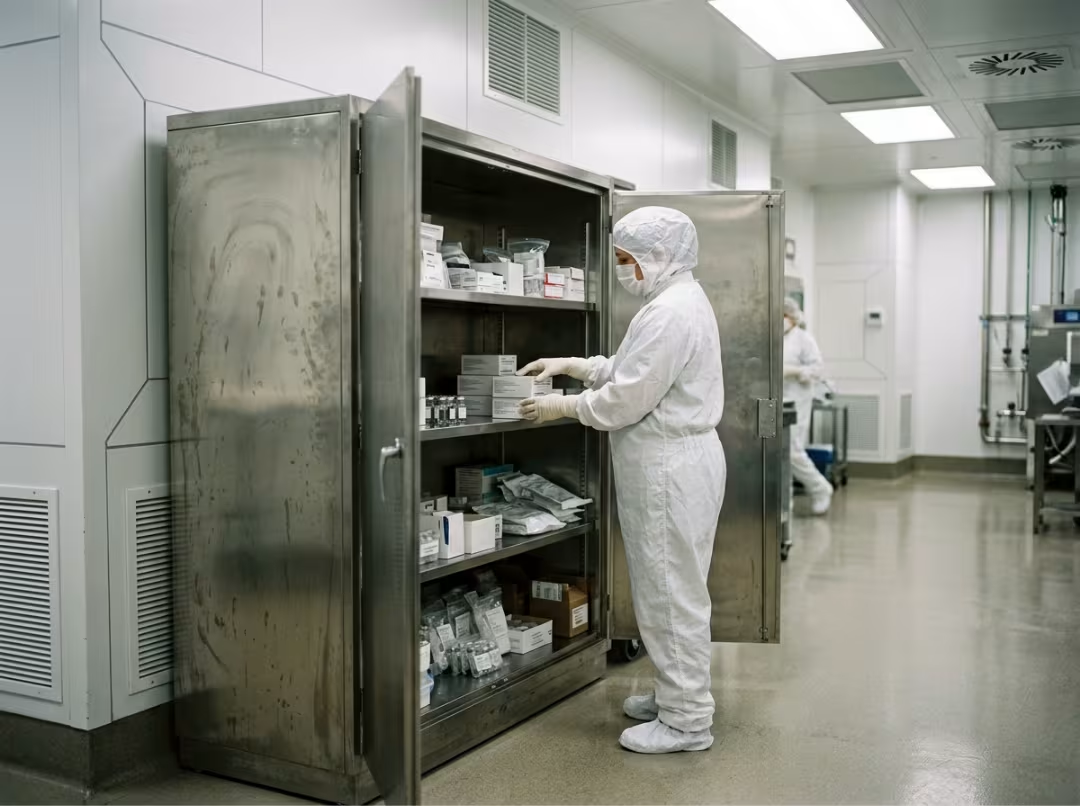
Here, static control leads, and everything else follows. Specify static-dissipative materials (surface resistivity of 10⁶–10⁸ ohms/sq) with a real grounding path and conductive surfaces — not a reassuring note that the cabinet is “ESD-friendly.” Confirm the numbers, and confirm the ground actually connects.
Worth saying plainly: in these rooms, 304 is often perfectly adequate for corrosion, because the threat is discharge, not rust. Buyers who pour budget into a 316L upgrade while leaving the grounding vague have solved the wrong problem. A component killed by static is just as dead as one lost to contamination, and far harder to trace back to the cabinet.
Harsh Cleaning or Corrosive Environments
Where aggressive sterilants or corrosive chemicals dominate, specify 316L or polymer, chemical-resistant surfaces, and gaskets compatible with your cleaning agents. Check gasket compatibility as carefully as you check the cabinet body — it’s the part that fails first and gets noticed last. If the room stores concentrated acids or bases, polymer usually wins outright, regardless of what the rest of the room is built from.
Pass-Through Material Transfer
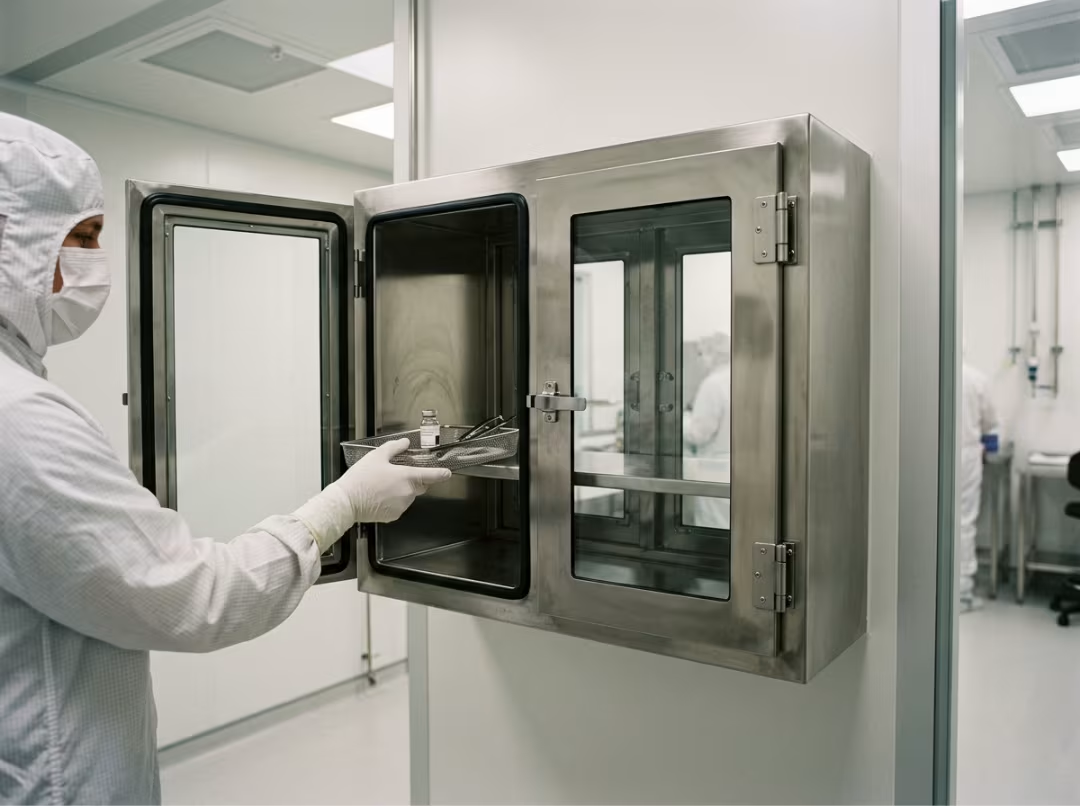
Pass-through cabinets are wall-mounted with interlocking doors on both sides, shuttling materials between rooms of different cleanliness classes without staff crossing thresholds. That trims contamination risk and smooths the workflow. Focus on interlock reliability, the wall-mount fit, and enough clearance for the items you’ll actually move. Plan them into the broader layout early, or transfers turn into a bottleneck the day you go live — folding storage decisions into your wider lab design and planning is what keeps that from happening.
Compliance Factors That Change the Specification
Standards aren’t terms to sprinkle in for credibility. Each one changes a concrete design decision, so treat them as design drivers.
- ISO class (ISO 14644): ISO Class 5 rooms demand tighter particle control than Class 7 or 8, which ripples into allowable materials, shelving choices, and how much surface exposure you can tolerate. Don’t assume any cleanroom cabinet will fit in any room.
- USP 800: For hazardous drug handling, this shifts your cleaning and containment expectations — smooth gaskets, no interior voids, surfaces that meet the required protocols. A passive cabinet is not a substitute for containment USP 800 may require.
- ESD: In electronics manufacturing, it directly drives surface resistivity and grounding choices. Verify the spec and the grounding path, not the label.
One habit that saves grief: treat every compliance claim as a starting point, not a guarantee. When a product says “USP 800 compliant” or “ISO compatible,” ask what, specifically, makes it so — and whether that aligns with your process.
Where Buyers Go Wrong
Most regrets in this category trace back to the same short list. Nothing exotic — these are the ordinary errors that look harmless on the quote and turn expensive in the room.
- Buying passive storage when the job needed active protection. Confirm the category first — passive, filtered, ventilated, or containment — before anything else.
- Paying for filtration you’ll never switch on. If the contents just need enclosure and cleanability, passive storage is the right and cheaper call.
- Assuming stainless equals cleanroom-grade. Grade and material aren’t the same thing as crevice-free, sanitizable construction. Specify the design, not just the metal.
- Match material to the average routine instead of the harshest one. The one aggressive cleaning step is what pits the surface, not the gentle ones.
- Over-accessorizing until you block cleaning access. Extra shelves and doors become contamination traps you can’t validate.
- Ignoring door swing, clearance, and workflow. Capacity means nothing if the cabinet fights the room or the airflow.
Maintenance That Keeps a Cabinet Compliant
Even passive storage needs upkeep, and the point isn’t tidiness — it’s staying audit-ready. A cabinet that drifts out of spec between inspections becomes a quiet weak link, and quiet is exactly how those problems slip through.
- Use cleanroom-approved cleaners. 70% isopropyl alcohol (IPA) with cleanroom-grade wipes is standard. Steer clear of chlorine, chlorides, and abrasives — they damage surfaces and seals.
- Clean top-to-bottom. Always wipe from the top down, so you’re not re-contaminating areas you already cleaned.
- Inspect routinely. Watch for scratches, dents, and worn seals that compromise cleanliness or open particle traps.
- Keep a documented schedule. Set daily, weekly, and quarterly tasks tied to your ISO class, so upkeep is repeatable — and provable the moment an auditor asks.
When Custom Cleanroom Cabinets Are Worth It
Standard cabinets serve most cleanrooms well, and there’s no prize for over-engineering a straightforward setup. If a stock unit fits your layout, contents, and compliance needs, take it and move on.
Custom fabrication earns its cost when the standard options genuinely don’t fit — non-standard room layouts, specific ISO or USP 800 requirements, integrated ESD grounding, or unusual contents a catalog can’t cover. Force a stock cabinet into a space that fights it, and you build in the gaps, workarounds, and cleaning obstacles you were trying to avoid.
So treat custom as a fit-and-function decision, not a reflex upsell. The question isn’t “can it be customized” — almost anything can. It’s “does the application actually require it.” When the answer’s yes, custom pays you back in a cabinet that works the way your space and process do.
Frequently Asked Questions
What is a cleanroom cabinet?
An enclosed storage unit built for contamination control in a controlled environment. It uses non-porous, seamless, easy-to-sanitize surfaces that resist particle shedding. Standard versions are passive storage — they organize and shield contents but don’t filter the air.
Do standard cleanroom cabinets have HEPA filters?
No. Standard cleanroom cabinets are passive storage units with no filtration. Add a HEPA or ULPA filter with a blower, and you’ve got a laminar flow or garment-conditioning cabinet — a different product category doing a different job.
What’s the difference between a passive storage cabinet and a laminar flow cabinet?
A passive cabinet encloses and organizes contents on cleanable surfaces, with no airflow. A laminar flow cabinet pushes HEPA- or ULPA-filtered air across its contents. One protects by barrier and cleanability; the other actively bathes items in filtered air.
Should I choose 304 or 316L stainless for a cleanroom cabinet?
Match the grade to your cleaning chemistry. 304 handles general cleanrooms and standard disinfectants comfortably. Go with 316L when you use bleach, Spor-Klenz, or chlorides, or when working in GMP and pharma settings — chlorides cause pitting corrosion in standard stainless.
What types of cleanroom cabinets are available?
Passive stainless steel storage cabinets, garment storage cabinets, pass-through cabinets, desiccator cabinets, ESD-safe cabinets, and polypropylene cabinets for chemical resistance. Choose by category first, then work through material, contents, and compliance.
Do I need a USP 800 compliant cabinet?
Only if you handle hazardous drugs. USP 800 shifts your cleaning and containment expectations — smooth gaskets, no interior voids, surfaces that meet its protocols. A passive cabinet won’t substitute for required containment, so verify your specific handling before assuming compliance.
Can I use a regular industrial cabinet in a cleanroom?
No. Standard industrial cabinets tend to have porous surfaces, crevices, and materials that shed particles. Cleanroom cabinets are designed with non-shedding, seamless, easy-to-sanitize surfaces specifically to maintain contamination control and pass validation.
Choosing With Confidence
The right cleanroom cabinet is a set of matched decisions, and it starts with category, not material. Pick the category first — it’s the costliest thing to get wrong. Match material to your harshest cleaning chemistry and your actual contents. Choose features for cleanability rather than raw capacity. Let ISO class, USP 800, and ESD requirements drive the concrete design choices, and maintain the cabinet on a documented schedule to keep it audit-ready.
Work through them in that order, and the choice stops feeling complicated. It turns into a framework you can reuse on the next room.
If you’re weighing cabinet type, material grade, or compliance for a specific application, our team is glad to talk it through with you. Explore our cleanroom storage cabinets and pass-through cabinet options, browse the broader cleanroom laboratory furniture range, and send over your layout and requirements for a specification review matched to your space. It’s cheaper to get it right on paper than to fix it after you’re operational.
This article is for general educational purposes only and does not constitute engineering, safety, or compliance advice. Cleanroom requirements, material specifications, and applicable standards vary by facility, cleanroom class, cleaning protocol, stored contents, and jurisdiction. Always verify requirements for your specific cleanroom and applicable standards before specifying or purchasing equipment.