When a microscope starts producing blurry images, the first instinct is to recalibrate, clean the objective, or blame the operator. The real cause is often a rooftop HVAC unit cycling on or foot traffic in the hallway outside. The fix isn’t a better microscope — it’s removing the vibration from the equation.
This guide focuses on what actually changes the buying decision: confirming you have a vibration problem, choosing passive or active isolation, reading the specs that matter, and matching a table to the work being done.
Why Vibration Problems Get Misdiagnosed
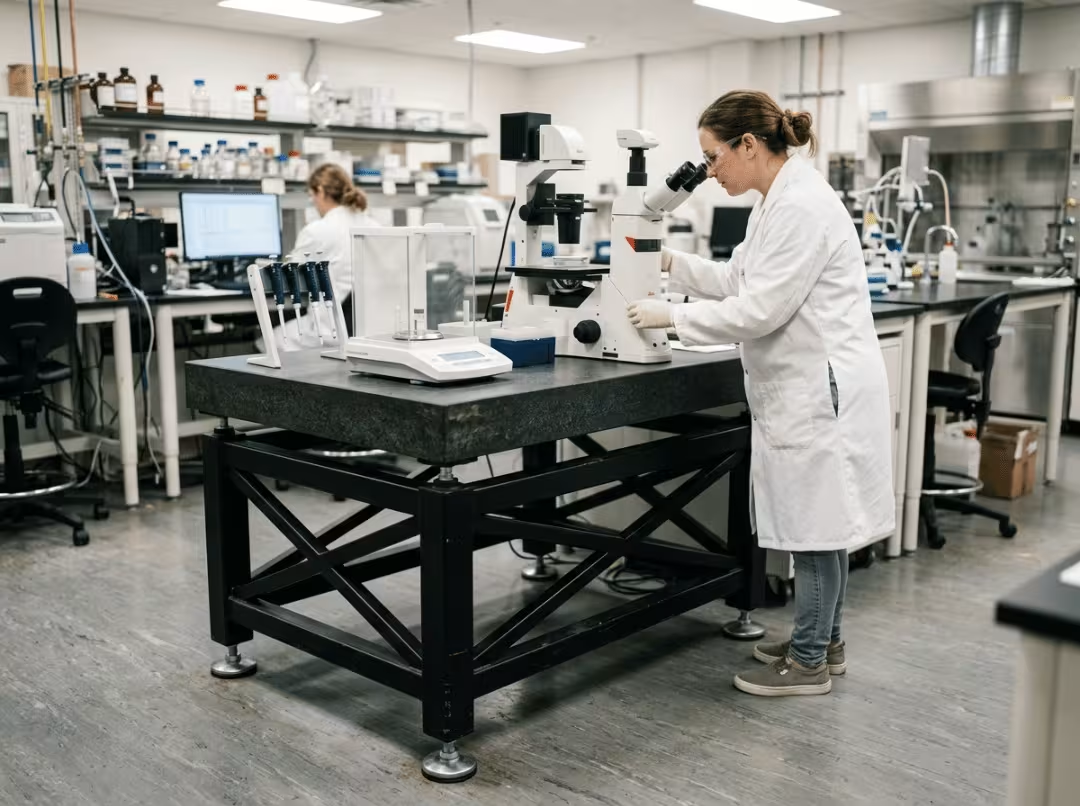
Vibration rarely announces itself as vibration. It shows up as fluorescence images that won’t stay sharp, precision balance readings that drift run to run, or metrology results that can’t be repeated. Labs spend hours re-running experiments and questioning instrument calibration before anyone looks at the bench.
Common sources include HVAC systems, foot traffic, elevators, nearby machinery, road traffic — and equipment on the same bench. Pumps and centrifuges generate vibration that couples directly into whatever sensitive instrument sits beside them. The instrument is almost never the problem. The environment usually is.
Confirm the Problem Before Buying Anything
An anti vibration table solves floor-transmitted vibration. It does not solve airborne acoustic noise. Both cause similar symptoms — unstable images, noisy readings — but they need different fixes.
A practical way to tell them apart: watch whether disturbances correlate with physical events — an elevator cycling, someone walking past, nearby equipment switching on. If readings shift in sync with movement, the problem is floor-borne. If the disturbance tracks more closely with loud sounds than physical activity, acoustic treatment is what’s needed, not an isolation table.
It’s also worth being direct: not every lab needs one. Light instruments, low-sensitivity work, and quiet ground-floor labs on solid concrete often perform fine on a standard heavy bench. Buying isolation for a problem that doesn’t exist adds cost without adding anything else.
How These Tables Actually Work
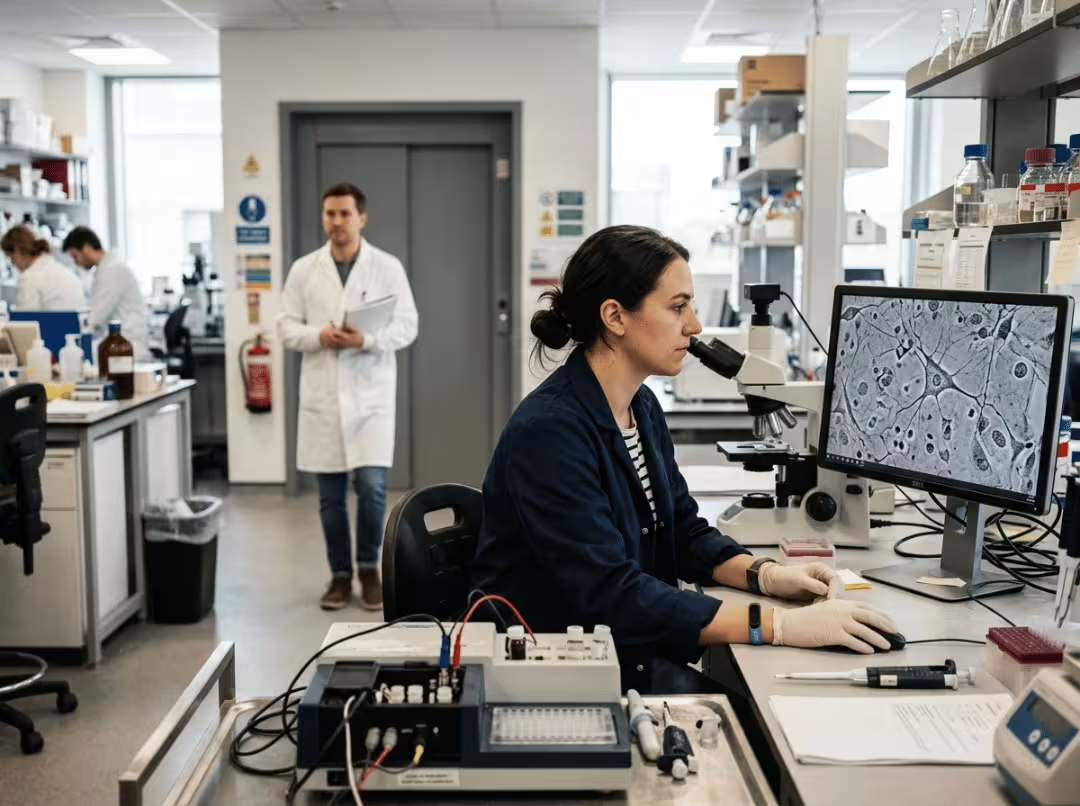
Two mechanisms matter: isolation and damping. Isolation decouples the tabletop from floor-transmitted vibration. Damping dissipates vibration already present in the tabletop so it settles quickly rather than ringing.
Most attention goes to the isolation base, but tabletop stiffness matters equally. Granite, steel honeycomb, and composite panels all resist flex under load — a stiff top stays stable while the base handles what comes from below. A soft or resonant tabletop undermines even a high-quality isolator underneath it.
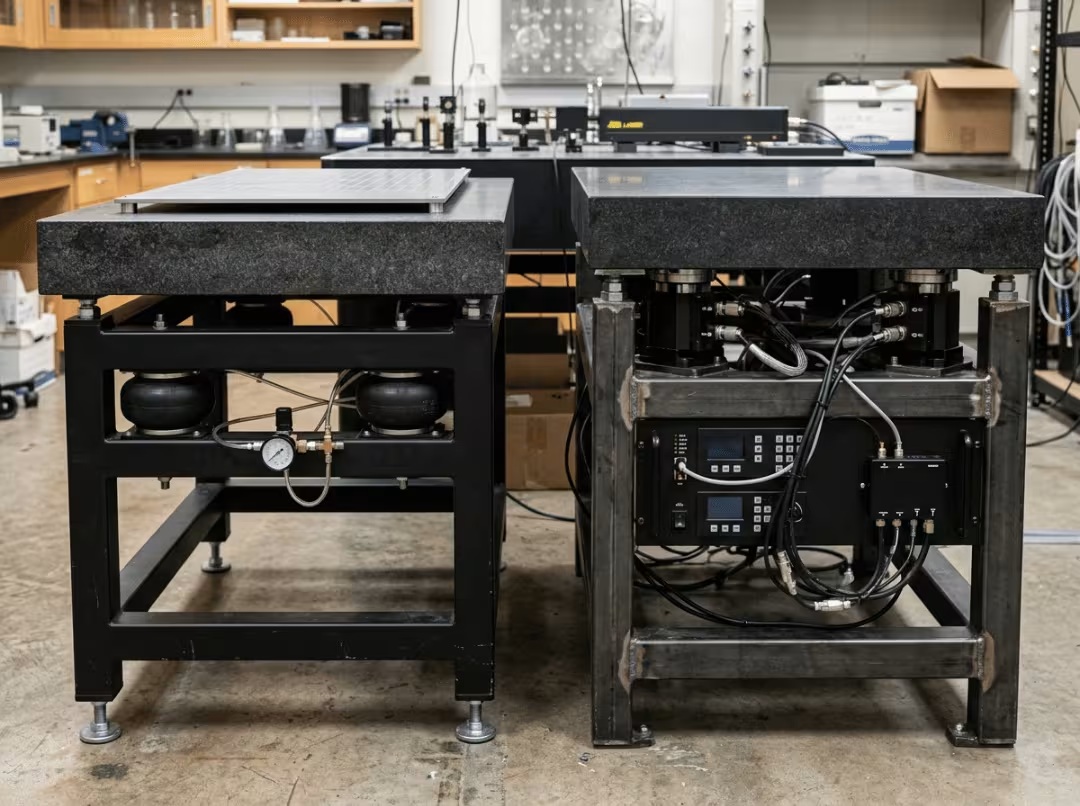
Three technology types cover most of the market: elastomer pads, pneumatic (air) isolation, and active sensor-driven systems. The choice between them is the real decision in this purchase.
Passive vs. Active: Where Most Buying Decisions Go Wrong
Passive systems — elastomer, spring, or air bladder — cost less, need no power (for elastomer and spring designs), and require minimal maintenance. They isolate mid-to-high frequency vibration effectively. Their limitation is low frequency: below roughly 5 Hz, passive systems lose effectiveness. Performance also depends on correct loading and leveling — an unloaded or unevenly loaded passive table underperforms its rated spec.
Passive tables work well for routine microscopy, general balance work, teaching labs, and facilities where the dominant vibration is mid-frequency mechanical noise. If the building is quiet and the instruments are moderately sensitive, passive isolation is almost always sufficient.
Active systems use accelerometers and actuators to cancel vibration in real time. They reach into low-frequency territory — building sway, seismic micromotion, slow structural flex — that passive systems simply can’t address. The tradeoff is cost, power consumption, and a more complex service profile.
Active isolation belongs in semiconductor inspection and lithography, scanning and transmission electron microscopy, atomic force microscopy, and nanopositioning setups. It also makes sense in facilities with genuinely poor floor conditions — suspended upper floors, buildings near rail lines or loading docks — where passive systems would be fighting a losing battle.
The common mistake runs in both directions. General labs over-buy active systems out of caution, paying for frequency compensation they’ll never need. High-sensitivity users sometimes under-buy on price, choose a passive table, and spend years chasing drift that better isolation would have eliminated from the start. The question isn’t “which is better” — it’s which one matches the actual vibration environment.
The Specs Worth Reading
Isolation efficiency is expressed as a percentage, but a single number without a frequency range is nearly meaningless. A table claiming “95% isolation” could mean 95% at 10 Hz, where most tables perform well — or something far more demanding. Always ask for efficiency across a frequency range, not just a peak figure.
Natural frequency is where the real difference between passive and active shows up. Lower natural frequency means the table begins isolating at lower frequencies. Passive pneumatic systems typically achieve natural frequencies around 1.5–3 Hz. Active systems push below 1 Hz. If primary vibration in a facility comes from building sway or low-cycle HVAC, this number determines whether a passive table solves the problem or misses it entirely.
Load capacity is routinely underestimated. The relevant load isn’t just the instrument — it’s the instrument, any mounted accessories, monitors or cameras, and the added dynamic load from leaning on the table or placing heavy samples. Isolators perform best near their rated capacity. Undersizing the load rating means the isolators operate in a degraded performance range.
Settling time is the most practical spec to verify directly. Tap the table and watch how long it takes to stop moving. Faster settling means less waiting between measurements. A table that rings for several seconds after a disturbance introduces cumulative downtime over a full day of use.
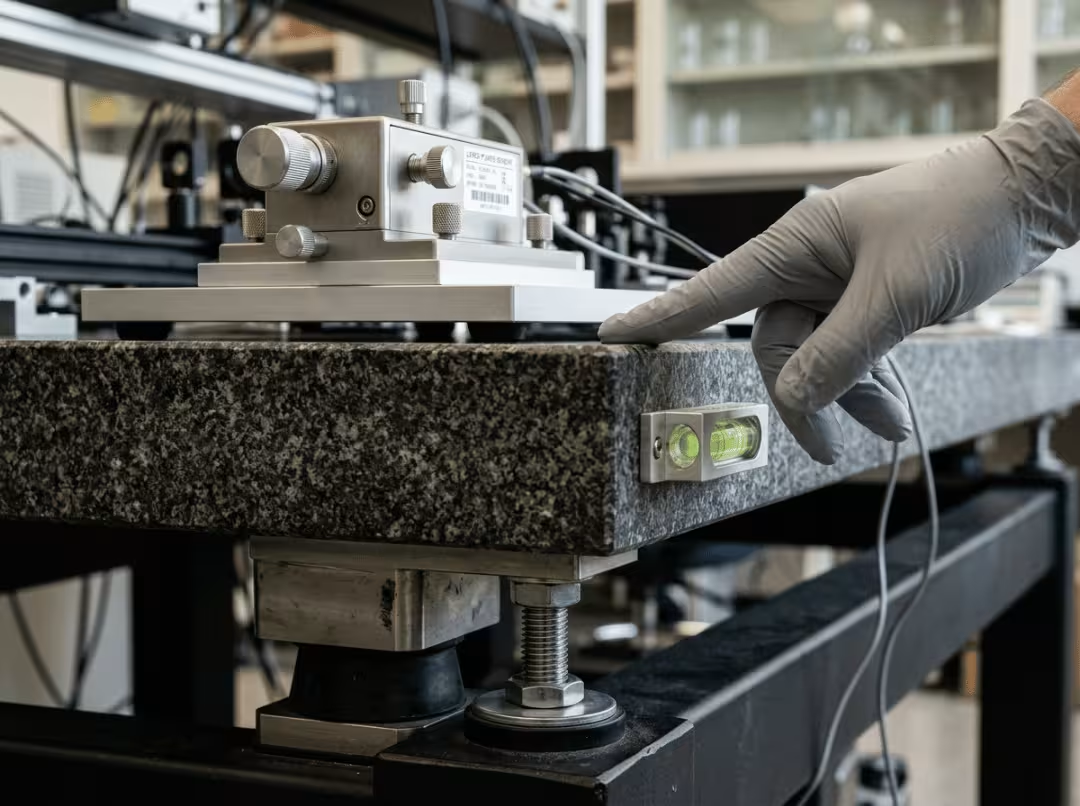
Leveling is underrated in most spec sheets. A tilted table degrades isolation performance and can introduce systematic tilt error into measurements. Precision leveling feet — not basic adjustment bolts — matter for anything running sensitive work.
Matching the Table to What’s Actually Being Measured
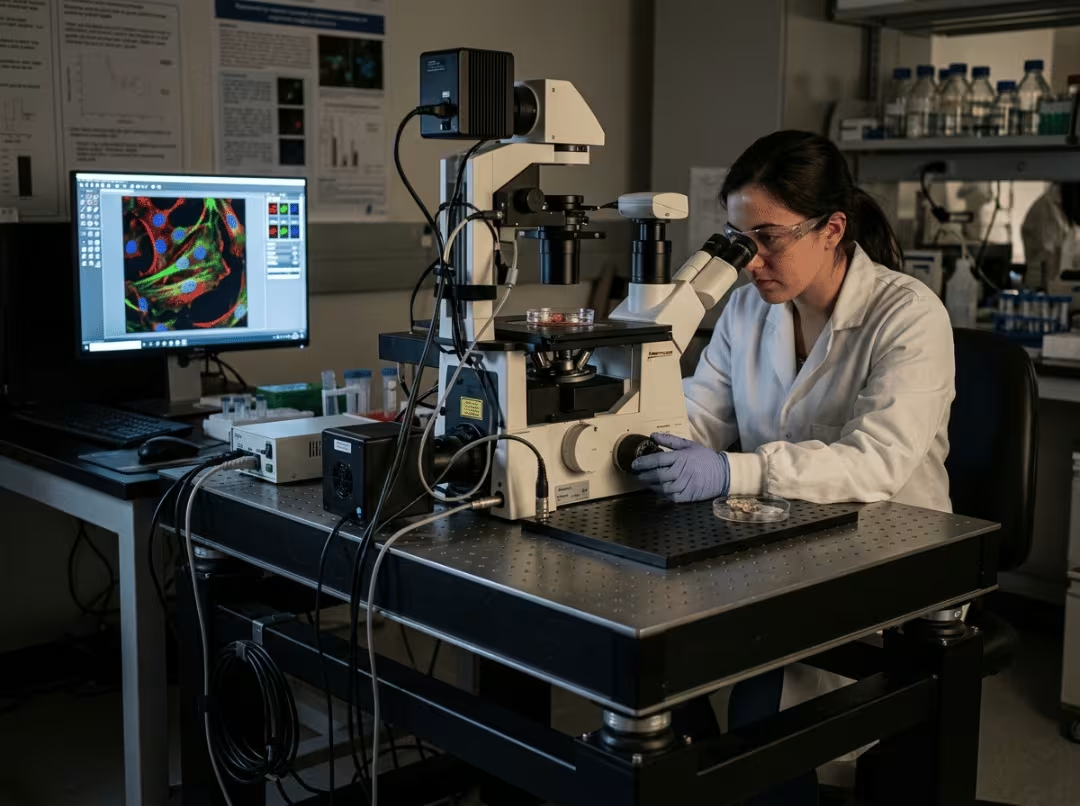
Microscopy is where most buying decisions happen, and the range within microscopy is wide. Routine brightfield work in a quiet building often runs without issue on a good heavy bench. Fluorescence, confocal, inverted, and long-exposure imaging need genuine low-frequency isolation — passive pneumatic tables handle most of these cases well. Electron microscopy is a different category: the tolerances involved typically require active isolation, and treating it like an upgraded optical microscope setup is a reliable way to underperform. For a closer look at available options, the anti vibration table range from GloryLab covers passive and marble-slab models suited to different microscopy and balance applications.
For metrology and precision measurement — profilometers, optical comparators, coordinate measuring machines — damping performance and tabletop flatness tend to matter more than peak isolation efficiency. A table that settles quickly and holds a flat, stable surface will outperform one with a strong isolation figure and a top that flexes or rings under concentrated load.
Semiconductor and micro-fabrication work operates at tolerances where active isolation is close to non-negotiable. Wafer inspection, electron-beam tools, and interferometry need more than passive isolation can reliably deliver, and cleanroom material compatibility — low outgassing, chemical resistance — is a real specification, not a secondary preference.
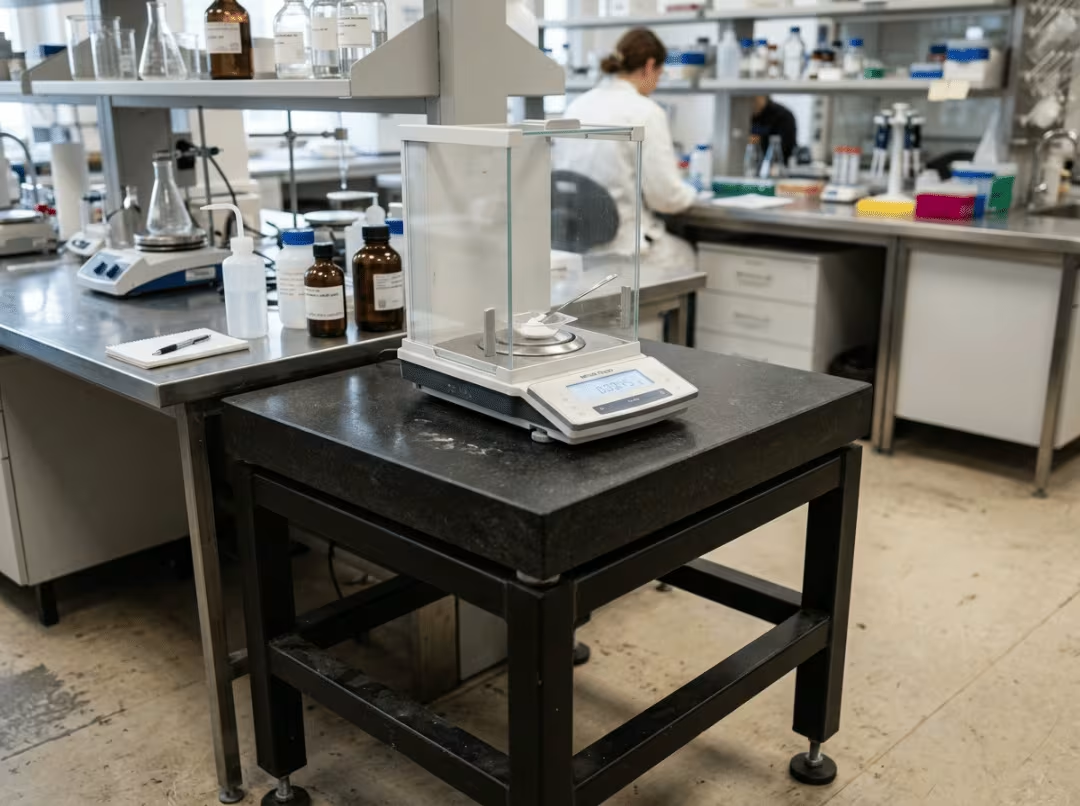
General lab use — analytical balances, routine assays, standard benchtop instruments — is the segment most prone to over-specification. A mid-range passive elastomer or pneumatic table covers nearly everything in this category. The economical anti vibration balance table (JH-BT006) is a practical example of what general lab work typically needs. The priority here is cost-efficiency, not chasing a spec sheet the application will never stress.
Cost, Placement, and Maintenance
Cost follows capability in a predictable way: passive elastomer tables occupy the low end, pneumatic systems sit in the middle, and active sensor-driven tables sit at the top. The gap between tiers is significant — active systems often cost three to five times more than a comparable passive pneumatic setup.
Placement affects performance more than most buyers expect. Concrete slab-on-grade floors transmit far less vibration than suspended wood-frame or upper-story floors. Positioning a table near HVAC vents, frequently opened doors, or heavy-traffic corridors degrades performance regardless of isolation quality. A well-placed passive table will often outperform a high-spec active table sited poorly. Evaluate the location before evaluating the product.
Maintenance is genuinely minimal for passive tables — occasional air pressure checks and releveling for pneumatic systems, almost nothing for elastomer. Active systems need periodic sensor calibration and firmware review to keep compensation current. Ask manufacturers about service contract terms and parts lead times before purchasing.
FAQs
Do I need an anti vibration table for a microscope, or is a heavy bench enough?
It depends on the technique and the environment. Brightfield microscopy in a quiet, ground-floor lab often works fine without one. Fluorescence, confocal, long-exposure, and electron microscopy almost always benefit from a dedicated isolation table — and electron microscopy often requires active isolation specifically.
What’s the practical difference between passive and active isolation?
Passive systems absorb vibration through materials and cost less, but they lose effectiveness below about 5 Hz. Active systems cancel vibration in real time using sensors and actuators, handling low-frequency building sway that passive systems can’t reach — at higher cost and with more involved service.
How do I tell if my problem is floor vibration or airborne noise?
Correlate the disturbance with physical events — elevators, foot traffic, nearby equipment switching on. Floor-transmitted vibration tracks with movement. Acoustic noise doesn’t. An isolation table only addresses the first.
How much load capacity do I actually need?
Add up the instrument weight, all accessories and peripherals, and a reasonable estimate of dynamic load from regular use. Isolators perform best near rated capacity — undersizing the rating degrades their performance.
Are anti vibration tables cleanroom-compatible?
Many are designed for cleanroom use, but not all standard models qualify. Low-outgassing materials and approved surface finishes must be specified and confirmed with the manufacturer before purchase.
Does floor type affect which table to buy?
Yes, significantly. A concrete slab transmits far less vibration than a suspended floor. Labs on upper floors or in older buildings often need a higher isolation tier than the same work would require on a ground-floor slab.
Making the Call
Three questions resolve most anti vibration table decisions: What am I measuring? What does my floor and facility environment actually look like? What’s my real budget over the table’s working life — not just the purchase price?
The order matters. Confirm the vibration source first. Then decide on passive or active based on the frequency range of the problem, not the price. Then look at specs. Reversed, that process leads to over-specified tables in the wrong locations, or under-specified tables fighting conditions they were never rated for.
The right table is the one that solves the actual vibration problem in that specific lab. That’s almost never the most expensive option — and it’s never the one chosen out of caution rather than diagnosis. If you’re building out or rethinking a lab space more broadly, GloryLab’s laboratory furniture range covers the full setup from benches to storage to worktops.