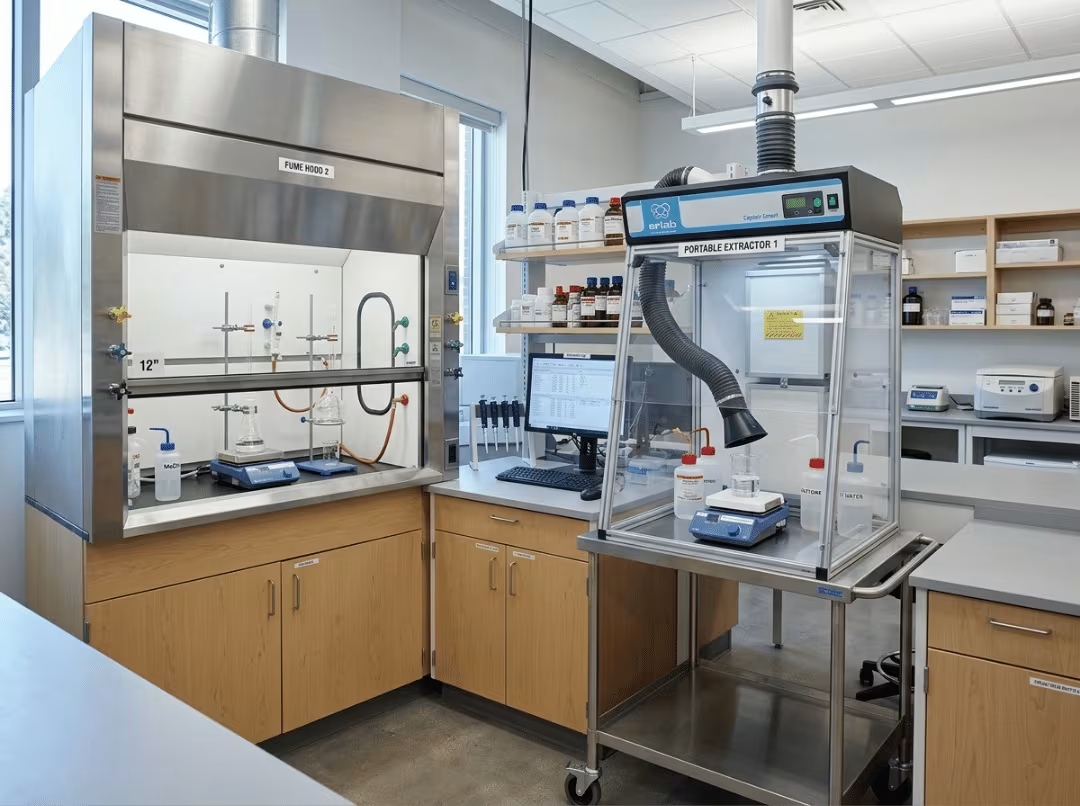
Acid digestion destroys standard fume hoods within months — not years. That’s not a maintenance issue; it’s a containment failure, and it happens because “fume hood” gets treated as a single interchangeable spec on a purchase order. It isn’t. A hood built for general solvent work and one built for daily nitric, hydrofluoric, or perchloric acid digestion are different products. Buying the wrong one doesn’t just mean an early replacement — it means vapor leaks that go undetected until the coating has already failed and staff have already been exposed.
This guide is a buying framework for lab managers, EHS officers, and procurement teams specifying a hood for recurring acid digestion work. It covers why standard hoods fail, how to build an acid list before opening a catalog, how to match materials to your actual chemistry, when ducted exhaust is non-negotiable, and what documentation to demand before signing off.
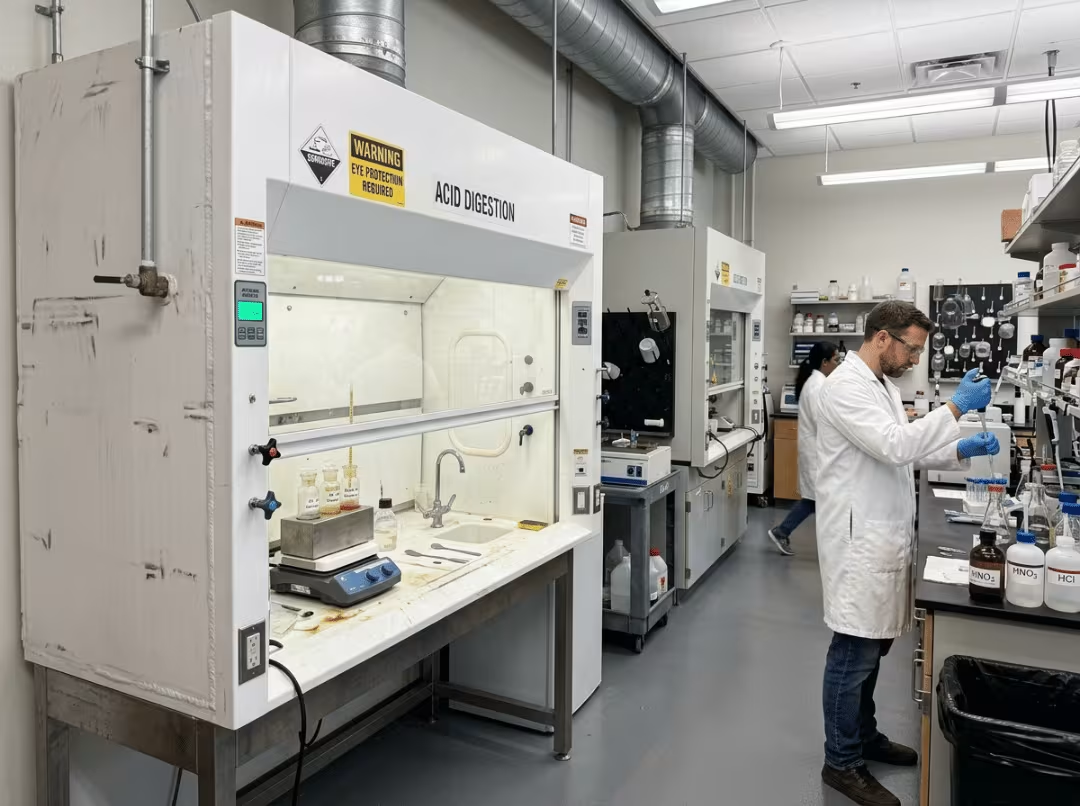
Why a Standard Fume Hood Fails in Acid Digestion Service
A general-purpose fume hood is designed for splashes and intermittent chemical exposure. Acid digestion produces something different: sustained, low-level acid vapor generated hour after hour across repeated runs. That’s what coated steel is not built to handle.
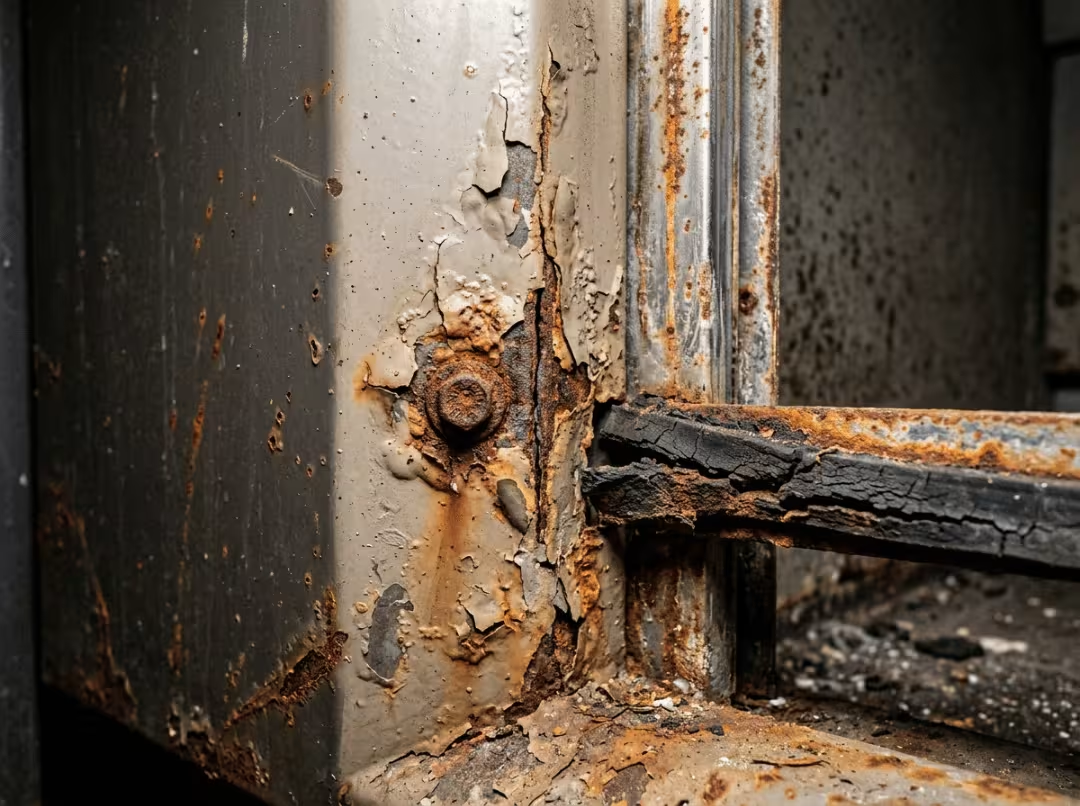
The failure isn’t dramatic. Acid vapor finds the thinnest point in the coating — a seam, a fastener head, a spot where the epoxy was applied unevenly — and breaches it. From there, corrosion spreads under the coating, lifting more of it as it goes. Seals degrade in parallel. Containment declines slowly and invisibly until the symptoms are obvious: rust bleeding through paint, a sash that no longer seats cleanly, pinholes in the baffle. By the time the damage shows, the hood has been leaking for months.
In practice, a lab running daily ICP-MS or AAS digestion on a standard steel hood typically sees visible corrosion and seal failure within 6 to 12 months. That’s not a defect — it’s the predictable lifespan of coated steel under sustained acid vapor. The hood was never rated for the job.
The labs most exposed to this risk are predictable: environmental testing labs running EPA Method 3050B or 3051 digestions daily, metallurgical and geological labs processing ore and mineral samples in hot concentrated acid mixtures, and food and agricultural testing labs running trace metal sample prep at volume. If digestion is a weekly or daily workflow, a standard hood isn’t a budget option — it’s the wrong product category.
For any lab running regular acid digestion, a purpose-built acid-resistant fume hood is the minimum specification, not an optional upgrade.
Start With the Acid List, Not the Hood Catalog
The most common mistake in specifying an acid digestion fume hood is choosing a model before documenting exactly which acids will run through it. That sequence is backward. The acid list determines material compatibility, exhaust strategy, and — in the case of perchloric acid — the entire ducting design. Start there.
Which acids are actually in your process?
Name every acid the hood will handle: nitric, hydrochloric, sulfuric, hydrofluoric, perchloric, or multi-acid combinations used in sequential or mixed digestion protocols. They carry different risks. Nitric and hydrochloric are manageable with the right materials. Hydrofluoric acid attacks glass and most stainless steel grades, eliminating options some buyers assume are safe. Perchloric acid introduces an explosive hazard — hot perchloric vapor can form shock-sensitive perchlorate crystals inside ductwork — that changes the entire exhaust design regardless of corrosion considerations.
Frequency, temperature, and volume change the spec
Two labs running the same acid can require completely different hoods depending on usage patterns. Occasional, room-temperature, low-volume digestion puts far less stress on a hood than daily, high-temperature, high-volume runs. Heat accelerates both vapor generation and material corrosion simultaneously. A hood that holds up fine under infrequent cold digestions can fail quickly under sustained hot-plate use of the same acid. Volume and run frequency also affect exhaust sizing — more mist per hour means material and airflow specs both need to scale.
Design for the worst case, not the average case
Specify for the harshest acid, the highest concentration, and the heaviest use case your lab will actually see. A hood rated for a typical Tuesday will fail the day someone runs a hotter or more concentrated digestion. Build the spec around the worst day, and every other day is covered by default.
How to Match Materials to the Actual Acid Work
Once the acid list is defined, material selection becomes a matching exercise rather than a cost comparison. Every material decision should be driven by the specific acids in your process — not by a general spec sheet.
When polypropylene is the right call
For high-frequency, strong-acid, or mixed-acid digestion — which describes most environmental, metallurgical, and food testing labs running this work daily — polypropylene (PP) is the correct default. PP’s advantage is structural: the material itself resists acid rather than relying on a surface coating to protect something more vulnerable underneath. There is no coating to breach. The resistance goes through the material.
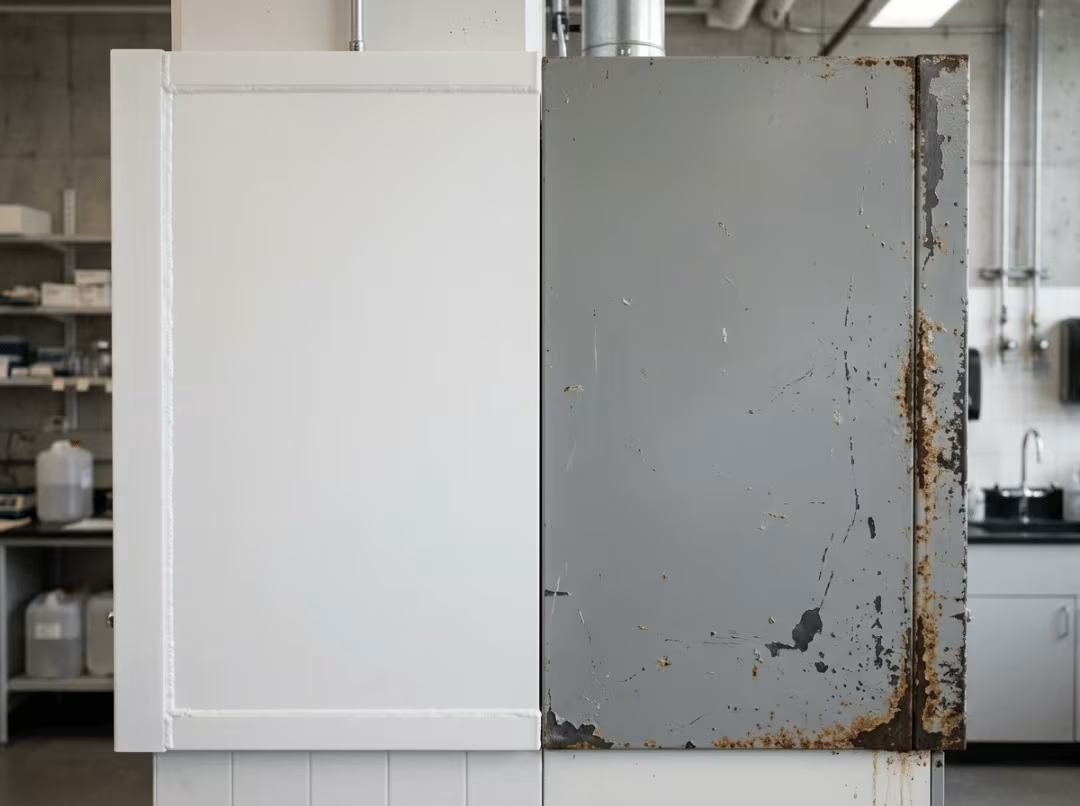
Welded PP construction extends this advantage by eliminating seam and fastener points where corrosion typically starts. Mechanical joints — bolted or riveted panels — create localized vulnerabilities that are hard to seal uniformly and that become failure points over time. A properly welded PP hood removes most of those weak points by design, not by maintenance.
Where coated steel still makes sense — and where it doesn’t
Coated steel has a legitimate role, but a narrow one: light, infrequent, low-concentration acid exposure where the hood won’t see sustained vapor across its working life. It is not a budget substitute for a purpose-built acid-resistant hood when digestion is routine. Buyers who choose coated steel on price for regular acid digestion aren’t saving money — they’re front-loading the cost of a replacement hood.
Where stainless steel fits — and where it doesn’t
Stainless steel (304 or 316) is routinely marketed as universally corrosion-proof. It isn’t. Hydrofluoric acid attacks stainless steel. Hot hydrochloric acid attacks it too, at concentrations and temperatures common in acid digestion work. Stainless may be appropriate for many general lab environments, but if your acid list includes HF or sustained hot HCl, the stainless steel designation on the spec sheet does not protect you. Match materials to the specific acids on your list — not to a material’s general reputation.
The components buyers consistently overlook
Material selection typically focuses on the hood shell and stops there. It shouldn’t. The sash, baffles, work surface, hardware, hinges, gaskets, and seals are all vapor-exposed or wetted surfaces — and many are tucked out of sight during a spec review. The rule is direct: a hood’s acid resistance equals its weakest component. A PP shell paired with standard steel fasteners or a sash frame not specified for acid service is not a PP-rated hood. It’s a hood that will fail at whichever component was under-specified.
Before approving any model, ask the manufacturer to document the material of every component: sash track, hardware, work surface, liner, and the areas behind removable panels where acid mist accumulates and is rarely cleaned. Labs exploring the full scope of acid-resistant options can review GloryLab’s laboratory furniture range as a reference point for what purpose-built configurations look like across different lab types.
Ducted vs. Ductless: Make This Decision Before You Look at Models
Why ducted is the default
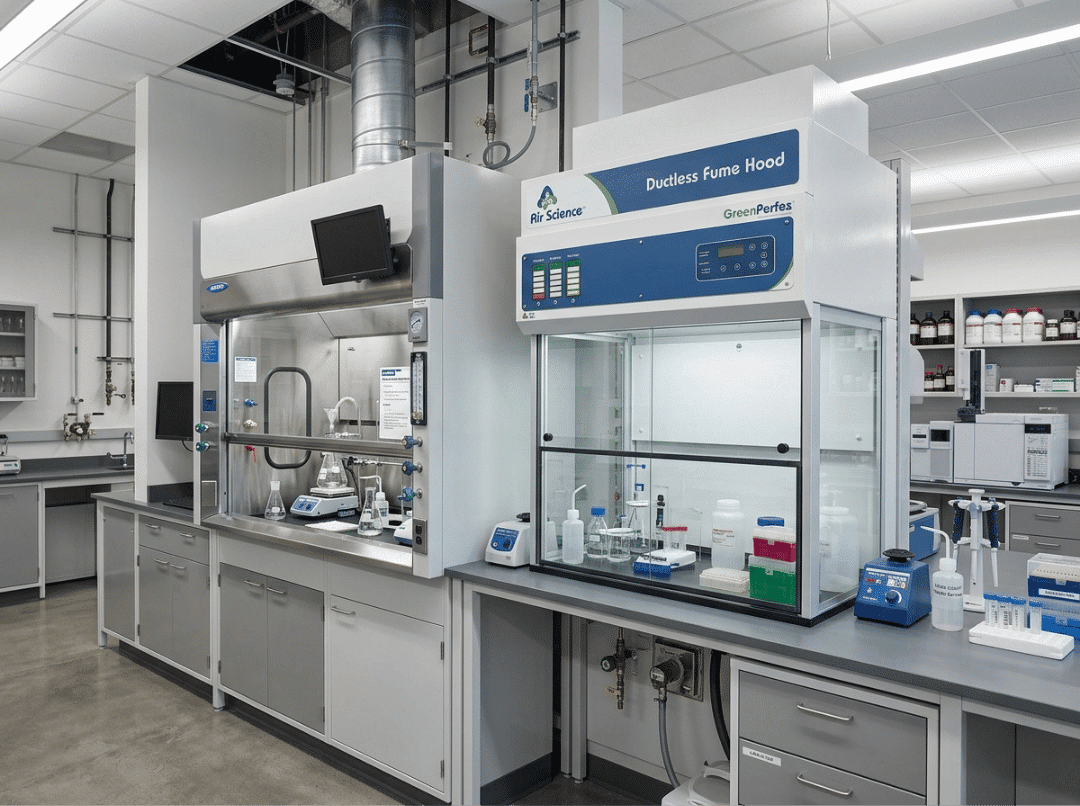
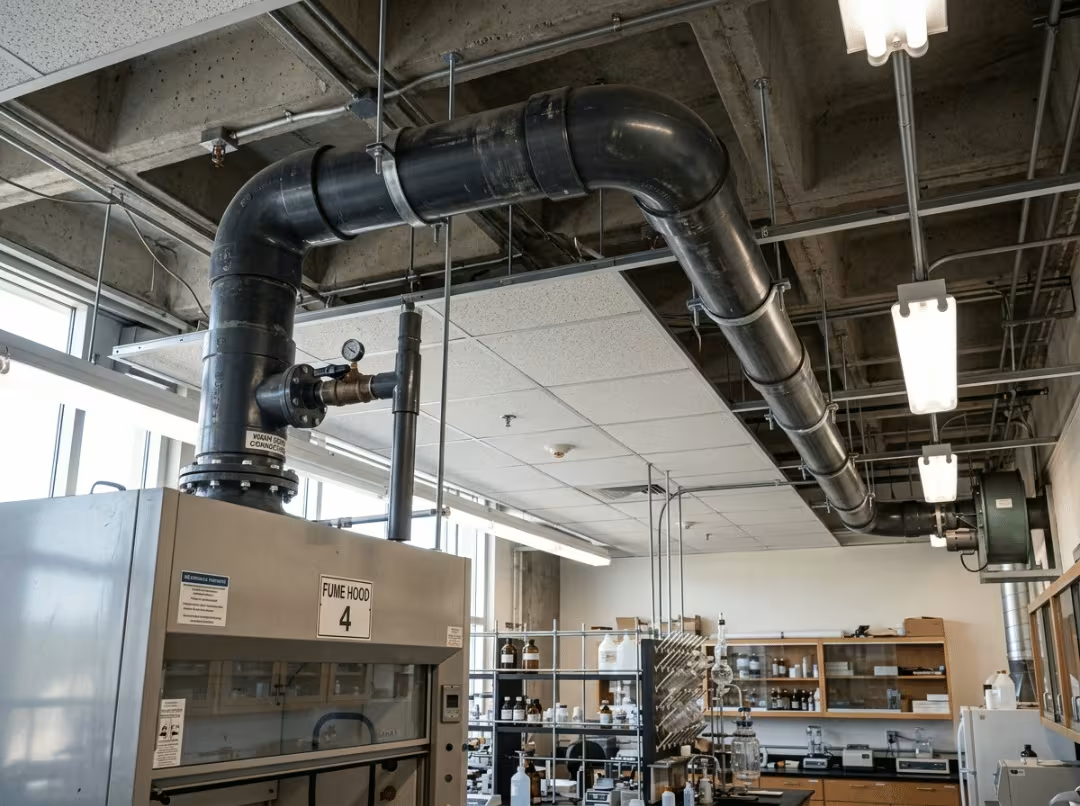
Acid digestion produces sustained acid mist and real heat load. Ducted exhaust — which moves contaminated air outside the building through a dedicated path — handles both reliably. Ductless systems filter and recirculate room air through chemical filtration media, but that media degrades under sustained acid vapor exposure at a rate that isn’t always predictable or visually obvious. For labs running recurring acid digestion, relying on filtration media to maintain containment introduces uncertainty that a ducted system avoids. Treat ducted as the default and evaluate ductless only when there’s a specific reason it’s necessary.
When ductless may be acceptable
Ductless containment is defensible under a narrow set of conditions: low-frequency use, low acid concentration, a single acid type rather than mixed protocols, and a facility where ducting isn’t physically feasible. Even then, it should be justified on its own merits for the specific application — not chosen as a cost default. If your lab runs digestion more than occasionally, or works with more than one acid type, ductless is almost certainly the wrong choice regardless of what the upfront cost comparison looks like.
Perchloric acid is a separate category
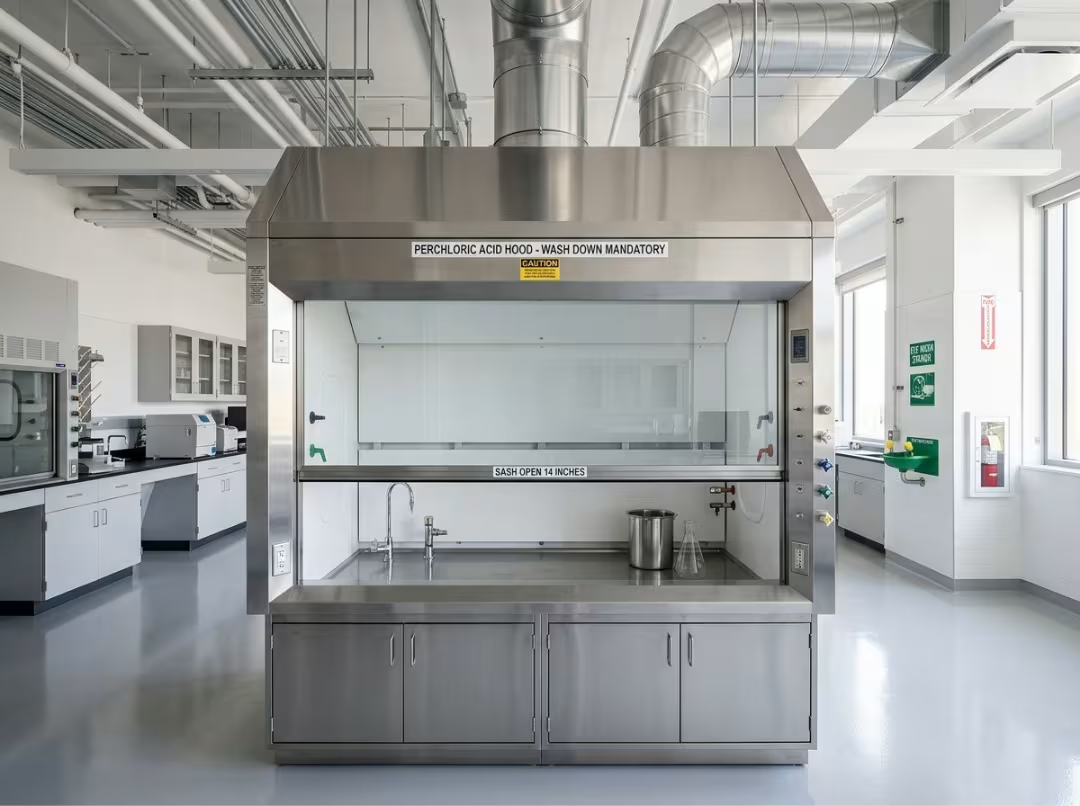
Perchloric acid doesn’t just require better corrosion resistance — it requires a completely different ducting approach. Hot perchloric vapor can form explosive perchlorate crystals inside standard ductwork, and those crystals are shock-sensitive. Any hood used for perchloric acid digestion requires a dedicated exhaust duct designed for periodic wash-down to flush crystal accumulation before it becomes a hazard. This is not a flexibility point. If perchloric acid is on your acid list, the ducting specification is decided before you evaluate anything else.
When to add a scrubber
Wet scrubbers become necessary when local air permitting rules require treatment of acid mist before discharge, or when overall digestion volume is high enough that untreated exhaust exceeds permitted concentrations. This decision belongs in the initial system design — not as a retrofit after the hood and ductwork are already installed.
Choose the Hood Format and Size Around the Actual Process
Benchtop, floor-mounted, or walk-in?
Benchtop hoods cover most routine single-user digestion setups. Floor-mounted hoods are the right format when equipment is too large or heavy for a bench surface — larger digestion blocks, heavier apparatus, or setups requiring more physical stability. Walk-in hoods serve high-throughput, multi-user, or large-apparatus setups where standard sash access isn’t sufficient.
Size for the setup, not the operator
The most common sizing mistake is measuring the hood against operator reach rather than the full digestion setup. The digestion block, hot plate, sample vessels, and service clearance all need to fit inside the hood with real margin — not just the operator’s arms. An undersized hood forces operators to work too close to the sash, which undermines containment regardless of how well the hood is specified on paper.
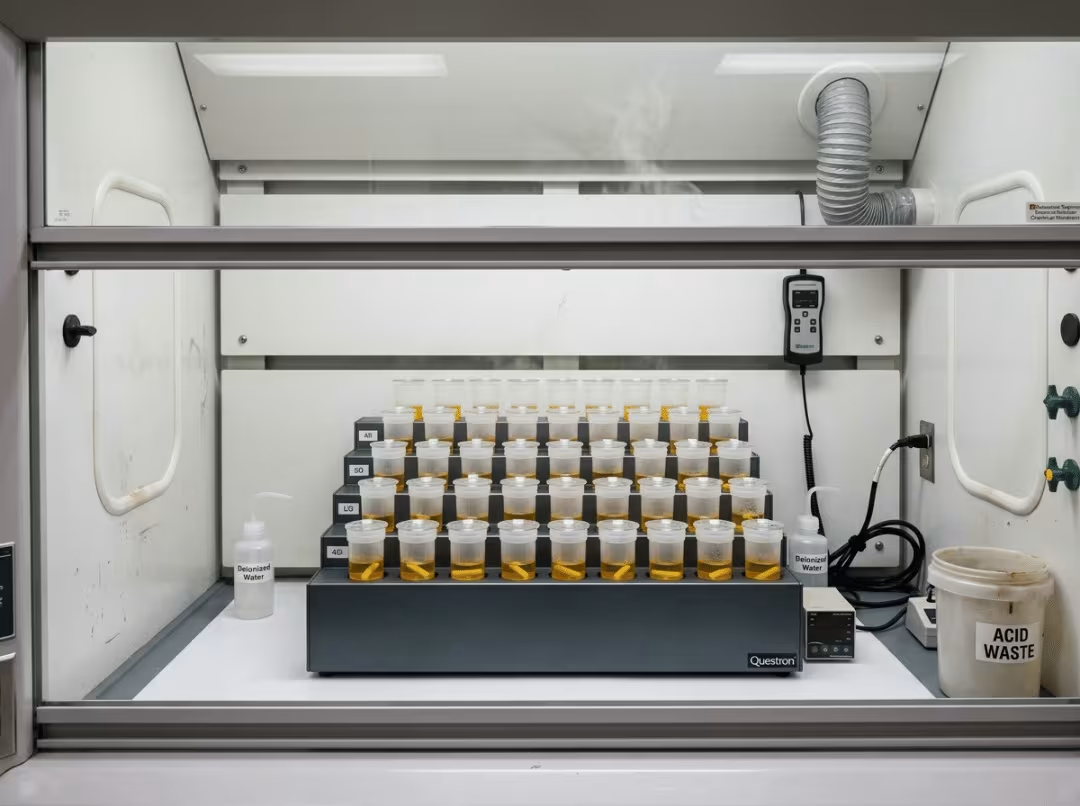
Placement affects containment
A correctly specified hood placed badly still underperforms. Positioning a hood near a frequently opened door, directly under a supply air diffuser, or in a high-traffic corridor introduces air currents that disrupt face velocity stability. Containment depends on the room’s airflow behavior, not just the hood’s exhaust rating.
The Safety Features That Actually Matter
Airflow monitoring is the highest-value investment
Continuous real-time airflow monitoring with audible and visual alarms catches performance drift that no commissioning test can predict. A one-time commissioning test confirms the hood was performing on day one — it says nothing about face velocity six months later after duct fouling or fan wear. Continuous monitoring closes that gap. It is the single feature most directly tied to ongoing containment reliability, and the one most often treated as optional.
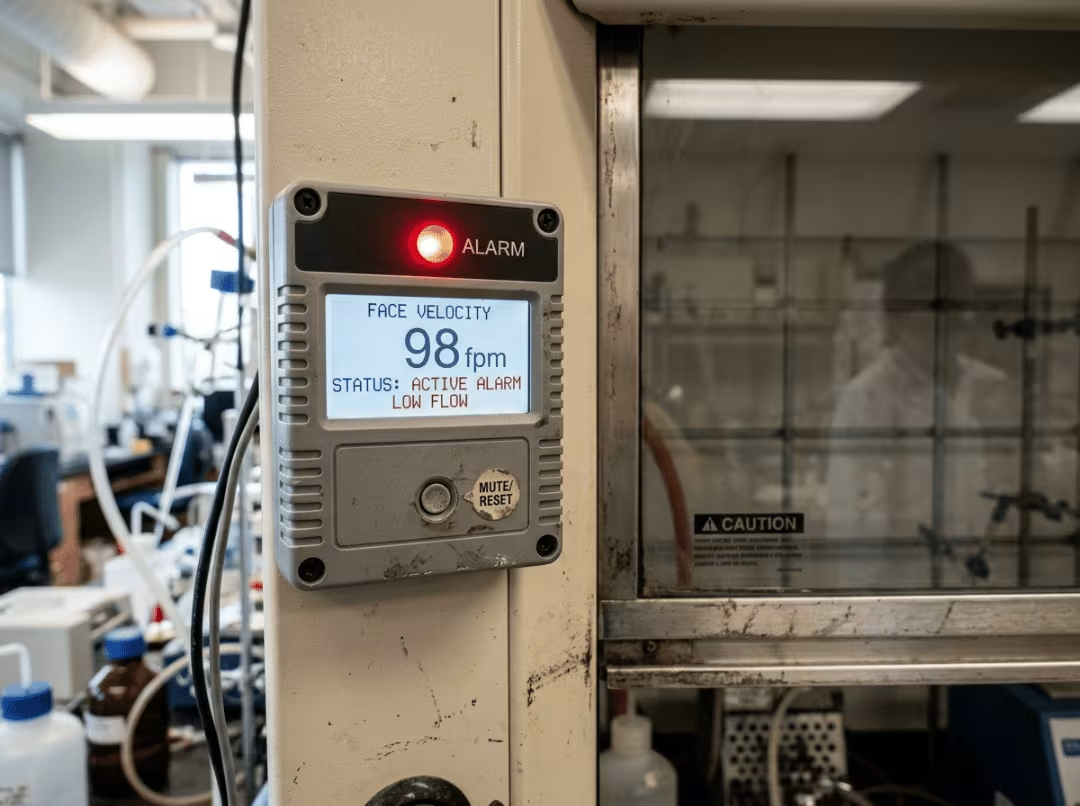
Sash control, spill containment, and corrosion-rated electrics
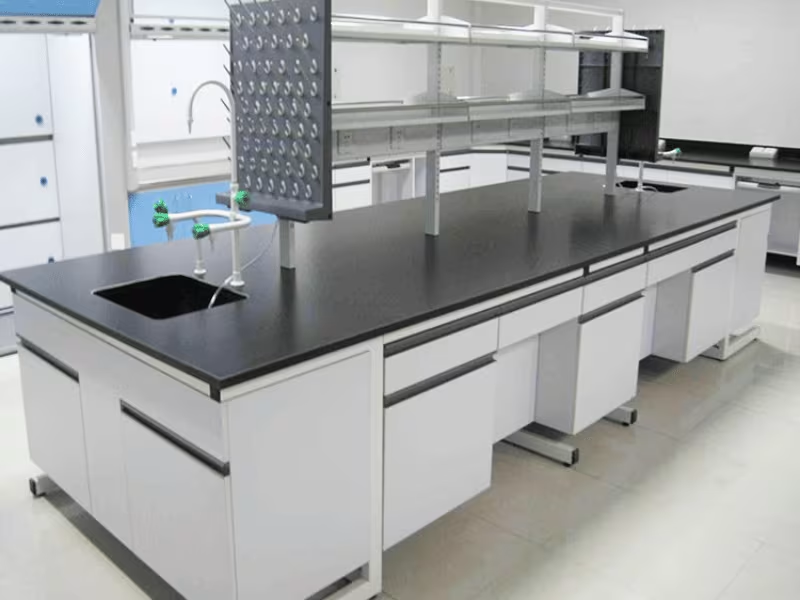
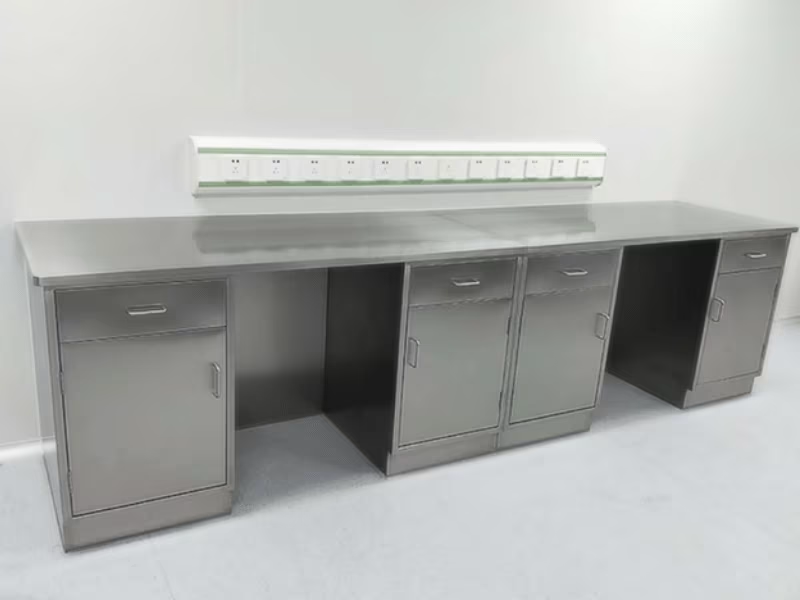
Sash stops prevent operators from working with the sash raised beyond the design position, maintaining face velocity regardless of individual habits. Integrated spill lips, cup sinks, and chemical-resistant work surfaces contain spills at the point of occurrence rather than letting them spread to unprotected surfaces below. Wherever perchloric acid or other reactive acids are in use, explosion-proof and corrosion-rated electrical fittings inside the hood are a requirement — not an upgrade tier. Labs specifying acid-resistant lab countertops and worktops alongside the hood can reinforce spill containment at the work surface level, which is often the first place acid makes contact.
What to Verify Before You Approve a Model
Request a model-specific ASHRAE 110 containment test report — not a general product-line certification. Confirm applicability against ANSI Z9.5, NFPA 45 (particularly for perchloric acid work), and OSHA general lab safety requirements. Require documented material compatibility data matched specifically to the acids on your list, not a generic resistance chart. Ask what field verification looks like after installation, and verify spare parts and service availability before committing to a model with a limited support path.
A supplier that produces third-party test documentation on a specific model signals a different level of quality control than one who can only provide catalog claims. That distinction is worth verifying directly, not assuming.
Installation, Maintenance, and Real Cost
Ventilation design is part of the spec
A correctly built hood can still underperform if the exhaust system around it is wrong. Duct run length, bend count, fan sizing, and makeup air supply all affect whether the hood achieves the face velocity it was rated for. A spec review that covers only the hood body — not the ductwork and fan selection — is incomplete.
The right material wins on total cost
Coated steel looks cheaper on the initial quote. It often isn’t, once you account for early failure within the first year or two, the downtime during replacement, and the cost of the replacement itself. A correctly specified PP or lined hood carries a higher upfront price and a meaningfully longer service life. That comparison typically resolves in favor of the higher-spec option when total lifecycle cost is the basis for comparison.
FAQs
Can a standard chemical fume hood be used for acid digestion?
Only for very occasional, low-concentration acid use. For regular digestion — weekly or daily — a coated steel hood typically shows corrosion and seal failure within 6 to 12 months. It is not rated for sustained acid vapor exposure.
Is polypropylene always the best material for an acid digestion fume hood?
It’s the safest default for high-frequency, strong-acid, or mixed-acid workloads because the material itself provides the corrosion resistance rather than a surface coating. For very light, infrequent, single-acid use, coated steel may be acceptable — but PP removes the guesswork of matching sub-components to a specific acid list.
What is the difference between a ducted and a ductless acid digestion fume hood?
A ducted hood exhausts contaminated air outside the building through a fixed duct path. A ductless hood filters and recirculates room air through chemical filtration media. Ducted is the default for regular acid digestion; ductless is only defensible for low-frequency, low-concentration, single-acid situations where building ducting isn’t feasible.
Does perchloric acid require a special hood?
Yes. Perchloric acid requires a dedicated washable duct system with wash-down capability to prevent explosive perchlorate crystal accumulation. This is a fixed requirement, not a design preference.
Can an existing hood be converted for acid digestion use?
Rarely, and it depends entirely on the base material and construction. A coated steel hood can’t be meaningfully retrofitted for reliable acid resistance — the corrosion risk is in the substrate, not the finish. A hood already built in PP or a fully acid-resistant liner may be adaptable on other components, but exhaust configuration and safety features still need verification against the specific acid list.
What test reports should I ask for before buying?
A model-specific ASHRAE 110 containment test report, compliance confirmation against ANSI Z9.5 and NFPA 45, and documented material compatibility data matched to your actual acid list. Third-party documentation on a specific model — not a product line — is the standard worth holding to.
A Direct Decision Framework
Specifying an acid digestion fume hood follows a clear sequence: define the acid list first, including every acid and combination the hood will see. Match all materials — shell, liner, sash, hardware, gaskets — to the worst-case acid on that list, not the most common one. Default to ducted exhaust and treat ductless as an exception requiring specific justification. Size the hood around the full digestion apparatus, not operator reach. Require real-time airflow monitoring as a baseline, not an optional add-on. Verify everything with model-specific third-party test documentation before approving the purchase.
The hood body is only half the system. The exhaust path — duct configuration, fan sizing, makeup air — determines whether the hood performs the way its test report says it should. A well-specified hood connected to an undersized or poorly routed duct system will still fall short in the field. For labs planning a broader lab fit-out alongside fume hood selection, GloryLab’s laboratory furniture range covers benches, casework, and worktops designed for chemical lab environments.