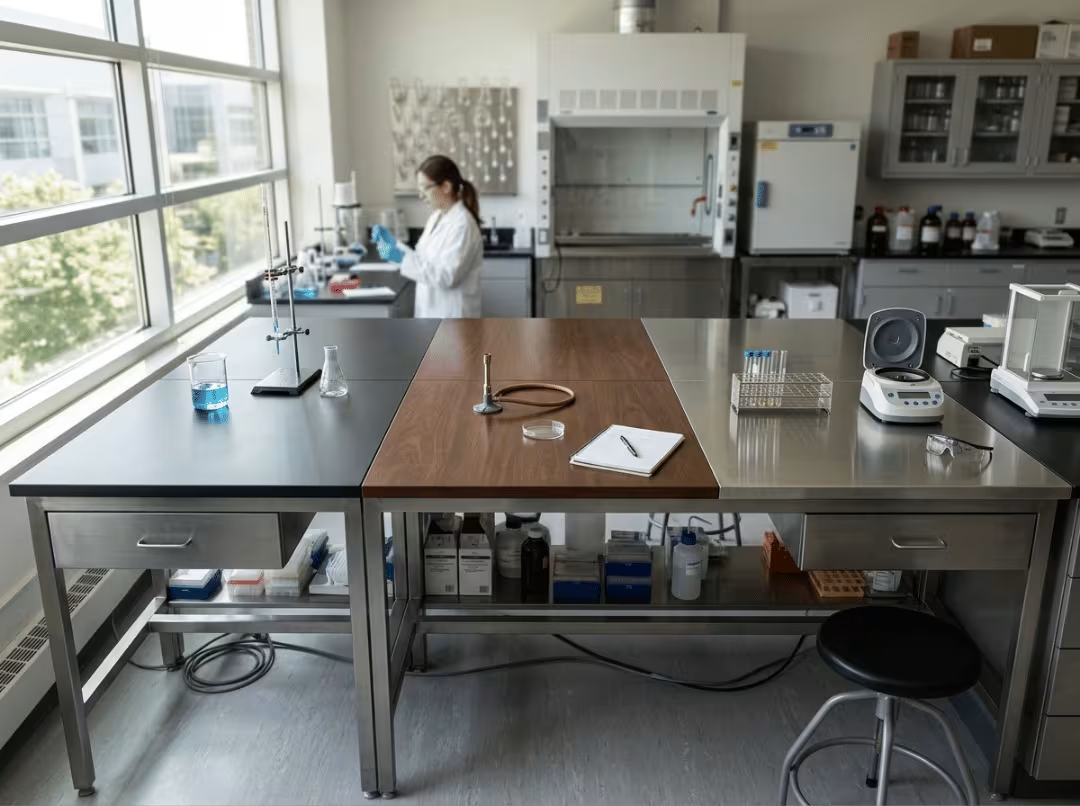
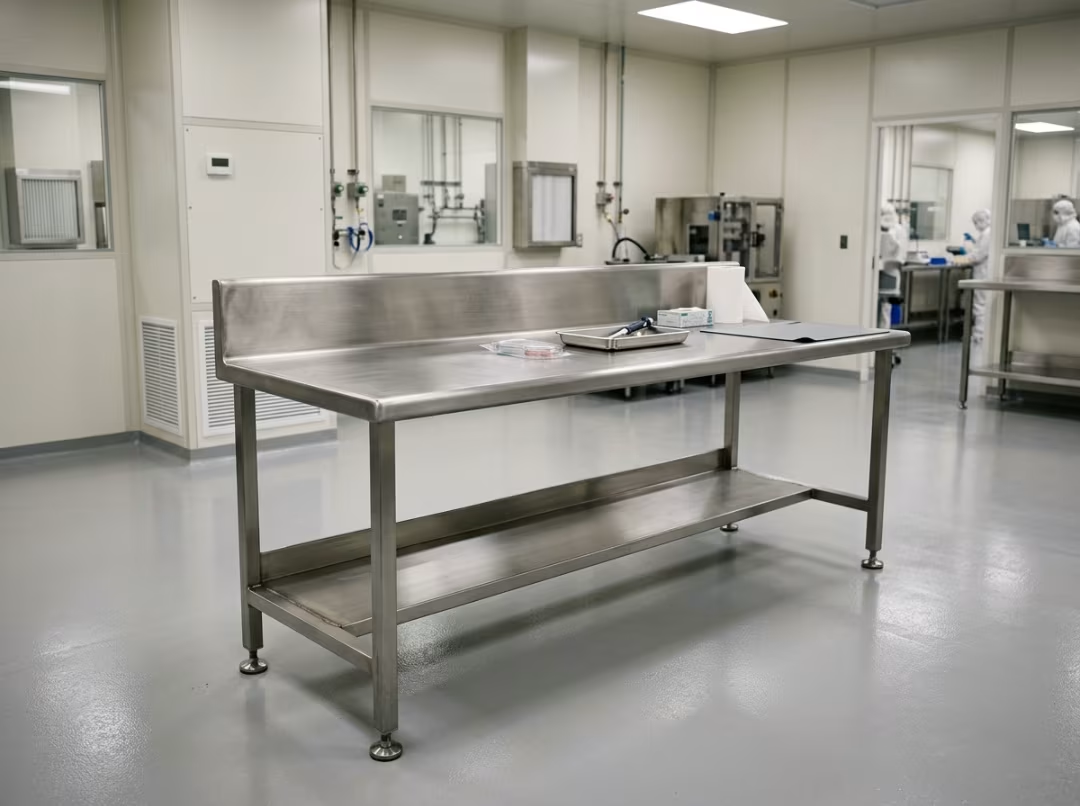
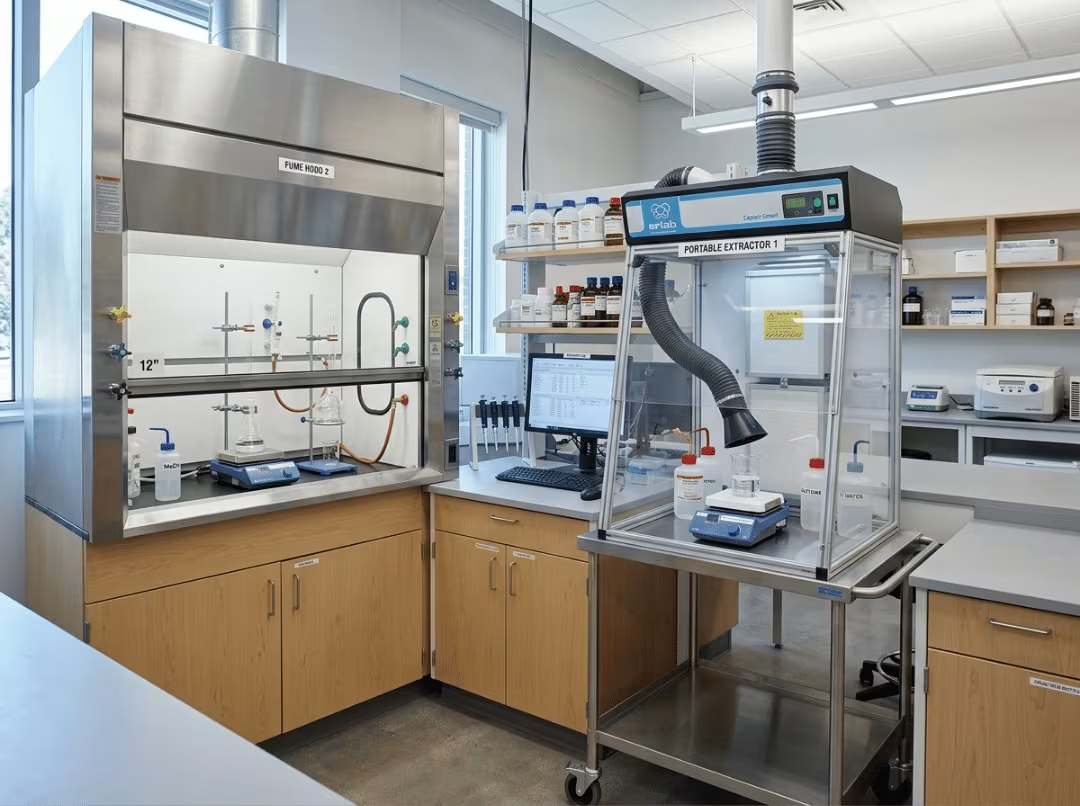
Choosing the wrong lab workstation often leads to workflow inefficiencies, storage limitations, or expensive replacements within a few years. Lab workstations are more than just furniture—they’re operational systems that directly impact productivity and functionality through their layout, structure, storage, and surfaces.
This guide is designed to help lab managers and facility planners make informed decisions by addressing the seven critical factors of workstation selection. From mapping workflow and space constraints to deciding between modular and fixed setups, each section equips you with the tools to choose workstations that meet your lab’s specific needs efficiently and effectively.

Assessing Lab Workflow and Space Constraints
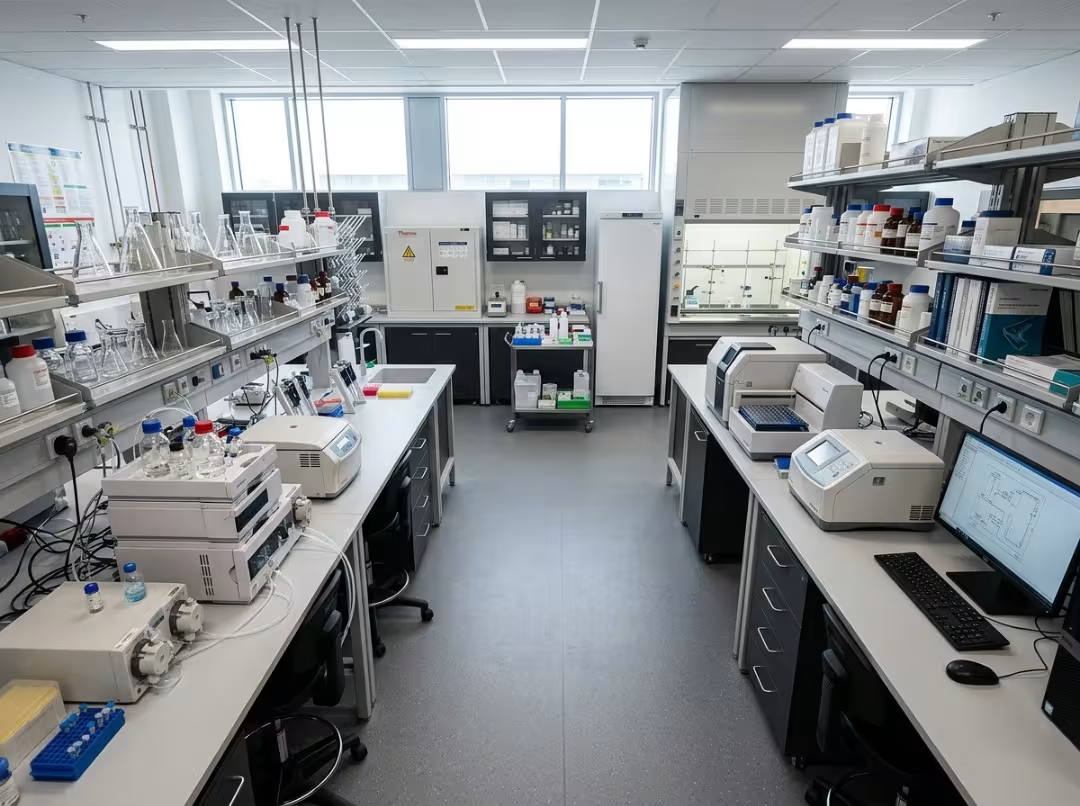
Effective workstation planning begins with understanding your lab’s workflow — how samples move, equipment is positioned, and technicians navigate the room — rather than simply measuring dimensions. For example, in a clinical lab, technicians handling blood samples might require streamlined movement between centrifuges, analyzers, and storage units. Without careful workflow mapping, equipment placement could create unnecessary backtracking, delaying results processing. Similarly, in a pharmaceutical R&D lab, improper alignment between chemical storage, fume hoods, and bench work can increase the risk of contamination or workflow interruptions.
Workflow mapping reveals these spatial dependencies and ensures every station fits operational needs, not just physical constraints. Dimensions tell you what fits; workflow shows what works.
Once workflow is mapped, spatial constraints become the boundaries you design within: aisle clearance for ADA and egress compliance, bench depth relative to equipment footprint, and utility drops for gas, vacuum, and power that act as fixed anchor points you can’t move later.
Consider an analytical lab that outgrew its bench layout within 18 months. The original design accommodated existing instruments, but two new analyzers added mid-cycle needed dedicated utility access the original layout never planned for. Technicians ended up routing samples across the room to reach the only bench with a compatible gas line. A short workflow-mapping exercise upfront, paired with realistic assumptions about equipment growth, would have avoided the redesign entirely. For a deeper walkthrough of this process, see our lab space planning guide (link).
Choosing Between Modular vs. Fixed Lab Workstations
Modular lab workstations are built with freestanding frames and interchangeable components, allowing them to be reconfigured, relocated, or expanded without the need for demolition. By contrast, fixed workstations are permanently integrated into the room, with components that are bolted, plumbed, and wired to a specific footprint, designed to support stable processes that aren’t expected to change over time.
Consider modular options when:
- Labs Expect Frequent Reconfiguration: For example, a shared R&D lab supporting both analytical chemistry and materials testing might need to rearrange benches and utilities to accommodate varying project needs or temporary setups.
- Multiple Teams Use the Same Space: In university or biotech facilities, modular systems make it easier for different groups to customize and share spaces without permanent alterations.
- Growth or Relocation is Anticipated: Laboratories preparing to scale up headcount or move to a new location benefit from workstation flexibility, as modular systems are designed to move and adapt with minimal installation effort.
Choose fixed systems when:
- The Process Requires Stability: Labs with workflow-critical fixtures, such as fume hood stations, hot water lines, or vibration-sensitive equipment, often rely on fixed configurations to ensure structural integrity and seamless process integration.
- Durability and Cost Optimization Take Priority: A fixed workstation is ideal for single-use labs like clinical pathology, where configurations remain unchanged. Lower upfront costs and fewer moving parts translate into longer maintenance cycles and lower total cost.
- Safety and Anchoring are Critical: Certain demanding applications, such as radioisotope work or media prep, benefit from fixed units where dedicated plumbing and venting are integrated securely into the environment.
Beyond task-specific practicality, the key tradeoff lies in total flexibility cost. Modular systems typically involve a higher upfront expenditure, justified when the first significant reconfiguration saves demolition and material costs. Conversely, fixed workstations deliver stability at a lower initial cost but lack flexibility for future adaptability, often incurring higher replacement or retrofit expenses if workflows evolve.
The decision framework is straightforward: choose modular lab workstations when the lab expects reconfiguration, supports multiple tenants or teams, or plans phased growth. Choose fixed systems when the process is stable, single-purpose, and unlikely to shift for the life of the room.
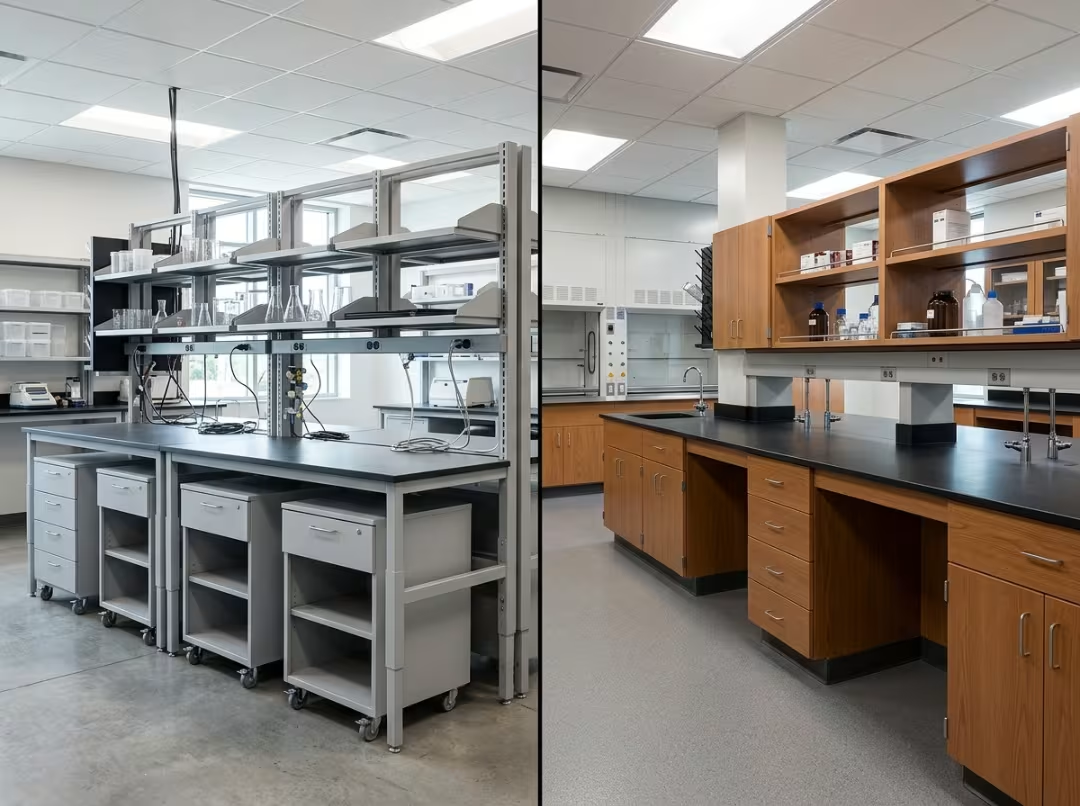
The tradeoff comes down to total flexibility cost. Modular systems carry a higher upfront price for the hardware that enables reconfiguration, but that cost is usually recovered the first time a lab needs to retrofit a layout without ripping out fixed benching.
|
Factor |
Modular Lab Workstations |
Fixed Lab Workstations |
|---|---|---|
|
Reconfigurability |
High — components move and expand |
Low — built to a fixed footprint |
|
Install cost |
Higher upfront |
Lower upfront |
|
Lead time |
Moderate, depends on customization |
Often shorter for standard builds |
|
Lifespan |
Long, with component-level replacement |
Long, but full removal needed to change |
Selecting Surface Materials
Surface material selection should prioritize matching the material’s properties to specific workflow risks—spill frequency, chemical exposure, heat tolerance, and sterilization needs—over aesthetics. The choice of material directly impacts performance and durability in various lab applications:
- Epoxy resin: Known for its exceptional chemical resistance and heat tolerance, it’s ideal for chemistry and analytical labs handling frequent exposure to solvents, acids, and high temperatures.
- Stainless steel: Preferred for life sciences and cleanroom environments, it withstands repeated sterilization processes, resists moisture, and supports a sterile workspace.
- Phenolic resin: Lightweight and moisture-resistant, it is cost-effective for general-purpose labs with moderate chemical exposure and less intensive use cases.
- HPL (high-pressure laminate): A budget-friendly option best suited to low-risk environments, such as administrative workstations or QC areas, where exposure to chemicals and spills is minimal.
Additionally, load-bearing capacity, including considerations like the weight of an epoxy resin countertop per square foot, is critical for labs with heavy instrumentation. The Technical FAQ section provides details on these calculations to ensure the frame can support both surface and equipment loads.
- Epoxy resin: Excellent chemical resistance and heat tolerance, common in chemistry and analytical labs handling solvents and acids.
- Stainless steel: Withstands repeated sterilization and moisture exposure, standard in life sciences and cleanroom environments.
- Phenolic resin: Lightweight, moisture-resistant, and cost-effective for general-purpose benching with moderate chemical exposure.
- HPL (high-pressure laminate): Budget-friendly for low-risk, low-exposure workstations like administrative or QC support areas.
Load-bearing capacity, including how much an epoxy resin countertop weighs per square foot, matters when specifying frame support for dense equipment. That figure is covered in the Technical FAQ below to avoid repeating it here.

Evaluating Frame, Storage, and Ergonomics
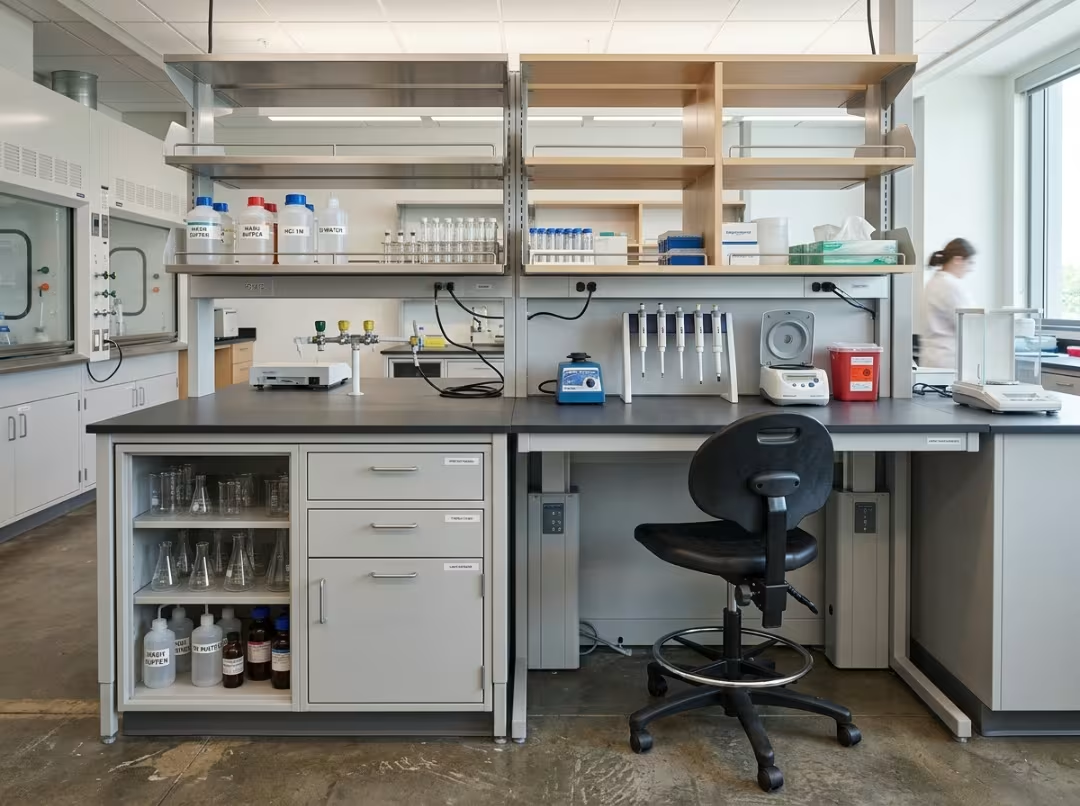
Frame material significantly influences both a workstation’s durability and its functionality in lab operations. Steel frames, for instance, are ideal for supporting heavy instruments like centrifuges or fume hoods. They excel at minimizing vibrations, which is critical for maintaining the accuracy of sensitive analyses such as chromatography or spectrometry. Conversely, aluminum frames are lightweight and modular, making them a better fit for labs with frequent bench reconfigurations or where mobility is prioritized over heavy-load stability.
Storage layout directly affects daily efficiency and safety. Labs that require quick access to consumables, such as pipette tips or gloves, benefit from open shelving near high-traffic workstations. On the other hand, zones handling hazardous chemicals or flammable liquids demand ventilated storage cabinets with spill containment trays to minimize risks. In lab spaces where flexibility is key, mobile storage units streamline reconfiguration, allowing technicians to repurpose spaces without compromising organization or accessibility.
Ergonomic bench design substantially impacts technician comfort and throughput, especially in multi-shift operations. Adjustable-height workstations permit alternating between seated and standing tasks, reducing fatigue during repetitive motions like pipetting or microscope use. Fixed-height benches, in contrast, may be cost-efficient for shared-use labs where tasks don’t vary significantly. Complementary additions, such as anti-fatigue mats or extended knee clearance, ensure long-term usability, especially in labs requiring sustained concentration or precision work. Deploying adjustable bench systems has proven to lower fatigue rates by as much as 15% in high-usage facilities, reinforcing their value in maintaining optimal productivity.
Storage configuration should match how often the lab turns over materials. Open shelving suits high-visibility, frequently accessed supplies; enclosed cabinetry protects sensitive or hazardous materials; mobile storage units support labs that reconfigure often; and chemical-safe storage is non-negotiable anywhere flammables or corrosives are kept at the bench.
Ergonomic adjustability — sit/stand height ranges, knee clearance, and reach distance — affects technician throughput more than most procurement checklists account for. A fixed-height bench works fine in a shared-use lab where one posture suits most tasks, but a multi-shift facility with varied technician heights benefits from adjustable benching that reduces fatigue-related slowdowns across a full shift rotation.
Matching Workstations to Specialized Applications
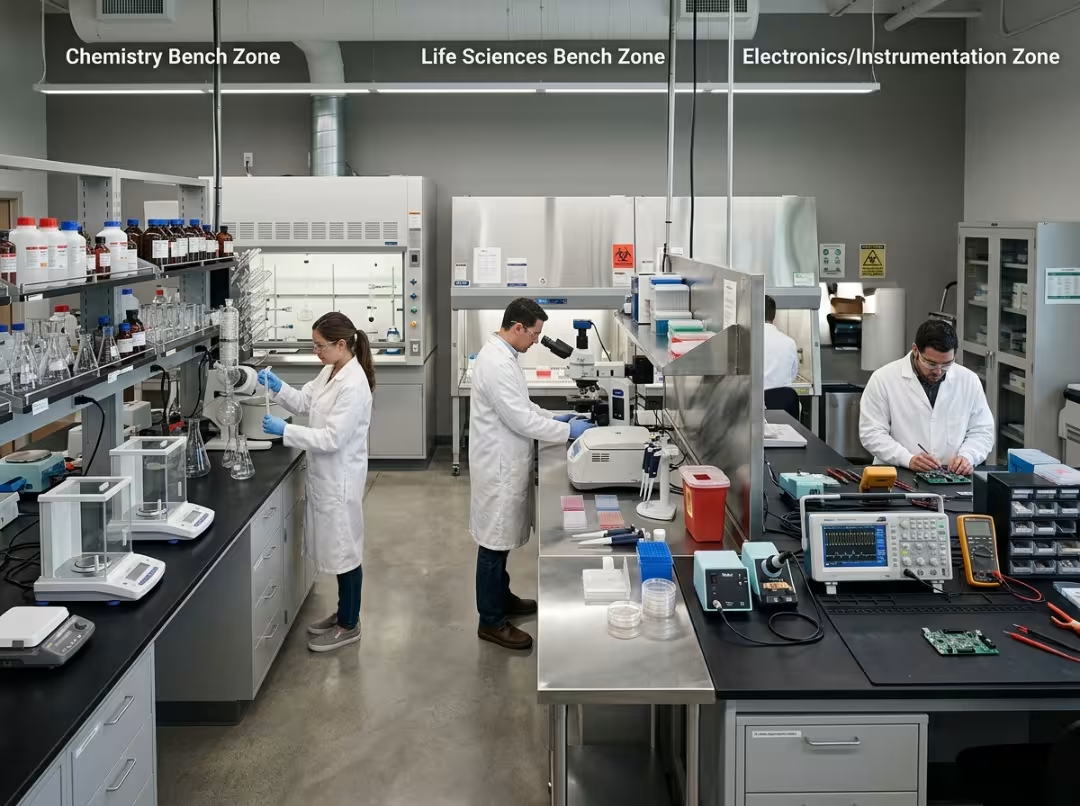
Specification should be driven by the lab’s unique operational needs, ensuring that workstations directly support specific tasks and environments without being constrained by catalog options. Here are the most critical requirements by lab type:
- Chemistry labs: Prioritize surfaces that resist chemical spills and high temperatures, integrate dedicated fume extraction systems, and include corrosion-resistant hardware for handling acids and solvents.
- Life sciences labs: Opt for stainless steel surfaces that can withstand frequent sterilization, sealed seams to avoid contamination, and storage systems compliant with biosafety protocols.
- Cleanrooms: Use low-particulate, non-shedding materials with smooth, sealed finishes and design features that minimize gaps or ledges where particles can accumulate.
- Electronics/ESD labs: Ensure static-dissipative surfaces, grounded workstation frames, and well-organized ESD-safe storage solutions to protect sensitive electronic components.
- Chemistry labs: Chemical-resistant surfaces, dedicated fume extraction points, and corrosion-resistant hardware.
- Life sciences labs: Sterilizable stainless steel surfaces, sealed seams to prevent contamination, and biosafety-compatible storage.
- Cleanrooms: Low-particulate materials, smooth non-shedding surfaces, and minimal ledges or gaps that trap debris.
- Electronics/ESD labs: Static-dissipative surfaces, grounded frames, and ESD-safe storage for sensitive components.
Total Cost of Ownership and Vendor Selection
Total cost of ownership goes beyond the initial purchase price, encompassing expenses like installation, maintenance, warranty coverage, part replacements, and the expected lifespan of both the frame and surface materials. These factors collectively determine the real financial impact of a workstation over its service life.
When evaluating vendors, focus on a structured approach:
- Customization Capabilities: Assess whether the vendor offers tailored solutions, such as modular components or specialized surface materials, that align with your lab’s unique requirements.
- Lead Times: Confirm realistic delivery schedules for standard and custom configurations, ensuring their timelines align with your project deadlines.
- Compliance Certifications: Verify compliance with ANSI/BIFMA and SEFA standards for safety and durability.
- Post-Sale Support: Review the scope of the vendor’s warranty, availability of replacement parts, and their responsiveness for post-installation service requests.
Before committing to a purchase, request material samples, complete with chemical resistance and load specifications, to ensure the workstation meets your operational demands. Investing time in these steps minimizes unexpected costs and disruptions. For a comprehensive checklist, refer to our vendor evaluation resources (link).
When evaluating vendors, weigh customization capability, realistic lead times, and compliance certifications such as ANSI/BIFMA and SEFA standards, along with the strength of post-sale support. Before committing to a full fit-out, request sample material swatches and documented load specs — it’s a small step that prevents expensive surprises after installation. Our vendor evaluation checklist and RFP template (link) walks through this process in more detail.
Common Mistakes to Avoid
- Underestimating future equipment or storage needs during initial layout.
- Choosing surface material on cost alone instead of chemical and thermal exposure.
- Ignoring ergonomic adjustability, leading to compliance or productivity issues.
- Overlooking utility access points when planning modular layouts.
- Failing to verify structural load limits before adding heavy equipment or dense storage.
Technical FAQ
How much does an epoxy resin lab countertop weigh per square foot?
Epoxy resin countertops typically weigh between 3 and 5 pounds per square foot at standard thickness. This matters because bench frames and floor structures — especially on second-floor installations — need load ratings that account for the countertop weight plus equipment and stored materials on top of it.
Can modular lab workstations support heavy instrumentation?
Yes, with the right frame reinforcement. Steel-reinforced modular frames can be specified with higher load ratings to support centrifuges, analyzers, and other heavy instrumentation without compromising reconfigurability.
How long do lab workstation surfaces typically last?
Epoxy resin and stainless steel surfaces often last 15–20 years under normal lab use. Phenolic resin typically lasts 10–15 years, while HPL surfaces, suited to lighter use, generally last 7–10 years before replacement.
Are modular lab workstations cost-effective for small labs?
It depends on growth plans. Small labs expecting to add equipment or reconfigure space benefit from modular systems despite the higher upfront cost. Labs with a fixed, unlikely-to-change process may find fixed benching more cost-effective.
Specify With Confidence
The right workstation decision starts with workflow, not furniture style. Layout, structure, surface material, and storage all trace back to how the lab actually operates day to day. Skipping total cost of ownership analysis and vendor vetting often costs more in the long run than the upfront hardware price ever suggested.
Ready to move from research to specification? Request a layout consultation (link) and get a workstation plan built around your lab’s actual workflow, not a generic template.