


Wet labs push furniture harder than almost any other room. Benches face acids, alkalis, cleaning agents, humid air, and frequent washdowns. Water is only part of the story.
A poor material choice costs more than looks. It shortens service life, threatens cleanliness, and raises safety concerns. Teams end up fighting corrosion, contamination risk, heavy upkeep, and early replacement.
I have helped many lab teams choose the right laboratory furniture for these tough spaces. In this guide to PP lab furniture vs steel, I show you where each material struggles, where PP pulls ahead, and how to pick the right spec for every zone in your lab.
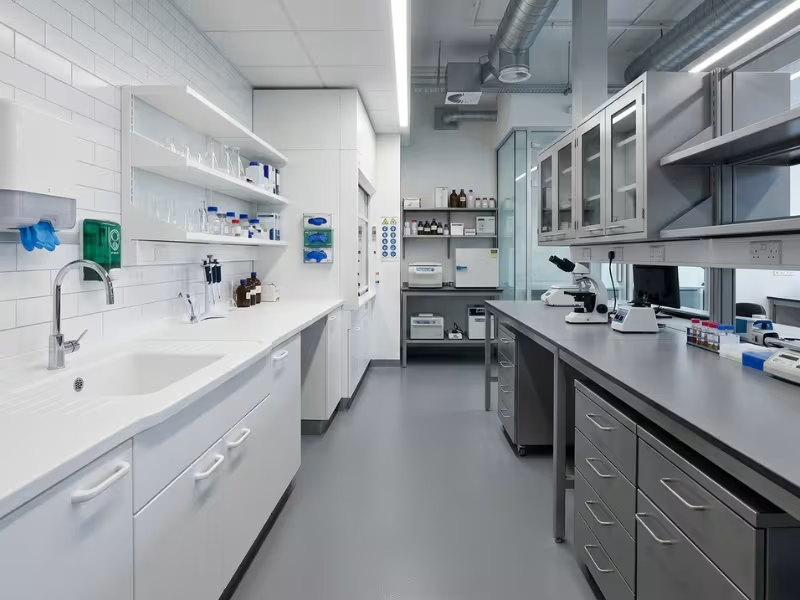
Why Wet Labs Stress Furniture Faster
A dry lab asks furniture to hold equipment and stay put. A wet lab asks for much more. When I walk a new wet lab site, I watch what happens on the benches all day. Four stresses show up every time, and they rarely act alone.
Chemical Splash and Fumes
Acids and alkalis land on cabinet faces, edges, and handles during routine pours. Even without a spill, fumes drift and settle on nearby surfaces. Over months, that steady contact eats into weak spots that nobody checks.
Moisture That Never Leaves
Sinks run for hours, and staff hose down work zones. Humid air lingers under benches and inside cabinets long after the floor dries. Any material that reacts badly to water starts aging early here.
Cleaning That Never Stops
Teams wipe surfaces with disinfectants, detergents, and sometimes bleach, several times a shift. Each pass protects the work, but it also tests the furniture. A finish that survives one cleaner may break down under a daily rotation of three.
Daily Wear From Busy Hands
Glassware slides across tops. Carts bump cabinet corners. Drawers open dozens of times a day. Each scratch and small gap gives chemicals and moisture an easy path inside.
These stresses stack. A scratch lets in moisture, cleaning pushes chemicals deeper, and fumes finish the job. That combined load makes material choice matter more here than anywhere else in the building.
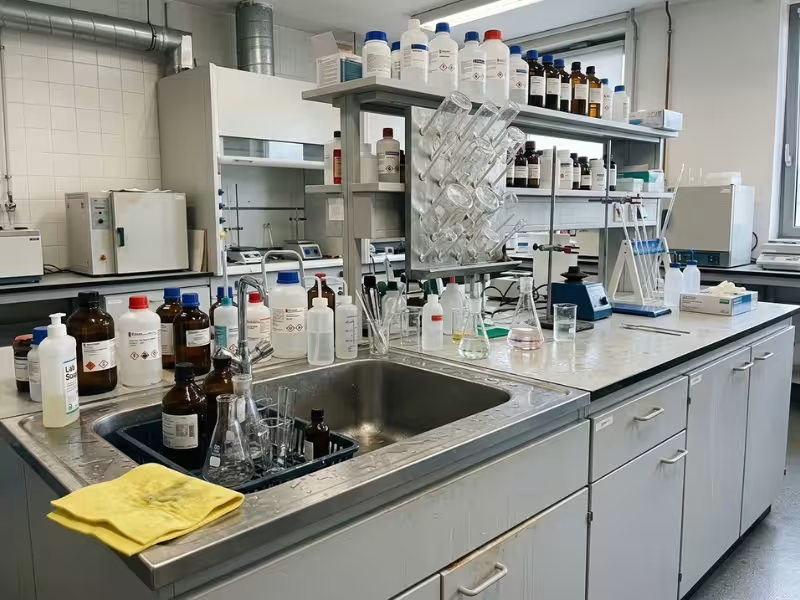
Where Steel Starts to Struggle in Wet Lab Use
Steel has earned its place in labs. It’s strong, familiar, and performs well in dry rooms. In wet zones, though, I see the same failure patterns again and again. Once you know them, you can spot trouble long before it turns into a replacement order.
Corrosion Hides Where You Don’t Look
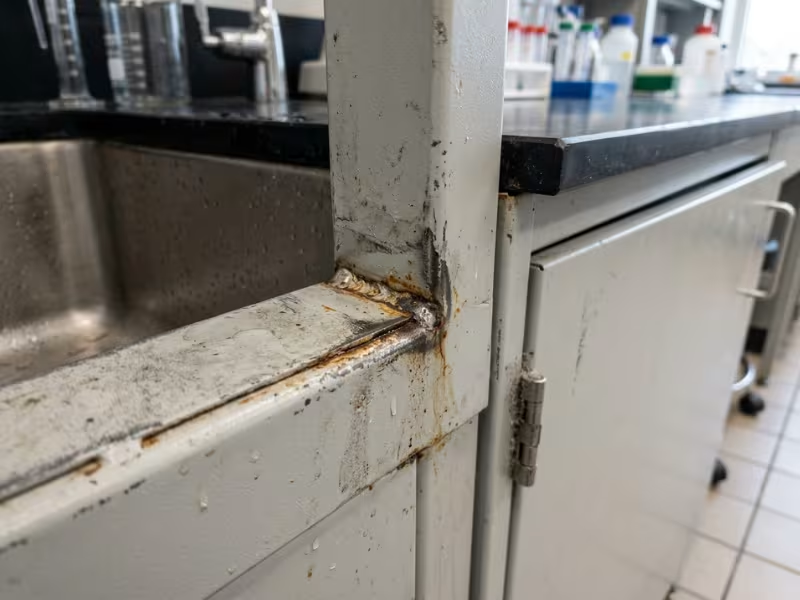
Most people inspect cabinet doors and work surfaces. Rust rarely starts there. It begins where the coating runs thin or breaks: welded joints, cut edges, screw holes, hinges, and drawer slides.
One chip from a cart bump is enough. Moisture slips under the coating and spreads sideways, out of sight. When I open a sink cabinet and check the back corners or base frame, I often find more rust inside than anyone noticed outside.
That hidden rust does the real damage. Surface spots give you a warning. Rust inside a frame weakens the structure quietly.
Upkeep Climbs Before Anything Looks Broken
From across the room, a five-year-old steel bench can look fine. Up close, your facilities team tells a different story. They touch up chips, swap rusted hinges and handles, replace corroded slides, and repaint sections every year or two.
Each job seems small. Together, they add labor hours, parts orders, and downtime. I always ask clients to pull their maintenance logs before we discuss new furniture. The cost trend usually surprises them.
More Cleaning Can’t Fix the Wrong Material
When steel starts to show wear, many teams clean harder. That rarely helps. If the coating doesn’t match the acids or disinfectants in daily use, every wipe-down wears it a little thinner.
Over time, the surface pits and the coating cracks or peels. Those pits and lifted edges trap residue and moisture, so the bench gets harder to clean, not easier. Hygiene slips, and contamination risk grows.
This isn’t a cleaning problem. It’s a compatibility problem.
Why PP Is Often the Better Fit for Wet Labs
When a client shows me a wet zone that keeps wearing out its furniture, polypropylene (PP) is usually my first suggestion. PP doesn’t win everywhere. Its strengths simply line up with what wet labs throw at benches every day.
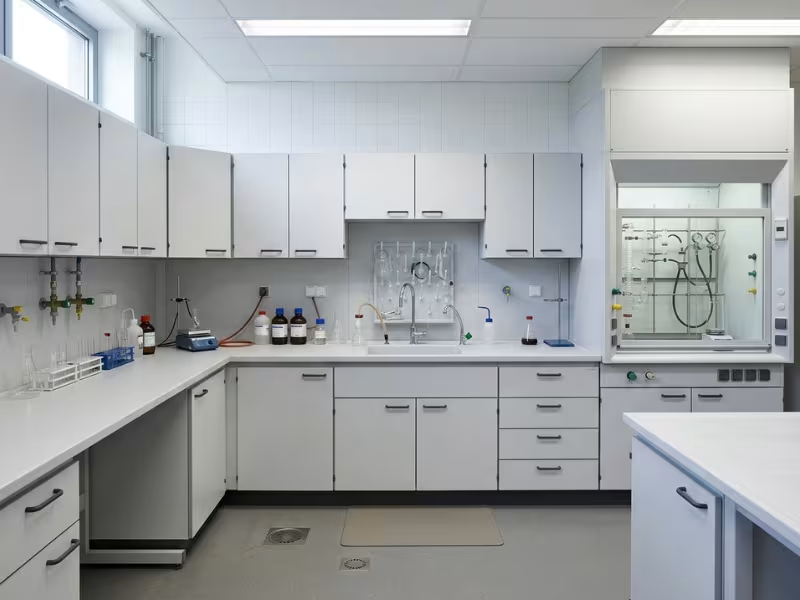
Chemical Resistance Where It Counts
PP holds up well against most acids, alkalis, and salt solutions in routine wet work. Think of acid washing glassware, reagent prep at the bench, or wet processing lines where splashes happen every hour.
In those spots, a spill becomes a wipe-up job instead of a repair ticket. PP has no coating to chip, so a cabinet face resists chemicals in year eight much as it did on day one.
PP has limits, though. Strong oxidizers and some organic solvents can attack it. I always check the actual reagent list before I sign off on a PP spec.
Moisture Stops Being a Countdown
With steel, water starts a chain: a chip lets moisture in, rust forms, and the damage spreads. PP breaks that chain. It doesn’t rust, swell, or peel when it stays damp.
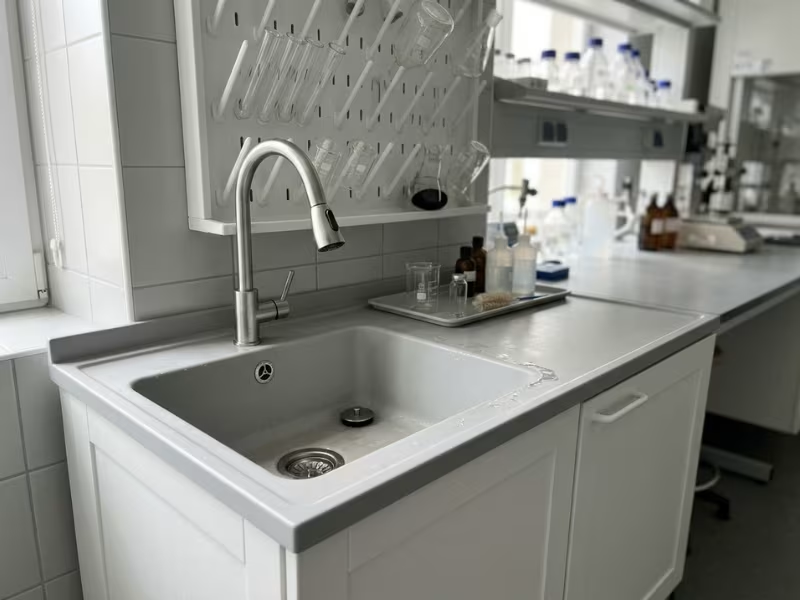
That makes PP a natural match for sink-heavy benches, washdown areas, and humid rooms where cabinets never fully dry. Pair PP cabinets with the right lab sinks and pegboards, and the whole wet station shrugs off water from top to bottom. Welded PP construction also leaves fewer gaps where water can sit.
Cleaner Surfaces, Easier Hygiene
PP has a smooth, non-porous surface. Residue sits on top instead of soaking in, so a quick wipe removes most of it. Your daily rotation of disinfectants can’t wear down a finish, because PP has no finish to wear down.
This matters most over time. Steel gets harder to clean once it pits. PP stays about as cleanable as it was on installation day, which makes hygiene audits far less stressful.
A Lifecycle You Can Plan Around
Lab managers want furniture that lasts. Just as much, they want furniture that behaves predictably. In corrosive wet zones, PP usually means:
- Fewer repair calls for hinges, slides, and corroded frames
- Less downtime while benches wait for parts or touch-ups
- Maintenance that follows a schedule instead of reacting to surprises
- Clearer budgets, since replacement timing becomes easier to forecast
I have watched facilities teams go from patching wet benches every quarter to a simple annual check. That time goes back into supporting research instead of chasing rust.
The takeaway: PP’s value doesn’t live on a spec sheet. It shows up as quieter maintenance logs, steadier uptime, and wet zones that stay usable for years.
When PP Makes the Most Sense, and When It Doesn’t
PP solves many wet lab problems, but I don’t specify it for every room. The right choice depends on what each zone faces day to day. Here’s how I sort it out on real projects.
Where PP Pulls Ahead
I recommend PP first for:
- Acid and alkali wash areas. Soak tanks and rinse stations splash all day, and PP has no coating to fail.
- Wet chemistry zones. Titrations, digestions, and reagent prep leave drips on cabinet faces every shift.
- Sink-heavy benches. The cabinet under a busy sink stays damp almost constantly. Steel often rusts through there first.
- High-humidity corrosive rooms. When acid vapor mixes with moist air, even closed cabinets can corrode from the inside.
- Aggressive cleaning routines. If your team rotates bleach, disinfectants, and detergents several times a day, PP keeps up without wearing thin.
If a zone matches two or more of these, I treat PP as the default. Then I ask what would justify anything else.
Where Steel Still Holds Its Ground
Steel isn’t the wrong answer everywhere. In the right setting, it performs well and often costs less upfront.
- Dry labs with low chemical exposure. Instrument rooms, electronics benches, and physics labs rarely see splashes. Coated steel can serve there for many years.
- Heavy-load applications. Large analyzers and dense storage need rigid frames. Steel carries high point loads with less flex than PP of a similar size.
- Low-corrosion areas where structure comes first. If chemical contact is rare, steel’s stiffness gives you a real edge.
- Mixed-material projects. Many labs have only one or two truly wet zones. I often specify PP for wash and sink areas and steel for the dry benches beside them.
For these dry and heavy-duty zones, well-planned steel lab benches and workstations still make practical sense. The goal isn’t loyalty to one material. It’s matching each bench to the exposure it actually faces.
Do Not Compare Purchase Price Alone
When two quotes land on a lab manager’s desk, the eye goes straight to the bottom line. Steel often wins that first glance. But purchase price covers only day one. In a wet lab, the bigger bill arrives over the next ten years.
I ask clients to price the whole life of a bench. Five costs usually decide the real winner:
- Repair frequency. Every hinge, slide, or handle swap brings parts, labor, and paperwork.
- Replacement cycle. A sink cabinet that rusts out in six years means you buy it twice.
- Downtime. When a bench sits out of service, samples stall and staff work around it. No invoice shows that loss, but your schedule feels it.
- Cleaning difficulty. Pitted surfaces take longer to wipe and make audits harder to pass. A few extra minutes per shift add up fast.
- Maintenance labor. Touch-up painting, frame repairs, and mid-life refits pull your facilities team away from other work.
Here’s a simple test I use. Total the hours and parts your team spent on wet-zone furniture over the past three years. Then spread each option’s price across its expected service life. The gap between quotes often shrinks, and sometimes it flips.
PP rarely has the lowest upfront price. In acid wash areas, sink benches, and washdown rooms, though, it often costs less over time. Judge each quote by its cost per year of reliable use, not by the number on page one.
A Practical Way to Decide Between PP and Steel
I don’t start projects with a catalog. I start with a walk through the lab and four simple questions. Work through them in order, and the right spec usually becomes clear.
Step 1: Map Your Exposure
List what each zone faces: the chemicals in use, splash frequency, washdown intensity, and humidity. Mark these notes on a quick floor plan sketch. A bench that sees acid every hour needs a different answer than one that sees a spill once a month.
Step 2: Find Where Furniture Really Fails
Look past the countertop. Inspect your lab casework and cabinets, base frames, hinges and slides, the space under each sink, and every joint and cut edge. Then ask your facilities team which parts they replace most often. Those repeat repairs show you where the current material is losing the fight.
Step 3: Choose Full PP or Zone-Based PP
Full PP sounds safe, but it isn’t always the smart move. If only the wash area and sink benches take heavy exposure, specify PP there. Keep steel for dry benches and low-risk storage. This zone-based approach puts your budget where it works hardest.
Step 4: Ask Suppliers for Proof, Not Promises
“Chemical resistant” means little on its own. Send suppliers your actual reagent list and ask them to confirm:
- Which of your chemicals their PP grade resists, and at what temperatures
- Whether they weld the cabinets or assemble them with fasteners
- Panel thickness for bodies, doors, and shelves
- How they finish and seal joints and welds
- What material they use for hinges, slides, and handles
A supplier who truly fits the product to your application will answer clearly. Vague replies tell you just as much.
PP vs Steel: Quick Comparison Table
Clients often ask me for a one-page summary they can share with their team. This table puts the key trade-offs side by side. Use it as a quick check, then test each row against the real exposure in your own lab zones.
|
Factor |
PP Lab Furniture |
Steel Lab Furniture |
|---|---|---|
|
Chemical resistance |
Excellent for many wet lab chemicals |
Depends heavily on coating and exposure level |
|
Moisture resistance |
No rust |
Corrosion risk over time |
|
Cleaning |
Easy to clean, non-porous |
Can become harder once coating degrades |
|
Long-term maintenance |
Lower in corrosive wet zones |
Often higher in wet chemical areas |
|
Structural load |
Good, application-dependent |
Often stronger for heavy-load dry use |
|
Best fit |
Wet, corrosive, washdown areas |
Dry or lower-exposure environments |
Best Material by Lab Area
Most labs aren’t one environment. They’re several zones sharing a floor plan. A sink bench and an instrument bench face very different days, so I rate each one on its own. One material everywhere means you either overspend on dry zones or underprotect wet ones.
|
Lab Area / Condition |
Better Choice |
Why |
|---|---|---|
|
Acid wash area |
PP |
Better chemical and moisture resistance |
|
Sink-heavy wet bench |
PP |
Better long-term performance around water exposure |
|
Dry analytical bench |
Steel or mixed |
Lower corrosion risk |
|
General storage in low-exposure room |
Steel |
Often cost-effective enough |
|
High-humidity corrosive room |
PP |
Lower maintenance and corrosion risk |
|
Mixed lab with separate wet zone |
Mixed specification |
Use PP only where exposure justifies it |
Common Buying Mistakes
Most wet lab furniture problems start at the buying stage, not at installation. I see these four mistakes on project after project.
Letting the lowest quote decide. A cheap bench that fails early doesn’t save money. It just moves the cost into the repair budget, where fewer people notice it.
Writing one spec for the whole lab. A single material list looks tidy on paper. In practice, it wastes money on dry benches or leaves sink areas exposed. Give each zone its own line in the specification.
Trusting the coating to carry the load. Epoxy and powder coatings help, but only until the first deep scratch or open seam. In a wet zone, a coating becomes something you maintain, not a permanent shield.
Asking for “chemical resistant” and stopping there. A cabinet can handle dilute acids and still fail against strong oxidizers or hot solvents. Check every claim against your actual reagents, concentrations, and temperatures. If a supplier won’t confirm compatibility in writing, take that as your answer.
FAQ
Is PP lab furniture strong enough for daily lab use?
Yes, for most bench work, but build quality matters. Thin panels can flex or sag under steady weight, especially shelves holding full reagent bottles. Look for thick, welded panels and reinforced shelf supports.
For heavier loads, ask about PP cabinets with an internal steel frame that the plastic fully encases. You get PP’s resistance outside and extra stiffness inside.
Can PP handle hot or high-temperature processes?
Only within limits. PP handles warm water and mild heat well. It softens as temperatures approach 100°C (212°F), and long contact with hot surfaces can warp it.
Never set hot plates, heating mantles, or hot glassware directly on PP. For heated work, pair PP cabinets with heat-tolerant lab countertops and worktops such as epoxy resin, ceramic, or phenolic resin. Tell your supplier about heated processes early, before they finalize the design.
Do all wet labs need full PP furniture?
No. Before you upgrade every bench, check your ventilation and drainage. Poor airflow and slow drains spread moisture and fumes into areas that would otherwise stay mild. Fixing them can shrink the zone that truly needs PP.
Small upgrades help too. A PP sink cabinet or PP drip trays can protect a steel run where it takes the most abuse.
How should I compare PP and steel quotes fairly?
Make sure both quotes cover the same scope:
- Dimensions and cabinet count
- Worktop material and thickness
- Sinks, faucets, and fittings
- Delivery and installation
- Warranty terms, especially corrosion coverage
Quotes often differ because one supplier includes more, not because one costs less. Ask each vendor to fill out the same scope sheet, and the gaps show up fast.
Choose by Exposure, Not by Habit
Many labs buy steel because they always have. Others switch to PP because it sounds safer. Neither habit makes a good spec.
When I help a team choose wet lab furniture, I focus on three things: how much exposure each zone faces, how hard the team cleans it, and what the furniture will cost over its full service life.
Those answers usually make the choice clear. In zones with heavy corrosion, constant humidity, or daily washdowns, PP tends to make more practical sense. In dry rooms, low-exposure areas, and heavy-load stations, steel can still serve you well.
Often, the smartest plan uses both, with each zone getting the material its conditions call for. Sketch your wet and dry zones first, and bring that map to your next supplier conversation.
