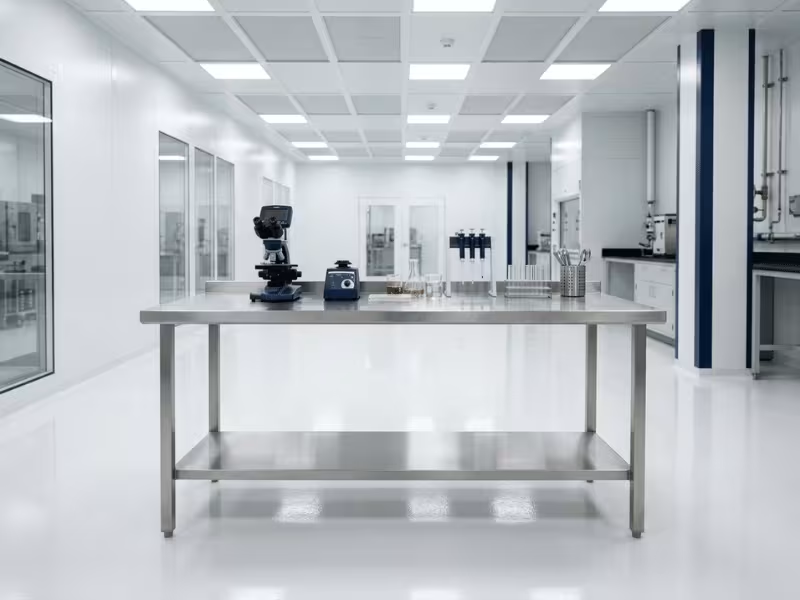
I’ve watched more than one lab manager stare at a corroded duct run and ask how it happened so fast. The answer, almost every time, is that a standard fume hood was pressed into acid-digestion duty because it was already there and looked close enough. It rarely is. On the surface, a standard hood and an acid digestion hood look like cousins. Put them both under months of hot, condensing acid vapor, and only one survives.
The failure you don’t see coming is the one that hurts. Coated liners corrode from the inside, ductwork thins out where nobody’s looking, and containment slips well before anything visible tips you off. By the time the damage surfaces, you’re not fixing a hood — you’re managing a breach, a leaking exhaust run, or a full rebuild. This piece lays out what an acid digestion fume hood really is, when your work actually demands one, which materials hold up, and how to spec a unit that lasts against the acids you run every day.
What Is an Acid Digestion Fume Hood?
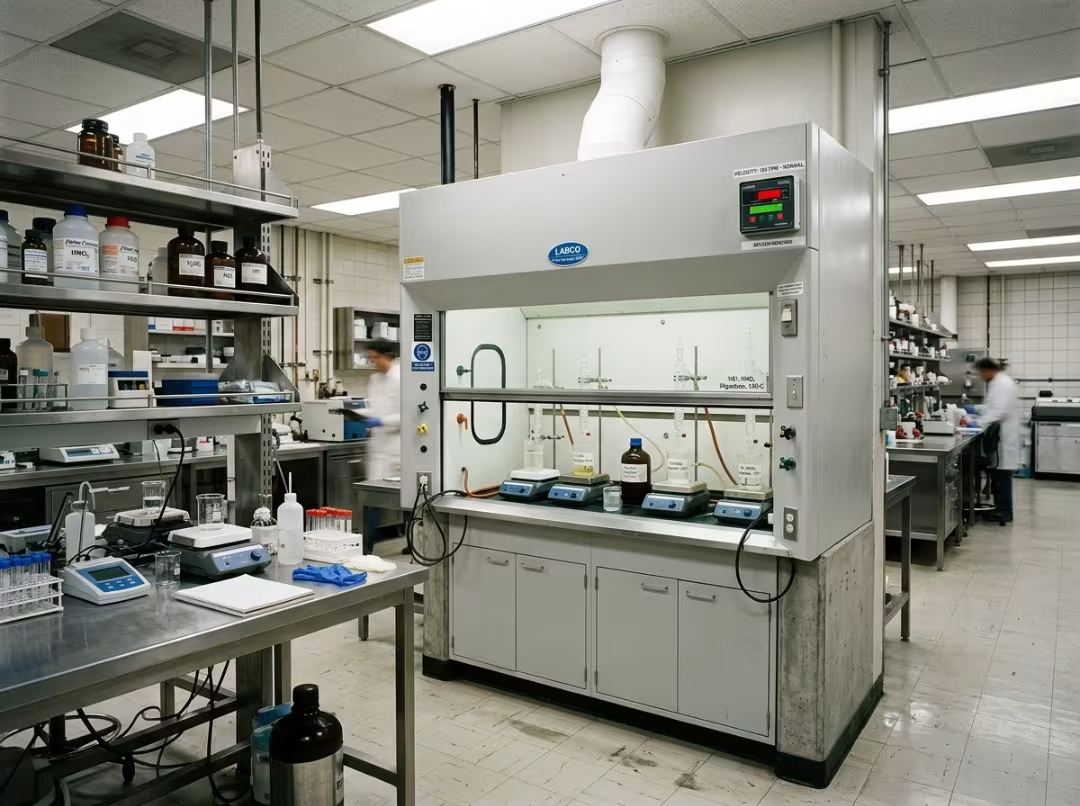
An acid digestion fume hood is a ventilated enclosure designed to contain and exhaust corrosive acid vapors, with corrosion-resistant materials lining the entire airstream. It is not a standard hood wearing a better coat of paint. The liner, work surface, seams, ductwork, and often the blower are all specified to withstand continuous exposure to aggressive acids.
Pay attention to that phrase — entire airstream. A hood that resists acid but dumps into ordinary sheet-metal ducting isn’t an acid digestion system at all. It’s a corrosion problem that simply moves a few feet downstream where you can’t watch it happen.
Where the Name Comes From
Acid digestion means breaking a sample down with strong, usually heated acids — nitric, hydrochloric, sulfuric, hydrofluoric, perchloric — to dissolve it for analysis. Those reactions throw off vapor that’s hot, concentrated, and eager to condense on any surface it touches. And when it lands, it starts eating.
That’s a much rougher job than general acid handling, and this is where a lot of buyers get burned. “Acid resistant” and “acid digestion rated” are not the same grade of protection. A hood can handle the occasional dilute splash just fine and still be completely wrong for daily hot-block digestion with concentrated nitric acid. Spec to the intensity of your actual process, not to a reassuring “acid resistant” line on a datasheet.
When Do You Actually Need One?
Not every lab that touches acid needs a dedicated digestion hood. What decides it isn’t your industry or your title — it’s your acids, their concentration, their temperature, and how nasty the vapor gets.
Start with your Safety Data Sheets. The corrosivity data tells you what you’re really working with. Then look hard at the process. Handling a dilute acid at room temperature is worlds apart from heated digestion of concentrated hydrofluoric acid. Heat and concentration are the two levers that push a workflow from “a standard hood is fine” to “you need the real thing.”
Some processes leave no room for debate. Trace metal analysis, mineral and geological digestion, environmental sample prep, and any hot-block or microwave digestion workflow throw off the kind of sustained, aggressive vapor that ordinary materials simply won’t outlast.
There’s an honest flip side, and it’s worth saying out loud because most vendors won’t. If you handle dilute acids at room temperature now and then, a well-maintained standard hood may genuinely be enough. Buying more than you need burns budget you could put toward better exhaust or safer storage. Match the equipment to the chemistry — nothing more, nothing less.
|
Acid / Process |
Vapor aggressiveness |
Standard hood OK? |
Dedicated hood needed? |
|---|---|---|---|
|
Dilute acids, room temperature, occasional |
Low |
Often yes |
Not usually |
|
Concentrated nitric/hydrochloric, heated |
High |
No |
Yes |
|
Hydrofluoric acid (any concentration) |
Very high |
No |
Yes, with HF-compatible materials |
|
Perchloric acid digestion |
Extreme + explosive residue |
No |
Yes, dedicated wash-down hood only |
|
Routine mineral/geological digestion |
High |
No |
Yes |
|
Trace metal / ICP-MS prep |
High |
No |
Yes |
Read that table one way: the acid’s intensity makes the call, not the fact that acid is present at all. Heat, high concentration, HF, or perchloric acid, and a dedicated unit are no longer optional.
How Is It Different From a Standard Fume Hood?
The gap between the two doesn’t show up on day one. It shows up over months and years of vapor exposure, and it traces straight back to what each hood is built from.
Construction and Liner Materials
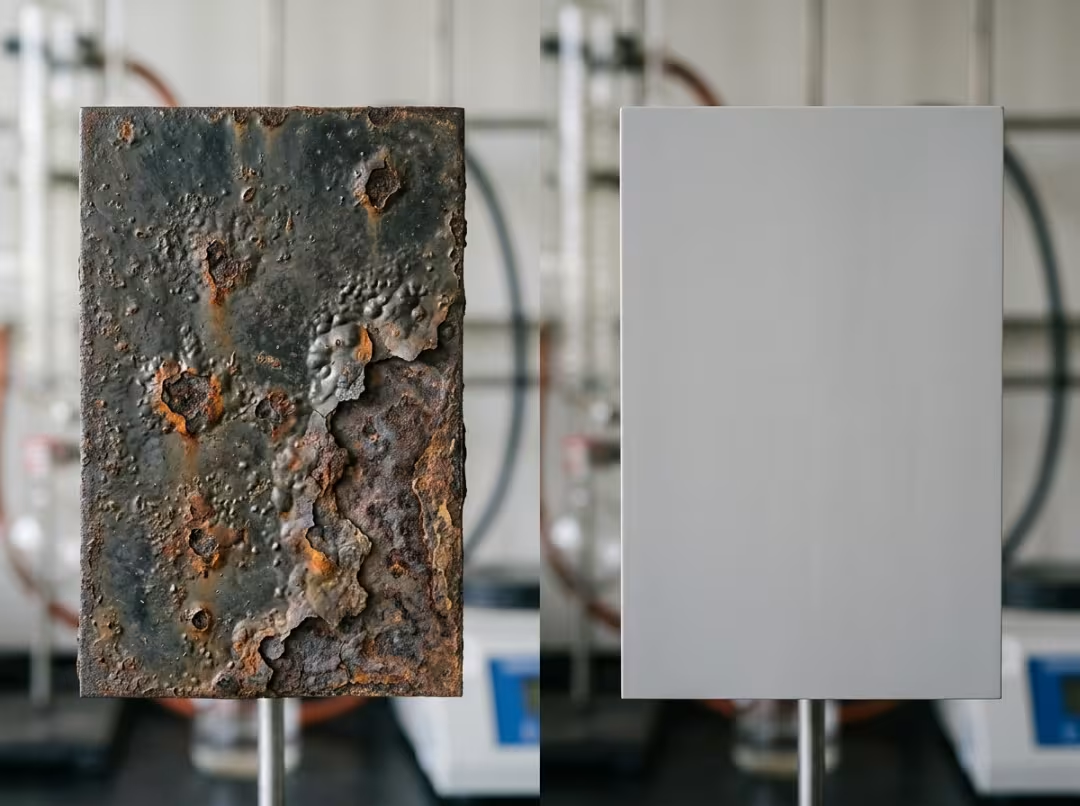
Standard fume hoods usually run epoxy-coated steel or laminate liners. Those hold up fine for general chemistry, but acid vapor is patient, and it hunts for weak points — a nick in the coating, a seam, an exposed edge. Once it reaches the steel underneath, corrosion spreads beneath the coating where nobody can see it until it’s too late.
Acid digestion hoods skip that problem by using non-metallic materials, most often polypropylene. There’s no vulnerable substrate hiding under a coating because the material itself does the resisting. Nothing to fail, nothing to undermine.
Ductwork and Exhaust Compatibility
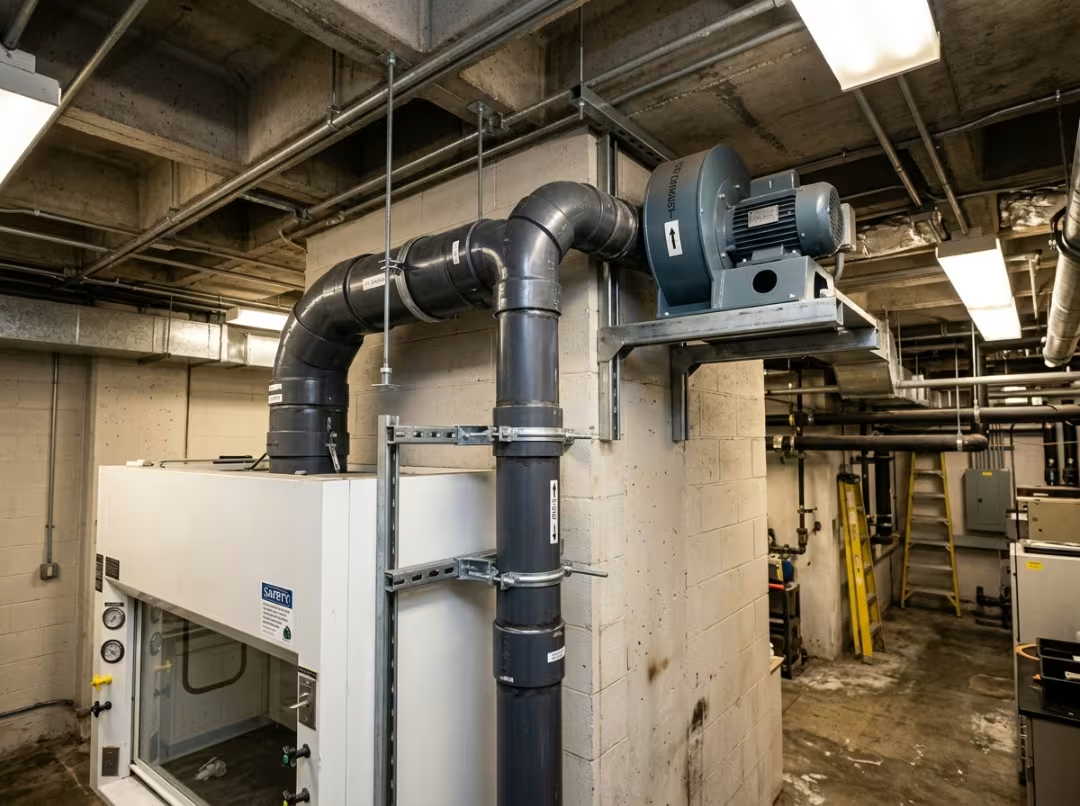
Here’s the mistake I run into again and again: a lab buys a proper corrosion-resistant hood and then bolts it onto whatever ductwork was already in the ceiling. The vapor doesn’t care where the hood ends. It rides through the duct, past the blower, and out the stack. If the duct and blower aren’t rated for the same acids, you didn’t fix your corrosion problem — you just shipped it somewhere you can’t inspect.
Treat the hood, duct, and blower as a single continuous corrosion-resistant path, or don’t bother. A system is only as good as its weakest joint, and acid finds that joint every time.
Durability Under Continuous Vapor
Standard materials fail quietly. A coated steel liner can look perfectly healthy on the surface while corrosion hollows it out behind the coating. By the time you notice bubbling, staining, or pitting, the structural and containment integrity is already gone. That slow, hidden failure mode is the whole reason matching materials to chemistry beats any glossy durability claim on a spec sheet.
|
Feature |
Standard fume hood |
Acid digestion fume hood |
|---|---|---|
|
Liner material |
Epoxy-coated steel or laminate |
Polypropylene or specialized non-metallic |
|
Work surface |
Epoxy resin or laminate |
Molded polypropylene, seamless |
|
Ductwork compatibility |
Standard, often acid-incompatible |
Fully acid-resistant airstream |
|
Target chemicals |
General lab chemistry |
Concentrated, heated, corrosive acids |
|
Wash-down capability |
Rarely |
Available (required for perchloric) |
|
Service life in acid work |
Short—corrodes over months |
Long—built for continuous exposure |
A standard hood protects a fragile material with a coating. An acid digestion hood uses a material that never needed protecting in the first place. That single difference is what separates a two-year replacement cycle from a hood you run for a decade.
What Materials Actually Matter?
Specifications get won or lost right here. The material has to match the exact acids you run, not “acids” as some vague category. Two hoods can both wear the “acid resistant” label and behave completely differently the moment your specific chemistry hits them.
Why Polypropylene Dominates Acid Digestion
Polypropylene earns its spot as the default for good reason. It stands up to a broad spread of the acids labs actually use; it’s non-metallic, so corrosion isn’t even on the table; and flame-retardant grades exist where fire safety matters. The part people overlook: polypropylene can be seamlessly welded, which eliminates joints and gaps where vapor would otherwise pool and start chewing.
That welded interior does more heavy lifting than the datasheet suggests. Every seam is a door for corrosion. Weld them shut, and you’ve closed most of the doors — which is exactly why welded polypropylene outlasts bonded or bolted alternatives in punishing digestion work.
When Stainless Steel Is Right — and When It’s a Mistake
Stainless has a reputation for being bulletproof, and with certain organic solvents and general wear, it lives up to it. But stainless steel is not a universal acid answer, and the labs that treat it as one pay for that assumption.
Chlorides attack stainless steel through pitting corrosion — small, deep failure points that spread out of sight beneath the surface. That knocks stainless out of the running for hydrochloric acid and any chloride-heavy chemistry, full stop. Hydrofluoric acid is even less merciful; HF attacks a wide range of materials and demands compatibility checks you don’t get to skip. Put a stainless hood in a trace metal lab running HCl digestions and “we picked it because it’s durable” turns into pitting failures inside a year. Durability in the abstract has nothing to do with resistance to your particular acid, and confusing the two is one of the most expensive habits in this business.
Seams, Work Surfaces, and Liners
Condensing vapor lands on the interior, so every seam you eliminate buys you life. One-piece molded liners, integral drip troughs, and seamless work surfaces eliminate the joints that would otherwise become corrosion failure points. When you’re evaluating a hood, get your eyes on how the interior is actually joined — bonded or bolted panels create the exact gaps you’re paying to avoid.
|
Material |
Resistant to |
Avoid with |
Best-fit process |
|---|---|---|---|
|
Polypropylene |
Broad acid range, including HCl |
Some strong oxidizers at high temp |
General acid digestion, HCl work |
|
PVC |
Many acids and bases |
High-temperature applications |
Ductwork, moderate-temp vapor |
|
Stainless 304/316 |
Some organics, general wear |
Chlorides (pitting), HF |
Organic solvents, non-chloride use |
|
Epoxy-coated steel |
Light, general chemistry |
Concentrated/heated acids |
Standard, non-digestion hoods |
Spec the material to the acid, confirm every surface the vapor touches, and never let “acid resistant” stand in for real chemical compatibility with your work.
Why Perchloric Acid Changes Everything
Perchloric acid falls into a category of its own and demands a dedicated wash-down hood — no exceptions, no workarounds. Treating it like just another strong acid is one of the most dangerous shortcuts in lab equipment specification, and it’s the kind of mistake that makes the news.
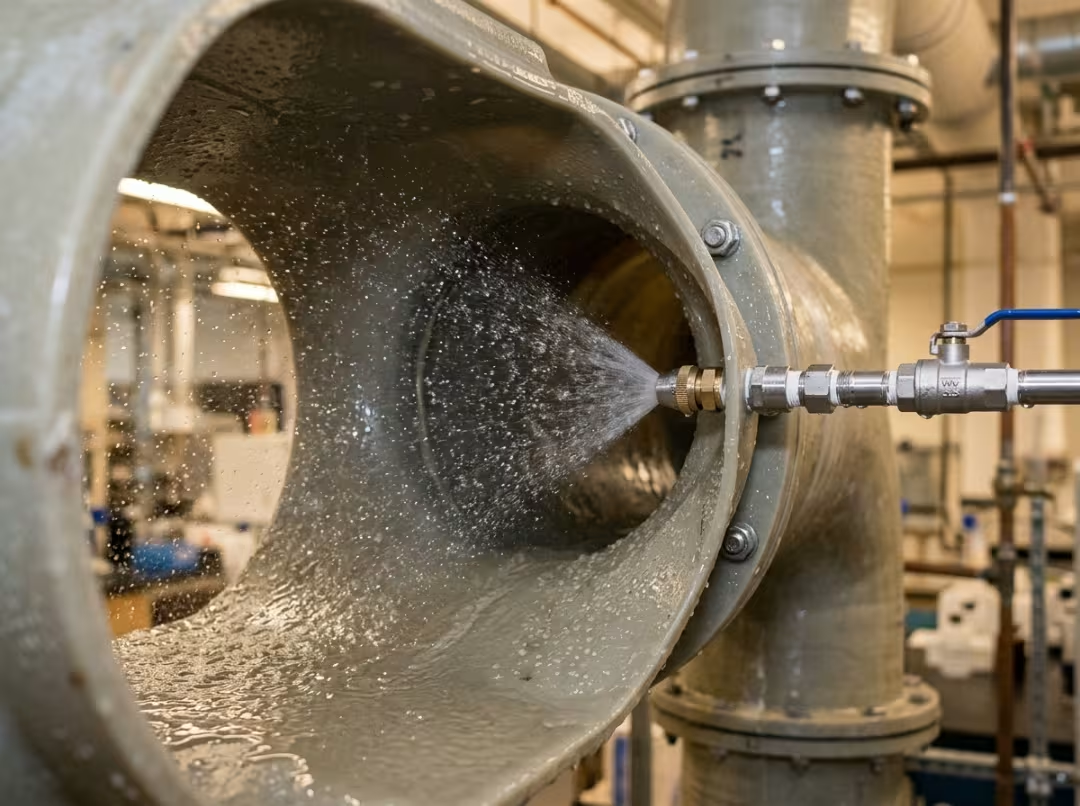
As perchloric vapor moves through the system, it forms perchlorate salts that settle inside the ductwork. Let those salts dry and pile up, and they turn shock-sensitive and explosive. A duct that looks completely ordinary can be sitting on a hidden hazard, waiting for a maintenance vibration or a stray spark to set it off.
A perchloric acid hood addresses this with integral water wash-down systems that flush the interior and ductwork clean before salts can build up, paired with non-reactive duct materials. And this part is non-negotiable: a perchloric hood can never share ductwork with organic-vapor hoods. Mix perchlorate residue with organic vapor, and you’ve built a genuine explosion risk into your exhaust. If perchloric acid appears anywhere in your workflow, a dedicated, isolated, washable system is the only answer worth considering.
Ducted vs. Ductless: Which Do You Need?
For most acid digestion work, this isn’t a close call, but it’s worth knowing why the answer is what it is.
Why Most Acid Digestion Needs Ducted Hoods
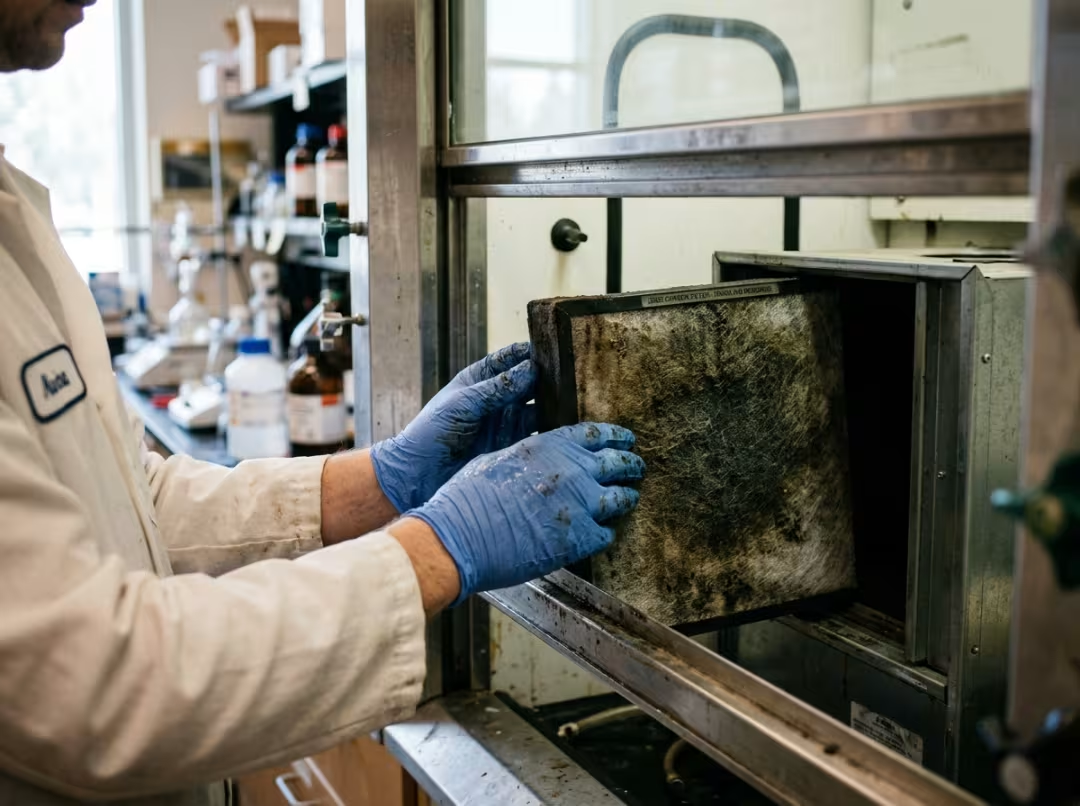
Strong, high-volume, or heated acid vapors have to leave the building. Ductless filtered hoods lean on carbon or specialized filters to grab contaminants and recirculate the air back into the room. Aggressive digestion vapor chews through those filters fast, and a saturated filter protects exactly no one — it just gives everyone a false sense that it’s working.
Where Ductless Units Fit — and Their Hard Limits
Ductless filtered hoods do have a place, but it’s a narrow one: light, specific applications where the chemistry genuinely matches the filter’s capability. Even then, someone has to stay on top of filter saturation and breakthrough — the moment contaminants sail straight through a spent filter as if it weren’t there.
For hydrofluoric and perchloric acid, ductless is flatly the wrong tool. HF’s aggressiveness and perchloric’s explosive residue both demand external exhaust, period. Don’t let a lower sticker price talk you into a ductless unit for either one — that’s a decision you only get to regret once.
Exhaust and Installation Planning
Ducted systems take planning: acid-compatible duct materials, dedicated exhaust runs, and a blower placed where it belongs. And to hammer the point that causes the most grief — a perchloric hood never gets manifolded with other hoods. It gets its own dedicated, washable path, and that’s the end of the discussion.
|
Factor |
Ducted |
Ductless (filtered) |
|---|---|---|
|
Exhaust method |
Vents externally |
Filters and recirculates |
|
Suitable acids |
Full range, including HF/perchloric with correct materials |
Light, filter-compatible acids only |
|
Key limitation |
Requires ductwork and installation |
Filter saturation and breakthrough risk |
|
Maintenance |
Duct and blower inspection |
Frequent filter monitoring and replacement |
|
Best-fit scenario |
Most acid digestion work |
Limited, low-intensity applications |
Default to ducted for acid digestion. Reach for ductless only when the chemistry clearly supports it — and never for HF or perchloric.
Where These Hoods Earn Their Keep
Acid digestion hoods show up wherever aggressive acid chemistry is part of the daily routine. What connects these settings isn’t the industry — it’s the acid profile driving the work.
Trace metal analysis and ICP-MS sample prep rely on digesting samples in concentrated acids to free up metals for measurement. The concentrated nitric and hydrochloric acids in play throw off precisely the sustained vapor a standard hood can’t take.
Environmental testing labs push high volumes of soil, water, and waste digestion through their benches. The throughput alone means near-constant acid exposure, and that rules out coated-steel construction before you even open the catalog.
Geological and mineral digestion leans hard on hydrofluoric acid to break down silicate matrices. HF’s bite makes material compatibility non-negotiable — a clean example of the chemistry itself dictating a dedicated, HF-rated hood.
Pharmaceutical and research labs conducting corrosive digestion need reliable containment for two reasons: worker safety and sample integrity. Trace contamination bleeding off a corroding hood interior can quietly wreck an analytical result you’ll never think to question.
In every one of these, the acid drives the requirement. The application matters because of what it puts into the air — not because of the label on the door.
How Do You Choose the Right Hood?
Selection is really about matching equipment to your chemistry and your space, and there’s a right order to it. Chemistry first. Everything else second.
Start With a Chemical Compatibility Audit
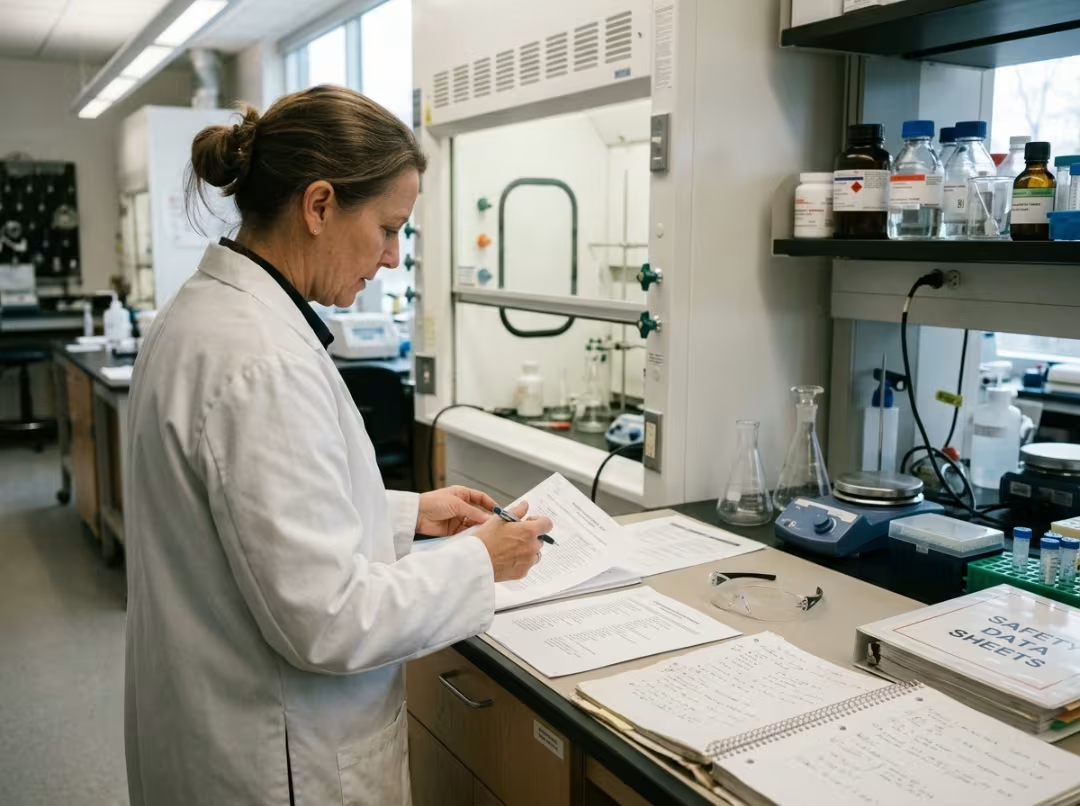
List your acids, their concentrations, and their operating temperatures before you look at a single product page. Then spec materials to match that list. Doing it backwards — falling for a hood and hoping it survives your chemistry — is exactly how labs end up staring at chloride pitting or HF damage a year into ownership.
Size, Sash, and Working Clearance
Match the interior to your equipment. Hot blocks, microwave digesters, and stacked sample racks all need room, and cramming them in strangles airflow and containment. Pick a sash design that fits how your team actually works, and make sure the hood settles into your benching instead of fighting it.
Confirm the Whole Airstream
Check that the duct, blower, and any scrubber materials handle the same chemicals as the hood interior. This is the step everyone skips and the one that quietly wrecks otherwise solid installations. The airstream is only as resistant as its weakest component — and acid always finds it.
Plan Installation, Drainage, and Wash-Down
Plan for integral drains, wash-down capability wherever perchloric acid is in the mix, and enough service access to actually inspect and maintain the thing. Factor in corrosion-resistant surroundings, too, because the vapor doesn’t respect the hood’s edges. Sorting this out early saves painful rework later; our guide to laboratory design and planning walks through how to sequence these calls across a project.
|
Decision factor |
What to confirm |
Why it matters |
|---|---|---|
|
Chemical compatibility |
Acids, concentrations, temperatures |
Wrong material fails silently over time |
|
Interior size |
Fits hot blocks, digesters, racks |
Overcrowding disrupts containment |
|
Sash design |
Matches workflow and clearance |
Correct height maintains face velocity |
|
Whole-airstream materials |
Duct, blower, scrubber compatibility |
Airstream is only as strong as its weakest part |
|
Wash-down / drainage |
Perchloric wash-down, integral drains |
Prevents salt buildup and pooling |
|
Service access |
Room for inspection and maintenance |
Corrosion needs regular monitoring |
Get the chemistry right, confirm the whole airstream, and plan the install around the acids you actually run. Do those three and the rest of the decision mostly makes itself.
Common Specification Mistakes to Avoid
Most acid digestion hood failures trace back to the same short list of predictable errors — and every one of them has a fix.
|
Mistake |
Why it’s dangerous |
Better approach |
|---|---|---|
|
Using a general-purpose hood for routine acid digestion |
Coated materials corrode silently, then fail on containment |
Specify a dedicated hood matched to your acids |
|
Choosing on price over chemical compatibility |
The cheapest hood often fails fastest under vapor |
Run a compatibility audit before comparing costs |
|
Overlooking duct and blower compatibility |
Corrosion moves downstream, out of sight |
Specify the entire airstream as acid-resistant |
|
Treating all acids the same |
Chlorides pit stainless; HF attacks many materials |
Match material to each specific acid |
|
Choosing stainless for chloride-heavy work |
Pitting causes deep, spreading corrosion |
Use polypropylene for HCl and chloride exposure |
|
Manifolding a perchloric hood with others |
Perchlorate plus organic vapor is an explosion hazard |
Give perchloric its own dedicated, washable duct |
|
Ignoring perchlorate salt buildup |
Dried deposits are shock-sensitive |
Use a wash-down hood and rinse ductwork regularly |
|
Ignoring slow condensing-vapor corrosion |
Damage stays invisible until containment fails |
Inspect interiors and ducts on a schedule |
Look at that list, and a pattern jumps out. Almost every failure stems from one of two bad habits: treating acid digestion as generic chemistry, or thinking of the hood as a standalone box rather than a complete system. Spec to the acid, protect the whole airstream, and give perchloric its own path — that’s most of the battle right there.
Frequently Asked Questions
What is an acid digestion fume hood used for?
It safely contains and exhausts the corrosive vapors thrown off when samples are broken down with strong, often heated acids. Common jobs include trace metal analysis, environmental sample prep, and mineral digestion — all settings where standard hood materials would corrode.
What’s the difference between an acid digestion hood and a standard fume hood?
A standard hood uses coated steel or laminate that acid vapor eventually eats through. An acid digestion hood uses non-metallic, corrosion-resistant materials — typically polypropylene — throughout the entire airstream, including the ductwork, so it withstands continuous acid exposure.
Why is polypropylene used for acid digestion fume hoods?
It resists a broad range of acids, won’t corrode because it’s non-metallic, and welds seamlessly to eliminate joints where vapor can collect. Flame-retardant grades add a safety margin. That mix makes it the practical default for most acid digestion work.
Can I use a stainless steel fume hood for acid digestion?
Only for specific chemistry. Stainless handles some organic solvents and withstands general wear, but chlorides cause pitting, and hydrofluoric acid attacks it outright. For hydrochloric acid or any chloride-heavy or HF work, stainless is the wrong call.
Do I need a special fume hood for perchloric acid?
Yes. Perchloric acid requires a dedicated wash-down hood with integral water spray and non-reactive ductwork. Its vapor forms shock-sensitive perchlorate salts, so the duct must be rinsed and cannot be shared with organic vapor exhausts.
Are ductless fume hoods suitable for acid digestion?
Rarely. Ductless units depend on filters that, when aggressive digestion vapor saturates them, fail quickly. They can suit light, filter-compatible applications, but they’re never appropriate for hydrofluoric or perchloric acid, which both demand external exhaust.
What material should the ductwork be for an acid fume hood?
It has to resist the same acids as the hood interior — usually PVC or another non-metallic, acid-compatible material. Standard sheet-metal duct corrodes and just relocates the problem downstream. For perchloric acid, the duct must also be washable.
Getting the Specification Right
The right acid digestion fume hood comes down to three things: your acids, your process, and whole-airstream compatibility. Not a durability claim, not a lower sticker price. Nail the chemistry audit, confirm every surface the vapor touches, and give perchloric acid its own dedicated, washable path, and you’ve headed off the failures that catch most labs off guard.
Planning a new lab or upgrading an old one? Walk your acid workflows against these requirements before you commit to any equipment. Our team can help you audit chemical compatibility, spec the right acid-resistant or perchloric-ready hood, and coordinate it with chemical-resistant laboratory furniture so your benching, casework, and containment all pull in the same direction. Reach out for a compatibility review or a quote whenever you’re ready to move.
Disclaimer: This article is for educational purposes only and does not constitute safety, engineering, or compliance advice. Chemical compatibility and applicable standards vary by application and jurisdiction. Always verify material compatibility and current safety requirements for your specific acids and processes before specifying or operating any fume hood.