A general steel storage cabinet looks like it should handle anything you put in it. Then someone stores a few bottles of concentrated hydrochloric acid inside, and within months the hinges seize, the shelf edges bloom with rust, and a faint acidic smell greets everyone who opens the door. That cabinet didn’t fail because it was cheap. It failed because it was never built to sit in the path of corrosive vapor.
This is the trap most labs fall into. Acids don’t need to spill to cause damage — they release vapor that attacks metal, degrades coatings, and slowly compromises the very structure meant to contain them. For a lab manager, that means recurring replacement costs. For a safety officer, it means a storage failure waiting to be flagged in an audit. For a procurement specialist, it means buying the wrong thing twice.
This guide walks through what actually sets an acid safety cabinet apart from alternatives, how to assess construction and ventilation, and how to choose a unit that fits your acids, your space, and your compliance obligations. The goal is a confident purchase the first time.
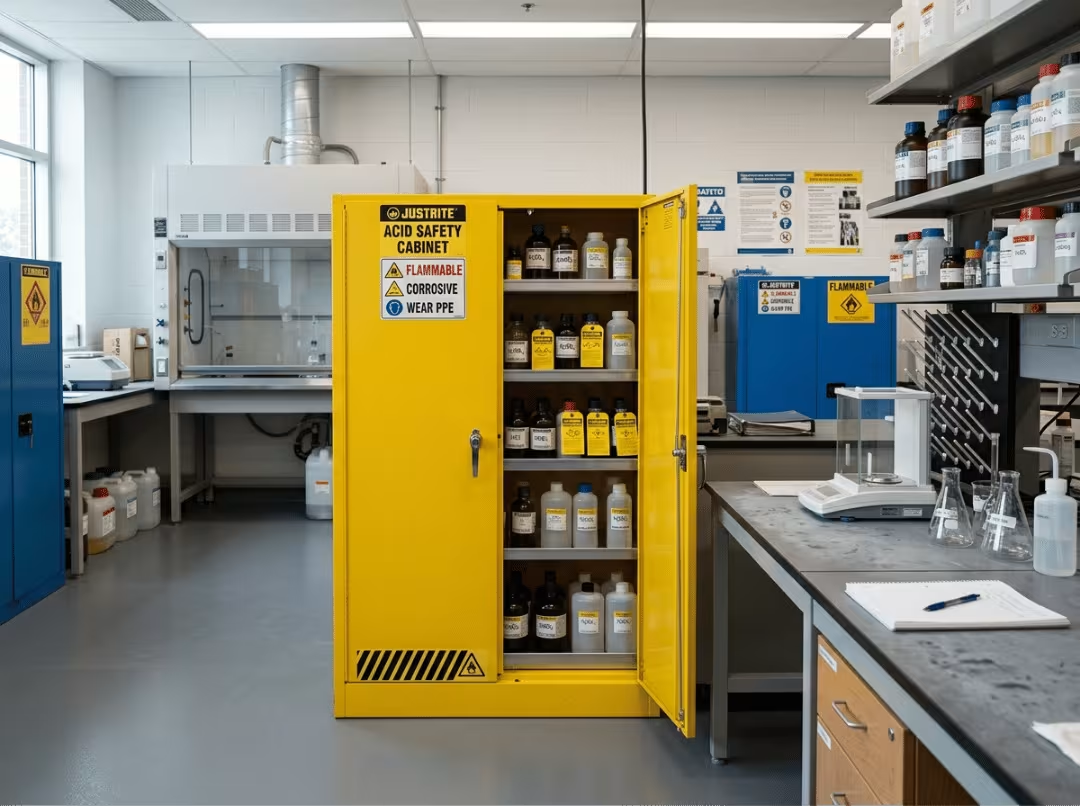
Why a Standard Cabinet Can’t Hold Acids Safely
Corrosive acids do their damage in two ways, and both matter for storage.
The obvious one is spillage. A tipped or leaking bottle releases liquid that eats away at unprotected surfaces and can react with whatever it comes into contact with. The less obvious — and more common — problem is vapor. Concentrated acids like hydrochloric and nitric acid off-gas continuously, even from sealed bottles that get opened and closed daily. That vapor condenses on interior surfaces, and on bare or powder-coated steel it starts corroding immediately.
A standard cabinet has no defense against either. Its shelves aren’t rated to resist acid attack, it has no sump to catch a leak, and its coating wasn’t formulated for constant acidic exposure. The result is a cabinet that degrades from the inside, loses structural integrity, and eventually can’t be trusted to contain its contents.
The stakes go beyond a ruined cabinet. Improper acid storage puts people at risk of exposure, damages nearby equipment and benchwork, and creates liability if an inspector finds corrosives stored in non-compliant conditions. Getting storage right is one of the cheapest forms of risk reduction available to a lab.
Acid Cabinet vs. Flammable Cabinet vs. General Cabinet
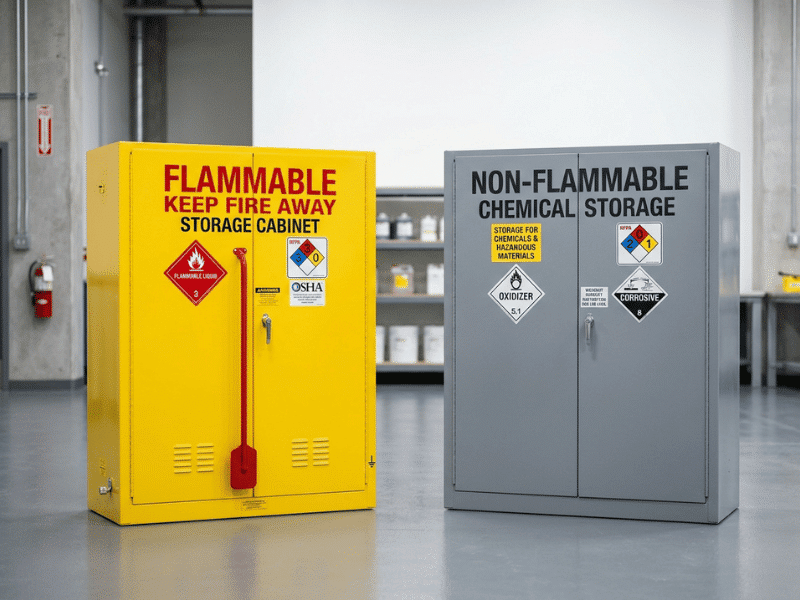
The single most expensive mistake in this category is buying the wrong type of safety cabinet. The three are not interchangeable, and confusion is common because they can look similar on the outside.
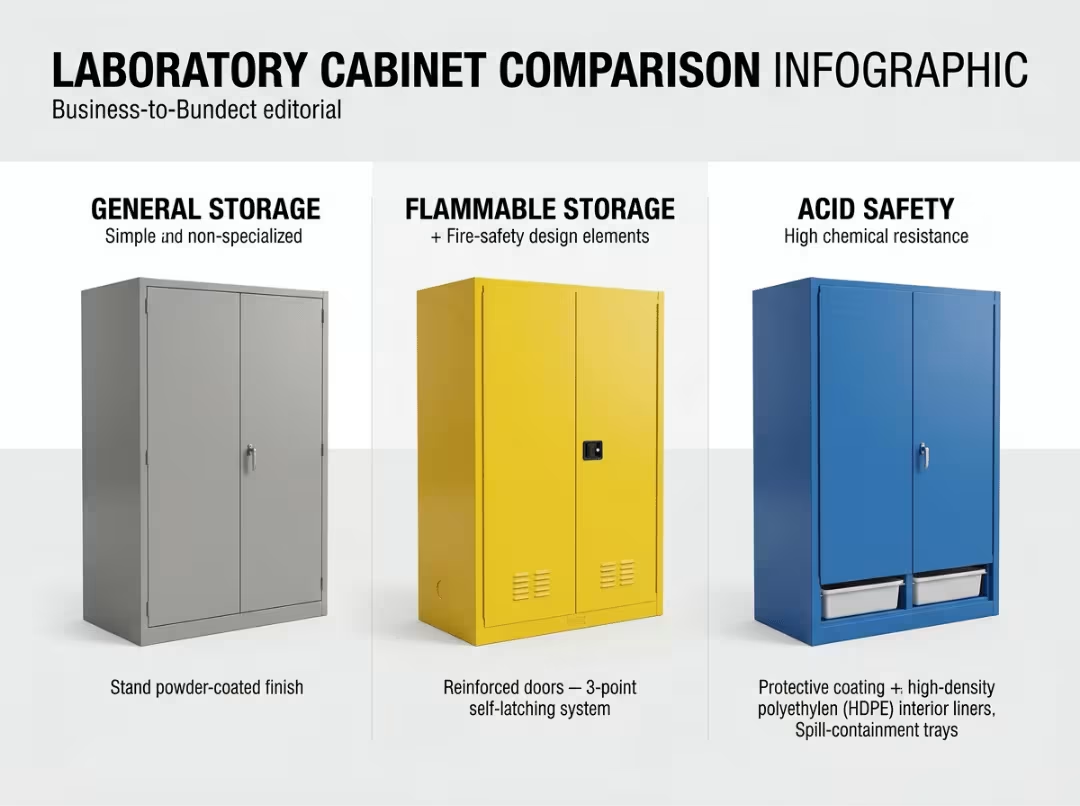
General storage cabinets are for non-hazardous items — glassware, consumables, equipment, and dry reagents. They offer no chemical resistance and no spill containment. They belong nowhere near corrosives.
Flammable storage cabinets are engineered for fire risk. They’re built from fire-rated steel, designed to keep contents below a critical temperature during a fire, and often carry FM or UL fire ratings. What they are not built for is acid vapor. Their steel interiors corrode when exposed to acids, which is why storing acids in a flammable cabinet quietly destroys it — and misfiles a corrosive hazard under a fire-protection solution that doesn’t address the actual risk.
Acid (corrosive) safety cabinets are purpose-built for chemical attack, not fire. They use acid-resistant interiors — either high-density polyethylene or specially coated steel — plus a leak-proof sump to contain spills. Their job is to resist corrosion and contain leaks over years of vapor exposure.
The rule is simple: fire risk calls for a flammable cabinet; corrosion risk calls for an acid cabinet. A lab that stores both flammable solvents and corrosive acids needs both types of cabinet, not one cabinet asked to do two jobs.
Cabinet Material: The Core Decision
Material is where an acid cabinet earns its keep. Two constructions dominate the market, and the right choice depends on what you store and how aggressive it is.
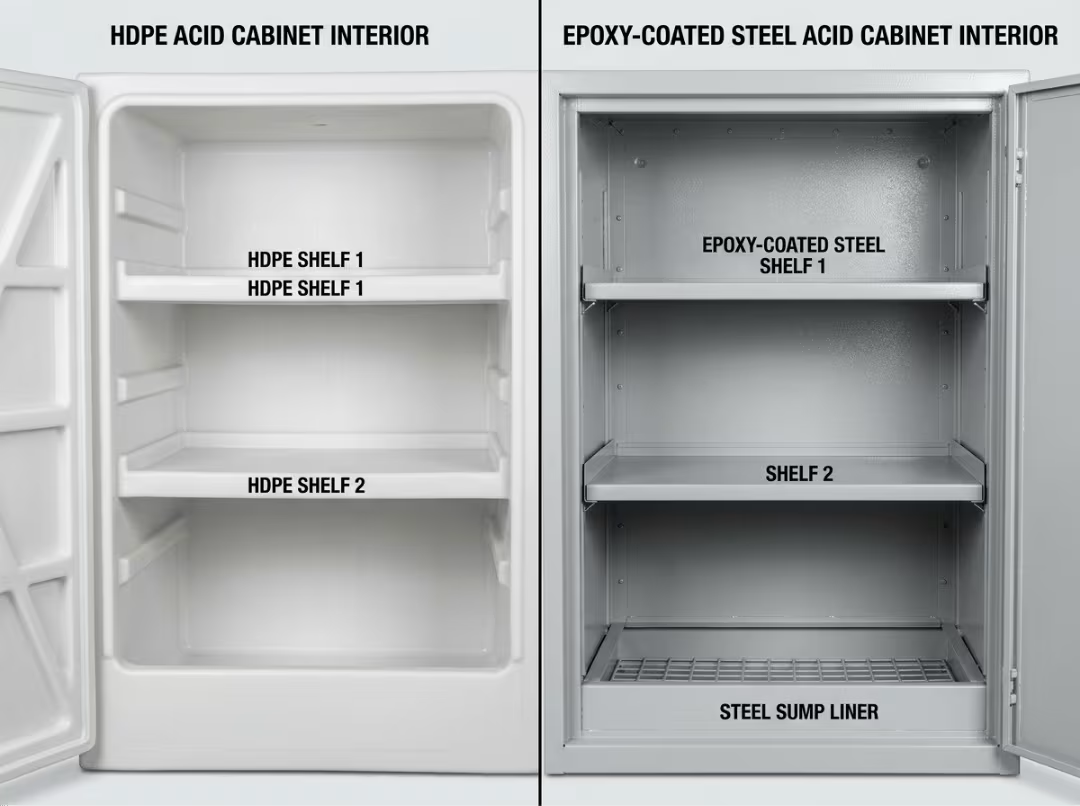
HDPE vs. Epoxy-Coated Steel
High-density polyethylene (HDPE) is inherently resistant to acid attack. It doesn’t rely on a coating that can be scratched or worn away — the material itself resists a broad range of concentrated acids, including aggressive ones like sulfuric and nitric. For labs handling strong or high-concentration acids, HDPE (or comparable polypropylene) is the safer default. Its limitation is structural: polyethylene is less rigid than steel and generally less suited to very heavy loads or high-heat environments.
Epoxy-coated steel offers structural rigidity, higher load capacity, and a more familiar cabinet feel. The catch is that its acid resistance depends entirely on the coating staying intact. A quality multi-step epoxy finish resists many common lab acids well, but a chip, scratch, or worn seam exposes bare steel to attack. Coated steel makes the most sense for lower-concentration acids, mixed general-corrosive storage, or situations where load and durability matter more than resistance to the harshest reagents.
This is what “chemical compatibility” actually means in practice: it’s not whether a cabinet resists “acids” in the abstract, but whether its interior material resists the specific acids you store, at the concentrations you store them. A cabinet fine for dilute acetic acid may be a poor choice for fuming nitric acid.
|
Factor |
HDPE / Polyethylene |
Epoxy-Coated Steel |
|---|---|---|
|
Acid resistance |
Excellent — inherent, not coating-dependent |
Good, but depends on coating integrity |
|
Strong/concentrated acids |
Well suited |
Risky if coating is breached |
|
Load capacity |
Lower |
Higher |
|
Heat tolerance |
Lower |
Higher |
|
Vulnerability |
Can deform under heavy load |
Corrodes where coating chips or wears |
|
Best fit |
Strong acids, high-concentration storage |
Dilute/general corrosives, heavier loads |
Sump Trays and Seamless Construction
Whatever the material, two features separate a real acid cabinet from a repurposed box.
A sump tray is a leak-proof reservoir at the base that captures spills before they escape the cabinet or reach the floor. Check that it’s an integral part of the design and sized to hold a meaningful volume — not a shallow lip that overflows the moment a bottle breaks.
Seamless or fully welded construction matters because seams and joints are where acid can get through. A cabinet with a molded one-piece interior (HDPE) or continuously welded, fully coated seams (steel) has no gaps for liquid or vapor to exploit. Spot-welded or riveted interiors with exposed edges are weak points that corrode first.
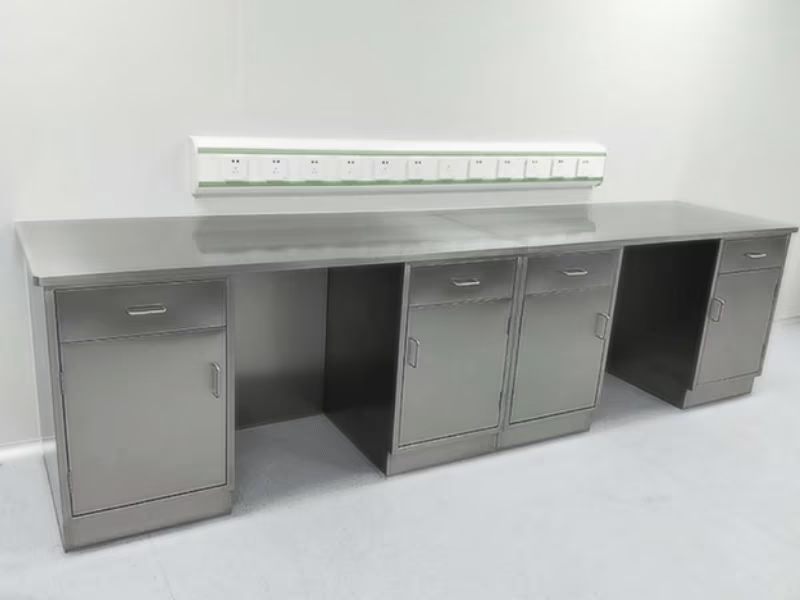
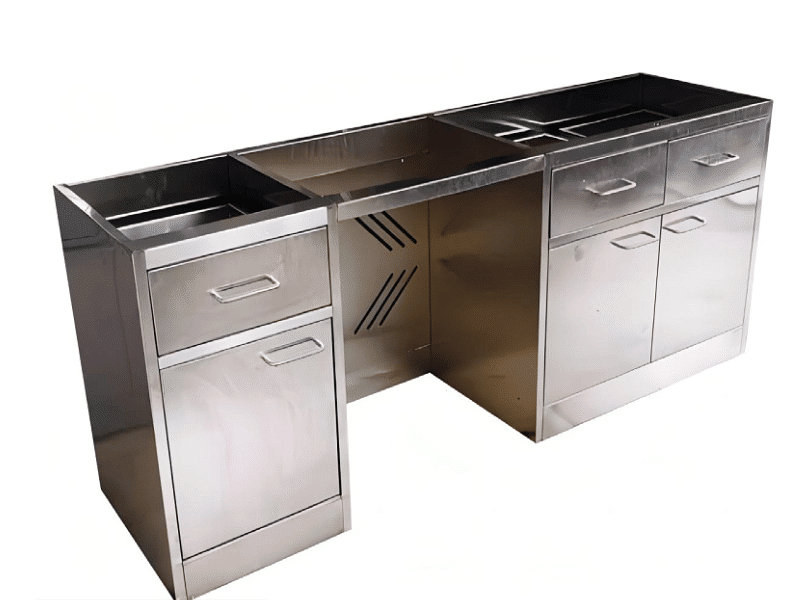
These same material principles carry over to the bench surfaces where acids are actually handled. If you’re specifying worktops for acid-handling zones, the worktop material you choose — epoxy resin or ceramic for the most aggressive exposure — follows the same compatibility logic as the cabinet interior.
Ventilation: Passive vs. Active
There’s a persistent assumption that active ventilation is automatically the superior choice. It isn’t. The right ventilation strategy depends on what you store and what your facility can support.
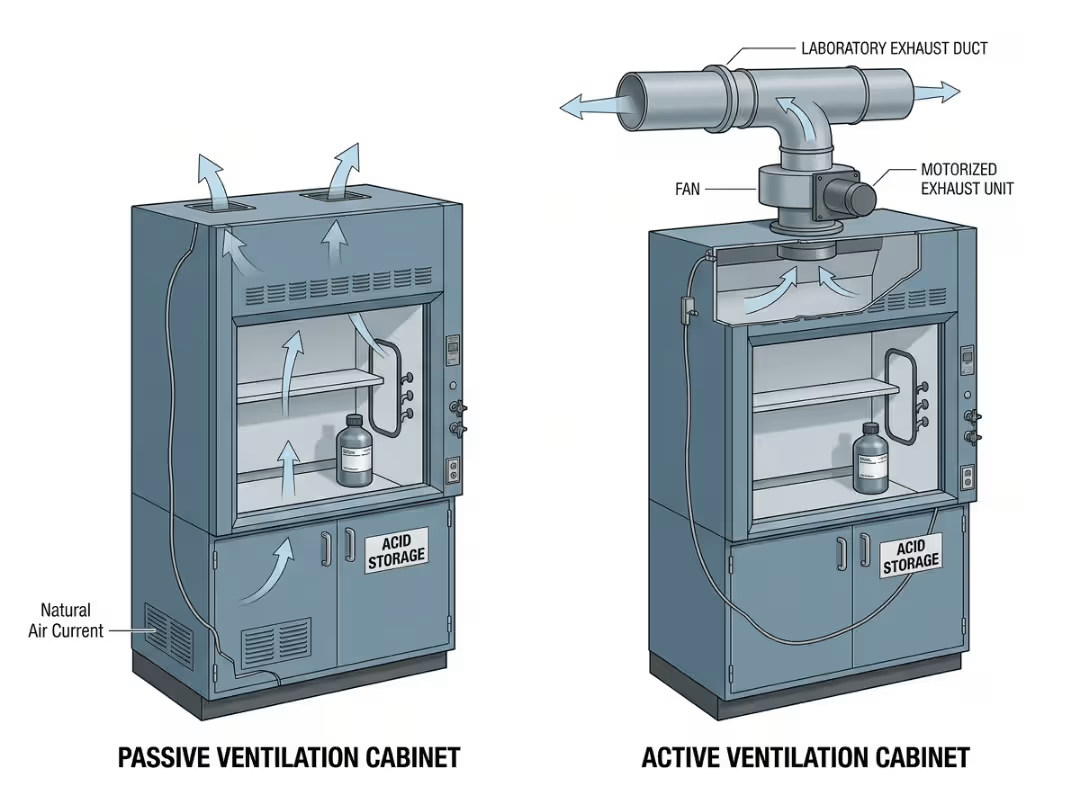
Passive ventilation uses vent ports, usually with flame or filter fittings, that let vapor disperse without a powered connection. It reduces low-level vapor accumulation and is often adequate for smaller quantities or lower-concentration acids. Its weakness shows with high-concentration or heavily off-gassing acids: passive ports may not clear vapor fast enough, and in some cases an open vent can actually let corrosive vapor migrate into the surrounding room rather than away from it. For aggressive acids, passive-only venting can be a false comfort.
Active ventilation connects the cabinet to a powered laboratory exhaust network, drawing vapor out continuously and discharging it safely. This is the appropriate choice for high-concentration acids, larger storage volumes, or any situation where vapor buildup is a genuine concern. The trade-offs are real: it costs more, it requires ducting and coordination with facility engineering, and it only works if your building actually has exhaust capacity to tie into.
The honest guidance is this. Match ventilation to your acids, not to a sales pitch. Low volumes of dilute acids may be perfectly safe with passive venting. Concentrated or fuming acids generally warrant an active connection. And whatever you choose, whether a vent should be connected at all — and how — is a decision to confirm against your local regulations and your facility’s EHS assessment, not a universal default.
Acid Cabinet vs. Fume Hood: Different Jobs
These two are sometimes discussed as if one were to replace the other. They don’t.
An acid cabinet is for storage — holding closed containers safely when they’re not in use. It is not designed for opening bottles, dispensing, diluting, or running any procedure inside it.
A fume hood is for handling — capturing and exhausting vapors generated while you actively work with acids. The moment you open a concentrated acid to pour, transfer, or dilute it, that operation belongs in a fume hood, not at an open bench and certainly not inside a storage cabinet.
In practice, a well-set-up lab uses both. Acids live in the cabinet. When needed, they’re carried to a fume hood for handling, then returned to storage. For labs that use acids frequently, keeping a small point-of-use quantity near the fume hood reduces repeated transport — but the main inventory still belongs in the dedicated cabinet, and point-of-use amounts should stay within the limits your safety policy allows.
Chemical Segregation Inside the Cabinet
Buying an acid cabinet is only half the job. What you put together inside it matters just as much, because not all acids are compatible with each other.
The most important pairings to keep apart:
- Oxidizing acids and organic acids. Nitric acid is a strong oxidizer. When stored alongside organic acids like acetic acid — or other organic/flammable materials — it can create a serious reaction and fire risk. These must never share a compartment.
- Nitric acid and hydrochloric acid. When kept together, their vapors can interact and, under the wrong conditions, form aggressive and hazardous mixtures. Common practice is to store nitric acid separately from hydrochloric acid.
- Acids and bases. Corrosive does not mean compatible. Acids and alkalis stored together can react violently if containers fail. Bases belong in their own dedicated storage.
- Acids and cyanides or sulfides. Contact between acids and these substances can release toxic gases. They must be stored well apart.
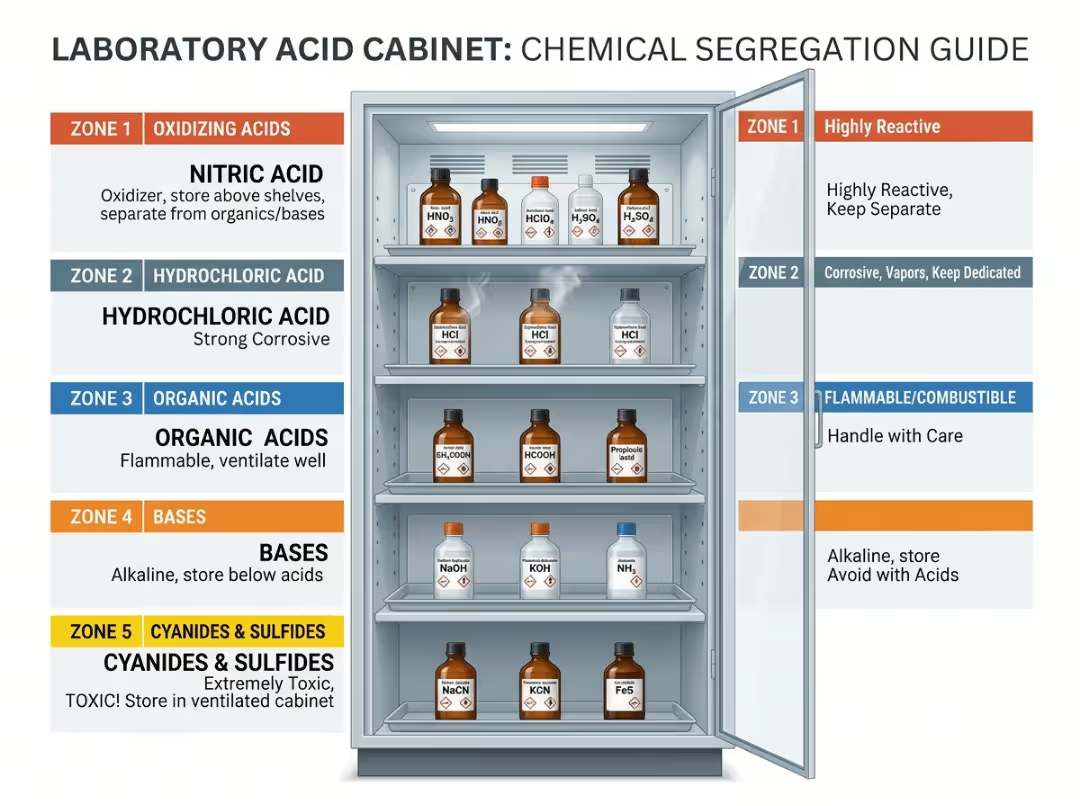
The practical solution is segregation. Use separate cabinets for incompatible groups, or a cabinet with divided, isolated compartments and secondary containment for each. When in doubt, keep oxidizers, organic acids, and bases in physically separate storage. A single well-chosen cabinet doesn’t excuse mixing chemicals that shouldn’t meet.
How to Choose the Right Cabinet for Your Facility
Rather than starting from a catalog, start from your own inventory and space. Work through these five questions in order.
1. What acids do you actually store? List them by type and concentration. Strong or fuming acids push you toward HDPE and active ventilation. Dilute, general corrosives may be fine in coated steel with passive venting. This single answer drives most of the others.
2. How much do you store? Total your container count and volumes, and add headroom for growth. Larger inventories increase both capacity needs and vapor load, which affects ventilation choice. Undersizing forces overcrowding — the enemy of safe segregation.
3. What ventilation can your facility support? Before specifying an active cabinet, confirm your building has exhaust capacity to connect to. If it doesn’t, either plan the infrastructure or select a configuration your facility can genuinely accommodate.
4. How much floor space and clearance do you have? Under-counter units save space in smaller labs; floor-standing units handle bulk storage. Measure not just the footprint but the clearance for doors to open and for the unit to sit clear of exits and traffic.
5. Do you need mobility? If storage needs shift or acids move between rooms, a mobile unit on lockable casters adds flexibility. For fixed, high-volume storage, a stationary anchored unit is more stable.
When you’re ready to compare specifications and configurations, reviewing a manufacturer’s range of chemical storage cabinets against these five answers turns a vague search into a targeted shortlist.
Installation and Placement
A correctly chosen cabinet still underperforms if it’s badly placed. A few practical rules cover most situations.
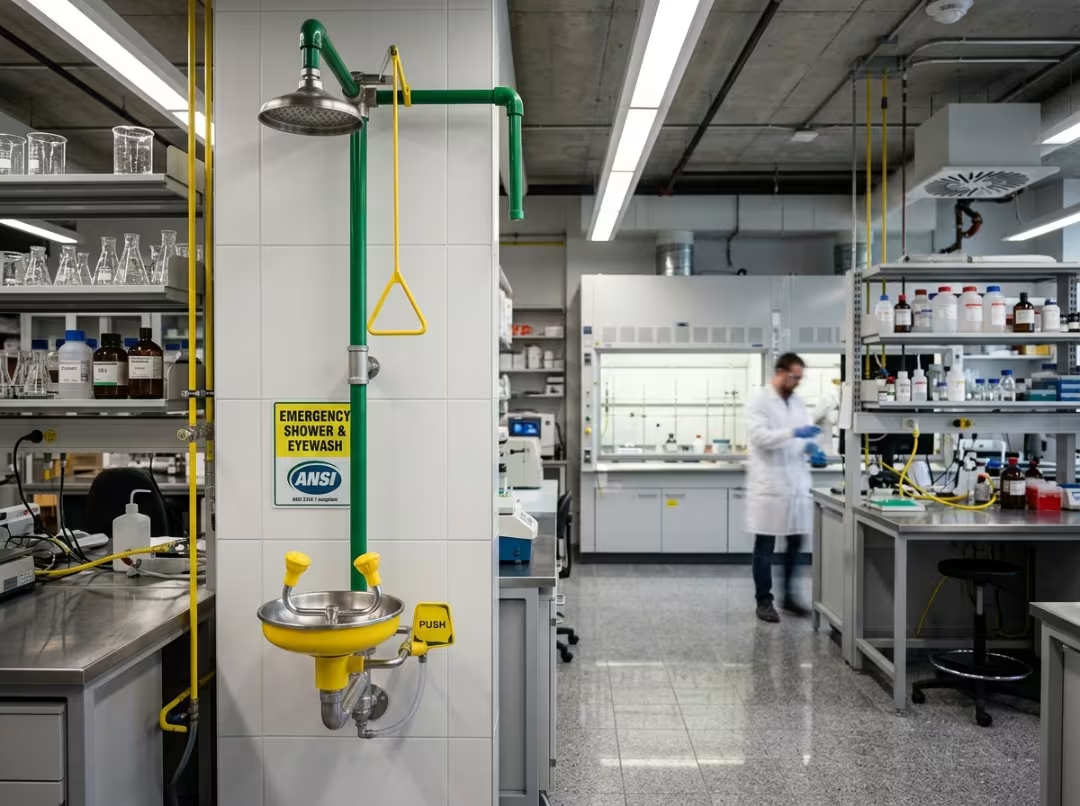
- Keep clear of exits and emergency equipment. Position the cabinet where it doesn’t block egress routes, and keep it accessible to — but not obstructing — eyewash stations and emergency showers.
- Stay away from heat and direct sunlight. Heat accelerates vapor generation and can stress both contents and structure.
- Anchor floor-standing units. Secure tall cabinets to prevent tipping, particularly in seismic zones or high-traffic areas.
- Level the unit. Doors seal properly and sump trays contain correctly only on a level surface. An out-of-level cabinet can develop door gaps that let vapor escape.
- Coordinate ventilation early. If the cabinet is vented to an exhaust network, involve facility engineers before installation so ducting and routing are planned, not improvised.
Common Purchasing Mistakes
The most costly errors in this category repeat across labs. Seeing them as scenarios makes them easier to avoid.
A procurement team, working from a generic spec, orders a flammable cabinet to store acids because it “looked like a safety cabinet.” Within a year the interior is corroding and the unit no longer protects anything — a full replacement, plus the audit finding it triggered.
A lab reuses an existing coated steel cabinet for concentrated acids, reasoning that the coating will hold up. A minor scratch on a shelf edge becomes a corrosion point, and the damage spreads unseen until a shelf fails under load.
A manager sizes a cabinet to today’s inventory with no margin, then crowds new acids in as the lab grows. Overcrowding forces incompatible acids onto the same shelf, quietly recreating the exact hazard the cabinet was bought to prevent.
A facility buys an actively vented cabinet without checking whether the building has exhaust capacity, and the vent connection is left capped — delivering none of the protection it was intended to provide.
Each of these traces back to one root cause: treating an acid cabinet as a generic box rather than matching it to specific acids, quantities, and infrastructure. The five-question framework above is the antidote.
Frequently Asked Questions
What is the difference between an acid cabinet and a corrosive cabinet?
In most contexts, they refer to the same thing. “Corrosive cabinet” is the broader term for storage of corrosive substances — including both acids and, in some cases, bases. “Acid cabinet” specifically emphasizes acid storage. What matters more than the label is the interior material and whether it’s compatible with your specific chemicals, since acids and bases still need to be segregated even within corrosive storage.
Can I store flammable liquids in an acid safety cabinet?
No. Flammable liquids belong in a fire-rated flammable storage cabinet designed to protect against ignition. An acid cabinet is built for corrosion resistance, not fire protection, and mixing corrosive and flammable storage creates both a compliance problem and a genuine safety risk. A lab with both hazards needs both cabinet types.
Can nitric acid be stored in the same cabinet as hydrochloric acid?
Standard practice is to keep them separate. Nitric acid is a strong oxidizer, and its vapors can interact dangerously with hydrochloric acid. Store nitric acid apart from hydrochloric acid — and apart from organic acids and flammables — using separate cabinets or isolated, individually contained compartments.
Do acid cabinets need to be vented?
It depends on the acids and quantities. Low volumes of dilute acids may be safely stored with passive venting, while concentrated or fuming acids generally warrant an active exhaust connection. There’s no universal requirement that every acid cabinet be actively vented — confirm the right approach against your local regulations and facility EHS assessment.
Is polyethylene better than epoxy-coated steel for acid storage?
For strong or high-concentration acids, HDPE is usually the safer choice because its resistance is inherent to the material and doesn’t depend on a coating staying intact. Epoxy-coated steel offers better load capacity and rigidity and is well-suited to dilute or general corrosives, but a breached coating exposes the steel to attack. The best choice follows your specific acid types and concentrations.
Are acid cabinets required by OSHA?
OSHA and related standards require that hazardous chemicals, including corrosives, be stored safely and in compatible conditions — but the exact requirements depend on the chemicals, quantities, and your jurisdiction. Rather than assuming a blanket mandate, base your storage on your chemical inventory, applicable regulations, and a facility risk assessment. A dedicated acid cabinet is typically the most practical way to meet those obligations for corrosive storage.
Choosing With Confidence
An acid safety cabinet isn’t a generic purchase you can standardize across every lab. The right unit is the one matched to the acids you actually store, the quantities you keep, the ventilation your building can support, and the space you have to work with. Get those four factors right, and the cabinet protects your people, your equipment, and your compliance standing for years. Get them wrong, and you’ll be buying again — often after a corrosion failure or an audit finding forces your hand.
The practical next step is straightforward: audit your current acid inventory by type and concentration, check how those chemicals are stored today, and identify any segregation or compatibility gaps. That short exercise tells you exactly what specification you need. If you’re planning storage as part of a broader fit-out, reviewing your options within a full laboratory furniture system helps you coordinate cabinets, worktops, and ventilation as one considered plan rather than a series of disconnected purchases.