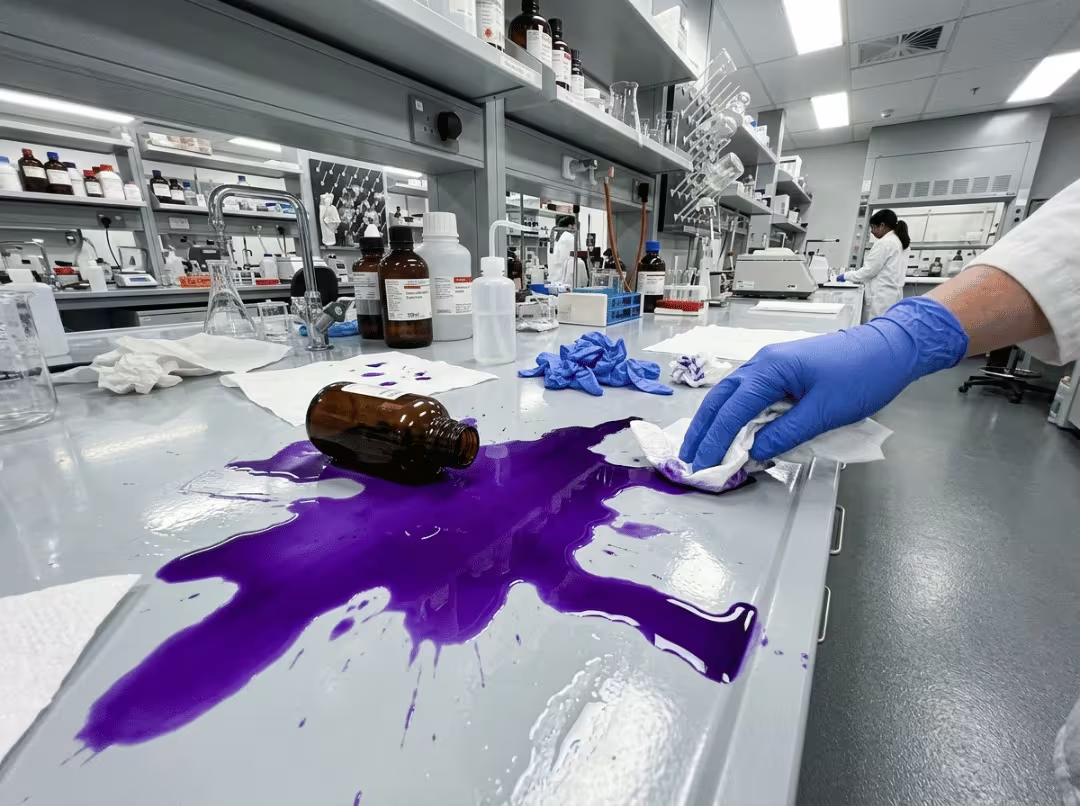
Crystal violet is not a forgiving dye. It carries a strong positive charge that bonds to most bench surfaces almost on contact — and the longer it sits, the more completely it sets. Standard chemical spill kits aren’t built for this. General spill checklists built around acids, bases, and organic solvents don’t account for how this dye behaves, and following them too literally can turn a recoverable spill into a permanent stain.
This guide covers the full cleanup path: fresh spills, dried stains, when bleach is and isn’t appropriate, and how your approach needs to change depending on whether your bench is epoxy resin, phenolic resin, stainless steel, laminate, or wood.
Why Crystal Violet Stains So Aggressively
Crystal violet is a triarylamine dye with a strong positive charge. That charge forms an ionic bond with negatively charged materials — glass, resin countertops, anything porous. This is why wiping it with a damp cloth often makes things worse: you’re spreading a bonded dye, not rinsing a loose liquid.
Timing is everything. In the first few seconds, the dye is still mostly in liquid form and hasn’t fully anchored. After ten minutes, the bond has strengthened and the dye has begun penetrating microscopic surface irregularities. That’s the difference between a five-minute fix and a multi-hour recovery — or no recovery at all.
First: Determine Whether It’s a Fresh Spill or a Dried Stain
Don’t reach for a solvent until you know what you’re dealing with. The two scenarios require completely different approaches.
A fresh spill still has liquid crystal violet on the surface. The bond is forming but hasn’t set. Fast action — within the first minute — gives you a real chance at full, trace-free removal.
A dried stain has already formed a residue film or soaked into the surface. Blotting alone won’t help. You’ll need to reactivate the dye with solvent before it can be lifted.
Everything that follows depends on this distinction.
How to Clean a Fresh Crystal Violet Spill
Speed matters more here than any specific technique. The most common mistake isn’t using the wrong solvent — it’s losing time while the dye sets. Act in this order:
Step 1: Contain the spread. Lay absorbent material around the perimeter before doing anything else. Crystal violet that reaches a gap, drawer edge, or porous surface becomes a second cleanup problem immediately.
Step 2: Blot — do not wipe. Press a paper towel or absorbent pad straight down and lift. Wiping smears the dye across a larger area and drives it into surface pores. Most people’s instinct is to wipe. That instinct is wrong here.
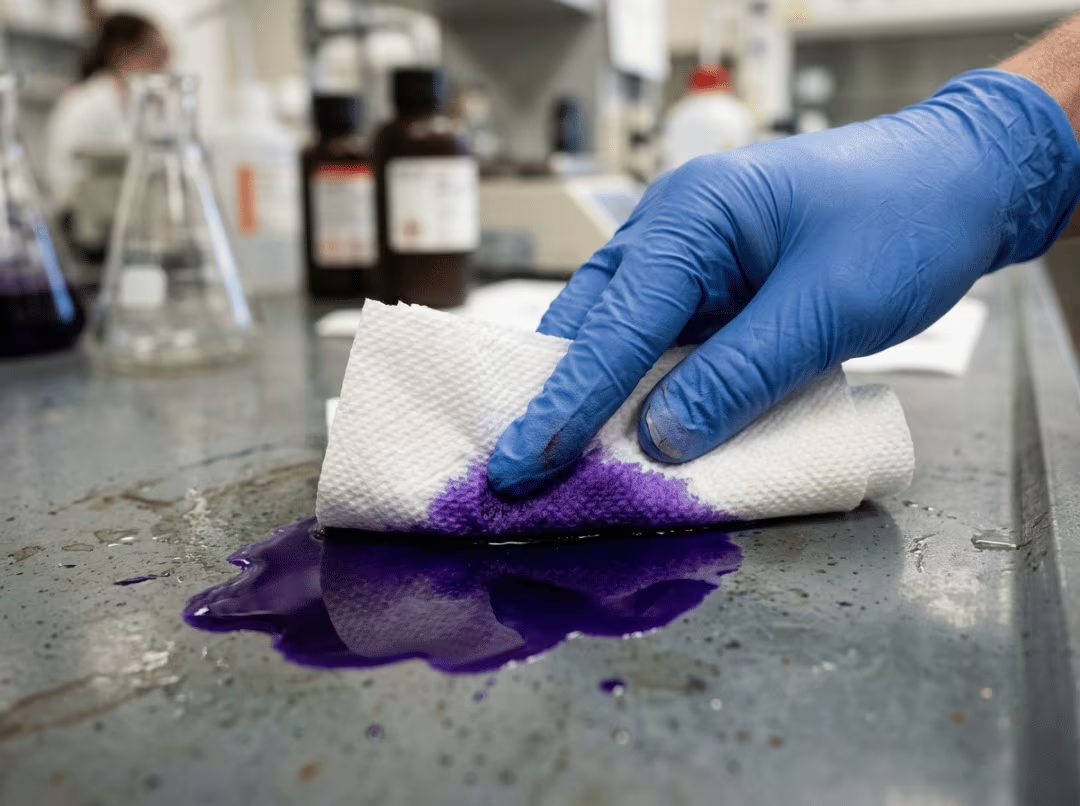
Step 3: Apply alcohol-based solvent. Ethanol, isopropanol, or methanol disrupts the ionic bond before it fully sets. Apply generously, let it sit for 30 to 60 seconds, then blot again. Don’t rub.
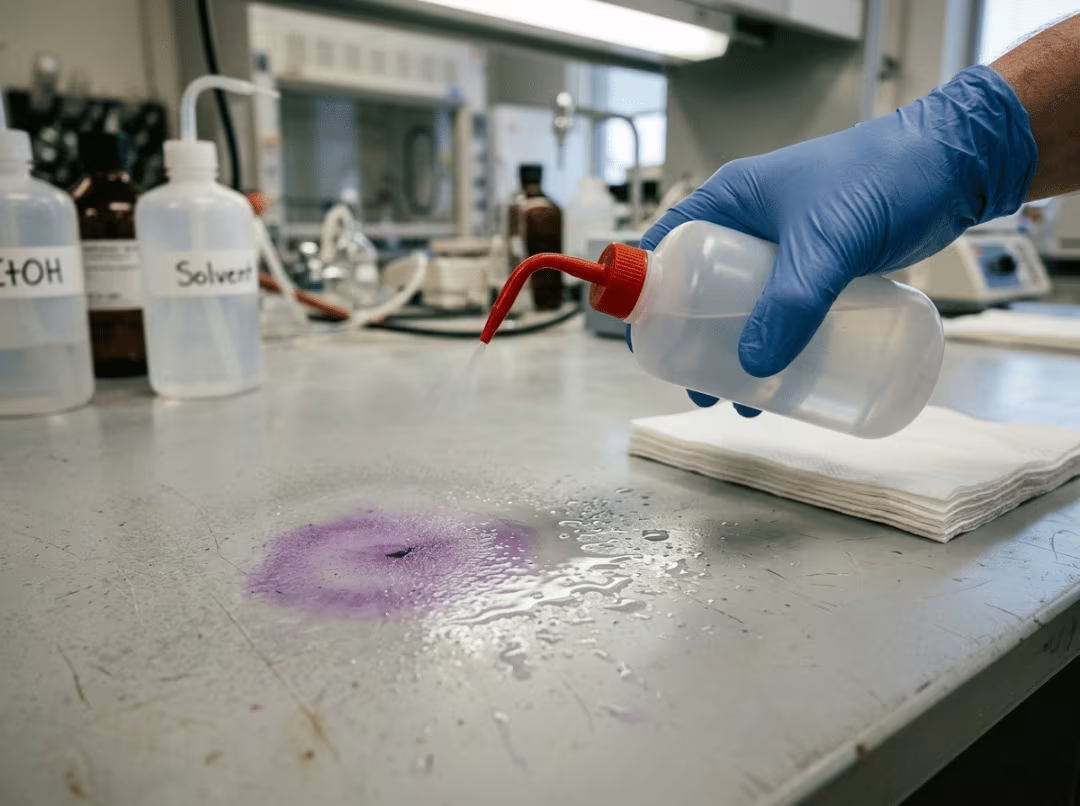
Step 4: Rinse with water. This removes loosened dye and residual solvent. Blot dry.
Step 5: Inspect under direct light and repeat if needed. A faint purple tint invisible under ambient light often shows clearly under a direct beam. If any trace remains, run the solvent and rinse cycle again — it’s far easier to catch residue now than after it dries.
A fresh crystal violet spill cleaned within the first minute typically leaves no visible trace. The same spill left for ten minutes frequently needs the dried-stain protocol instead — and even then, full recovery isn’t always possible depending on the surface.
How to Remove a Dried Crystal Violet Stain
Once crystal violet has dried, blotting and rinsing won’t touch it. The dye has partially anchored, and the first priority is reactivating it.
Step 1: Re-wet the stain with solvent. Saturate the dried area with ethanol, isopropanol, or methanol and let it sit for two to three minutes. The goal is to loosen the ionic bond enough so the dye can be lifted rather than smeared.
Step 2: Work the stain loose with gentle scrubbing. Use a non-abrasive pad in small circular motions. Avoid steel wool, scouring pads, or anything that will scratch resin or laminate — scratches create more surface texture for future dye to bond into.
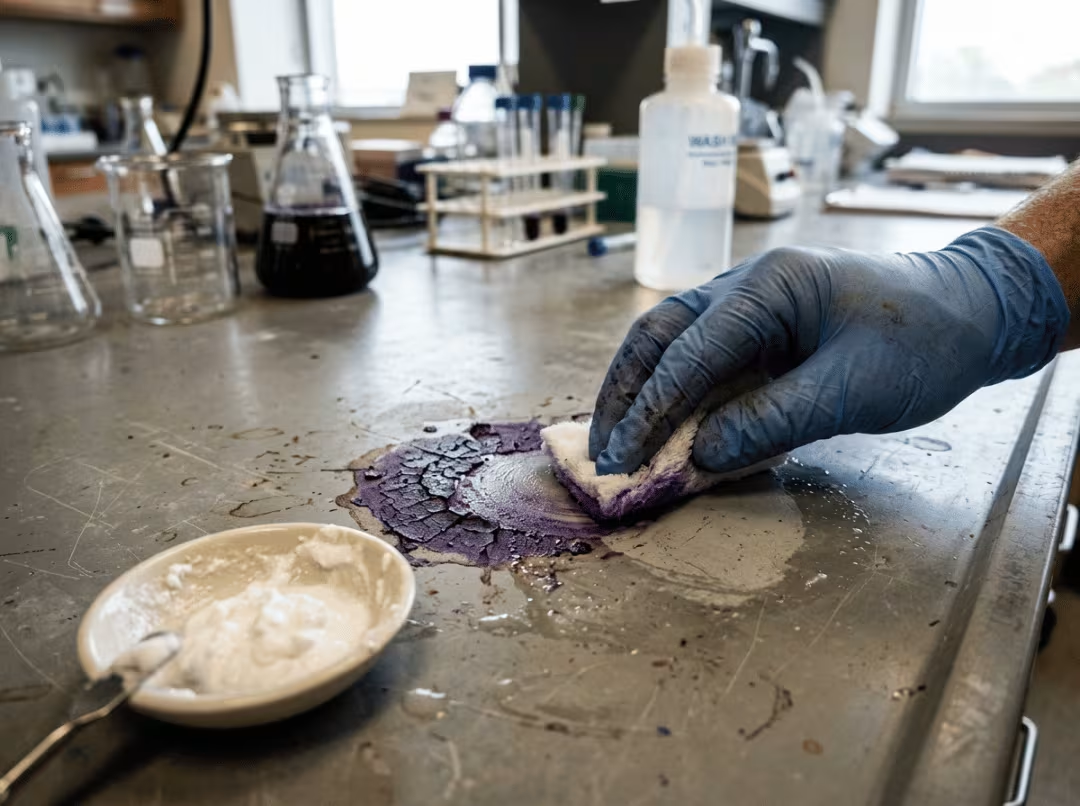
Step 3: Apply a baking soda paste for residual pigment. Mix baking soda with a small amount of water and use it as a mild abrasive to lift remaining pigment without the surface damage that harsher abrasives would cause.
Step 4: Rinse thoroughly and repeat. Most dried crystal violet stains need two to three full rounds of this process. On non-porous surfaces like epoxy resin or stainless steel, full recovery is usually achievable with enough passes. On porous materials, it may not be.
When Bleach Is and Isn’t the Right Call
Solvents dissolve and lift the dye physically. Bleach works differently — it breaks down the chromophore, the part of the crystal violet molecule responsible for its color, through oxidation. That makes it effective for stains that solvents can’t fully remove, but it also makes it a last resort, not a starting point.
Leading with bleach skips the approach most likely to fully remove the stain, and it introduces surface risks that solvents generally don’t. Before applying bleach to any bench surface, spot-test on an inconspicuous area — laminate in particular can dull or discolor under repeated bleach exposure.
One rule with no flexibility: never apply bleach to a surface that still has solvent on it. The combination produces toxic fumes. If a solvent hasn’t worked, rinse the surface completely with water and allow it to dry before introducing bleach. Treat the two methods as sequential steps with a full rinse in between — never simultaneously.
The Best Method Depends on the Bench Surface
This is where generic cleanup advice consistently breaks down. The same technique that works on stainless steel can damage laminate. Methods safe for epoxy resin may be pointless on untreated wood. Surface material determines both what’s safe and what’s realistic.
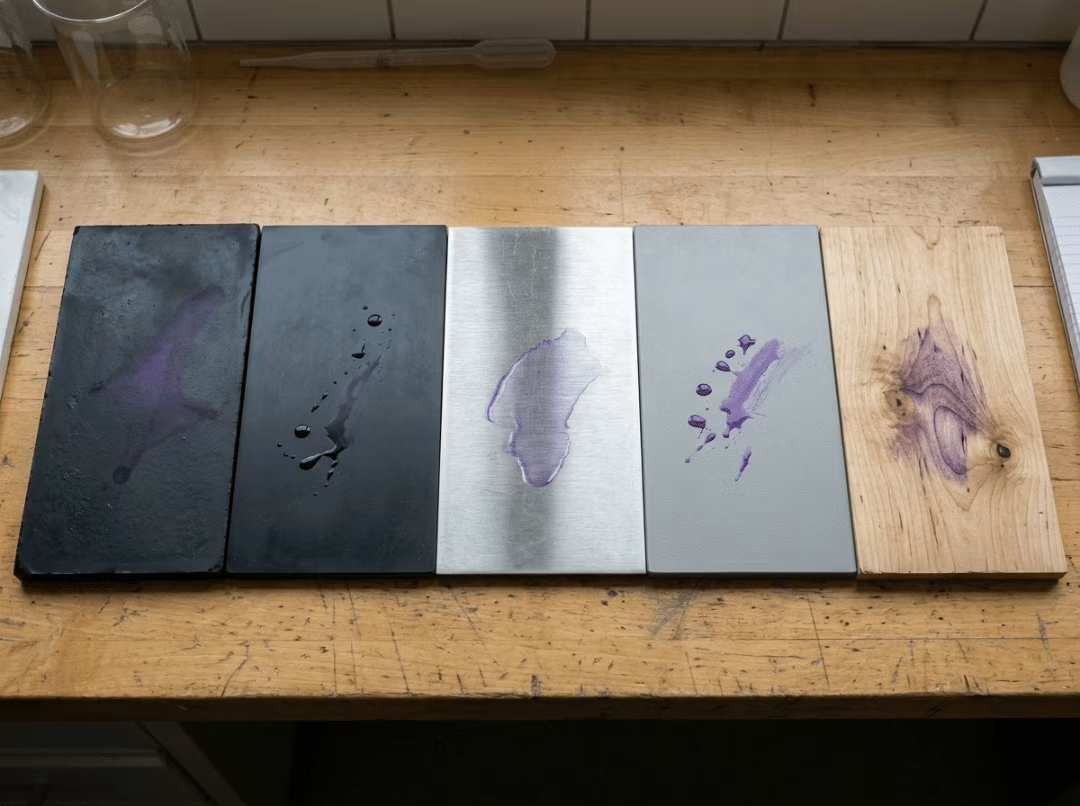
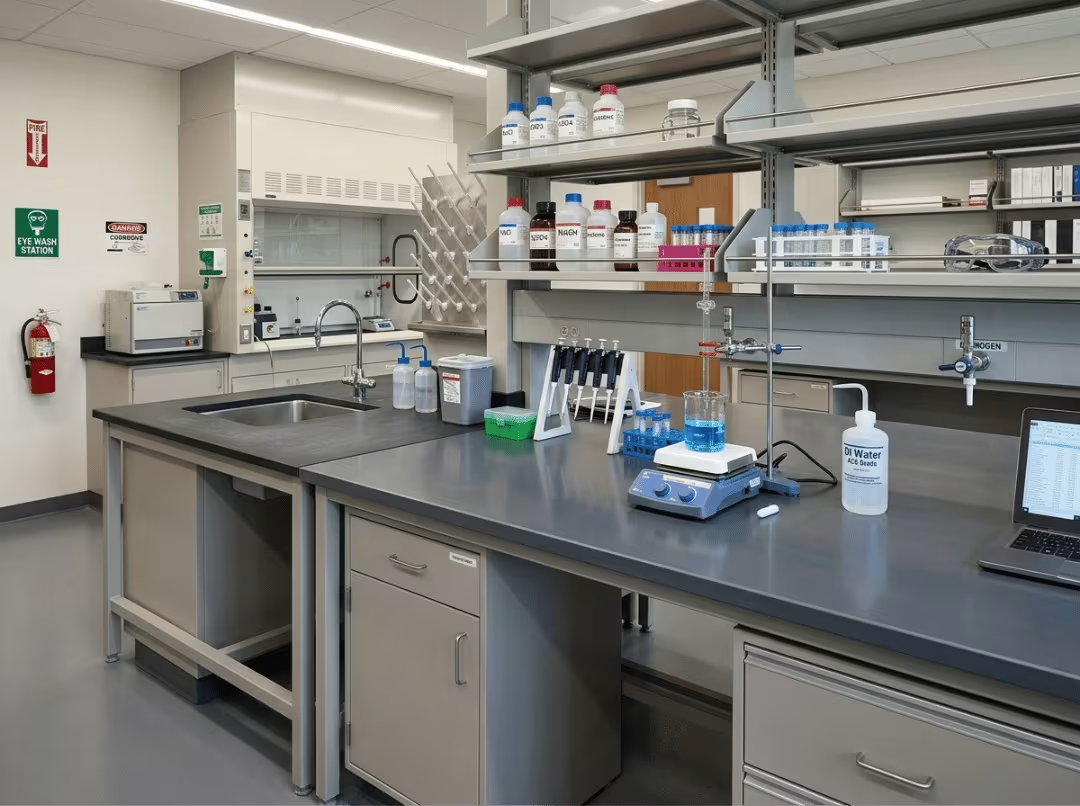
Epoxy resin is the most forgiving surface for this type of cleanup. Its dense, non-porous structure resists ionic bonding, so crystal violet doesn’t penetrate deeply. Fresh spills typically lift completely with one round of solvent. Dried stains respond well to the full solvent-scrub-baking soda sequence. Bleach is safe as a follow-up if needed.
Phenolic resin behaves similarly to epoxy but is slightly more porous near the surface. Solvent is still the right first move, and bleach can follow — just rinse thoroughly between steps and allow the surface to dry. Full recovery from dried stains is still common, though it may take an extra round.
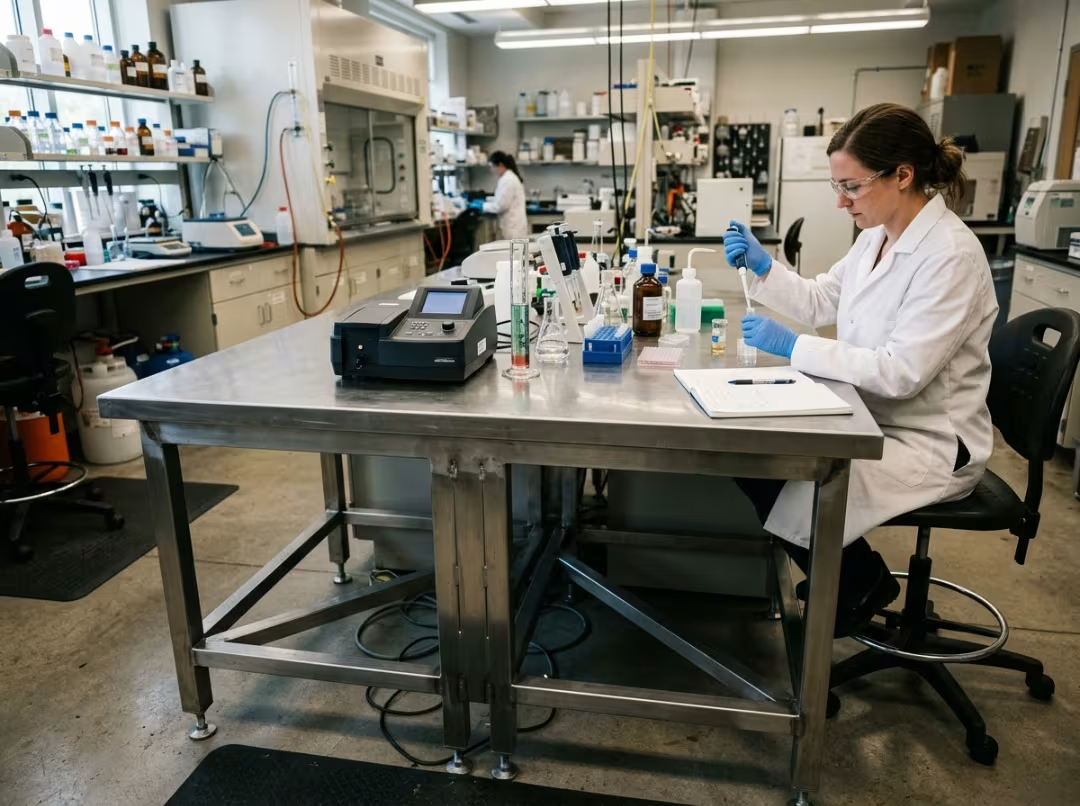
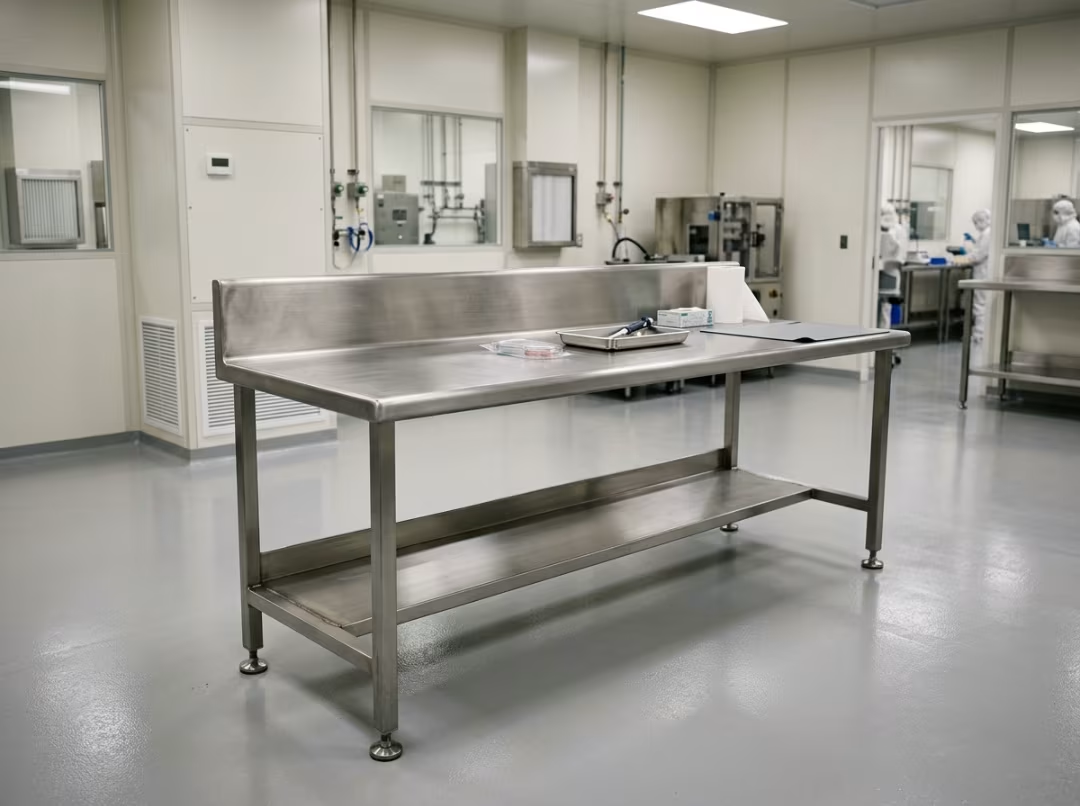
Stainless steel is the most tolerant surface on this list. It handles solvents, scrubbing, and bleach without meaningful risk of damage, which makes it a practical choice for any lab where dye work is routine. The main point of failure isn’t the cleaning chemistry — it’s inadequate rinsing after bleach, which can leave streaks if not cleared completely.
Laminate requires more care than it typically gets. The surface scratches more easily than resin or steel, so abrasive pads are out. Use solvent with light pressure and a soft cloth. Apply bleach only after a spot test, and sparingly — repeated exposure can dull the finish in ways that aren’t immediately obvious. The realistic ceiling for dried stain recovery on laminate is also lower than on resin or steel.
Wood and other porous surfaces are the hardest case. Porous materials absorb crystal violet quickly, and the dye penetrates below the cleanable surface layer fast. A stain sitting for more than a few minutes has likely soaked in past where solvents can fully reach. Repeated solvent soaks and gentle scrubbing offer the best chance of partial improvement, but full removal is unlikely. If this keeps happening, the surface material is the real problem.
If your lab works with crystal violet or similar dyes regularly, surface selection matters as much as technique. Epoxy resin and phenolic resin countertops are built to resist chemical staining and ionic bonding — which keeps routine spills manageable rather than permanent.
Quick Reference: Bench Material and Best Cleanup Method
|
Bench Material |
Best First Method |
Bleach Safe? |
Main Caution |
|---|---|---|---|
|
Epoxy resin |
Solvent wipe/scrub |
Yes |
Highly resistant — most methods are safe |
|
Phenolic resin |
Solvent wipe/scrub |
Yes, with thorough rinsing |
Slightly more porous than epoxy; allow drying between steps |
|
Stainless steel |
Solvent + scrub |
Yes |
Rinse bleach thoroughly to avoid streaks |
|
Laminate |
Solvent, light pressure |
Spot-test first; use sparingly |
Scratches easily; repeated bleach dulls the finish |
|
Wood/porous |
Solvent, gentle scrub |
Avoid |
Dye penetrates below cleanable depth; full removal unlikely |
What to Prepare Before You Start
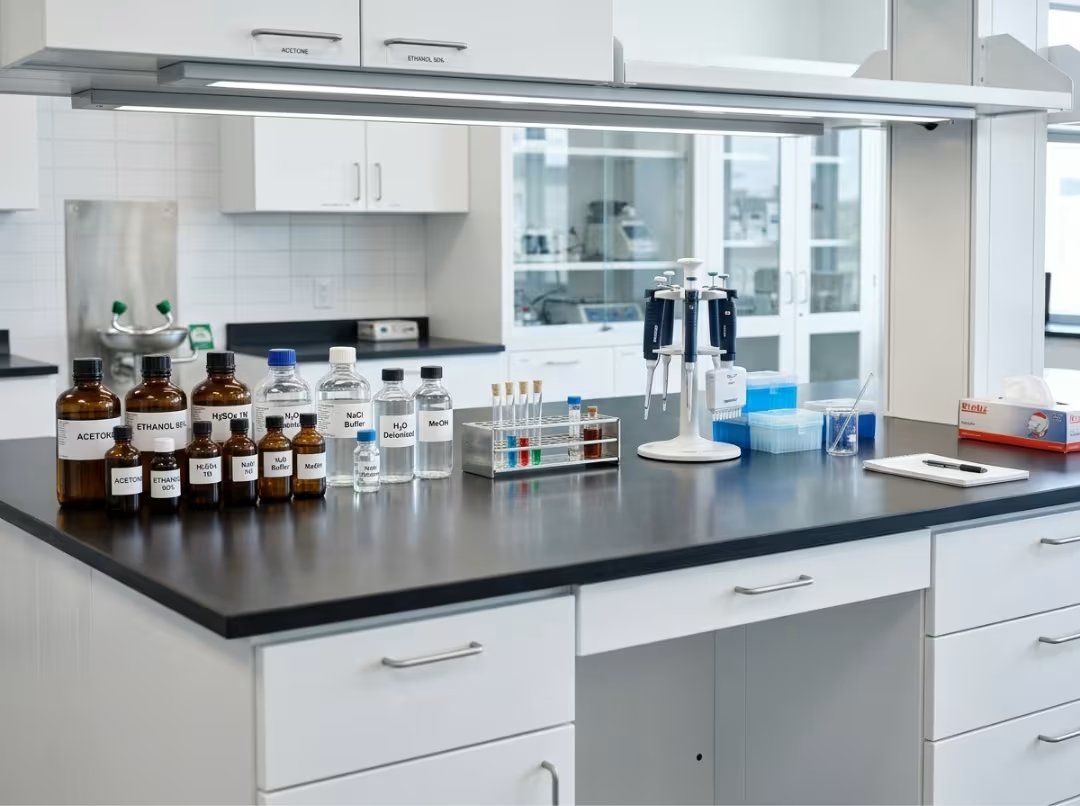
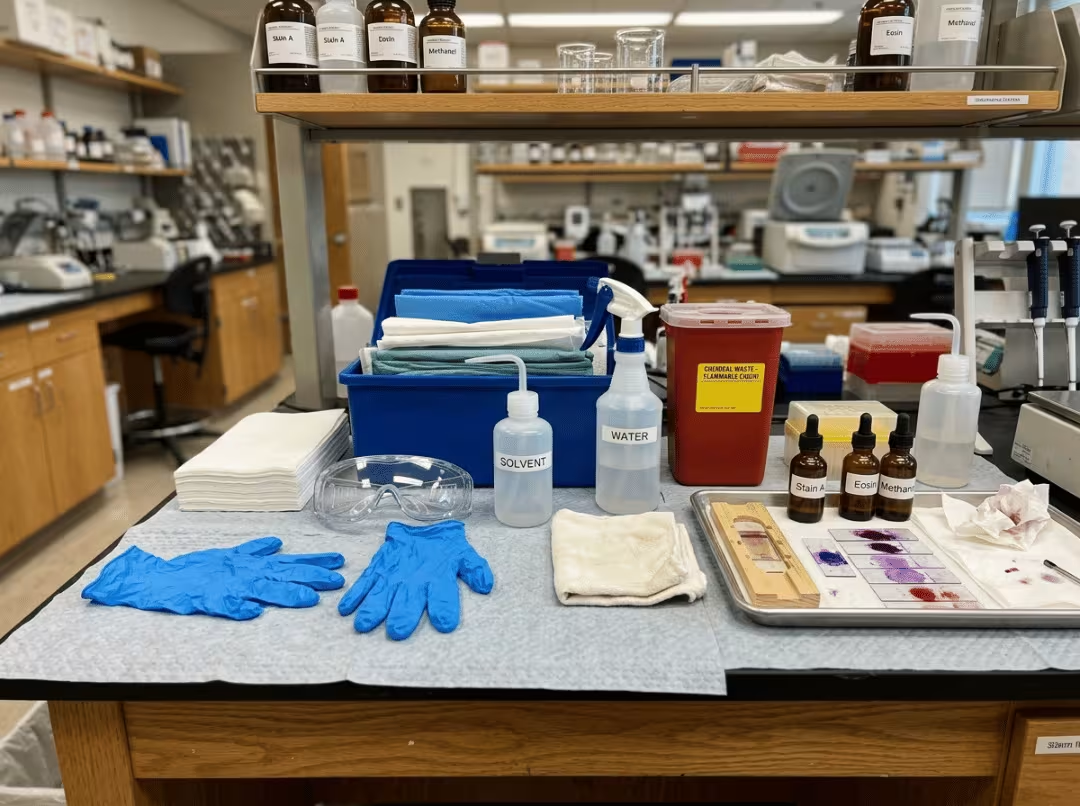
Having the right kit within arm’s reach of the staining station is the simplest way to cut response time — and response time is the largest single variable in how this turns out.
- PPE: Nitrile gloves, safety goggles, lab coat
- Solvents: Ethanol, isopropanol, or methanol
- Supplies: Absorbent paper towels or pads, soft non-abrasive cloth, water spray bottle, labeled chemical waste container
Keep this assembled near any area where crystal violet is regularly used. Hunting for supplies after a spill is how fixable situations become permanent ones.
Waste Disposal and Spill Reporting
Solvent-contaminated towels, pads, and absorbents go into designated chemical waste — not regular trash, and not the sink. Follow your institution’s specific protocol for solvent waste disposal, since rules vary by location and jurisdiction.
Any spill involving skin contact, broken glass, or a volume larger than a minor bench spill should be reported to a supervisor or lab manager, even if you’ve already cleaned it up. Documentation helps labs identify recurring issues and supports compliance if questions arise later.
How to Prevent the Next Spill
- Place an absorbent bench liner or spill tray under active staining areas
- Keep a small spill kit — solvent, gloves, absorbent pads — within arm’s reach of the staining station, not across the room
- Cap crystal violet bottles immediately after each use and store them upright in a dedicated tray
- Designate a specific bench zone for staining work, away from shared equipment and walkways
Frequently Asked Questions
Can water alone remove crystal violet?
No. Water doesn’t break the ionic bond between the dye and the surface. You need ethanol, isopropanol, or methanol to disrupt that bond. Water will dilute the visible puddle while the dye continues to set.
Is bleach safe for every bench surface?
No. Bleach is appropriate for stainless steel and generally safe for epoxy resin. On laminate, spot-test first and use it sparingly. On wood and other porous materials, bleach risks surface damage without reliably removing the stain — and it won’t reach dye that has already penetrated below the surface.
What if the stain dried hours or days ago?
Older stains still respond to the dried-stain protocol — solvent re-wetting, gentle scrubbing, baking soda paste — but they usually need more rounds. Full removal on epoxy resin and stainless steel is often still achievable. On laminate, results are less predictable. On porous surfaces, partial improvement is the more realistic expectation.
Can crystal violet permanently stain porous surfaces?
Yes. Once the dye penetrates below the surface layer of wood or other porous materials, solvents can’t reliably reach it. This is a real risk within minutes of a spill, not just with prolonged exposure.
Can contaminated towels go in regular trash or a sink drain?
No. All materials used in crystal violet cleanup — towels, pads, solvent-soaked absorbents — belong in labeled chemical waste containers. Follow your lab’s hazardous waste protocol.
Act Fast, Match the Method to the Surface
Crystal violet spill cleanup follows a simple but unforgiving logic: the faster you act, the better your odds of full recovery. Blot before you wipe, dissolve with solvent before you scrub, and reach for bleach only when solvent hasn’t been enough. Never apply both in the same step.
What changes across situations is the surface. Epoxy resin and stainless steel give you the most options and the most realistic chance of complete removal. Laminate requires restraint. Porous surfaces like wood set a lower ceiling on what’s achievable regardless of technique.
If crystal violet stains are a recurring problem, the cleanup protocol is only part of the answer. The other part is whether your bench surface is the right material for the work being done on it.