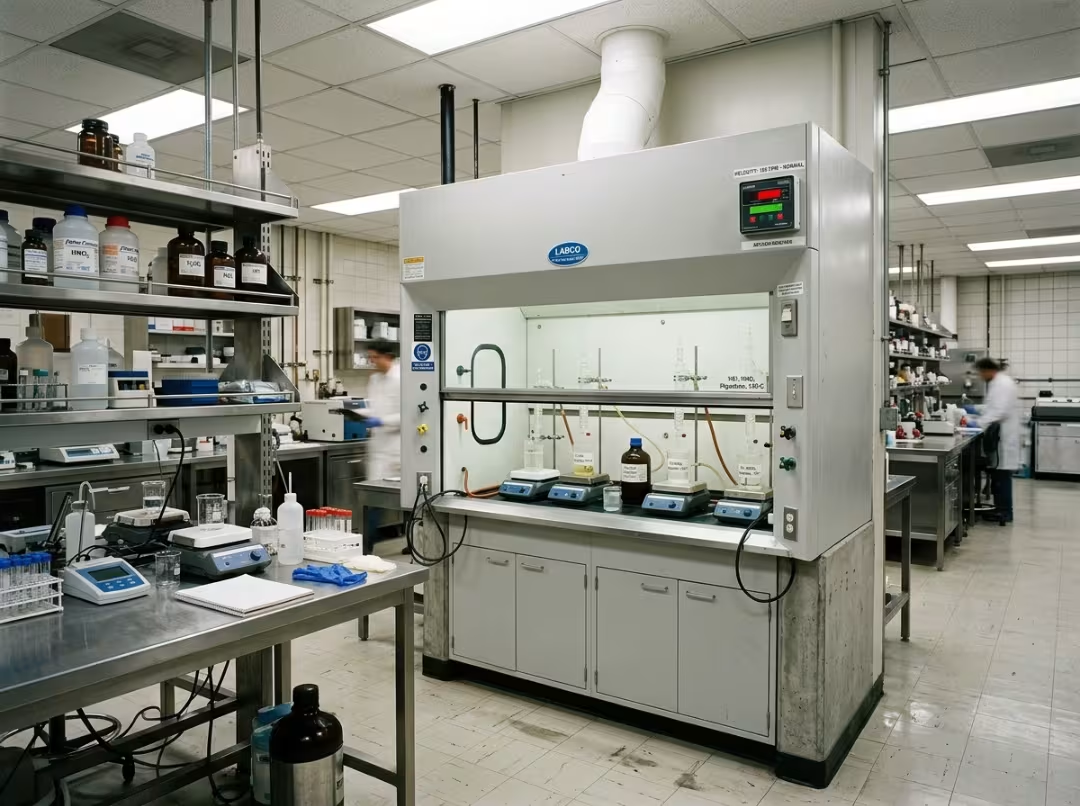
Choosing the wrong lab countertop material is rarely a visible failure at first. The surface looks fine during installation. The problem shows up six months later as a faint etch mark under the acid dispenser, a swelling seam near the sink, or a discolored patch where a hot plate sits every morning. By the time the damage is obvious, the cost is already built in — replacement, downtime, and the quiet friction of staff working around a surface that no longer performs.
This guide is for lab managers, EHS managers, procurement teams, and lab designers who need to make the call before the damage appears. The goal is not to rank materials from best to worst. It is to give you a way to think about the decision clearly: which factors matter most, where each material earns its price, and where it quietly fails — and what that means station by station across a real lab.
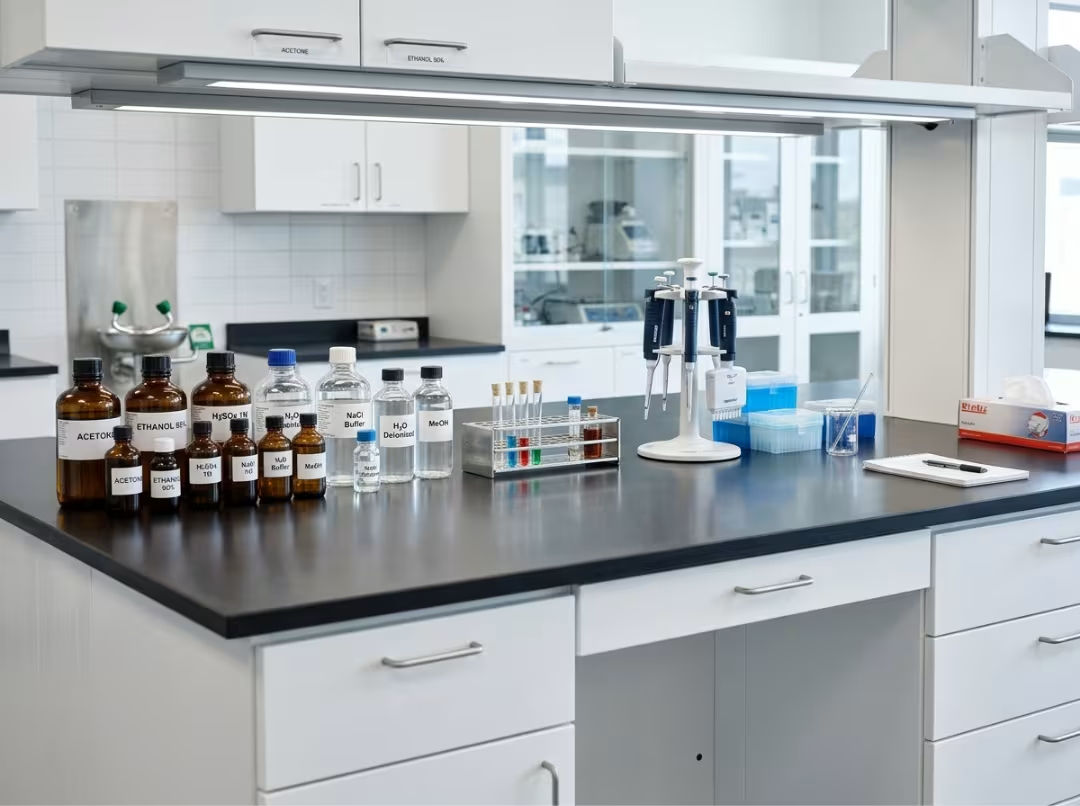
What Actually Drives the Decision? Six Criteria That Matter
Before you compare materials, you need to know what to compare them on. The following six criteria distinguish a surface that holds up from one that does not.
Chemical Exposure
Start here. Identify what each bench actually contacts — daily chemicals first, then occasional but aggressive ones. Concentrated acids, strong bases, and solvents attack surfaces in different ways. A material that holds up against common solvents may still etch in nitric acid or permanently stain from sulfuric acid drips.
Occasional exposure still drives the spec. A surface only needs to fail once in a spill to create a permanent problem. The key distinction is between spot resistance — handling a quick wipe-up — and prolonged contact resistance, which matters when reagents sit under equipment overnight or accumulate in low points.
Heat Exposure
Heat damage in labs rarely comes from ambient temperature. It comes from open flames, hot plates left in contact with surfaces, autoclaved items set down still warm, and equipment that generates localized heat for hours at a time.
Two situations are easy to confuse. Most lab-grade surfaces tolerate brief, incidental contact with moderate heat. Sustained elevated temperature at a fixed station is a different problem. A material rated for short contact can still blister or discolor when the same spot cycles through heat every day for months.
Moisture and Cleanability
Non-porous surfaces resist moisture and give bacteria nowhere to settle. Porous or micro-textured surfaces do the opposite, and the problem compounds over time as staining and biological load accumulate in surface irregularities.
Seams deserve as much attention as the surface itself. Every joint is a path for liquid to enter and residue to hide. Fewer seams mean easier sanitation. Factor in how the surface will actually be cleaned — routine disinfectant, harsh sterilants, or validated cleaning cycles for regulated environments — and whether the material will hold up to that chemistry long term.
Mechanical Durability
Daily wear comes from dropped equipment, dragged heavy items, and abrasive cleaning. Impact resistance keeps a surface from chipping or cracking. Scratch resistance keeps it from roughening into a texture that is difficult to clean and easy to contaminate.
The factor teams consistently underweight is repairability. Some materials can be sanded, spot-patched, or have a single section replaced without touching the rest of the bench. Others force a full-slab replacement over one bad area. When you compare durability, ask what happens after damage occurs, not just how long before it occurs.
Hygiene and Contamination Control
Sterile workflows, medical environments, and cleanrooms are not just asking for a surface that cleans up well. They require a surface that supports validated contamination control. Porous materials, pronounced textures, and multi-seam assemblies cannot meet that requirement regardless of cleaning frequency.
Surface finish drives performance at this level. A smooth, non-porous, minimal-seam surface limits where particles and biological contamination can settle and makes validated cleaning repeatable. In these environments, cleanability is a compliance criterion, not a convenience.
Lifecycle Cost
Purchase price is the first metric most procurement processes compare, and it is the one that misleads most often. The true cost of a countertop includes early replacement, bench downtime during reinstallation, and ongoing maintenance over a realistic service life of ten to twenty years.
A lower-cost surface that fails under the exposure it actually faces and requires replacement in five years almost always costs more than a higher-cost surface that holds up for twenty. The comparison that matters is not material A versus material B at purchase. It is total cost over the life of the bench given your specific workload.
The Six Main Lab Countertop Materials: What Each One Does Well and Where It Falls Short
Each material is assessed the same way — what it handles well, where it has real limits, where it belongs, and where it does not. The three materials most often compared by procurement teams — epoxy resin, phenolic resin, and stainless steel — receive more depth because that is where the most consequential mismatches occur.
Epoxy Resin Countertops
Epoxy resin is the standard surface for demanding wet labs, and for good reason: it handles the widest range of aggressive chemicals without flinching. Strong acids, bases, and solvents that would etch or stain most other surfaces leave epoxy largely unaffected. It also tolerates sustained heat well and, because it is cast as a monolithic slab, has very few seams — which means fewer points of contamination and easier sanitation.
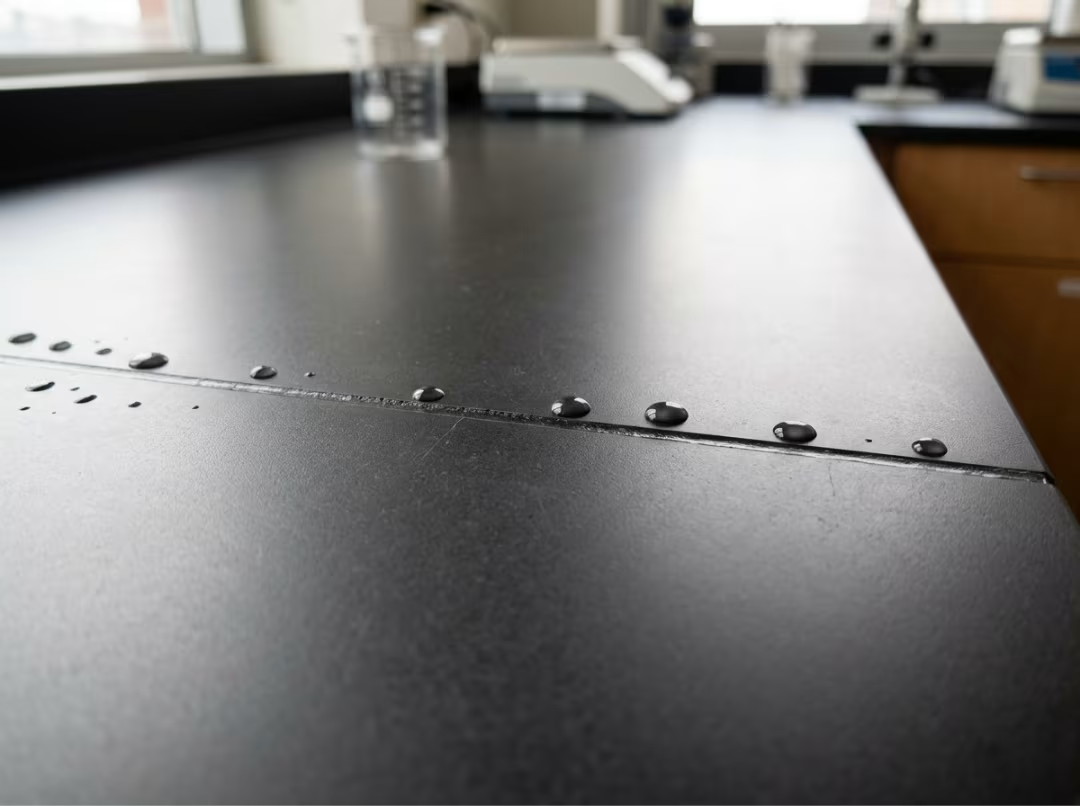
The tradeoffs are real. Epoxy is heavy, which affects casework specification and installation cost. It carries a higher upfront price than most alternatives. Color options are limited, typically dark tones. And if it is damaged — a deep chip or crack — repair is difficult and often means full-section replacement.
Where epoxy earns its cost: Chemistry labs, research facilities, and any station with daily contact with strong acids, solvents, or sustained heat. If the exposure is genuinely demanding, epoxy is the material you stop shopping around on.
Where it is the wrong call: Low-traffic administrative benches, dry writing or storage areas, or anywhere the chemical and heat exposure is minimal. You would be paying for resistance the station never needs.
Common misjudgment: Specifying epoxy across an entire lab floor without distinguishing between stations. A prep bench in a chemistry lab and a documentation area in the same room do not require the same surface.
Phenolic Resin Countertops
Phenolic resin — often specified under the Trespa trade name — holds up well against most chemicals and moisture at a lower cost and weight than epoxy. That combination makes it the practical choice for a large share of general laboratory and educational bench work.
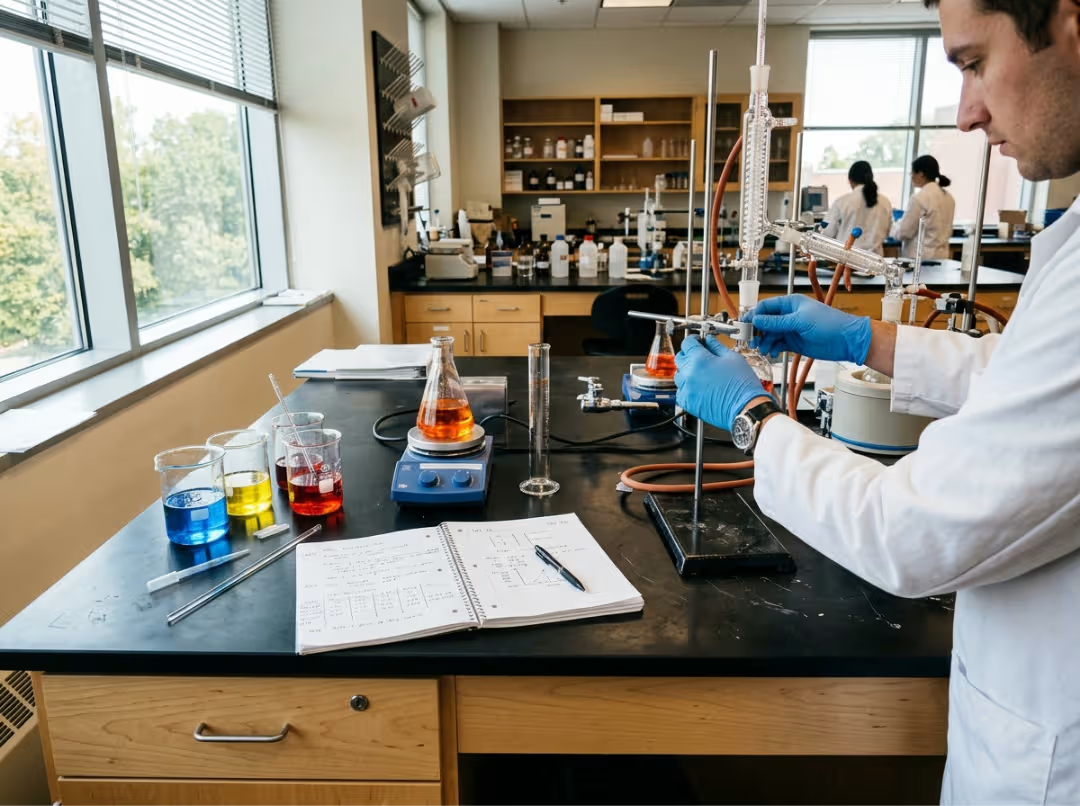
The material’s real limitation is sustained heat. Phenolic resin handles brief heat contact reasonably well, but repeated, concentrated high heat at a fixed station will degrade the surface over time. Its edges also need proper sealing; an unsealed edge will absorb moisture and eventually compromise the substrate.
Where phenolic resin belongs: Educational labs, commercial research facilities, and general-purpose benches where chemical exposure is consistent but not extreme, and where no station is functioning as a permanent high-heat workstation.
Where it does not belong: Open-flame stations, dedicated hot-plate benches, or any position where the same spot receives concentrated heat daily.
Common misjudgment: Treating phenolic as a budget version of epoxy that fits the same applications. The two materials diverge significantly under sustained heat. A chemistry lab that runs daily acid digestions should not be phenolic at those stations even if epoxy feels expensive.
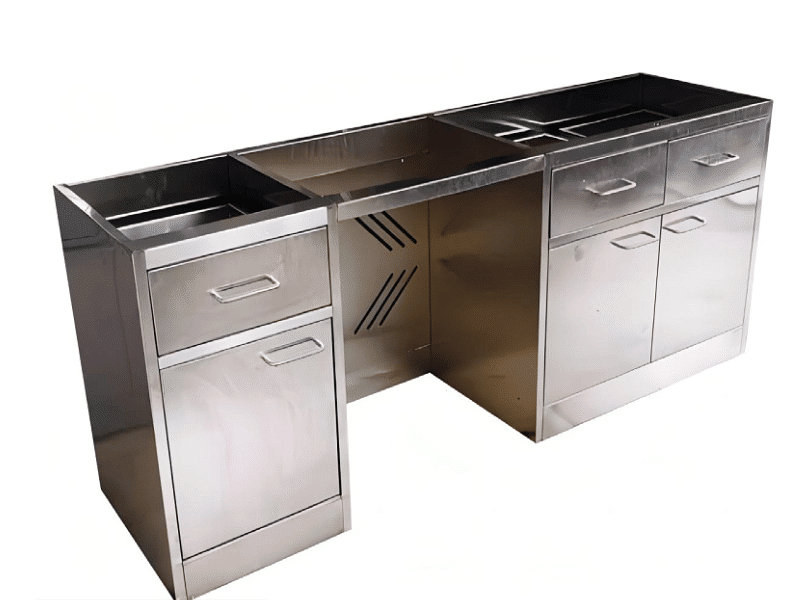
Stainless Steel Countertops
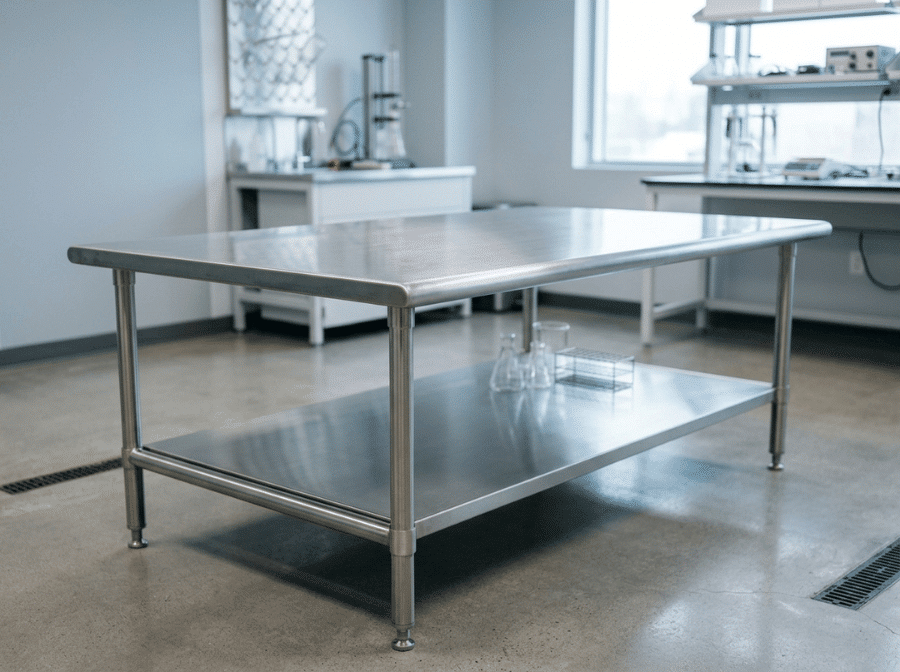
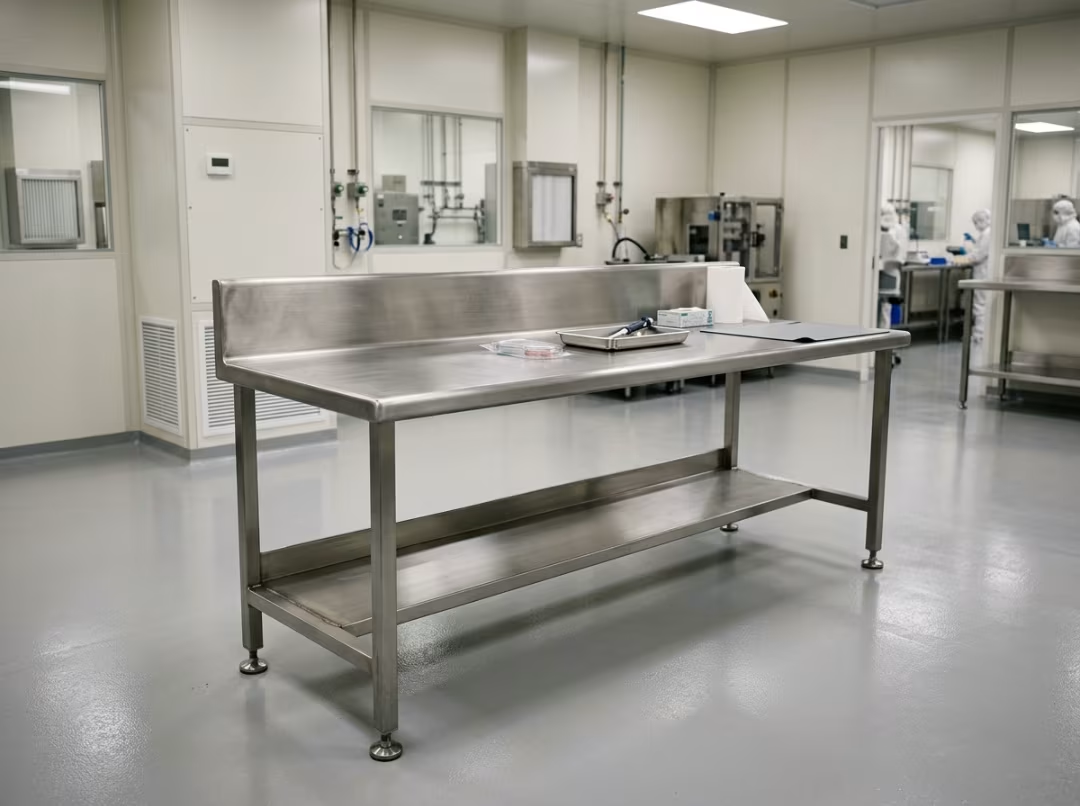
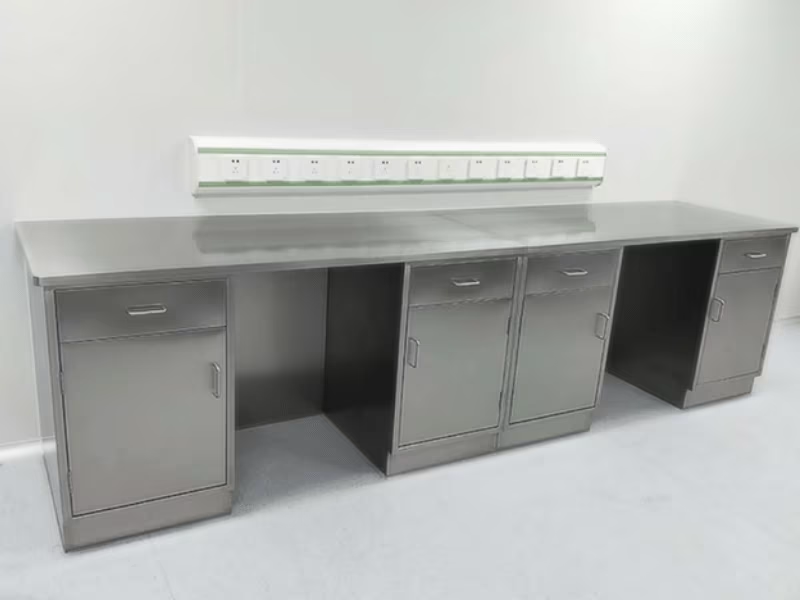
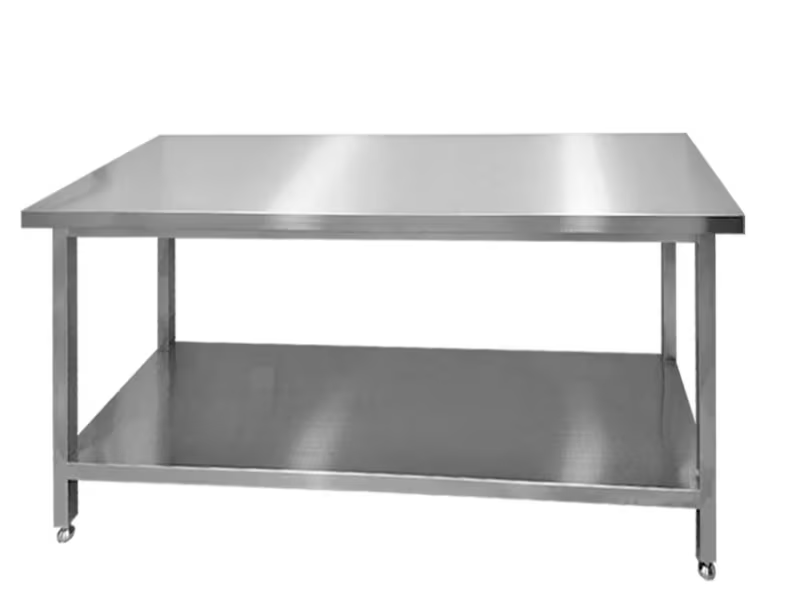
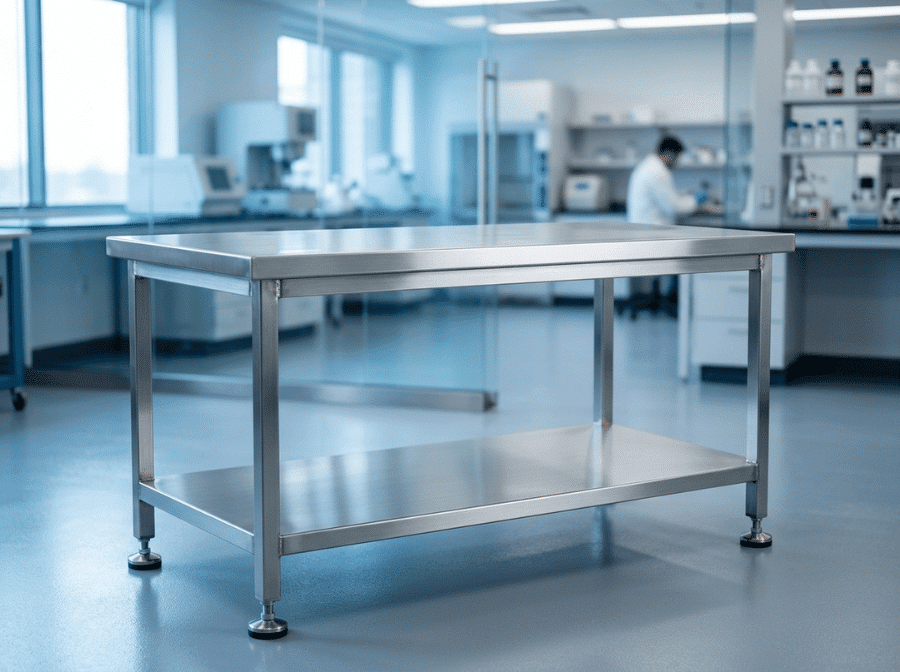
Stainless steel’s strengths are heat tolerance and sterilizability, and no other lab surface matches it on both at once. It is non-porous, bacteria-resistant, and can withstand repeated disinfection cycles and thermal exposure required by sterile and regulated environments. For cleanrooms, medical diagnostic labs, food testing facilities, and pharmaceutical environments, it is often the only material that meets compliance requirements.
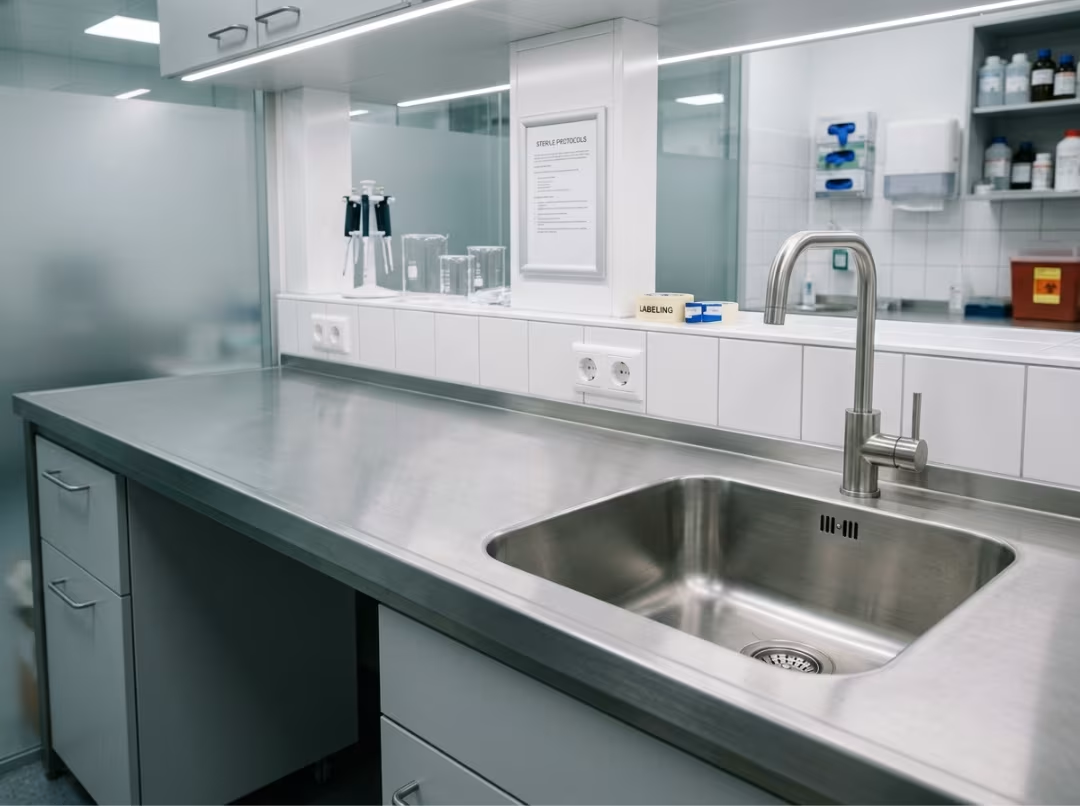
The limitations matter and are often underappreciated during specification. Stainless steel scratches and dents under hard impact, and those surface irregularities accumulate over time in high-traffic environments. More critically, it is vulnerable to certain chlorides and concentrated strong acids — particularly hydrochloric acid — which can cause pitting that is both cosmetically damaging and hygienically problematic.
Where stainless steel belongs: Anywhere that combines frequent sterilization, heat exposure, and strict hygiene requirements — medical labs, pharmaceutical production support, food testing, and cleanroom environments.
Where it does not belong: Labs running concentrated hydrochloric acid or sustained chloride exposure. Pitting from chloride attack will shorten the material’s service life significantly, and the repair options are limited.
Common misjudgment: Specifying stainless steel based on its sterile-environment reputation without checking the specific chemical profile. A surface can fail badly at acid resistance while excelling at everything else.
Solid Surface / Acrylic Countertops
Solid surface materials offer a seamless, non-porous finish with one advantage most other lab materials cannot match: genuine repairability. Minor scratches, burns, and surface damage can often be sanded out and refinished in place rather than requiring section replacement. That makes them a reasonable fit where moderate hygiene requirements and appearance matter, but where aggressive chemical or thermal exposure is not the daily reality.
Their limits are straightforward. Harsh reagents and sustained heat damage solid surface materials in ways that are not always easy to repair. They are not a substitute for epoxy or stainless steel in demanding environments.
Best fit: Analytical labs, medical offices, and moderate-duty stations where a clean, seamless, hygienic surface is required, and the chemistry is comparatively mild.
Plastic Laminate Countertops
Plastic laminate has one genuine advantage: it is the lowest-cost option and installs easily. For spaces that do not actually come into contact with chemicals — administrative areas, dry documentation benches, storage-adjacent surfaces — it is a reasonable, cost-controlled choice.
The problem is that laboratories frequently underestimate how often a supposedly “dry” bench gets exposed to moisture, chemical spills, or cleaning products. Laminate’s vulnerabilities are its seams and edges, where moisture infiltrates, causing swelling and delamination. Once that starts, the surface does not recover.
Best fit: Administrative spaces, dry storage benches, and general-purpose educational rooms with no meaningful chemical exposure.
Where it fails: wet labs, benches near sinks, chemical handling, and sterile environments.
Ceramic Tile Countertops
Ceramic tile handles high heat well and allows individual tile replacement rather than full-surface removal when a section is damaged. Those are genuine advantages in the right context.
The weakness is the grout. Grout lines harbor bacteria, stain over time, and resist thorough cleaning even with aggressive disinfectants. The tile surface is also inherently uneven, which creates challenges for equipment stability and makes validated cleaning harder to achieve.
Best fit: High-temperature specialty stations where seamlessness is not required, and individual tile replaceability is genuinely useful.
Where it does not belong: Cleanrooms, sterile workflows, or any application requiring a validated, seamless cleaning surface.
How Do the Materials Compare Side by Side?
Use this table to evaluate trade-offs across the six criteria. Ratings are relative to other purpose-built lab surfaces, not to household or commercial materials.
|
Material |
Chemical Resistance |
Heat Resistance |
Moisture/Cleanability |
Durability |
Repairability |
Cost |
Best For |
|---|---|---|---|---|---|---|---|
|
Epoxy Resin |
High |
High |
High |
High |
Medium |
High |
Heavy chemical and heat labs |
|
Phenolic Resin |
High |
Medium |
High |
Medium–High |
Low |
Medium |
General-purpose and teaching labs |
|
Stainless Steel |
Medium–High |
High |
High |
Medium–High |
Low |
High |
Cleanrooms, medical, food/pharma |
|
Solid Surface |
Medium |
Low–Medium |
High |
Medium |
High |
Medium |
Analytical and moderate-duty labs |
|
Plastic Laminate |
Low |
Low |
Medium |
Low–Medium |
Low |
Low |
Admin and dry general-use areas |
|
Ceramic Tile |
Medium |
High |
Low–Medium |
Medium |
High (per tile) |
Medium |
High-heat specialty stations |
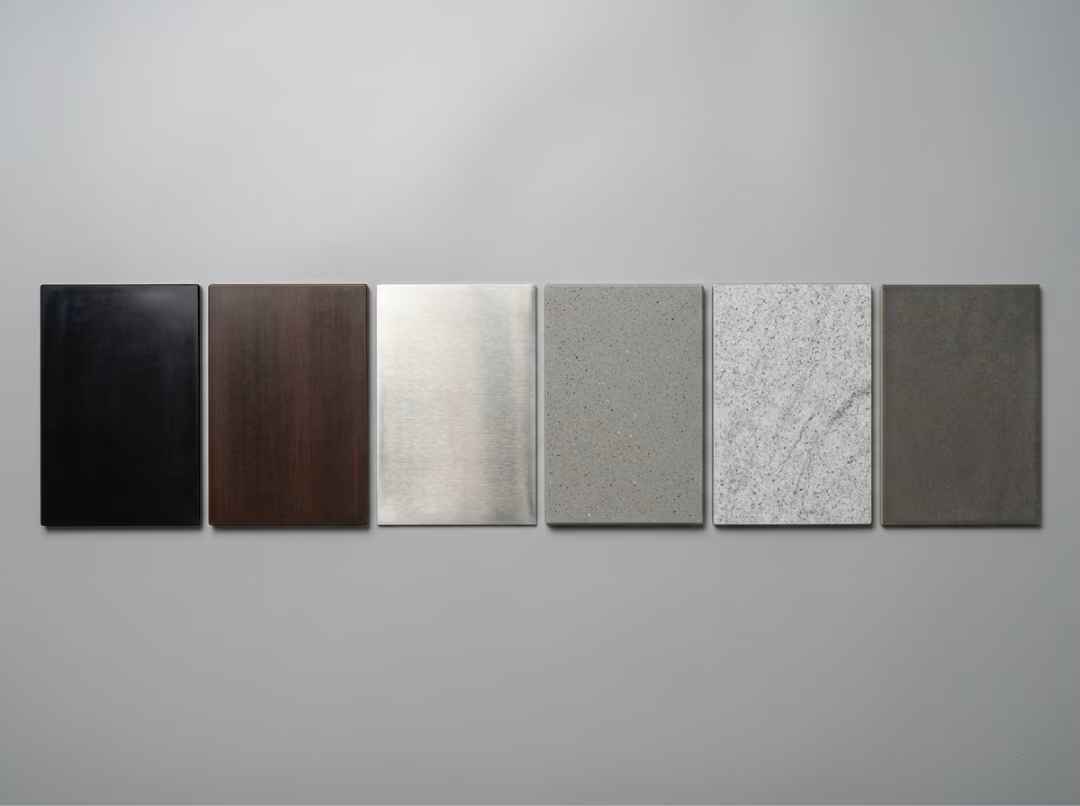
The table does not produce a single winner because the right answer depends on what a specific station actually does. Epoxy scores highly across most dimensions but is the most expensive and overkill on a dry bench. Stainless steel excels at heat resistance and sterilization but becomes a liability in the presence of chlorides. Phenolic resin is a strong general-purpose choice until sustained heat is part of the picture.
The most useful way to read the table is to identify which two or three criteria matter most for each station, then see which materials score well on those specific dimensions. If you are still mapping materials to station types and want to compare physical specifications, the lab countertop range at Glory Lab Furniture lets you review material options alongside casework compatibility before you finalize a spec.
Which Material Fits Which Lab Environment?
Different labs fail surfaces in different ways. These are practical recommendations by environment, not general descriptions.
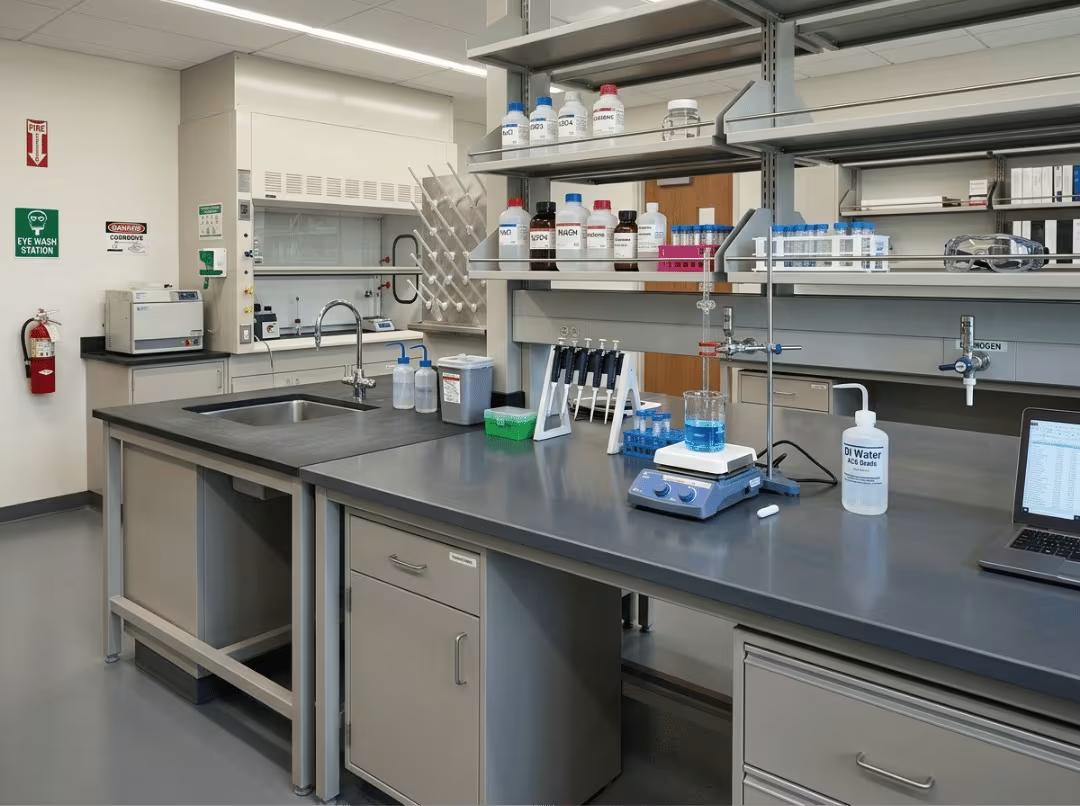
Chemistry and Research Labs
The default for primary work surfaces is epoxy resin. The combination of broad chemical resistance, heat tolerance, and non-porous construction is difficult to substitute in environments where acid spills, solvent exposure, and hot plates are part of daily operation. Phenolic resin makes sense on lighter-duty prep or writing benches in the same lab where chemical contact is present but not intense. The distinction to make is by station, not by room.
Educational and Teaching Labs
Teaching environments need durability against heavy, sometimes rough use, balanced against budget constraints that genuine research labs may not face. Phenolic resin handles most teaching bench applications well. Epoxy is justified at demonstration stations and fume hood benches where chemistry is more concentrated. Avoid the mistake of specifying the cheapest available material across the whole room — the stations that take the most punishment should not be where corners are cut.
Medical and Diagnostic Labs
Sterilization frequency and hygiene standards lead the decision. Stainless steel is the primary choice where disinfection is frequent, and heat exposure is part of the workflow. Solid surface is a reasonable option where a seamless, hygienic, repairable finish matters and the chemical profile is comparatively mild — lower-concentration reagents and standard disinfectants rather than aggressive laboratory chemistry.
Cleanrooms
Seamlessness and particle control are not negotiable. Stainless steel and epoxy both provide the smooth, non-porous surfaces these environments require. Ceramic tile is not appropriate here; grout lines are incompatible with the contamination control cleanrooms exist to maintain, regardless of how the tile itself performs.
Food and Pharmaceutical Labs
The repeated sterilization cycles, validated cleaning requirements, and strict contamination standards in these environments consistently point to stainless steel. Its non-porous surface withstands the cleaning chemistry and cycle frequency required by regulatory compliance.
Industrial and Testing Labs
The right material depends on the dominant exposure at each station. Where the primary stress is aggressive chemistry, epoxy resin is the appropriate anchor. Where heat and physical impact dominate and chemical exposure is secondary, stainless steel is the stronger choice. Mixing both in the same space by station type is often the most cost-effective approach.
The Mistakes That Lead to the Wrong Material
Even experienced teams get this wrong in predictable ways.
Choosing on purchase price without calculating lifecycle cost. A surface that fails in five years and requires bench downtime for replacement nearly always costs more over a lab’s life than a material that holds up for twenty. The comparison that matters is cost per year of service under your actual conditions, not cost per slab at purchase.
Confusing toughness with chemical resistance. These are different properties. A surface can be highly impact-resistant and still etch when exposed to a routine lab reagent. General durability and resistance to specific chemical exposure are not the same thing, and they are not measured the same way.
Treating seams as a minor detail. Every joint in a countertop surface is a contamination pathway and a moisture entry point. A material with strong surface properties but compromised seaming will still fail hygiene audits and clean-room requirements. Edge details, sink cutouts, and backsplash integration deserve the same scrutiny as the surface itself.
Applying one material to the entire lab. A chemistry bench and a documentation station in the same room do not have the same demands. Specifying a single surface type across all stations is a convenient shortcut that often leads to either overspending on low-demand areas or underspecifying on high-demand areas.
Using office or residential surface logic. Kitchen-grade or commercial office surfaces are not built for lab conditions. The exposure profiles are categorically different, and materials that perform well in those contexts often fail quickly under the conditions of daily laboratory chemistry, heat, and cleaning.
If you are moving into the specification stage, working through the layout with fabricators who build for laboratory environments is worth the time. The Glory Lab Furniture team can work through station-by-station material matching based on your actual workload before you finalize the order.
Frequently Asked Questions
What is the most chemical-resistant lab countertop material?
Epoxy resin offers the broadest chemical resistance — strong acids, bases, and solvents — across the most diverse range of lab applications. Phenolic resin performs well for most general chemical exposure at a lower cost. For labs where the chemistry is varied or aggressive, epoxy is the more defensible long-term choice.
What is the difference between epoxy resin and phenolic resin countertops?
Epoxy resin handles sustained high heat and aggressive chemical exposure better, but it is heavier and more expensive. Phenolic resin is lighter, less expensive, and offers solid chemical and moisture resistance for general-purpose and educational use. The point of divergence is heat: if a station runs hot regularly, phenolic resin is not the right call there.
Which lab countertop material handles high heat best?
Epoxy resin, stainless steel, and ceramic tile are the strongest options for sustained heat. Epoxy is the choice when heat and aggressive chemistry coexist. Stainless steel suits sterile environments with high heat exposure. Ceramic tile is well-suited for specialty high-temperature stations where seamlessness is not required.
Are stainless steel countertops suitable for every lab?
No. Stainless steel performs well in sterile, medical, food testing, and pharmaceutical environments. It is a poor fit where concentrated hydrochloric acid or high chloride exposure is routine, because chloride attack causes pitting that compromises both the surface and the hygiene performance it is supposed to deliver.
What is the most affordable lab countertop material?
Plastic laminate has the lowest upfront cost. The tradeoff is low chemical and heat resistance and vulnerability to moisture at seams and edges. It is appropriate only for administrative areas and dry, low-exposure general-purpose spaces.
Can a single lab use more than one countertop material?
Yes, and in most labs it should. Matching material to station type lets you place epoxy at high-demand chemical benches, stainless steel where sterilization is frequent, and a lighter-duty surface at dry or low-exposure areas. The cost savings from not over-specifying low-demand zones typically offset the additional planning required.
How long do lab countertops last?
When matched correctly to their exposure, high-quality lab surfaces typically last well over a decade, often 20 years or more. Lifespan shortens substantially when a material faces conditions it was not designed for. That gap in longevity is the core argument for lifecycle cost analysis over purchase price comparison.
Where to Go From Here
The right countertop material is not the toughest one available. It is the one that matches what each station actually does — and does not ask you to pay for resistance you will never need or compromise on protection where it matters.
The decision process is straightforward: map your stations by their real chemical, heat, and hygiene exposure; run each station through the six criteria in this guide; cross-reference with the comparison table; and specify by station type rather than by room. That approach is almost always more accurate and more cost-effective than applying a single material across a whole lab.
When you are ready to move from framework to specification, working with a supplier that specializes in laboratory environments removes much of the guesswork. Reach out to Glory Lab Furniture to review material options against your layout, compliance requirements, and budget before you commit to a final spec.