A technician cracks open a small bottle of solvent at an open bench to transfer a few milliliters. Within seconds, a sharp smell drifts up. Nobody planned for that vapor — the task felt too small to bother with ventilation. That moment is where a lot of exposure happens: not during the dramatic reactions everyone plans around, but during the routine work that slips through the cracks.
The equipment meant to catch those fumes comes in two very different forms, and they’re easy to confuse. A fume hood and a fume extractor both pull contaminated air away from people, but they do it in fundamentally different ways, protect against different things, and cost wildly different amounts to run. Choose the wrong one and you either leave staff exposed to hazards the device was never built to handle, or you pour money into infrastructure and energy you didn’t need. This article walks through how each device works, the differences that actually drive the decision, real cost numbers, and a practical way to settle the choice for your lab.
The Two Devices in Plain Terms
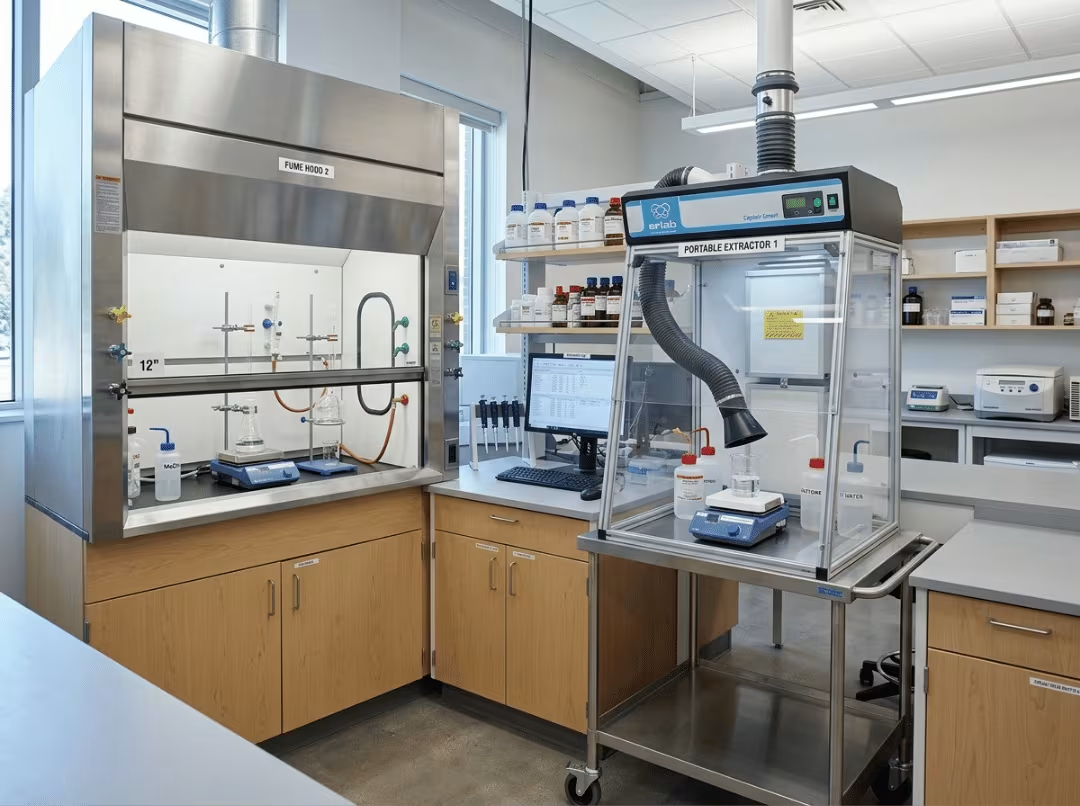
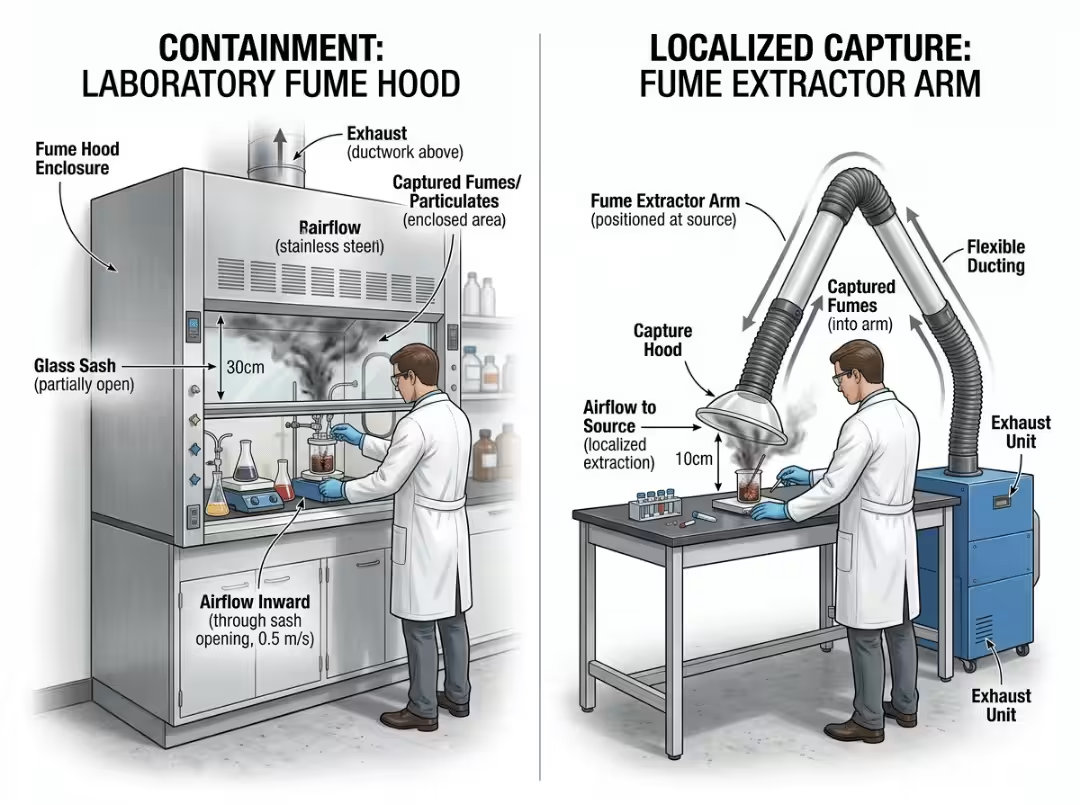
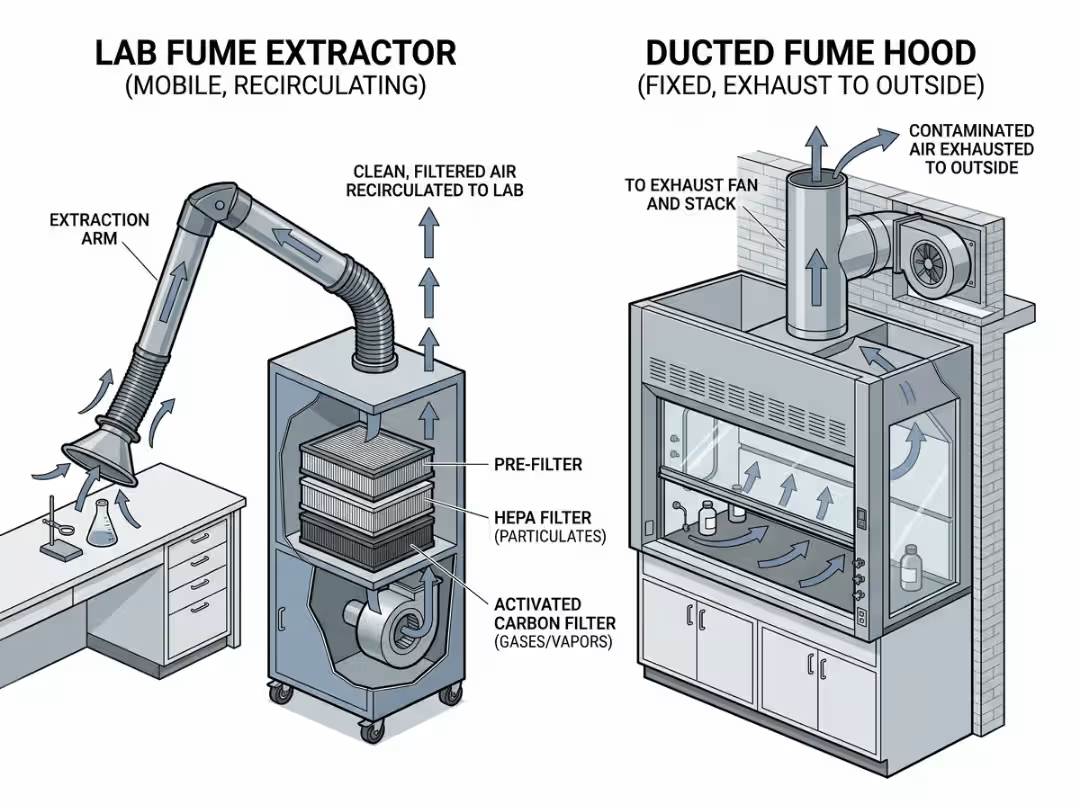
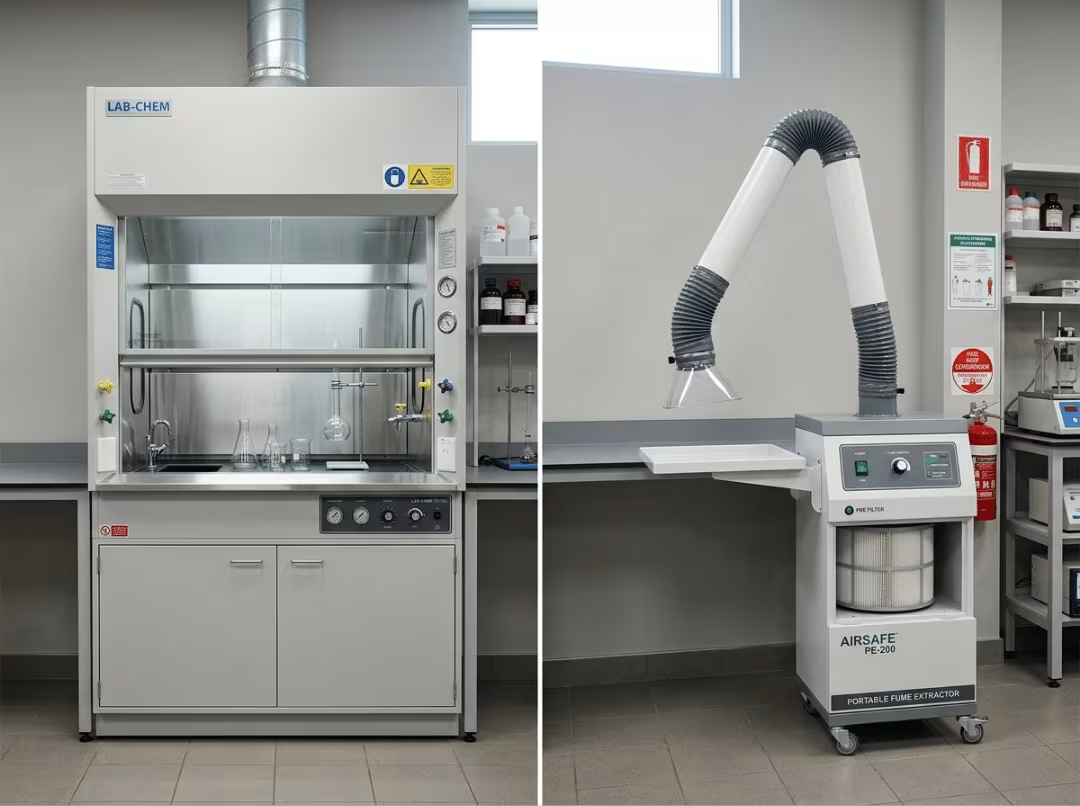
A fume hood is a ventilated enclosure. You work inside it, behind a movable sash, while constant inward airflow pulls fumes, vapors, and particulates away from you and out of the room. Most hoods are ducted — they exhaust contaminated air outside the building entirely. Ductless (recirculating) versions instead pass the air through filters and return it to the room. Either way, the defining feature is containment: the hood surrounds the entire work process, and the sash puts a physical barrier between you and whatever happens inside.
A fume extractor works from the opposite direction. Instead of enclosing the work, it captures contaminants at the source through a flexible arm, a nozzle, or a small bench-top hood positioned right over the task. Air passes through a filter stack — typically HEPA for particulates plus activated carbon or chemical-specific media for gases and vapors — and the cleaned air recirculates back into the room. Most units are portable, sitting on a bench or rolling between stations. The catch is range: an extractor only protects a small zone, often just a few inches from the intake. Move the work away from the nozzle and the protection largely disappears.
That difference in reach is the heart of everything that follows.
The Differences That Actually Decide It
There are many small distinctions between these two. Only a handful change the buying decision, so those are the ones worth your attention.
Containment vs. Breathing-Zone Protection
This is the difference that carries the most weight. A fume hood contains the entire process. If a reaction puffs, a beaker tips, or a reagent splashes, the sash and enclosure keep it away from your face and body. You get respiratory protection and a physical shield.
A fume extractor protects only the breathing zone — it pulls airborne contaminants from a small area near the nozzle. It does nothing about a splash, a spill, a sudden exothermic reaction, or a bottle that cracks. For any task that can throw liquid or release a sudden slug of concentrated gas, that gap is decisive. The extractor simply isn’t built to contain those events.
Filtration and Exhaust — Where Extractors Fail Quietly
A ducted fume hood sends all contaminated air outside, so for most chemical work it needs no filters at all. Nothing to match, nothing to saturate. A ductless hood or a fume extractor, by contrast, lives or dies by its filter media.
Here’s the risk buyers underestimate: filtration failure is invisible. Put the wrong media in an extractor and it will happily run while letting toxic vapor pass straight through — activated carbon that captures solvents does little against many acid gases, and the reverse is also true. Worse, a saturated filter can start releasing previously captured contaminants back into the room, with no obvious sign that anything changed. A ducted hood exhausting outside doesn’t share this failure mode. If you go with any recirculating unit, matching the media to your exact chemicals and tracking saturation isn’t optional — it’s the whole safety case.
Fixed Infrastructure vs. Plug-and-Play
A ducted fume hood is a building commitment. It needs permanent ductwork, a blower sized to the exhaust load, and a make-up air supply to replace the air it removes. It stays where it’s installed. Retrofitting one into a space that lacks exhaust infrastructure can cost as much as the hood itself and may require structural work.
A fume extractor is the opposite. It arrives ready to plug in — position the arm over the source, switch it on, and it works. You can wheel it between benches, share it across workstations, or store it when it’s idle. For labs in leased space, older buildings, or rooms that can’t easily accept ductwork, that flexibility is often the deciding practical factor.
The Energy Gap Is Enormous
People rarely appreciate how much a ducted hood costs to run. An open hood can move thousands of cubic feet of air per minute, and every bit of that conditioned air — heated or cooled — gets thrown outside and replaced. A single hood can remove more conditioned air than an entire office floor, and that shows up on the energy bill month after month.
A fume extractor recirculates air and runs on a modest blower, often drawing under 200 watts. The operating-cost difference isn’t a rounding error; over a year it can be large enough to justify choosing an extractor outright for low-hazard tasks that don’t strictly require a hood.
A Framework for Making the Call
Three questions settle most decisions. Work through them in order.
First, identify your contaminants. Write down what the work actually produces — gases, vapors, smoke, dust, or aerosols — and how toxic each one is. Highly toxic or corrosive substances, or anything with a strict exposure limit, push you toward a hood. Then ask whether the contaminants are even filterable: HEPA handles solid particulates well, but gas and vapor abatement needs specialized sorbent media, and for some compounds no reliable media exists. If your hazard can’t be filtered safely, a recirculating extractor is off the table regardless of its other advantages.
Second, assess your work patterns. Continuous, long-duration procedures that occupy a dedicated bench justify a fixed hood — it’s there, it’s always on, it contains everything. Intermittent or short tasks, or work that moves around the room, favor a portable extractor that goes where the work is and stores away when it doesn’t. Space matters too: a hood claims permanent floor and bench real estate, while an extractor frees it up between uses.
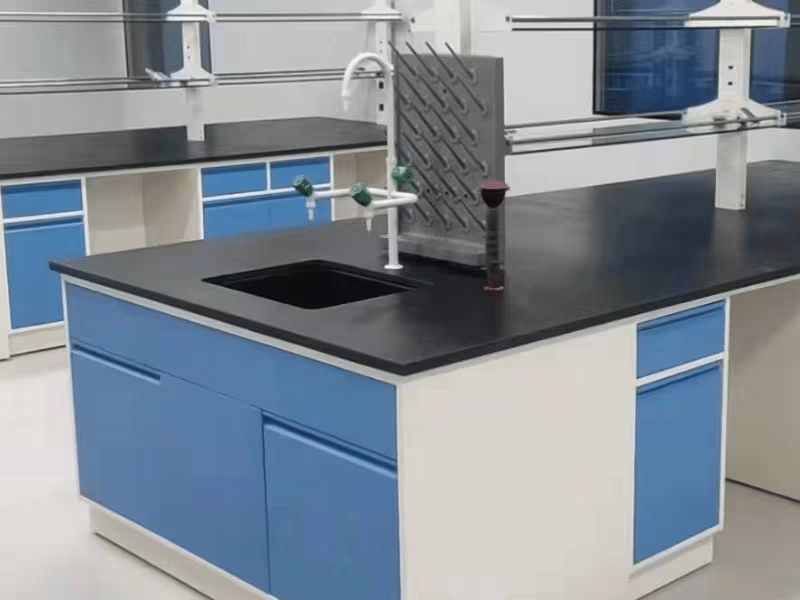
Third, review your building ventilation. Do you already have exhaust infrastructure and enough make-up air? A ducted hood without adequate make-up air creates negative pressure that pulls air from corridors and actually degrades the hood’s own performance. If your building has no existing ductwork, that fact alone strongly favors an extractor or a ductless hood, since retrofitting exhaust can dwarf the equipment cost. Because a hood ties directly into the bench and surrounding layout, it’s worth planning placement alongside your lab benches and workstations rather than treating ventilation as an afterthought bolted on later.
When Each One Clearly Wins
The use cases sort cleanly once you frame them around containment versus source capture.
A fume hood is the right call for chemical synthesis and reactions that throw off toxic or reactive vapors, for work with acids, solvents, and volatile compounds that flash off readily, and for procedures involving hot plates, evaporation stations, or large apparatus. It’s also the answer whenever splash or spill risk is real — transferring concentrated reagents, for instance — because only the enclosure protects against liquid, not just fumes. For serious chemistry, the hood isn’t a preference; it’s the baseline safety requirement.
A fume extractor is the better fit for source-generated fumes and particulates from smaller operations. Soldering and rework stations, where lead and flux fumes rise from a fixed point. Welding and grinding, which throw off metal oxides and fine particulates. Laser cutting and engraving, which produce smoke and ash. Adhesive application, epoxy mixing, and small-scale solvent handling. Extractors also earn their place in cleanrooms and noise-sensitive setups, where a hood’s sweeping airflow would disturb delicate processes — the localized, gentler capture is an advantage rather than a limitation.
What It Actually Costs
Real numbers make the trade-off concrete. A basic four-foot ducted fume hood typically runs $5,000 to $15,000, plus installation that often costs at least as much again once you account for ductwork, a blower, and make-up air. Ductless hoods land lower, roughly $3,000 to $8,000, since they skip the exterior ducting. A quality fume extractor with an arm and filters usually falls between $1,000 and $3,000.
The purchase price tells only part of the story. A ducted hood’s biggest long-term expense is energy — all that conditioned air going out the stack — while an extractor’s ongoing cost is filters. Replacement cartridges commonly run 20% to 40% of the unit price per year, more under heavy use, so a cheap extractor doing constant duty isn’t as cheap as it first looks. Hoods, meanwhile, carry few consumables but require annual certification and periodic face-velocity and smoke-visualization checks. For light-duty work, total cost of ownership favors the extractor comfortably. For heavy chemical use, the hood is simply the only option that meets the safety standard, which ends the cost debate before it starts.
Most Labs Need Both
The honest answer for a typical working lab isn’t one device — it’s a combination. Install a fixed fume hood where the high-hazard chemistry happens: the reactions, the acids, the solvents, the anything-that-can-splash. Then deploy one or more portable extractors for the routine, low-volume tasks scattered around the room — the soldering bench, the epoxy station, the occasional small transfer.
This split does two things at once. It puts full containment exactly where the serious risk lives, and it keeps you from running an energy-hungry hood for jobs a 200-watt extractor handles perfectly well. If you’re refreshing or building out a space, it’s worth mapping ventilation, benches, and storage together as part of the overall laboratory furniture layout, so the hood, the extractors, and the workflow all line up instead of fighting each other after installation.
Frequently Asked Questions
Can a fume extractor replace a fume hood for all chemical work?
No. An extractor protects only the breathing zone near its nozzle and does nothing against splashes, spills, or sudden reactions. For toxic vapors, volatile solvents, acid work, or anything that can splash, a fume hood’s full enclosure is the required level of protection. Extractors suit source-generated fumes from smaller, well-defined tasks.
Do fume extractors remove toxic gases or only smoke and particulates?
It depends entirely on the filter media. HEPA filters capture solid particulates like welding fume and dust, but gases and vapors need activated carbon or a chemical-specific sorbent matched to those exact compounds. The wrong media lets toxic gas pass straight through, so the filter has to be chosen against your specific hazards.
What’s the difference between a ductless fume hood and a fume extractor?
A ductless hood fully encloses the work behind a sash and filters the air before recirculating it, giving you containment plus a physical barrier. A fume extractor captures at the source through an arm or nozzle without enclosing the work, so it protects a much smaller zone. The hood offers broader protection; the extractor offers portability and targeted capture.
How often do extractor filters need replacing?
It varies with contaminant load and hours of use — anywhere from every few months to about once a year. Many units include saturation indicators, but don’t rely on them alone for hazardous work. Budget for replacement cartridges at roughly 20% to 40% of the unit price annually, and more for heavy or continuous use.
Do I need a fume hood if I only use a soldering iron?
Usually not. Solder fumes and flux are a classic source-capture job, exactly what a fume extractor is built for. Position the arm close to the iron and the extractor handles it at a fraction of a hood’s cost and energy use. A hood would be overkill for that task alone.
Why is a ducted fume hood so much more expensive to run?
Because it constantly exhausts conditioned air outside, and that air has to be heated or cooled and replaced through the building’s make-up air system. A single open hood can remove more conditioned air than a whole office floor. An extractor recirculates air on a small blower drawing under 200 watts, so its operating cost is a tiny fraction of a hood’s.
The Bottom Line
The choice between a fume extractor and a fume hood comes down to two things: the hazards you actually generate and how your building is set up to handle them. A fume hood delivers broad containment and full-body protection, which makes it non-negotiable for real chemical work, toxic vapors, and anything that can splash. A fume extractor delivers targeted, portable, low-energy capture that’s ideal for soldering, welding, gluing, and other small-scale source-generated fumes. Neither is universally “better” — they solve different problems, and most labs end up needing one of each.
Before you buy anything, do the short audit that prevents expensive mistakes. List every contaminant your work produces and how toxic each is. Check whether your building already has exhaust infrastructure and adequate make-up air. Then match the device to what you found. That review takes an afternoon and steers you away from paying for a hood you didn’t need — or worse, trusting an extractor with a hazard it was never built to contain.