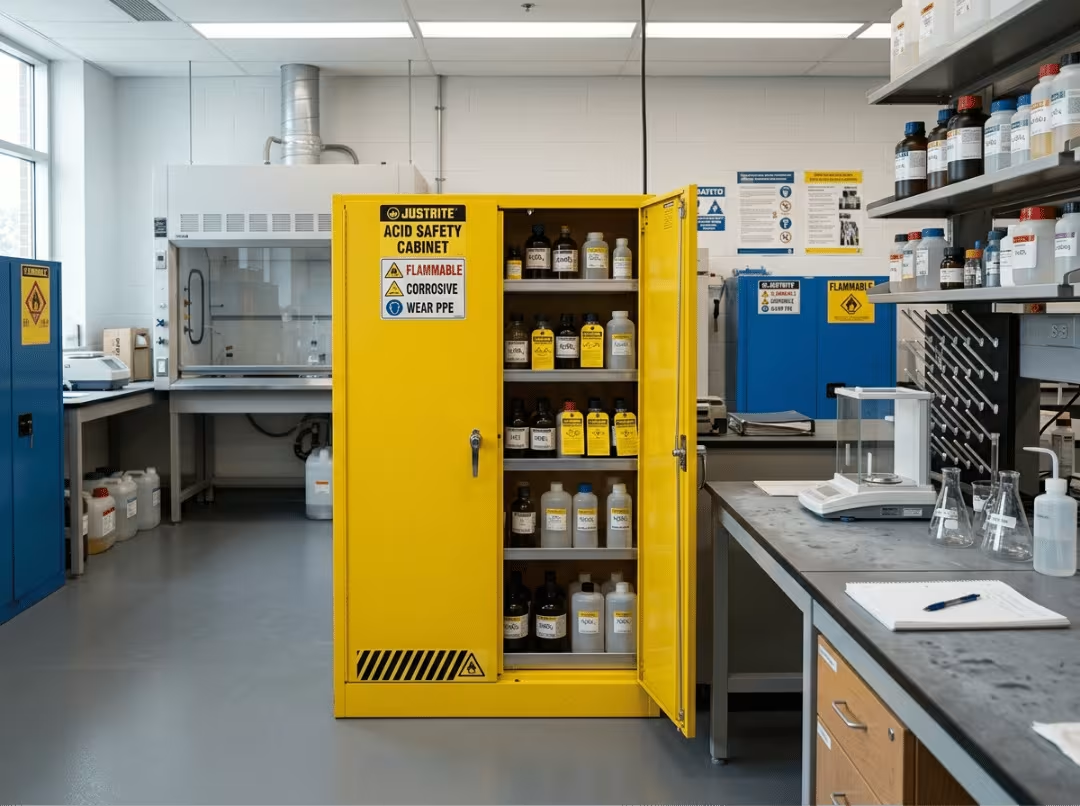
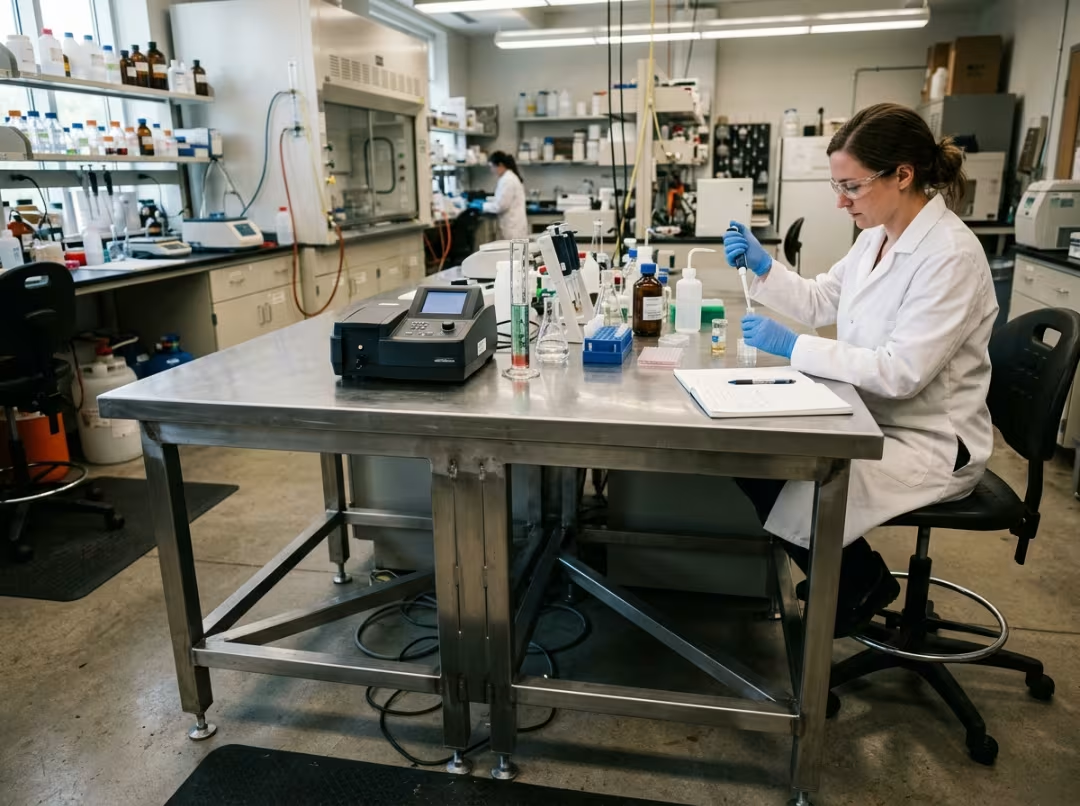
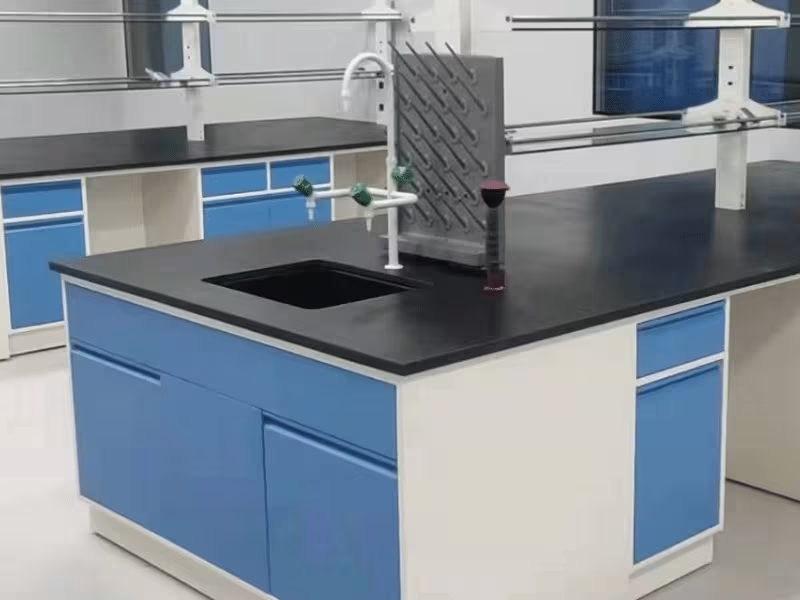
Most labs don’t outgrow their space — they outgrow their furniture. Research priorities shift, teams expand, and the bench that worked three years ago becomes a constraint. Modular lab benches are built for this: interchangeable frames, work surfaces, storage, and utility components that reconfigure without demolition. The right system starts with workflow, not a catalog.
What Are Modular Lab Benches?
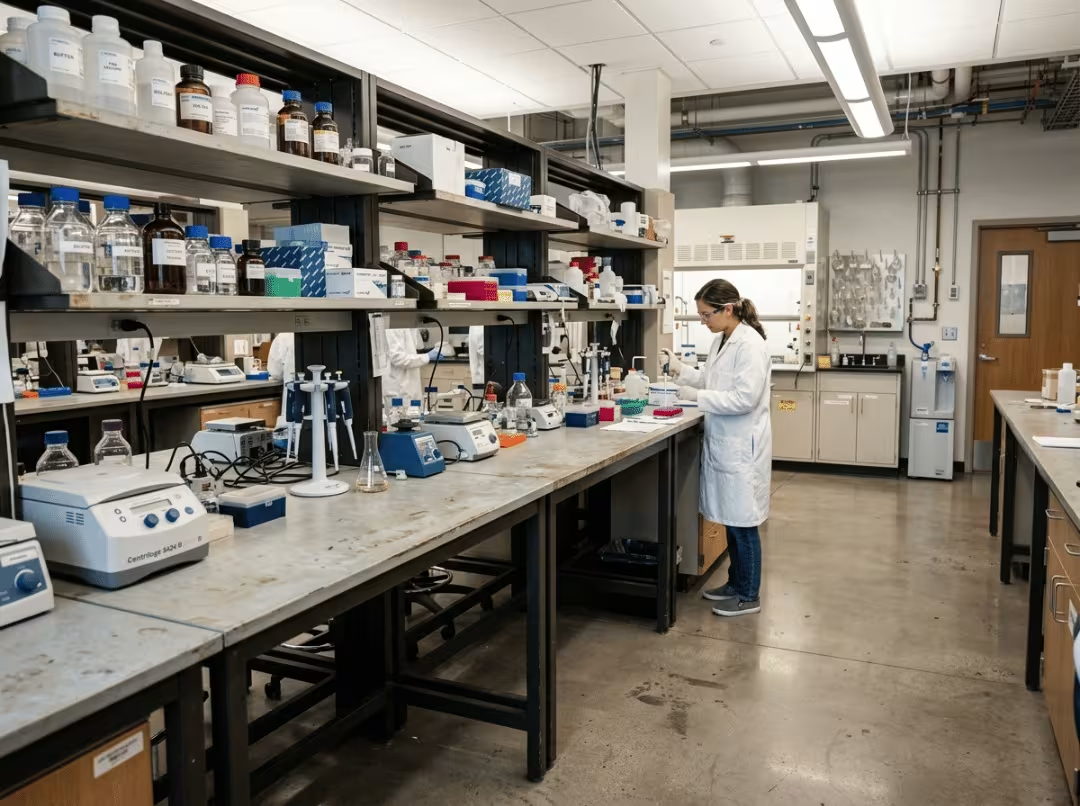
Modular lab benches are component-based systems — frames, work surfaces, storage, and utility fittings — that reconfigure, swap, or expand as needs change. Fixed casework is built into the room. Modular furniture moves with you. That distinction drives every trade-off that follows.
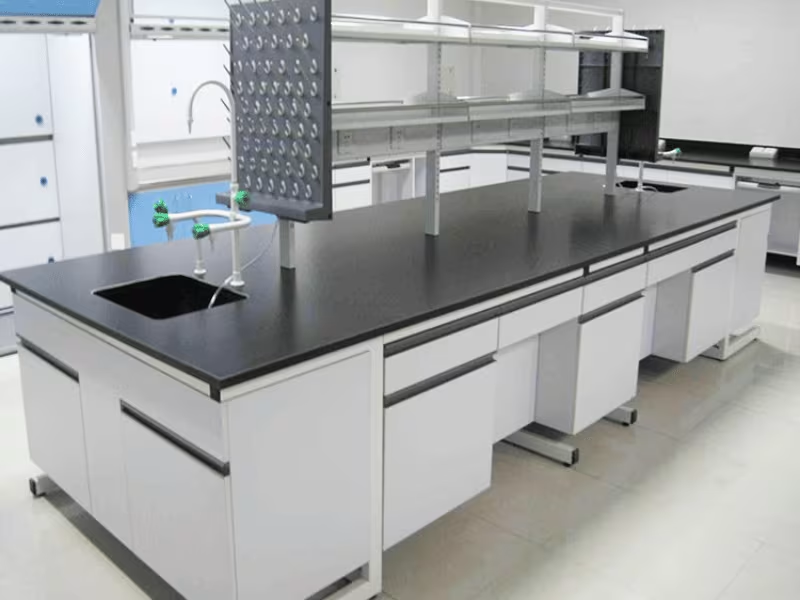
A standard modular system stacks four layers: a frame (open, C-frame, or adjustable-height), a swappable work surface, an accessory tier for shelving, drawers, and mobile carts, and integrated utility drops for power, gas, and water. Each layer changes independently. That independence is the entire value proposition.
Why Labs Choose Modular Over Fixed
The core advantage isn’t aesthetics or modularity for its own sake. It’s that change in a lab is inevitable, and modular systems absorb that change at the component level instead of the renovation level.
A project requiring four wet-chemistry stations this year might need six electronics workstations next year. A team expanding from three to eight researchers doesn’t want to schedule weeks of construction and lose lab access mid-project — they want to reconfigure benches over a weekend. When a countertop takes chemical damage, component replacement beats full bench teardown every time.
Over a five-to-ten-year horizon, labs with evolving research needs almost always recover the cost premium of modular systems in avoided renovation costs alone.
How to Choose the Right Modular Lab Bench System
Starting with a catalog is the wrong move. Most buyers pick a surface material that sounds right, then reverse-engineer justifications for it — which is exactly how labs end up with underspecified benches or expensive rework. The right starting point is workflow, and everything else follows from there.
Step 1: Map Your Workflow First
Before comparing specs, pin down three things: what tasks happen at the bench, what hazards are present (chemical, heat, electrical, biological), and who uses it and how. A bench rotating through twelve students has completely different requirements than a dedicated analytical station running overnight assays — and that gap shows up in surface material, frame load rating, and utility access, not just layout.
That gap is where most selection mistakes happen. Buyers who lead with “we want epoxy resin because it’s durable” often overpay for chemical resistance they never use — or, worse, underspecify heat resistance for a bench sitting next to a hot plate. Workflow defines the requirements. Specs follow from that, not the other way around.

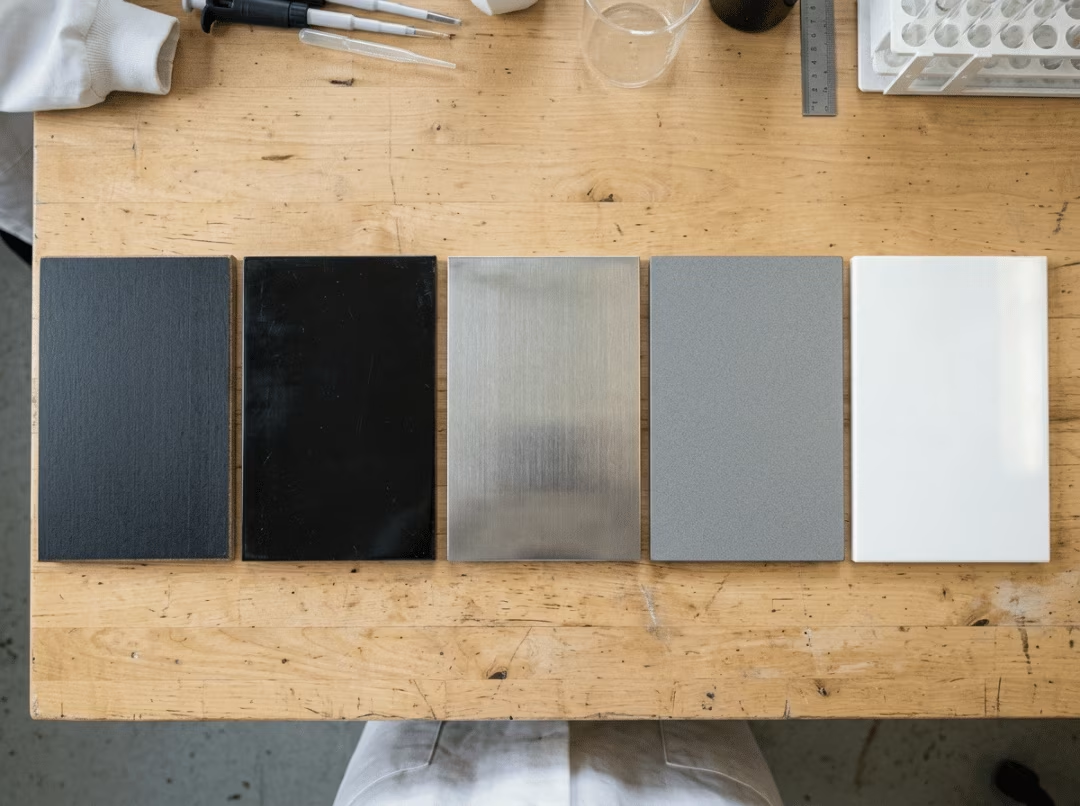
Step 2: Work Surface Materials
The work surface takes more abuse than any other component — and it’s the one most buyers get wrong. No frame quality or accessory configuration compensates for a surface that can’t handle the work being done on it.
Phenolic resin is a laminated composite with good chemical resistance and heat tolerance to around 135°C. It’s the right call for general research and teaching labs where budgets matter and chemical exposure stays moderate. One hard limit: it’s a laminated panel, so serious surface damage means replacement, not refinishing.
Epoxy resin is a cast, monolithic surface with heat resistance to approximately 300°C and broad resistance to solvents, acids, and oxidants. Unlike phenolic, it can be sanded and resurfaced if damaged — a practical advantage that extends working life well beyond what laminated panels allow. For any bench with regular chemical exposure, epoxy resin is the default specification. Once solvent or reagent work enters the picture, there is rarely a sound reason to choose anything weaker.
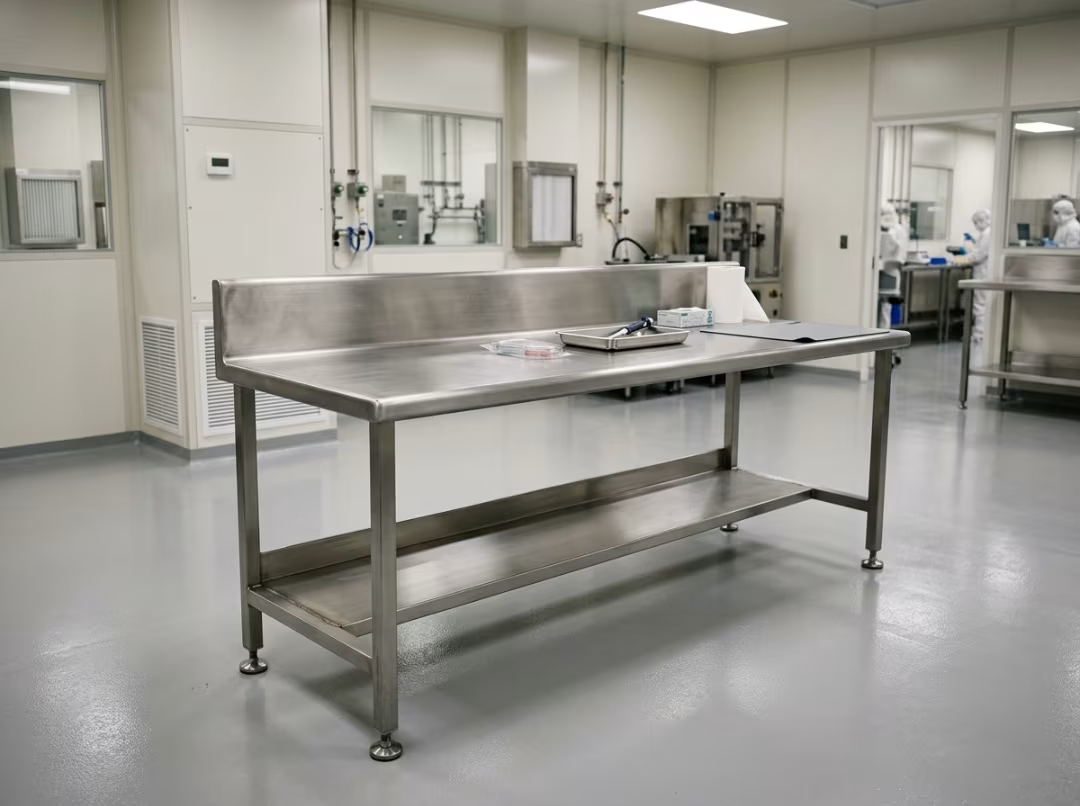
Stainless steel (grade 304 or 316) is the standard surface for clinical, medical, and microbiology environments — seamless, non-porous, and easy to sanitize. Grade 316 adds chloride resistance, which matters in coastal facilities or any lab working with salt-based reagents. Its limitation is chemical durability: strong acids and oxidants degrade stainless steel over time, so it’s not the right call for heavy chemical work. For hygiene-critical environments where that tradeoff doesn’t apply, it’s the most practical surface on this list.
Laminate is inexpensive and adequate for dry, low-hazard work — and that’s where its suitability ends. It offers weaker chemical resistance and lower heat tolerance than both phenolic and epoxy resin, and in any environment with regular solvent or reagent use, the replacement cycle will outpace the initial cost savings.
Solid surfaces
like Trespa TopLab offer a consistent, seamless finish with reliable chemical resistance to around 180°C. They’re common in high-spec university labs and life sciences facilities where both appearance and performance requirements are elevated. Repairability is limited, so consider that against the application before specifying.
|
Material |
Best For |
Chemical Resistance |
Heat Resistance |
Relative Cost |
Main Caution |
|---|---|---|---|---|---|
|
Phenolic Resin |
General-purpose, teaching labs |
Good |
~135°C |
Low |
Laminated — not repairable if damaged |
|
Epoxy Resin |
Chemical-heavy wet labs, pharma, testing |
Excellent |
~300°C |
Medium-High |
Higher upfront cost |
|
Stainless Steel |
Clinical, hygienic, sterile environments |
Very good (316 for chlorides) |
~180°C |
Medium |
Scratches; avoid strong acids |
|
Laminate |
Low-hazard, dry general use |
Moderate |
Low |
Low |
Poor solvent resistance |
|
Solid Surface (e.g., Trespa) |
High-spec research, institutional labs |
Good |
~180°C |
Medium-High |
Limited repairability |
For a closer look at how these materials perform across different lab types, Glorylab’s lab countertop options cover chemical resistance, heat tolerance, and customization in detail.
Step 3: Frame and Structure
Steel frames carry heavier loads and are the better choice for benches supporting instruments, dense storage, or shared equipment. Aluminum frames are lighter and easier to reconfigure — a practical advantage in labs that expect frequent layout changes, but a limitation for benches loaded with heavy equipment.
Tie load capacity directly to your workflow mapping. A bench holding a centrifuge or analytical balance needs a frame rated well above the equipment’s static weight, with margin for operational vibration. For sensitive instruments — balances, microscopes, precision measurement tools — an underspecified frame introduces measurable error. If vibration isolation is critical, a dedicated anti-vibration table is often a better fit than a standard modular frame.
Also decide early whether you need mobile units (casters with lockable wheels) or fixed modular frames. Mobility adds flexibility; it also reduces stability. For heavier equipment, fixed frames are usually the right call.
Step 4: Dimensions and Utility Compatibility
Standard bench heights and depths cover most applications, but adjustable-height frames are worth the cost for shared spaces or any team with mixed ergonomic needs. Beyond the bench dimensions, check aisle clearance, delivery path, and door widths before finalizing anything — a bench that can’t reach its destination on installation day is a planning failure.
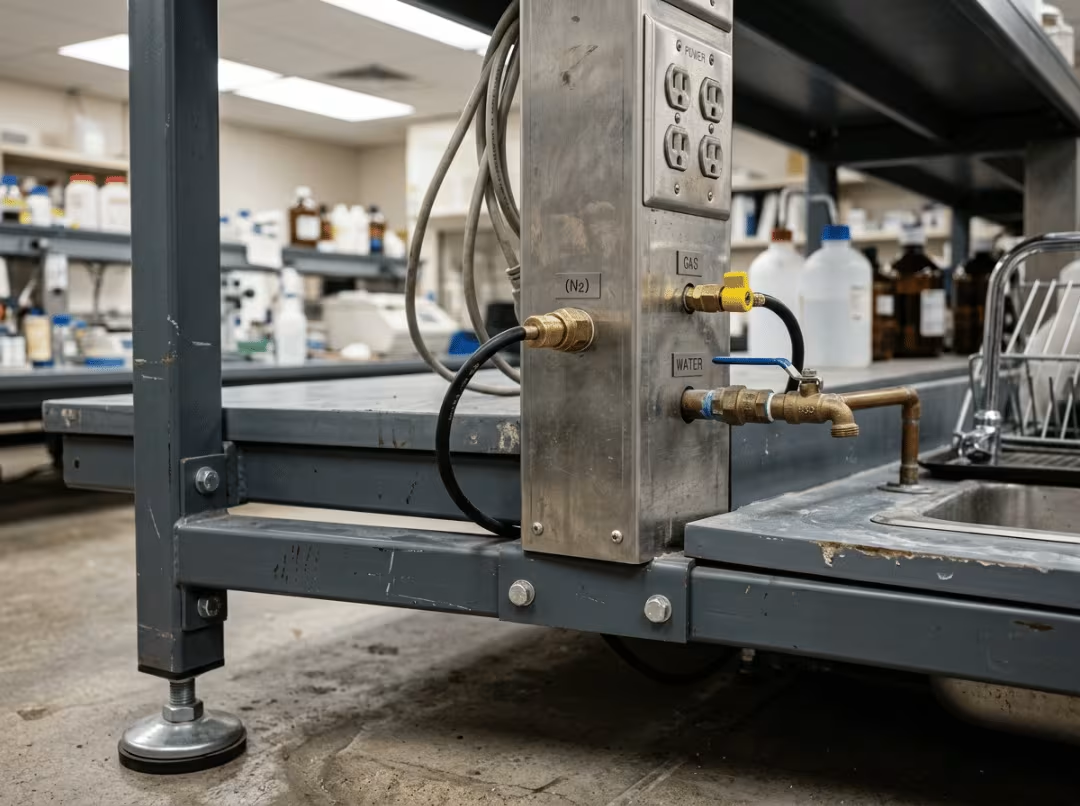
Utilities are where modular systems most often fail to deliver on their promise. Physical modularity doesn’t guarantee functional flexibility — a bench can reconfigure on paper while remaining functionally fixed because the utility connections were never designed to move. Before committing, confirm that power, gas, water, and data drops can all be repositioned as the layout changes, and specify a utility chase with spare capacity for future additions. Labs that skip this step end up with a system that’s modular in theory and inflexible in practice.
Step 5: Supplier and Warranty
Warranty terms and replacement part availability reveal how a supplier actually expects their product to perform over time. Ask specifically: how long are replacement components available? What are lead times for custom configurations? A strong product catalog means little if a damaged work surface takes three months to source.
Suppliers with in-house manufacturing and engineering support handle custom bench depths, non-standard utility routing, and bespoke configurations more reliably than distributors reselling third-party components. If your lab has non-standard requirements — and most do — that distinction matters.
Modular vs. Fixed Lab Benches: The Real Trade-offs
Cost: Modular systems cost more upfront. Fixed casework costs more over time — every layout change triggers renovation spend. For labs that expect to reconfigure, the modular premium typically pays for itself within five to ten years.
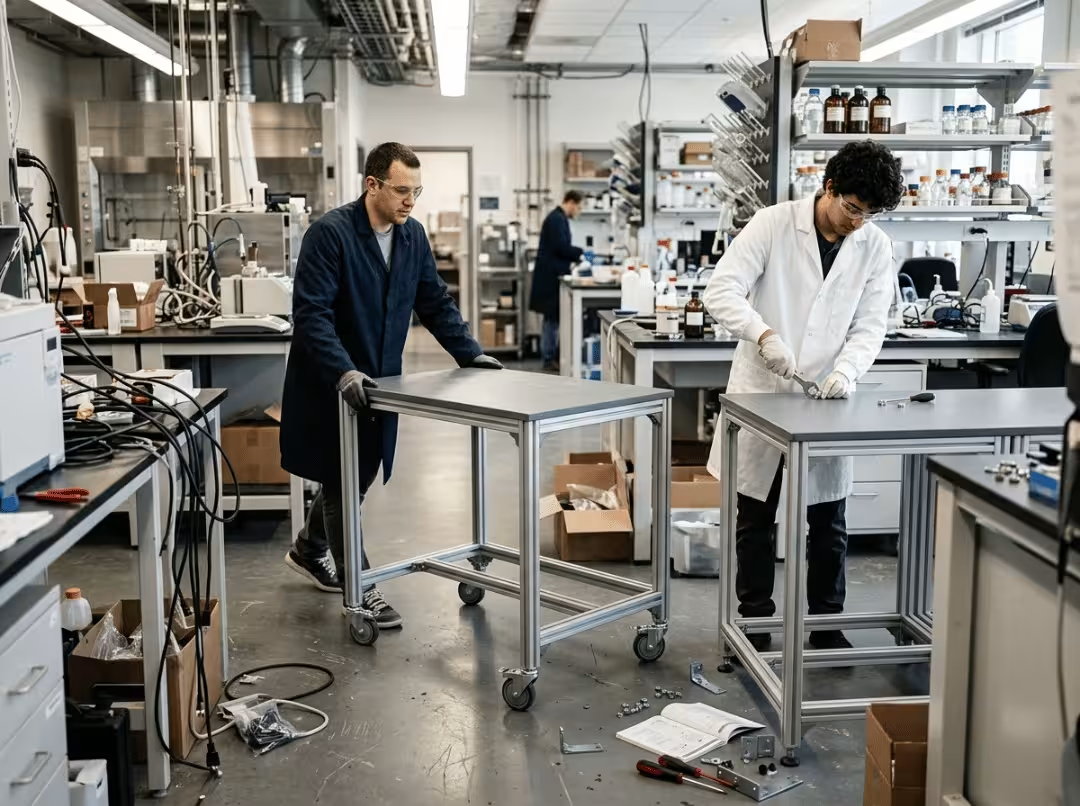
Installation speed: Modular benches arrive pre-fabricated and assemble on-site in days. Fixed casework is built into the room — a longer construction window that forces labs to suspend operations while work is underway.
Portability: Modular systems move when the lab moves. Fixed casework stays behind. For organizations in leased facilities or planning future relocations, this is a straightforward financial advantage.
Where fixed wins: Heavy, permanent analytical instruments that will never be relocated are the clearest case for fixed casework — better structural rigidity, lower total cost, and no modularity premium you’ll never use. If the layout is genuinely static and the equipment will never change, fixed is the simpler and more defensible choice. Modular makes sense when change is expected, not as the default answer to every lab configuration problem.
Cost, Installation, and Maintenance
Pricing tracks material and customization level. Basic configurations use laminate or phenolic resin on standard steel frames. Mid-range systems step up to epoxy resin or stainless steel, with added mobility and utility integration. High-spec builds involve solid surfaces, adjustable-height frames, and custom work — sink cutouts, specialized edges, non-standard utility routing.
Standard modular installations take days; custom orders with non-standard dimensions or utility routing run longer. For maintenance: inspect phenolic and laminate periodically for delamination; check epoxy surfaces occasionally for wear; sanitize stainless steel regularly; inspect solid surface seams and edge bonding over time.
Who Should Choose Modular Lab Benches
Modular systems suit labs with evolving research priorities, shared or multi-purpose spaces, growing teams, and buyers who want to avoid renovation costs as the lab changes. They’re a poor fit for labs built around heavy, permanent equipment that will never move, or layouts with no realistic prospect of change. In those scenarios, a well-specified fixed bench is simpler and may cost less over its lifetime.
FAQs
How long do modular lab benches typically last?
With proper maintenance, a well-built modular system lasts 10–15 years or more. Because work surfaces and accessories can be replaced individually, the frame and structure often outlast any single component.
Can modular lab benches support heavy equipment like centrifuges or fume hoods?
Yes, with the right frame specification. Steel frames handle heavier loads than aluminum. For sensitive instruments, include anti-vibration requirements in the load assessment from the start.
Is it more expensive to buy modular vs. fixed lab furniture upfront?
Usually yes. Modular systems cost more initially. Fixed casework tends to cost more over time when layouts need to change or components need replacing.
Can I mix work surface materials within the same modular system?
Yes. Pairing epoxy resin on chemical-exposure benches with stainless steel near sinks or sanitization-critical stations is a common and practical approach within a single modular frame system.
How do I know if my lab needs adjustable-height benches?
If multiple people with different ergonomic needs share the bench, or if the bench needs to support both seated and standing work, adjustable-height frames are worth specifying. Single-user, single-purpose benches can usually use standard fixed heights.
What happens to my modular lab bench system if I move to a new building?
Frames, surfaces, and accessories disassemble and reassemble in the new space. Fixed casework cannot make that move. For labs in leased facilities or organizations likely to relocate, this is one of the strongest practical arguments for going modular.
Choose Workflow-First, Not Catalog-First
Surface material, frame, and utility layout all matter — but none of them matter in isolation from the work being done at the bench. The same phenolic resin surface on a steel frame that’s the right call for a teaching lab is a specification failure in a pharmaceutical wet lab down the hall. The material didn’t change. The workflow did. That’s the entire point.
The labs that get the most from modular lab benches are the ones that started with workflow — not a catalog.