


A lab countertop is one of the few specifications you live with for 15 years or more. Once it’s installed, sealed, and plumbed into your bench system, the cost of changing course — in time, disruption, and money — is real. Yet in many projects, the surface selection happens late, under budget pressure, with less thought than it deserves.
That’s when mismatches happen. A phenolic top ends up under daily solvent exposure. A 304 stainless countertop gets installed in a chloride-heavy room and starts pitting within two years. Neither failure is a mystery in hindsight — both were predictable from the specification.
This comparison of phenolic vs epoxy vs stainless steel lab countertops is written for the people who make or influence that call: lab planners, procurement leads, facility managers, and fit-out contractors. It covers how the three materials perform in real working conditions, which suits which lab type, where each one fails, and what to look for when you go to source.
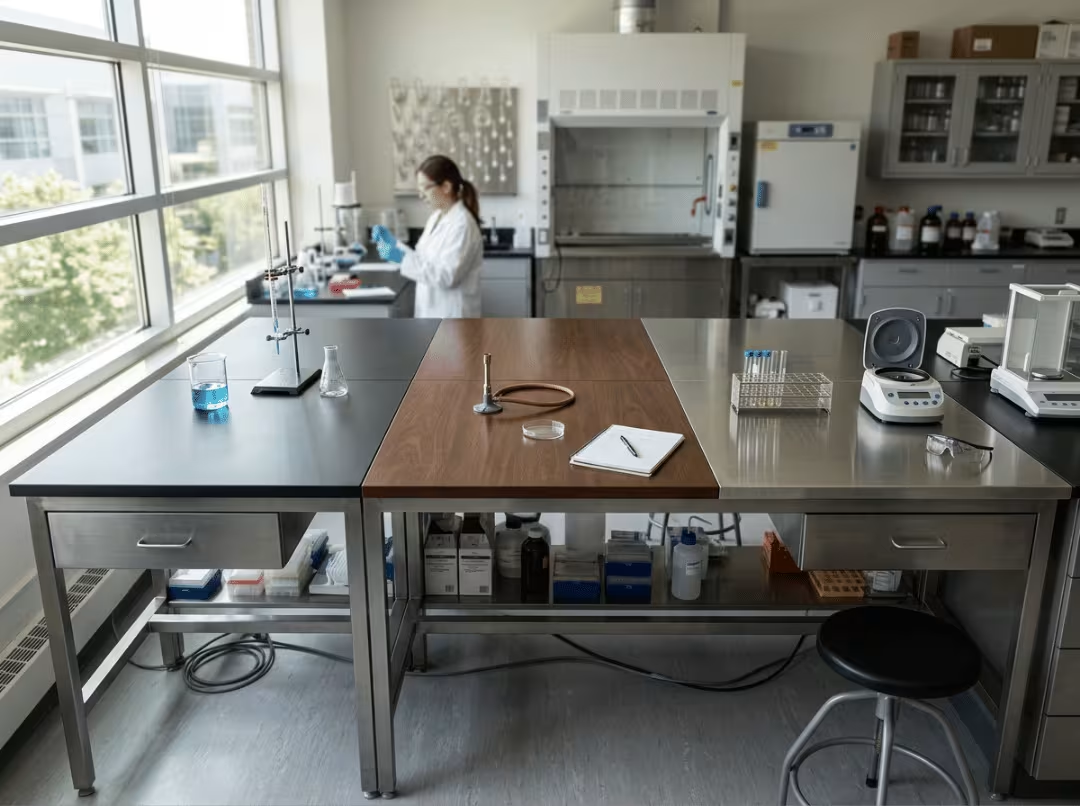
What the Decision Actually Rests On
Material datasheets lead with strengths. Good specification works in the opposite direction — you identify what will damage or destroy a surface under your working conditions, then eliminate anything that can’t survive it.
Four factors drive most countertop decisions:
- Chemical exposure: What reagents, solvents, and acids contact the surface, at what concentration, and for how long.
- Heat load: Hot plates, open flames, autoclaved items placed directly on the bench, anything sustained above 120°C.
- Hygiene requirements: Whether the environment requires sterilization, repeated washdown, or cleanroom-grade cleanability.
- Budget and lifecycle: Not just purchase price, but installation complexity, repairability, and how often replacement becomes necessary.
Edge profiles, color options, and sink integration matter — but they’re downstream of getting these four right. A surface well-matched to your actual conditions will outperform a “superior” material used in the wrong place every time.
The Core Differences Between the Three Materials
Phenolic is a solid-core laminate — layers of kraft paper saturated with phenolic resin, compressed and cured under heat and pressure into a dense, homogeneous panel. It’s light, affordable, and genuinely impact-tough. Epoxy is a monolithic cast resin, non-porous by nature, favored wherever aggressive chemistry is the norm. Stainless steel — typically 304 or 316 grade — is the material of choice where heat resistance, mechanical durability, and sterilization are the primary demands.
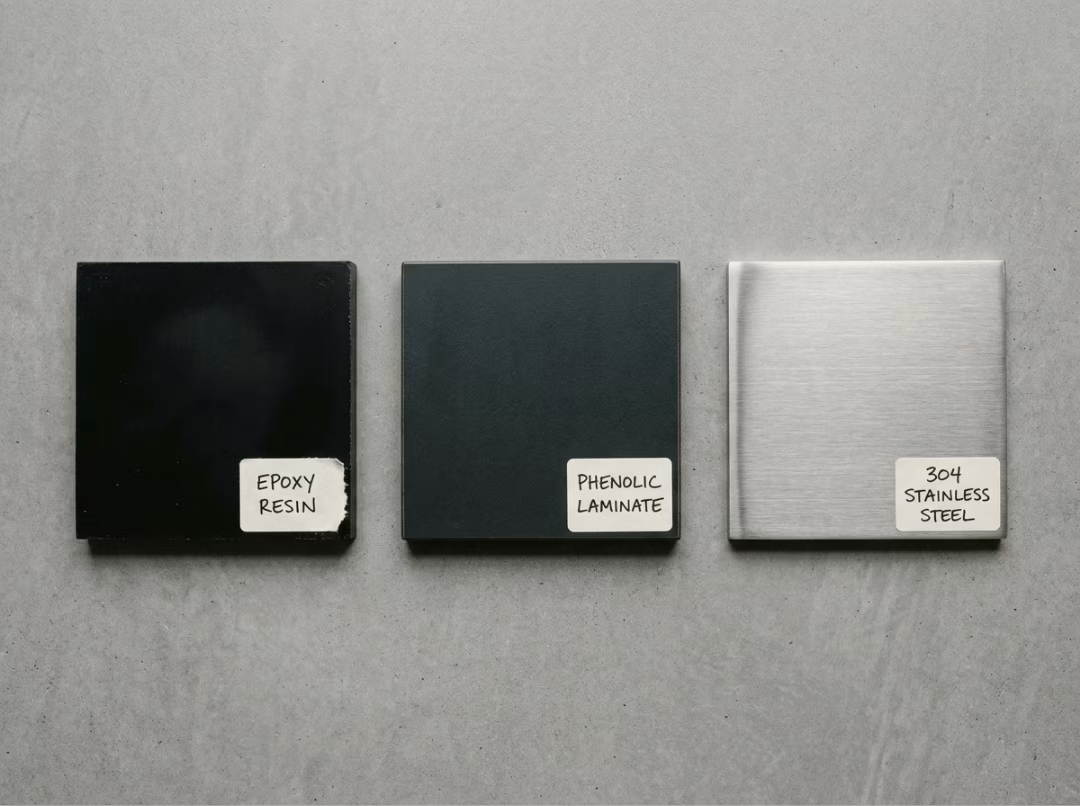
The table below is your filter. Start with the “Not recommended for” row — it disqualifies bad fits faster than any list of strengths confirms good ones.
|
Property |
Phenolic Resin |
Epoxy Resin |
Stainless Steel (304/316) |
|---|---|---|---|
|
Best for |
Teaching labs, prep areas, budget projects |
Chemistry, analytical, pharma, R&D labs |
Sterile, food, heat-intensive, and wet labs |
|
Not recommended for |
Heavy solvents, concentrated acids, sustained heat |
Extreme continuous heat, very tight budgets |
Strong oxidizers; chloride-heavy rooms (use 316) |
|
Chemical resistance |
Fair to Good |
Excellent |
Good — grade-dependent |
|
Heat resistance |
Fair — chars ~120–150°C |
Good — 150–200°C typical |
Excellent |
|
Moisture resistance |
Good |
Excellent |
Excellent |
|
Impact resistance |
Good |
Good |
Excellent |
|
Cleanability |
Good — not autoclave safe |
Good |
Excellent — autoclave compatible |
|
Cost (material only) |
Low to Medium |
Medium to High |
Medium to High |
|
Lifespan |
10–15 years |
15–20+ years |
20–30+ years |
|
Maintenance |
Replace rather than repair |
Patchable by a qualified technician |
Repairable; re-passivation restores surface |
No material wins across the board. Each one covers a specific risk profile well — and fails outside it. The table narrows the field; your working conditions make the final call.
Chemical Resistance: Why the Chart Doesn’t Tell the Whole Story
Most lab countertops get specified badly because the buyer stops at the resistance chart. A chart tells you a material “resists” a chemical. It rarely tells you at what concentration, over what contact duration, or at what temperature — and those three variables change the outcome entirely. A splash wiped away in under a minute is a different situation from a spill left sitting for several hours. Add heat, and the rate of surface attack accelerates across all three materials.
Acids: Dilute mineral acids — hydrochloric or sulfuric below 5% — are handled reasonably well by all three. The gap opens with concentrated acids and prolonged contact. Epoxy holds up best across a broad acid range. Stainless steel depends heavily on grade: 316 resists chloride-containing acids far better than 304. Phenolic performs poorly under concentrated acids and degrades faster as concentration and contact time increase.
Bases and alkalis: Epoxy and stainless steel both handle sodium hydroxide and similar caustic solutions well. Phenolic tolerates limited concentrations but breaks down under strong, prolonged alkaline contact. For benches with routine caustic exposure, phenolic is a short service life waiting to happen.
Solvents and halogenated solvents: Epoxy and stainless perform strongly here — including tougher halogenated solvents like chloroform and dichloromethane. Phenolic is the weak link. Acetone and similar solvents can swell or stain the surface. For solvent-heavy chemistry, this factor alone frequently rules phenolic out before anything else comes into consideration.
Oxidizers: Strong oxidizers such as chromic acid and hydrogen peroxide test all three. Concentrated oxidizers can attack the passive film on stainless steel. Epoxy may discolor over time. Phenolic offers only fair resistance. This is the one chemical category where a general chart is genuinely insufficient — verify directly with the manufacturer’s data for your exact concentrations.
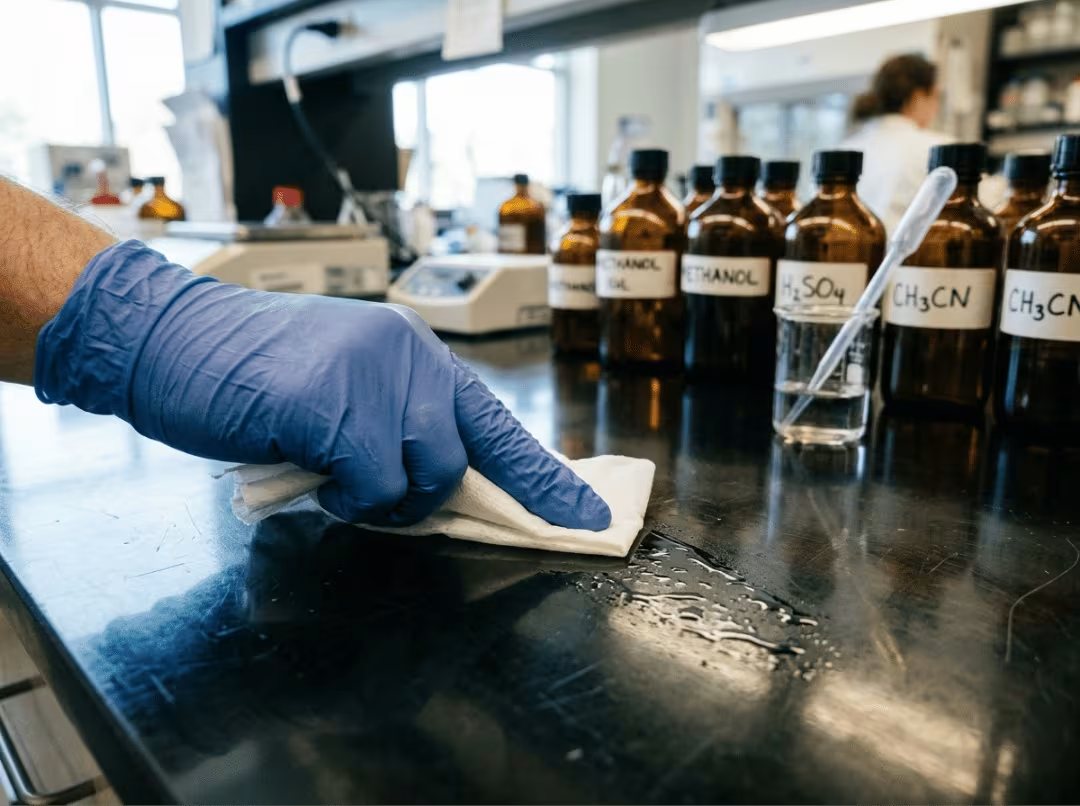
Before specifying, build a chemical exposure matrix: list each chemical, its typical concentration, maximum contact duration, and operating temperature. Match that against verified data, not a summary table or marketing copy.
Physical Performance: Heat, Moisture, Hygiene, and Impact
Chemical resistance gets most of the attention, but physical performance regularly decides the specification in wet, hot, or high-traffic environments.
Stainless steel handles continuous high heat and direct flame best. Epoxy tolerates moderate heat — most formulations are rated to 150–200°C. Phenolic is the most heat-sensitive and will char under sustained high-temperature contact.
On moisture, epoxy and stainless are both non-porous and perform well. Phenolic’s solid core resists moisture adequately, but unsealed edges are a vulnerability — edge sealing is essential at sinks and cutouts.
For impact, stainless steel absorbs knocks best. Phenolic is genuinely durable. Epoxy is solid but can chip under a concentrated, sharp blow.
For hygiene and cleanability, stainless is autoclave compatible and easiest to sterilize. Epoxy’s seamless, non-porous surface cleans readily. Phenolic handles most common cleaners but cannot be sterilized to the same standard and is not suitable for autoclave use.
The pattern holds across all four properties: the more physically demanding the environment, the more stainless steel earns its cost.
When Phenolic Makes Sense
Phenolic gets dismissed in conversations about high-performance chemistry environments, which is fair — but that dismissal bleeds into contexts where it doesn’t belong. In the right setting, phenolic is the most sensible surface on the list.
It’s affordable, impact-resistant, moisture-tolerant, and relatively quick to install given its light weight. The limits are equally straightforward: it chars above roughly 120–150°C, struggles with concentrated solvents and acids, can’t be repaired when burned or deeply gouged — the panel needs replacing — and isn’t autoclave safe.
Those limits don’t matter in teaching labs, university classrooms, prep areas, and general-purpose benches where chemical exposure stays dilute and light. Upgrading to epoxy or stainless in these environments adds cost with no real benefit.
Specify phenolic where cost and impact resistance lead and aggressive chemistry is absent. That’s the environment it was designed for.
When Epoxy Justifies the Premium
Epoxy is the standard answer when chemistry is the dominant risk. Its poured, monolithic construction creates a non-porous surface, and seams can be chemically bonded into near-continuous runs — a meaningful advantage where spill control and contamination matter. There are no surface pores for reagents to penetrate and no seam gaps for liquids to migrate through when the installation is done correctly.
The trade-offs are real. Upfront cost sits higher than phenolic. The material is heavy and requires solid bench support. Installation demands experienced labor to avoid voids and weak seam joints. Repairs are possible but need a qualified technician, and a perfect color match is rarely achievable.
In research chemistry, analytical benches, pharmaceutical environments, and anywhere with frequent solvent use or moderate-to-strong acid and base exposure, those trade-offs are well worth it. Epoxy performs where other surfaces degrade. If you’re evaluating surface options across a full project, our lab countertops and worktops range covers epoxy alongside the full material selection.
When your benches face aggressive chemistry on a daily basis, the resistance profile and seamless construction of epoxy repay the premium over the surface’s working life.
When Stainless Steel Is the Right Specification
Stainless steel is the specification that dominates where heat, sterilization, and hygiene are the primary requirements. It handles high temperatures without degradation, tolerates repeated disinfection, is fully autoclave compatible, and resists mechanical abuse better than any resin surface. It generates no off-gassing and is fully recyclable at end of life.
The limitations are specific. It costs more, especially in 316. Strong oxidizers can damage the passive film. It scratches and can dent under heavy impact. And in chloride-rich environments, the wrong grade pits — which brings up a decision point that gets made incorrectly more often than it should.
Stainless is the right call for microbiology and sterile processing rooms, food science labs, hospital and clinical benches, and fume-hood workstations that require frequent cleaning or high-heat tolerance. Because stainless tops integrate naturally with metal-framed bench systems, it’s worth planning the surface and structure together when you’re scoping lab benches and workstations for these environments.
Specify stainless where sterilization, heat, or hygiene drive the requirement — then get the grade right, because that’s where stainless specifications most commonly fail.
304 vs 316 Stainless Steel: A Distinction That Matters
The grade decision carries as much weight as the choice to use stainless at all. The difference comes down to a single alloying element: 316 contains molybdenum, which significantly improves resistance to chloride-induced pitting corrosion. That distinction often determines whether a countertop performs for 25 years or fails in two.
304 is corrosion-resistant, cost-effective, and adequate for most general lab rooms — dry environments, standard cleaning agents, and minimal chloride exposure. For labs without regular chloride contact, 304 is solid value.
316 is the specification to use when chlorides enter the picture — saline solutions, hydrochloric acid, coastal humidity, or any process involving chloride salts. The molybdenum content provides meaningful protection in food testing labs, marine research settings, and chemical benches handling halogen-containing compounds. The cost premium over 304 is small against the cost of early failure.
In a chloride environment, 304 stainless develops pitting: small, deep surface defects that compromise the material and create areas where contamination accumulates and can’t be cleaned out. 316 resists pitting and crevice corrosion far better. If there’s genuine uncertainty about chloride exposure, defaulting to 316 is the lower-risk choice.
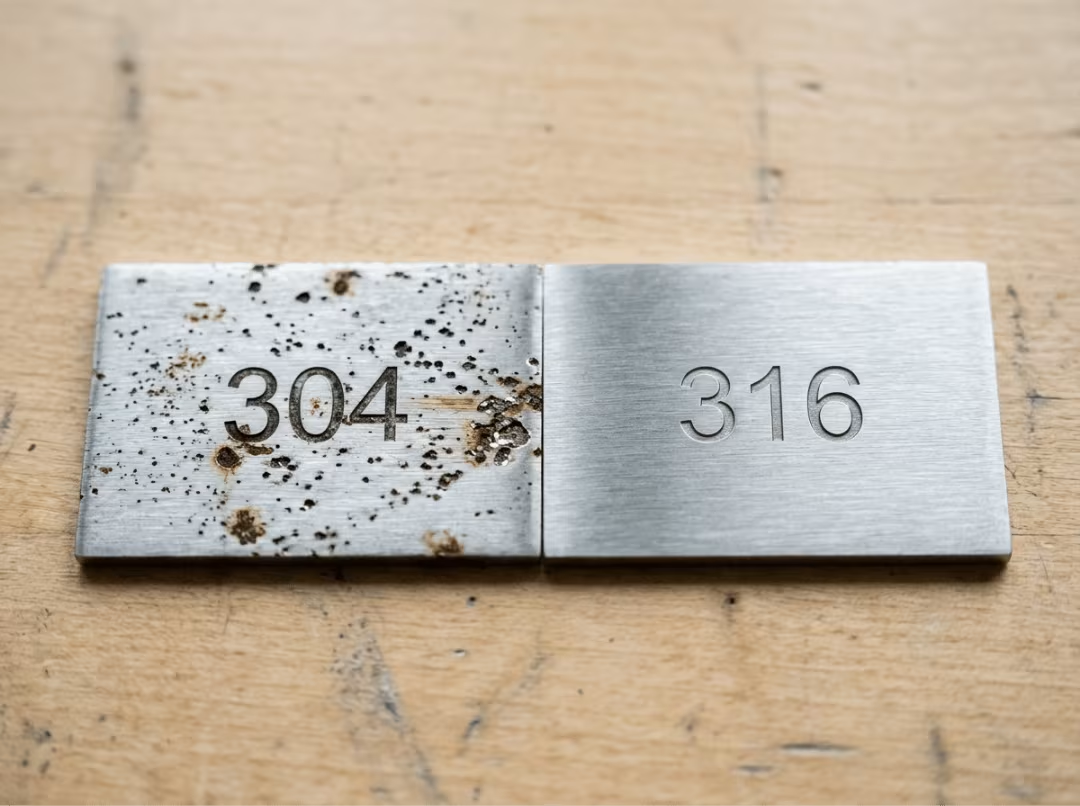
Use 304 in standard environments and step up to 316 the moment chlorides are a routine part of the room’s chemistry.
Material Selection by Lab Type
Matching material to the lab’s dominant risk is the most direct path to the right specification. The following reflects what holds up across most projects for each common environment.
- Chemistry labs — Epoxy. Broad resistance to solvents, acids, and bases; seamless surface simplifies spill management. Phenolic fails quickly under frequent solvent or concentrated acid contact.
- Pharmaceutical labs — Epoxy for general benches; stainless in sterile zones. Both materials meet the non-porous, cleanable surface requirements that compliance typically demands.
- Microbiology and sterile labs — Stainless steel. Autoclave compatible, easy to sterilize, and hygienic by nature. Phenolic cannot meet the sterilization standard these rooms require.
- School and university labs — Phenolic. Cost-effective and durable for student use with light chemistry. Epoxy or stainless steel is over-specified here unless the lab runs aggressive chemical procedures.
- Cleanrooms — Epoxy or stainless, depending on cleanliness class. Both offer low particle shedding and sealed surfaces. Phenolic is unsuitable in higher ISO classes.
- Food testing labs — Stainless steel, 316 grade. Hygienic, heat-tolerant, and resistant to salt and chloride contact. Avoid 304 where saline solutions are routine.
- Hospital and clinical labs — Stainless or epoxy. Both handle repeated disinfection. Phenolic is not the right surface where aggressive sterilization is a regular requirement.
- Industrial R&D labs — Epoxy for general benches, stainless at heat-intensive stations. Variable chemistry demands broad chemical resistance; phenolic is too limiting where processes aren’t fully predictable.
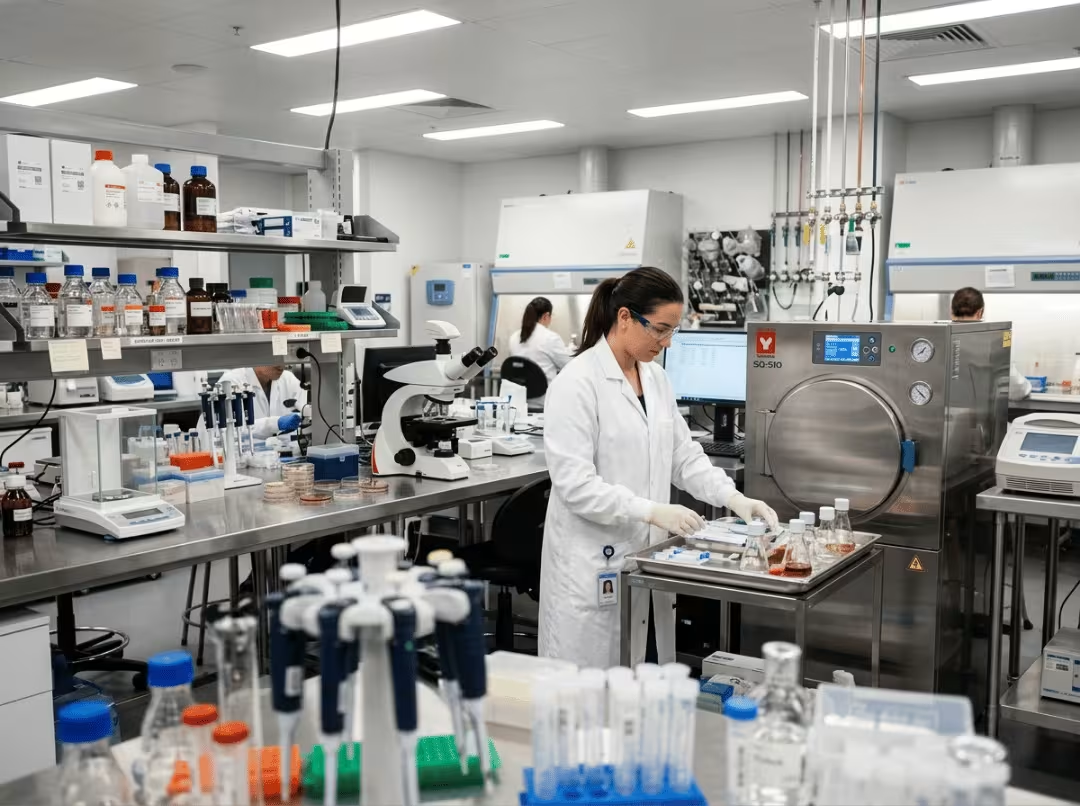
Identify the primary hazard in the room — chemical, thermal, or hygienic — and the material choice becomes straightforward.
Cost, Service Life, and Lifecycle Value
The surface with the lowest invoice price is rarely the cheapest over a 15-year period. A complete cost picture weighs purchase price against installation requirements, maintenance burden, repairability, and how disruptive replacement cycles are to lab operations.
Purchase and installation: Phenolic is the lowest on both counts. Epoxy runs medium to high and requires skilled labor. Stainless steel varies by grade, with 316 at the top of the range.
Maintenance and repair: Phenolic is low-maintenance but gets replaced rather than repaired when damaged. Epoxy can be patched by a technician, though a seamless color match is rarely achievable. Stainless steel is repairable through metalworking and can be re-passivated to restore corrosion resistance.
Service life: Phenolic runs 10–15 years under normal conditions, epoxy 15–20+ years, and stainless steel 20–30+ years with appropriate maintenance. Longer service life translates directly to fewer replacement cycles — and the downtime, cost, and disruption those involve.
Lifecycle value: Phenolic delivers the best return in light-use teaching environments. Epoxy’s durability reduces long-term costs in chemical-heavy rooms where a phenolic surface would fail early and require multiple replacements. Stainless steel often wins lifecycle economics in sterilization- or heat-intensive labs, despite the higher entry cost.
Factor in maintenance, replacement frequency, and downtime alongside purchase price — that’s the only accurate way to compare these materials over their working lives.
Common Specification Errors
Most premature countertop failures have a short list of causes. These are the ones that appear most consistently:
- Selecting on unit price without accounting for lifecycle cost.
- Reading a resistance chart without checking the relevant concentrations and contact times.
- Underestimating heat load from hot plates, open burners, or items taken directly from autoclaves.
- Inadequate seam and edge sealing, which allows spills to migrate into the substrate.
- Specifying 304 stainless in chloride-rich rooms — pitting is the predictable outcome.
- Using phenolic in solvent-heavy environments where surface failure is a matter of when, not if.
- Treating all grades and formulations within a material family as equivalent — they aren’t.
- Relying on a generic resistance list rather than requesting manufacturer data for the specific chemicals in use.
Almost every case traces back to the same root cause: specifying against assumptions rather than documented working conditions.
Working with a Supplier
Even a correctly chosen material fails if it isn’t fabricated and installed to standard. Grade and workmanship affect chemical penetration risk as much as the material type itself, and the supplier conversation deserves the same rigor as the material selection.
Give every prospective supplier a chemical exposure matrix — your chemicals, typical concentrations, maximum contact durations, and operating temperatures. Then ask specifically for:
- Manufacturer chemical resistance data that covers the chemicals on your list
- Warranty language that explicitly references those chemicals and conditions
- References from comparable installed projects
- Details on seam sealing, edge treatment, sink integration, and cutout specifications
- Material grade certifications or third-party test data where applicable

A competent supplier treats the surface as part of a system — coordinating sinks, raised edges, sealed instrument cutouts, and chemical-resistant splashbacks with the bench structure. That integration matters, and it’s one reason surface selection belongs in the laboratory design and planning process from the start, not as a late-stage afterthought.
Evaluate suppliers on their willingness to match their recommendations to your documented conditions and back them with specific warranty terms.
Frequently Asked Questions
Which lab countertop material offers the best chemical resistance?
Epoxy resin is generally the strongest performer across a broad range of acids, bases, and solvents. Stainless steel is also excellent against organic solvents and halogenated compounds. In both cases, confirm the specific formulation or grade against your actual chemicals and concentrations — general ratings have limits.
Is epoxy a better choice than phenolic for a chemistry lab?
In most chemistry labs, yes. Epoxy resists concentrated acids, bases, and solvents considerably better than phenolic, and its seamless surface is easier to keep clean after spills. Phenolic is appropriate for teaching labs with light, diluted chemistry — not for rooms where solvents or strong acids are a regular presence.
What’s the practical difference between 304 and 316 stainless steel for lab countertops?
The difference is molybdenum. 316 contains it; 304 does not. That addition gives 316 substantially better resistance to chloride-induced pitting and crevice corrosion. 304 is appropriate for standard lab rooms. 316 is the correct choice wherever chlorides are present — saline solutions, hydrochloric acid, or salt-containing processes.
Which surface works best in a school or teaching lab?
Phenolic is the standard answer. It’s cost-effective, impact-resistant, and durable enough for normal student use and low-concentration chemistry. Upgrading to epoxy or stainless in this context rarely delivers value that justifies the cost, unless the lab runs advanced chemistry with aggressive reagents.
How long does an epoxy countertop last?
Under normal lab conditions, epoxy surfaces last 15 to 20 years or more. Actual service life depends on installation quality, the chemicals it contacts, heat exposure, and maintenance. Proper seam sealing and consistent cleaning practices extend it considerably.
Can phenolic be used in a chemical lab?
Phenolic is suitable for low-intensity chemical environments — teaching labs, prep areas, and rooms where reagents stay diluted. It isn’t appropriate where concentrated solvents, strong acids, or aggressive reagents appear regularly. For those conditions, epoxy or stainless steel is the right specification.
Are stainless steel lab countertops worth the cost?
For the right application, yes. Stainless steel is durable, autoclave compatible, easy to sterilize, and handles heat that would damage resin surfaces. For microbiology, food science, hospital, and clinical labs, it’s often the most practical long-term choice. In chloride-rich rooms, specify 316 rather than 304.
What countertop is appropriate for pharmaceutical or cleanroom environments?
Both epoxy and stainless steel are used in these settings. Properly specified epoxy with sealed seams and a low particle-shedding finish is common in cleanrooms. Stainless steel is preferred where autoclaving or aggressive sterilization is part of the workflow. The right choice depends on the cleanliness classification and sterilization requirements of the specific zone.
Can a damaged lab countertop be repaired?
It depends on the material. Phenolic with deep damage — burns, gouges — typically needs panel replacement. Epoxy can be patched by a qualified technician using compatible resin, though achieving a seamless match is difficult. Stainless steel can be repaired through metalworking and surface re-passivation.
How do I approach the selection when I’m not sure which material is right?
Start with the four factors described at the top of this piece: chemical exposure, heat load, hygiene requirements, and budget. Use the comparison table to eliminate clear mismatches. Then pressure-test your shortlist against your documented worst-case conditions — the chemicals at their highest realistic concentrations, the heat at its peak, and the cleaning regime at its most demanding. If one material still holds up, that’s your answer.
Making the Specification
Phenolic, epoxy, and stainless steel are each well-suited to a specific kind of lab — and ill-suited to others. Phenolic belongs in teaching and prep environments where budgets are tight and chemistry is light. Epoxy belongs where chemical resistance is the primary requirement. Stainless steel belongs where heat, sterilization, and mechanical durability drive the room.
Get clear on the four factors that matter — chemical exposure, heat, hygiene, and lifecycle cost — and the decision typically narrows itself. The remaining work is pressure-testing your shortlist against real conditions, getting the grade right if stainless is in play, and validating seam and edge details with your supplier before anything gets fabricated.
If you’re working through a project and want a recommendation grounded in your actual workflow, send your chemical exposure list, request material samples, or ask for a drawing review. That’s the process that results in benches that perform for their full service life.
