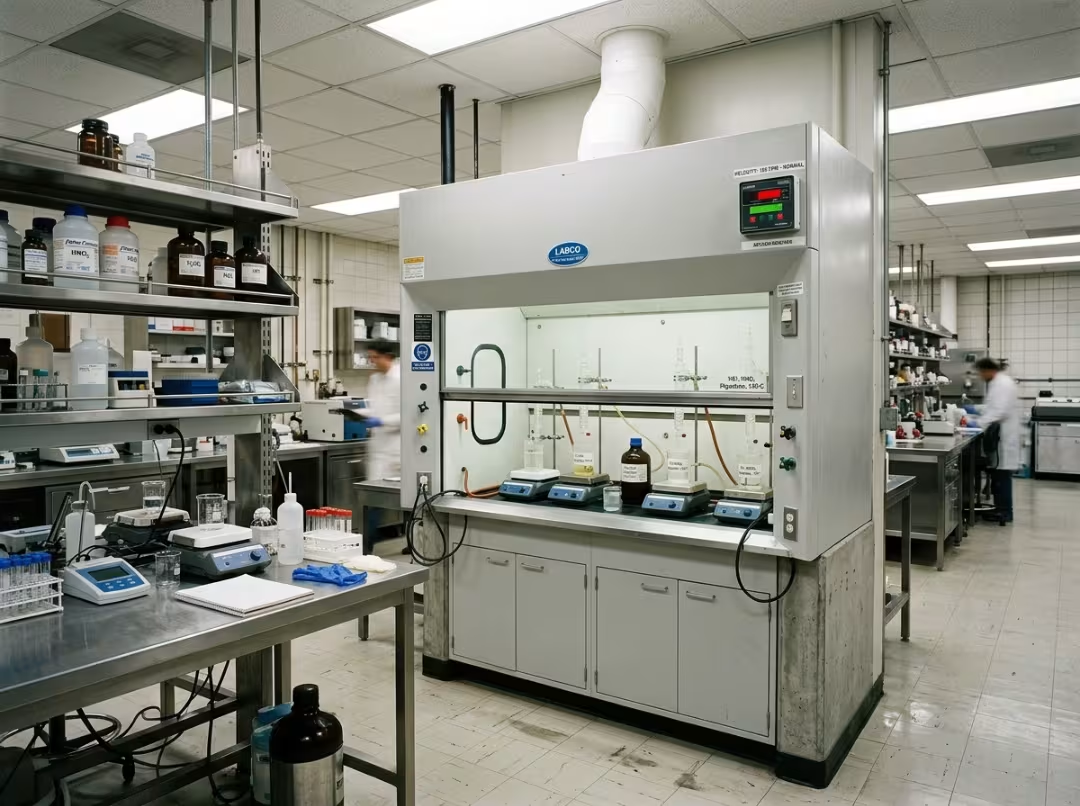
A fume hood is the single most important piece of safety equipment on a chemistry bench. It stands between your staff and whatever they’re heating, mixing, or digesting. So the material it’s built from isn’t a cosmetic detail — it decides what the hood can safely contain, how long it lasts, and whether it becomes a fire risk or a corrosion problem down the line.
The choice usually comes down to two families. Polypropylene (PP) hoods are welded plastic — seamless, corrosion-proof, and light. Steel hoods come in two flavors: powder-coated carbon steel for general work, and stainless steel (304 or 316 grade) for aggressive or high-cleanliness environments. Each is excellent in the right lab and a liability in the wrong one.
Here’s where buyers go wrong: they choose on price, or they copy whatever the lab next door installed, without checking their own chemical load. That’s how a lab ends up with a steel hood quietly rusting from acid vapor, or a PP hood softening under a hot plate it was never meant to hold. This article works toward one rule — match the hood material to your chemical inventory, your fire risk, and the true lifetime cost, not the sticker price.
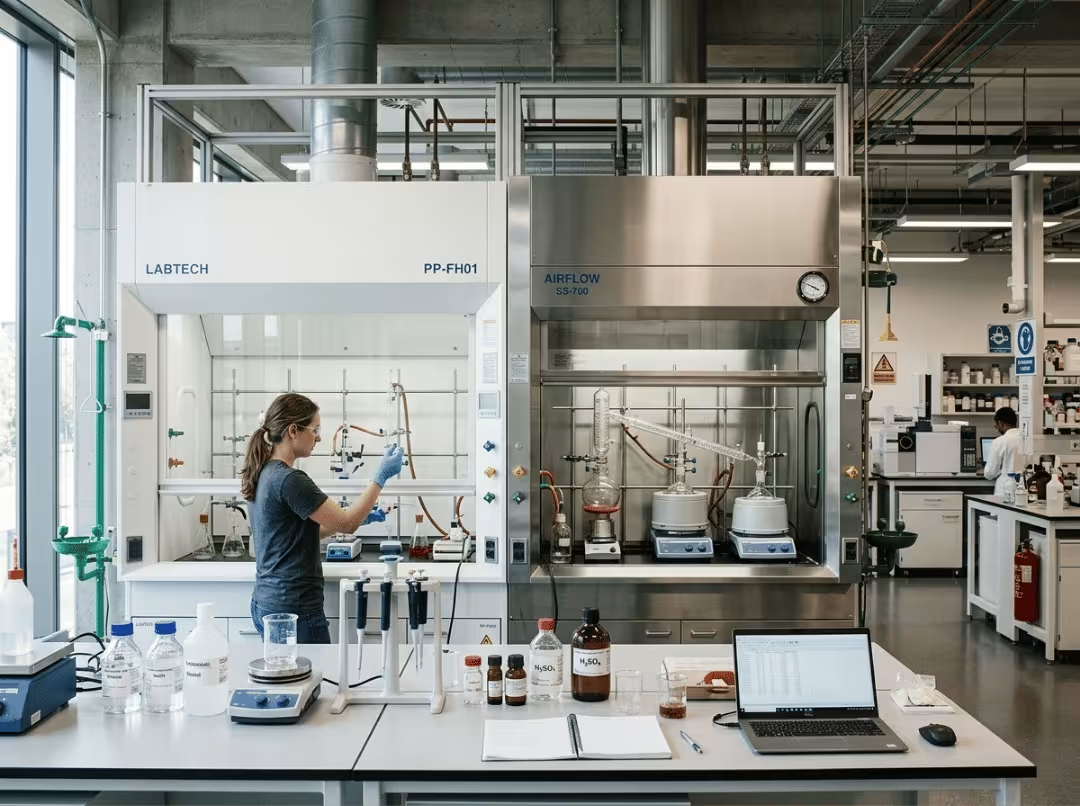
How Each Hood Is Built
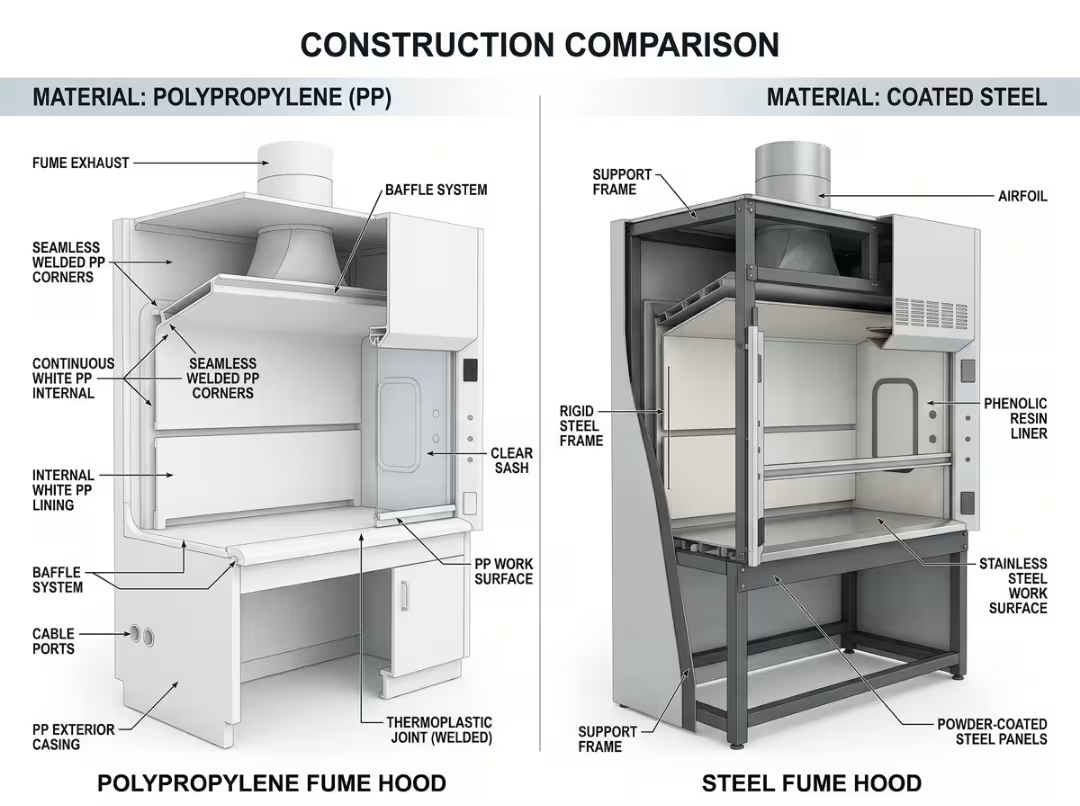
The construction explains almost everything about how these hoods behave, so it’s worth two minutes before you compare specs.
Polypropylene hoods are cut from sheet stock and heat-welded at the corners to form seamless joints. That seamless build matters more than it sounds: there are no crevices or seams where corrosive residue can collect and eat away at the structure. PP is naturally resistant to most acids and bases, completely unaffected by moisture, and light enough to support standard floor loads without reinforcement. The trade-off is baked into the material — PP is a thermoplastic, so it softens under sustained heat and burns more readily than metal. Its natural home is the acid bench: wet digestion, acid baths, and any workflow that fills the interior with corrosive vapor.
Steel hoods split into two types. Powder-coated carbon steel is the traditional general-purpose choice — strong, rigid, non-combustible, and compatible with nearly any chemical as long as the coating stays intact. That last part is the catch. Once the powder coat chips or scratches, moisture and acid reach the bare metal and rust spreads from the inside out. Stainless steel avoids that weakness and suits high-corrosion, frequent-washdown, and cleanroom settings. Within stainless, the grade matters: 316 resists chloride corrosion far better than 304, which is the difference-maker for labs handling hydrochloric acid or salt solutions.
Chemical Compatibility: The Deciding Factor
If you only get one thing right, make it this. The chemistry that happens inside the hood should drive the material choice more than budget, brand, or floor plan.
Where PP Wins: Acids and Corrosive Vapors
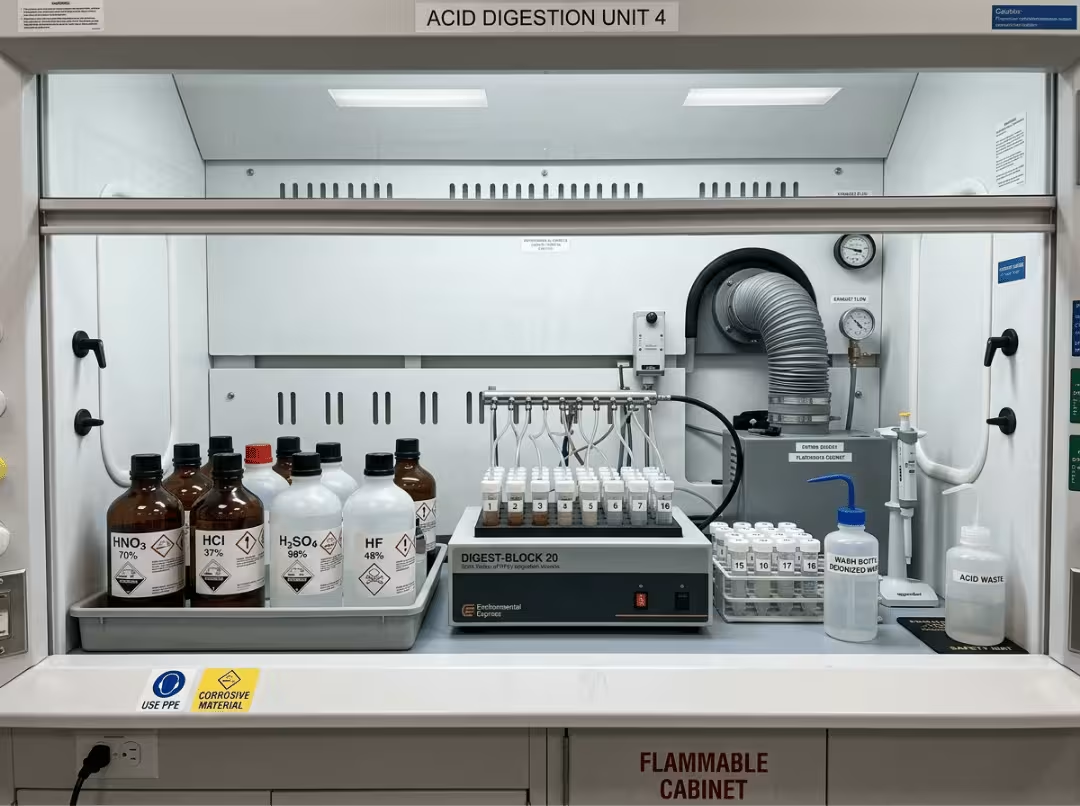
PP handles the chemical families that punish metal. Concentrated mineral acids, hydrofluoric acid (with the correct PP grade), and the aggressive acid vapors that rise and condense on interior walls — PP shrugs all of it off.
Condensation is the real reason PP dominates the acid bench. When acid-laden moisture beads up on a PP surface, nothing happens. When that same condensate settles on a coated steel interior day after day, it works into every scratch and seam and eventually corrodes the metal beneath. A wet digestion lab heating samples with nitric or perchloric acid is a natural fit for PP for exactly this reason.
One caution keeps this honest: PP is not universally acid-proof. Strong oxidizing acids — hot concentrated sulfuric or chromic acid — degrade it. So the manufacturer’s chemical resistance chart still governs, even when PP is the obvious direction.
Where Steel Wins: Solvents, Organics, and Heat
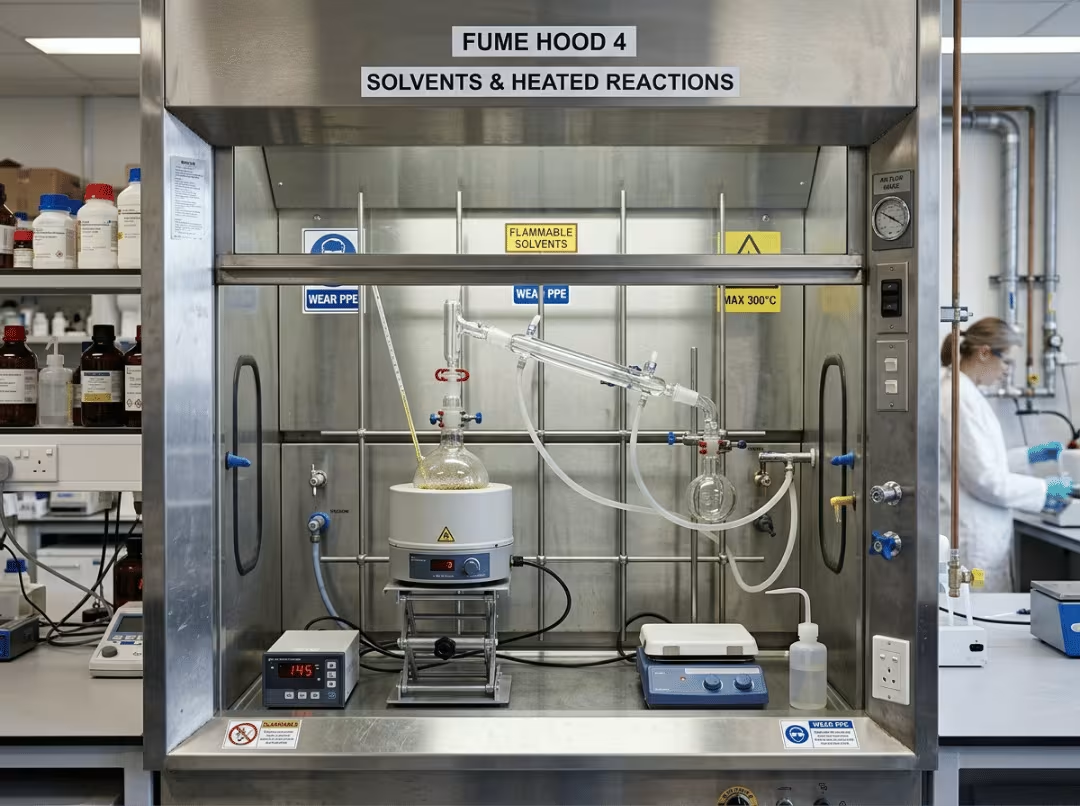
Flip the chemistry and the answer flips too. Organic solvents and hydrocarbon vapors can stain, swell, and soften polypropylene over time — the same material that laughs off acid slowly gives way to solvents.
Stainless steel handles most organic chemicals without complaint, which makes it the safer specification for organic synthesis, pharmaceutical, and analytical labs. Two factors reinforce that. First, flammability: steel contributes no fuel to a fire, while PP melts and burns at temperatures a lab fire easily exceeds. Second, heat: solvent work often travels with elevated temperatures — reflux, distillation, evaporation — and steel tolerates that routine heat far better than PP, which is edging toward its working limit.
The Gray Zone: Mixed Chemical Loads
Plenty of labs run both strong acids and organic solvents, and neither standard material is a clean fit. Don’t force one. The practical options are a coated steel hood with an acid-resistant interior lining, or a PP hood specified with a solvent-tolerant surface treatment. Whichever way you lean, run your worst-case chemical against the resistance chart — not the chemicals you use most often. A hood fails at its weakest match, not its average one.
Fire Safety: A Trade-Off, Not a Rule
This is where the comparison refuses to be simple, so it’s worth stating plainly. Steel is non-combustible and keeps its structural integrity in a fire. PP melts and burns at temperatures well below those reached in a serious lab fire. On flammability alone, steel wins outright.
Fume hood construction materials are subject to standards such as NFPA 45 and ASTM fire-testing requirements, and building codes and insurance underwriters scrutinize PP hoods closely in labs that carry a high fire load. If your bench runs solvents and open heat, that scrutiny is justified — steel is the responsible call.
And yet context can override the material’s flammability. For perchloric acid work, many labs still choose a PP washdown hood. The reasoning is sound: perchloric acid vapor forms unstable, explosive perchlorate crystals in ductwork and crevices, and the hazard from that buildup outweighs the material’s flammability, especially since perchloric work carries little solvent fire load. The washdown system rinses the crystals away, and PP’s seamless, corrosion-proof interior is ideal for it. This is the clearest proof that no single material is “safer” in the abstract — the workload decides.
Cost: The Cheapest Hood Is the One That Fits
On paper, the pricing order is predictable: PP is usually the least expensive, powder-coated steel is in the middle, and stainless steel is the most expensive. PP earns its lower price honestly — cheaper raw material, lighter build, simpler fabrication. Stainless pricing swings with metal markets, so quote timing matters more than it does for the other two.
But purchase price is the smallest part of the picture. Weight drives installation costs: PP mounts on standard floors, whereas heavy steel hoods may require structural reinforcement or crane work for upper-floor labs. Ductwork adds cost independent of the hood — corrosive exhaust demands corrosion-resistant ducting regardless of what the hood is made from, and the smartest PP installs pair the hood with PP or fiberglass ducting so the exhaust path resists corrosion as well as the bench does.
Then there’s the long tail. PP cracks and gouges can be welded back to sound condition; stainless scratches polish out; but chipped powder coat on carbon steel usually means slow, progressive rust that no quick fix stops. PP’s upfront savings evaporate the first time someone parks a hot plate against it or runs an incompatible solvent inside it.
The framing that actually helps a buyer: the price gap between materials is small next to the cost of downtime from a hood that fails in service. The cheapest hood is the one that matches your work and keeps running.
A Practical Decision Guide
Skip the brochures until you’ve done this. The right hood falls out of two questions: what’s in your chemical inventory and what does your workflow demand?
Start with your chemical inventory. List every chemical used inside the hood, and for each one note the concentration, the temperature it reaches, and how often it’s handled. Then hold that list against the manufacturer’s published resistance chart before you request a single quote. Make it concrete: if your worst-case chemical is hot concentrated sulfuric acid, PP is out. If it’s hydrochloric acid vapor, coated steel will eventually corrode, and 316 stainless or PP becomes the honest answer.
Then let your workflow set the safety priorities:
- Radiochemistry or trace-metal work favors stainless steel interiors — they decontaminate cleanly and resist adsorption.
- Perchloric acid digestions require a dedicated washdown hood with water sprays; the material follows the crystal-control and fire logic above.
- Routine solvent and organic chemistry points to steel for its heat tolerance and non-combustibility. PP is rarely the right call here.
When neither standard hood fits, look at specialty configurations rather than forcing a mismatch: ductless hoods with carbon filtration for light, intermittent workloads; VAV systems for energy savings in high-use facilities; and explosion-proof builds for highly flammable processes. Forcing a standard hood into a job it wasn’t built for is exactly how containment failures happen.
Because the hood is only one part of a working chemical bench, plan it alongside the rest of the layout. The surrounding surfaces face the same vapors and spills, so choosing corrosion-resistant lab benches, workstations, countertops, and worktops matters as much as the hood itself. If you’re leaning toward PP for heavy-acid work, the same material logic that governs the hood applies to the fittings around it — a welded PP laboratory sink resists the condensate that would corrode a metal basin.
Frequently Asked Questions
Can I use a PP fume hood for organic solvent work?
It’s not recommended for regular solvent use. Organic solvents and hydrocarbon vapors can stain, swell, and soften polypropylene over time, and PP burns at temperatures solvent work can reach. For solvent-heavy chemistry, steel — usually stainless — is the safer specification.
How does the lifespan of a steel hood compare to a PP one?
Both last many years when matched to the right chemistry. A stainless-steel hood in a solvent lab and a PP hood on an acid bench can each serve for a decade or more. The failures come from mismatch: a coated steel hood in acid vapor rusts early, and a PP hood exposed to heat or oxidizing acids degrades early.
Are PP fume hoods safe in labs that handle flammable chemicals?
Generally no. PP is combustible and will melt and burn well before a lab fire peaks, which is why codes and insurers scrutinize it in high-fire-load labs. The notable exception is perchloric acid washdown work, where the crystal-explosion hazard outweighs the material’s flammability.
What’s the actual price difference between PP and steel hoods?
PP is typically the least expensive; powder-coated carbon steel sits in the middle; and stainless steel costs the most, with prices moving alongside raw metal markets. Purchase price is only part of the total — factor in installation, corrosion-resistant ducting, and repair costs over the hood’s life.
Can a scratched polypropylene hood be repaired?
Yes. Cracks and gouges in PP can be heat-welded back to a sound, seamless condition, which is one of the material’s quiet advantages. Chipped powder coat on carbon steel is harder to fix cleanly, since rust often spreads before a repair takes hold.
Do I need special ductwork for a PP hood?
Corrosive exhaust requires corrosion-resistant ducting, regardless of the hood material, so a PP hood is best paired with PP or fiberglass ducting. This protects the exhaust path and the building structure from the same acid vapors that the hood handles.
Is stainless steel worth the extra cost for a general teaching lab?
Often not. A typical undergraduate teaching lab handling dilute reagents does fine with powder-coated carbon steel or PP, depending on whether acids or solvents dominate. Stainless earns its premium in high-corrosion, washdown, radiochemistry, or cleanroom settings, not routine instruction.
How do I find the chemical compatibility chart for my hood material?
Ask the manufacturer directly — reputable suppliers publish resistance charts for their specific PP grade or steel finish. Match your worst-case chemical, at its real concentration and temperature, against that chart before you commit.
The Bottom Line
The whole decision reduces to one question: will your chemistry corrode the hood or burn it? Then pick the material that lasts the longest for your specific workload. PP wins where heavy acid use, wet digestions, and high humidity dominate, and where the fire load at the bench stays low. Steel wins for solvent-heavy organic chemistry, heated reactions, fire-rated areas, and any process that demands a non-combustible hood — with stainless steel stepping up for aggressive corrosion or strict cleanliness.
Your next step is concrete and takes an afternoon. Pull together your complete chemical inventory, flag the worst-case compounds with their concentrations and temperatures, and send that single list to your shortlisted manufacturers before you accept any quote. That one document is what keeps a rushed material choice from turning into a costly retrofit a year later.