Proper reagent storage is critical to lab safety and efficiency. Misfiled hazard classes, incompatible chemicals stored together, or using the wrong storage type can lead to compliance issues, safety hazards, and costly retrofits. Choosing between a chemistry cupboard, chemical storage rack, or reagent shelf depends on the hazard class and how often you access the reagent. This guide helps you make informed decisions by walking through inventory assessment, storage type matching, and essential safety and compliance standards.
An inspector opens a cabinet, finds an oxidizer sitting next to a flammable solvent, and writes up a violation on the spot. That’s the moment poor reagent storage stops being a theoretical risk and becomes a compliance problem — sometimes an expensive one. Misfiled hazard classes, incompatible chemicals stored side by side, and cabinets never rated for what’s actually inside are among the most common failures labs run into.
Reagent storage is a system decision, not a furniture purchase. The choice between a chemistry cupboard, a chemical storage rack, and a reagent shelf depends entirely on what you’re storing and how often someone needs to reach it. Get that logic backward — buy based on room layout or budget instead of hazard class — and you end up retrofitting within a year.
This guide walks through how to inventory reagents before choosing storage, how each storage type stacks up against safety and compliance standards, and how to size, place, and maintain the system so it doesn’t become next year’s problem.
Start With an Inventory, Not a Catalog
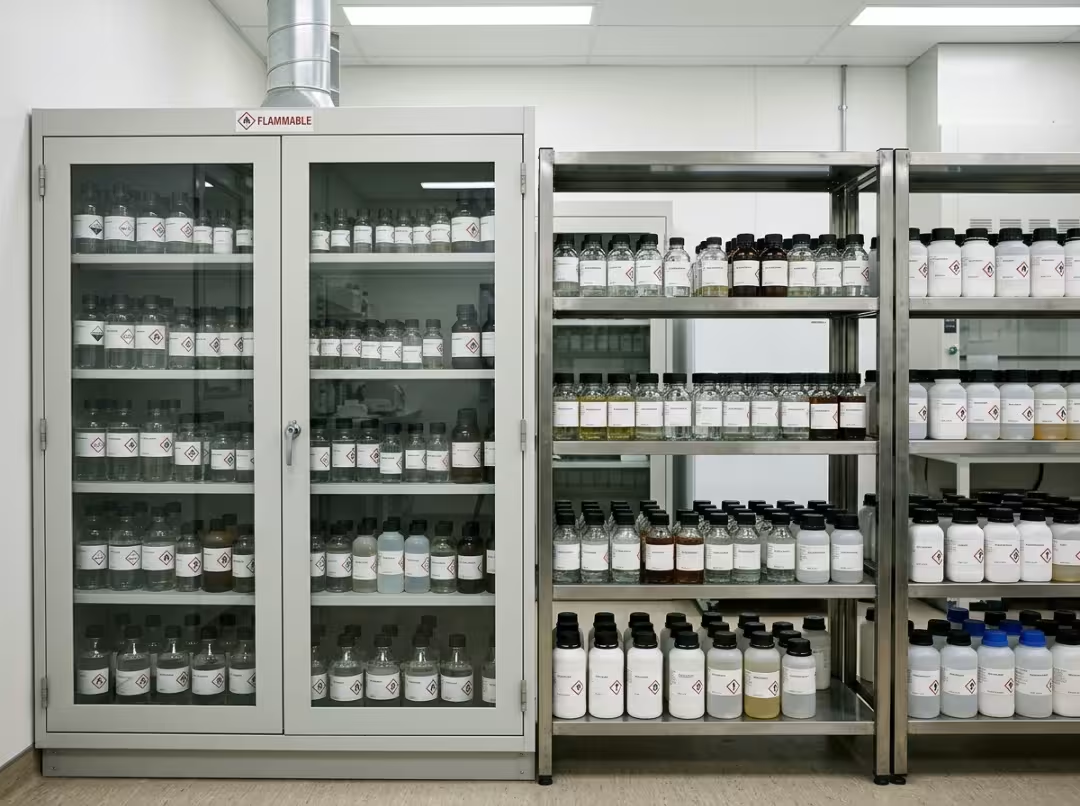
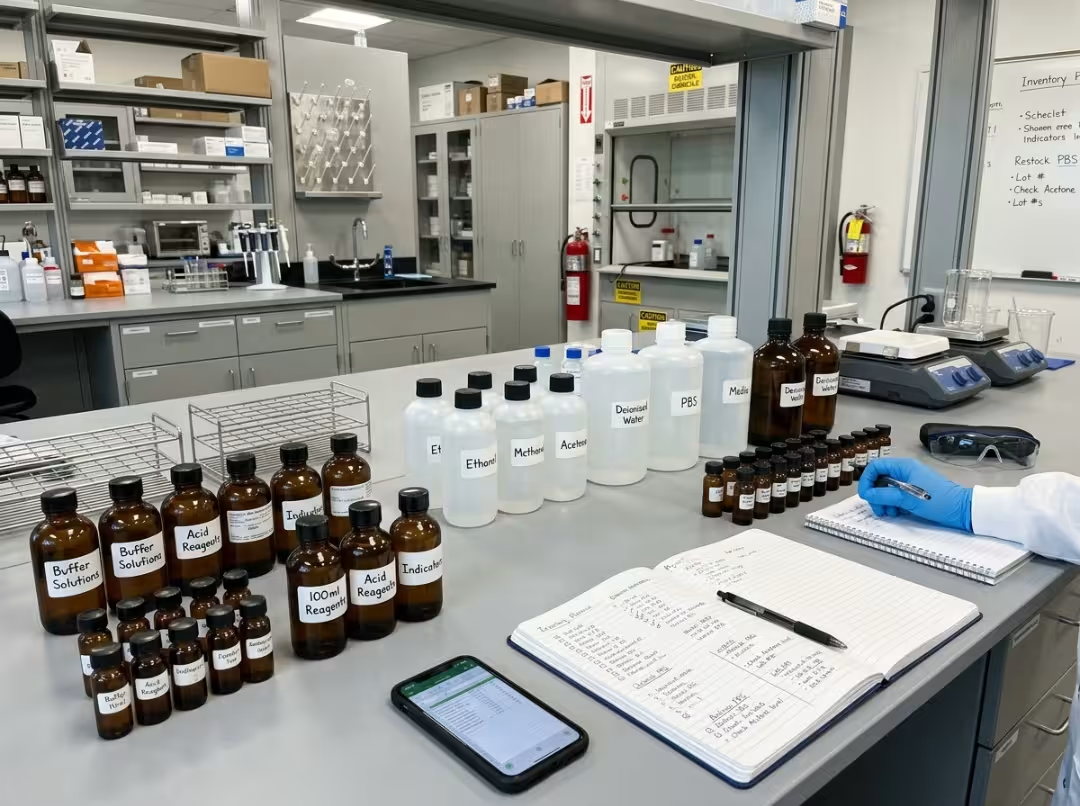
Before comparing products, know what’s going on the shelf. Three variables matter: hazard class (flammable, corrosive, oxidizer, toxic), volume per container, and sensitivity to light, heat, or moisture. Skip this step and the storage decision becomes guesswork.
Here’s a scenario that plays out often: a lab buys a standard chemistry cupboard sized for its current flammables inventory, without accounting for a growing stock of light-sensitive reagents. Six months in, those reagents are degrading on open shelving because nobody planned for them, and the lab is now paying for a retrofit it could have avoided with better upfront inventory planning.
Storing incompatible hazard classes together is one of the most commonly cited inspection failures in lab safety audits. That’s precisely why inventorying by hazard class has to happen before anyone picks a cabinet type, rack style, or shelf unit. A catalog tells you what’s available to buy. An inventory tells you what you actually need.
Matching Storage Type to Hazard Class
Once you’ve completed your inventory, the decision becomes clearer. Each storage type is designed for a specific purpose:
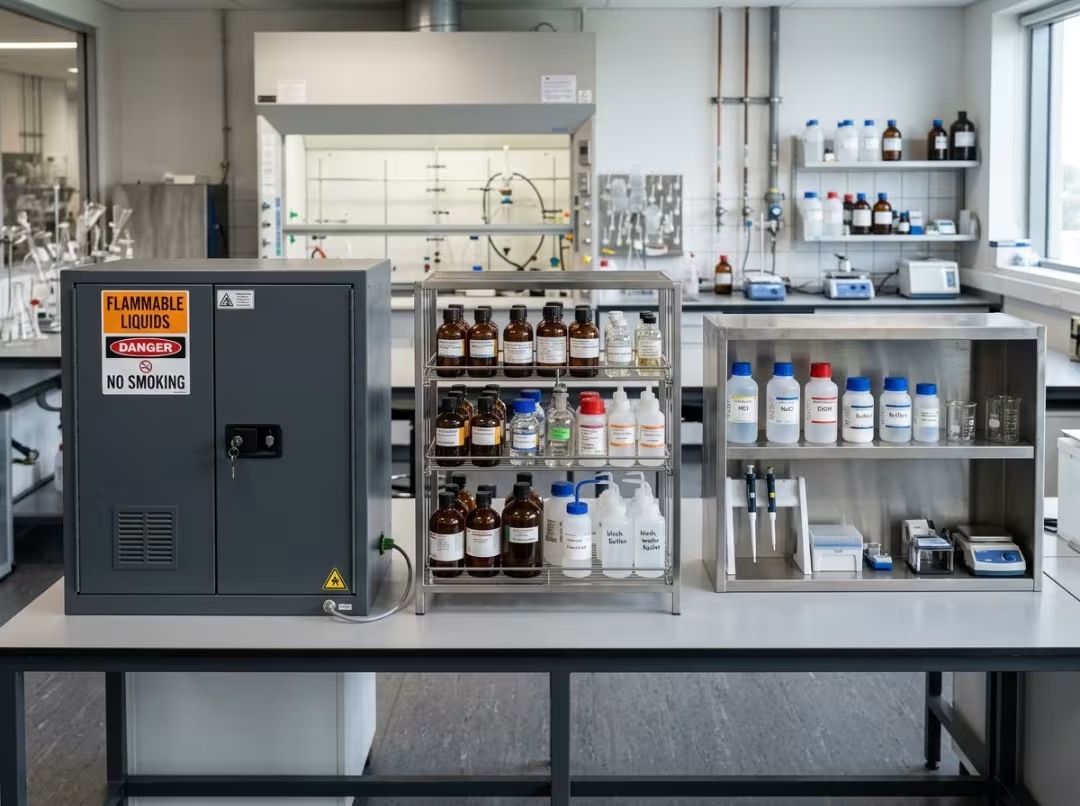
Chemistry cupboards are the cornerstone of fire-resistant containment. They are essential for storing flammables, corrosives, and other high-risk reagents that require strict containment to prevent safety incidents. For larger volumes, particularly those exceeding regulatory thresholds, using a chemistry cupboard often shifts from being a choice to a compliance obligation.
Chemical storage racks work best for high-turnover, lower-risk reagents that need quick, easy access. These racks are designed for practicality, not containment, and suit reagents that are frequently pulled throughout the day and do not pose severe hazards if stored in an open configuration.
Reagent shelves serve as a convenient option for daily-use, low-hazard chemicals that are chemically compatible and pose no significant risk when stored openly. These shelves prioritize accessibility and operational speed over containment, making them unsuitable for any reagents requiring fire resistance, spill control, or secure access.
The primary decision factors are containment requirements and access frequency. Reagents needing strict containment, such as flammables or corrosives, must go into properly rated chemistry cupboards, regardless of access frequency. Conversely, routine-use, low-hazard reagents that technicians handle multiple times a day are better suited for racks or shelves where accessibility takes precedence.
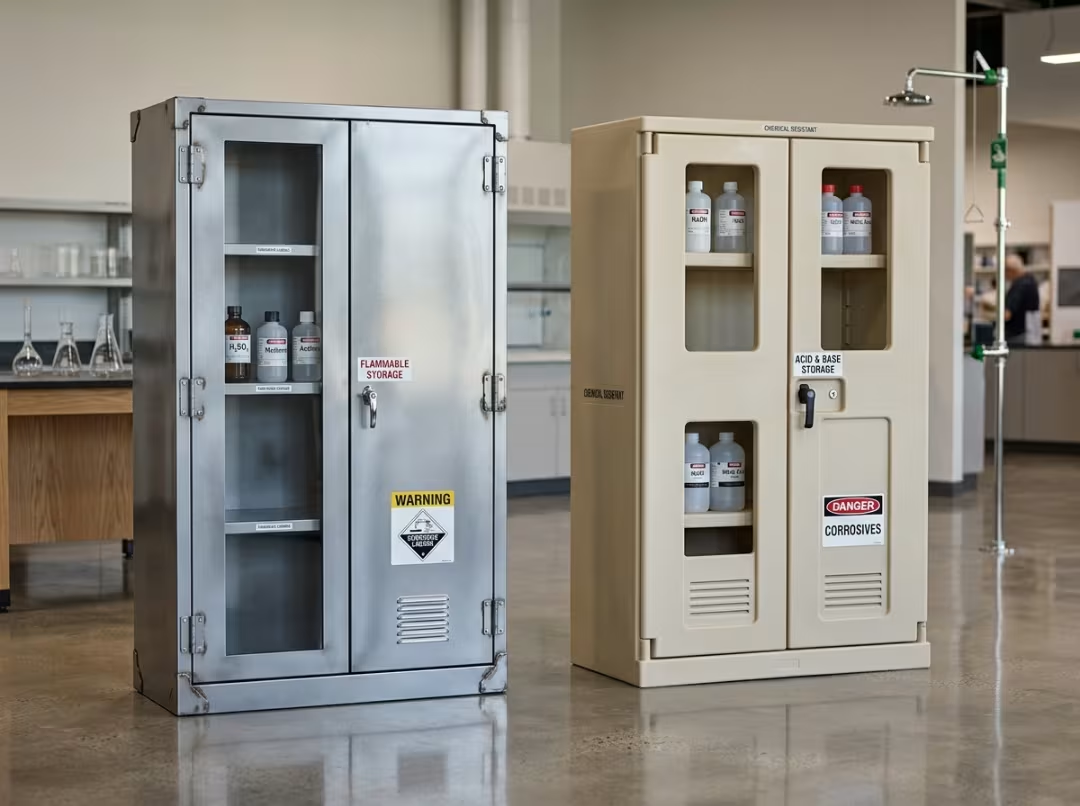
Material selection follows the same logic. When containment and hazard management are critical, steel cabinets are non-negotiable for their fire-rated capabilities. For environments with high exposure to corrosive substances, polypropylene offers superior resistance, ensuring durability where acids or bases could compromise steel. Choose materials that align directly with the risks posed by the stored chemicals, prioritizing safety and compliance over cost.
Chemistry cupboards offer fire-resistant containment and are the standard choice for flammables and corrosives. Once volume crosses a regulatory threshold, a chemistry cupboard often becomes a code requirement rather than an option.
Chemical storage racks are suited to higher-turnover, lower-hazard reagents that need quick access rather than full containment. If a reagent gets pulled multiple times a day and doesn’t carry a serious hazard rating, a chemical storage rack usually makes more sense than locking it away in a cupboard.
Reagent shelves are the most accessible tier — open or semi-open storage built for compatible, low-hazard reagents used daily. This is where convenience matters most, but only for chemicals that pose minimal risk if left unsecured.
The boundary decision comes down to containment needs and access frequency — not room layout, and not what fit in the space last time. A reagent that requires fire-rated containment doesn’t belong on a rack no matter how often it’s used, and a low-hazard reagent pulled ten times a day doesn’t need to live behind a locked cupboard door.
Material choice follows the same logic. Steel delivers the fire-rated containment flammables require. Polypropylene resists corrosion better, which makes it the stronger option for acids and bases. Choose the material based on the risk the reagent presents, not based on which one costs less.
Safety Features That Matter More Than Price
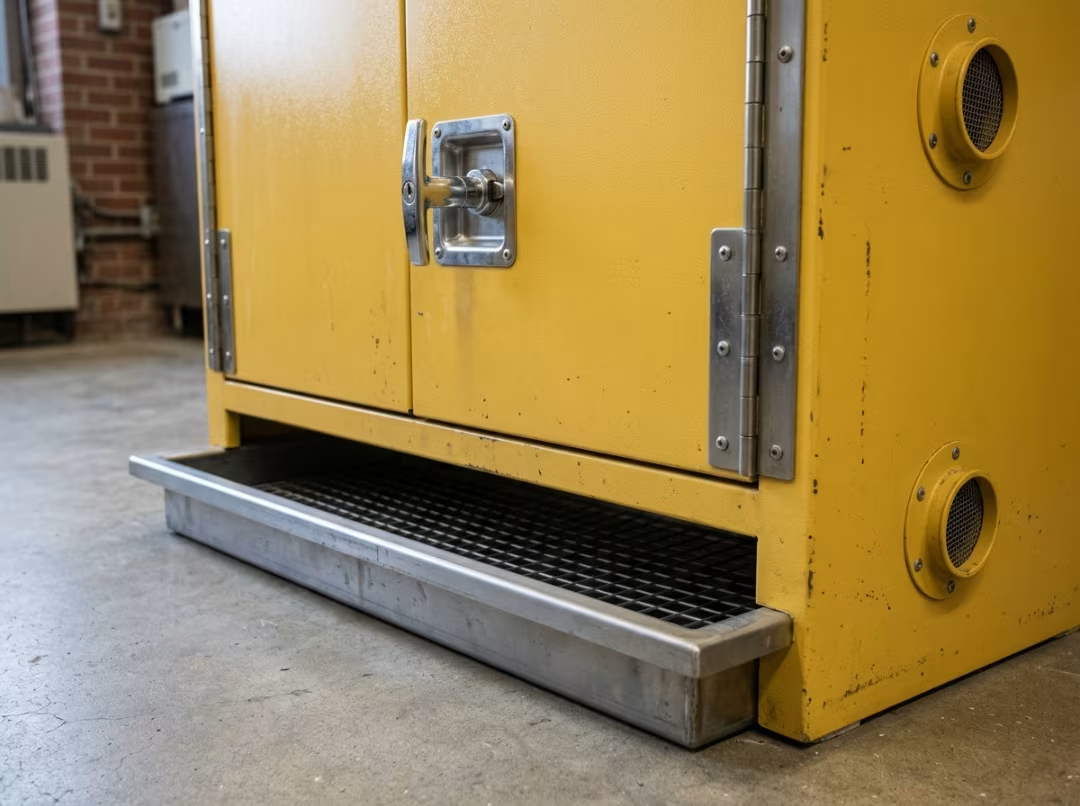
Once the storage type is determined, prioritize selecting safety features that align with hazard class requirements to effectively mitigate risks. Specifically, fire resistance ratings are critical for containing flammables, preventing the escalation of fire incidents. Spill containment trays or sumps protect against chemical leaks, containing spills before they spread and cause contamination or equipment damage. Ventilation integration is essential for reagents that release hazardous vapors, maintaining a safe working environment by directing fumes away from lab personnel. Access control mechanisms, such as locks, safeguard restricted or high-risk chemicals, minimizing the chances of theft or misuse. Each feature directly addresses a specific safety challenge, making them non-negotiable elements tailored to the risks posed by your inventory.
These features should be selected because the inventory calls for them — not tacked on afterward as an upsell once the storage type is already chosen. A lab storing corrosives needs a spill containment tray regardless of what the base unit costs. Skipping it to save money is how a minor spill turns into a cleanup that shuts down a bench for a day, along with the cost of replacing damaged equipment and the reagents themselves.
Choose spill containment and ventilation based on hazard class first. Price comparisons come after that, not before it.
Compliance Standards to Check Before You Buy
Two key regulatory aspects are essential: OSHA’s requirements for hazard labeling, storage specifications, and NFPA’s fire code limits on flammable liquid storage per cabinet and room. Ensure compliance by confirming appropriate placement — maintaining safe distances from exits and ignition sources — and adhering to quantity limits. Always request fire-rating certifications and code compliance documentation from vendors before purchase. If a supplier can’t provide these, it’s a clear signal to look elsewhere.
Compliance doesn’t stop at the cabinet door. It also covers placement — distance from exits and ignition sources — and maximum quantities permitted per storage unit. A chemistry cupboard that’s technically fire-rated but placed too close to an exit route can still fail an inspection.
Confirm compliance documentation directly from the vendor before purchase, not after installation. If a supplier can’t produce fire rating certifications or code compliance documentation on request, that’s a sign to keep looking rather than a detail to sort out later.
Sizing, Layout, and Placement
Plan for storage not just for your current inventory but also for future growth. Assess how your lab’s chemical inventory might expand, considering new reagents or processes, and choose storage solutions that can accommodate this growth without frequent retrofits. Use modular cupboards or racks with adjustable shelving to maintain flexibility as needs evolve.
When arranging storage, prioritize placement near usage areas to reduce transport risks. Ensure door swing and aisle clearance meet both safety codes and daily operational ease, leaving enough space for technicians to move without obstruction. Early coordination with utility and ventilation systems is crucial for seamless integration — avoid afterthought setups that might compromise airflow or compliance.
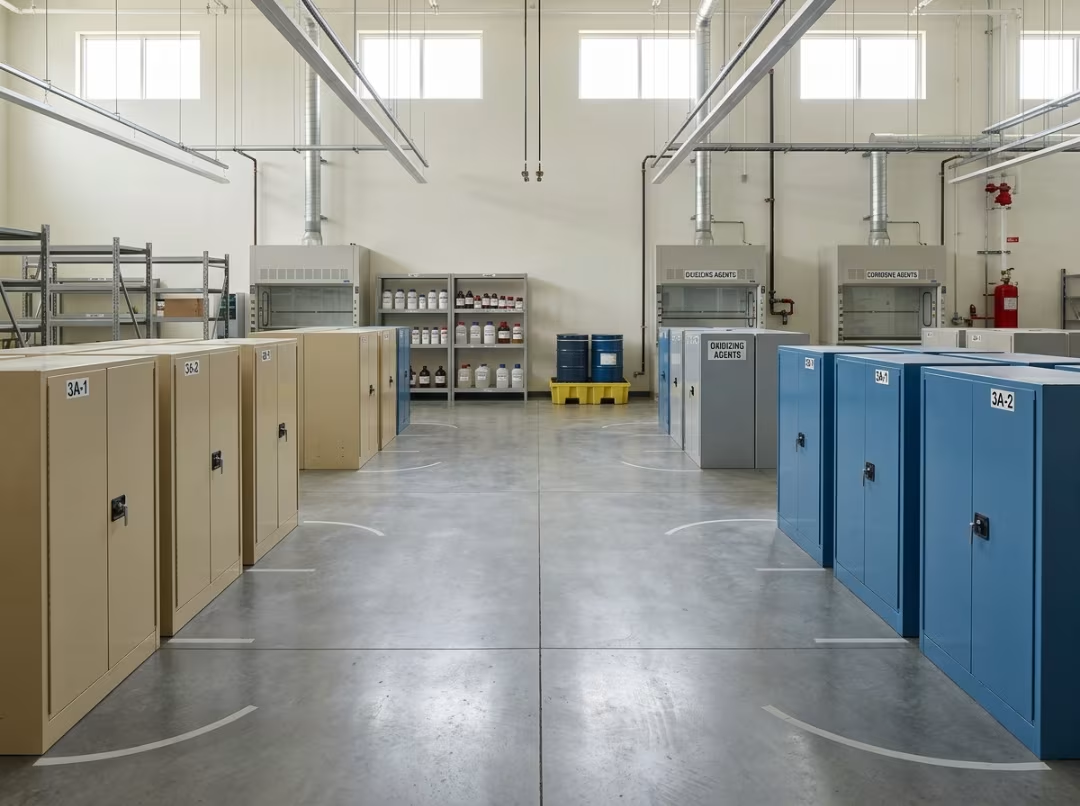
Additionally, separate incompatible hazard classes physically within your layout. It’s not enough to rely on cabinet compartments; flammables and oxidizers, for instance, should be stored in distinct units across the lab to prevent accidental interactions. By aligning storage size and placement with your lab’s workflow and addressing both immediate and future inventory needs, you’ll create a safer, more efficient workspace that complies with regulatory standards.
Placement matters just as much as sizing. Reagents should live close to where they’re actually used, but door swing and aisle clearance need enough room to meet code and keep the space functional day to day. Ventilation and utility hookups should factor into placement decisions early, not get bolted on after the unit is already installed.
Layout also needs to physically separate incompatible hazard classes. Cabinet compartments alone aren’t a substitute for keeping oxidizers and flammables in genuinely separate storage — compartmentalizing within one unit isn’t the same as separating hazard classes across different units entirely.
Maintenance and Total Cost of Ownership
A practical maintenance routine involves four critical steps: regularly inspect seals for wear or damage, verify that ventilation systems are fully operational, clean spill trays immediately after any incident to prevent residue buildup, and periodically review hazard-class compatibility as inventory changes. Ignoring these steps can lead to gradual non-compliance, resulting in safety risks and potential penalties.
When evaluating total cost of ownership, consider more than just the purchase price. Factor in installation expenses, ongoing maintenance needs, and potential retrofit costs if the storage system fails to meet hazard-class compatibility or projected growth. Vendor support and replacement-part availability are equally crucial; a low-cost unit without long-term part availability can quickly become a false economy. Prioritize cabinets from reliable vendors that offer comprehensive support to keep your storage solution functional and compliant throughout its lifespan.
Frame total cost of ownership the same way you’d evaluate any other piece of lab infrastructure: purchase price plus installation, ongoing maintenance, and the cost of retrofitting if the system turns out to be undersized or mismatched to hazard class from day one. That last cost is the one labs most often underestimate.
Vendor support and replacement-part availability affect long-term cost just as much as the upfront price tag on a chemistry cupboard or chemical storage rack. A cheaper unit with no parts availability three years from now isn’t actually the cheaper option.
Plan Storage Around the Inventory, Not the Other Way Around
The sequence holds regardless of lab size: inventory first, hazard-class matching second, safety features and compliance third, sizing and placement fourth. Skip a step, and the gaps show up later as retrofits, inspection failures, or worse.
A chemistry cupboard, a chemical storage rack, and a reagent shelf each serve a distinct role. The right lab setup uses a combination of all three, matched to what’s actually being stored, rather than forcing one system to do everyone’s job.
If your lab is planning a reagent storage layout or preparing for an upcoming inspection, start with a compliance checklist or reach out for a consultation before making a purchase.
FAQ
How do I choose between a chemical storage rack and a chemistry cupboard?
Base the decision on access frequency and containment need rather than available footprint. High-turnover, low-hazard reagents belong on a chemical storage rack. Flammables and corrosives that require fire-rated containment belong in a chemistry cupboard, regardless of how often they’re accessed.
What size chemistry cupboard do I need?
Size for inventory volume plus projected growth, not current stock alone. A cupboard that only fits today’s inventory almost always needs a retrofit within a year or two as chemical stock expands.
Can I store all my reagents on open reagent shelves?
No. Reagent shelves are appropriate only for compatible, low-hazard reagents in daily use. Anything requiring fire-rated containment, spill control, or restricted access needs a chemistry cupboard or a secured chemical storage rack instead.