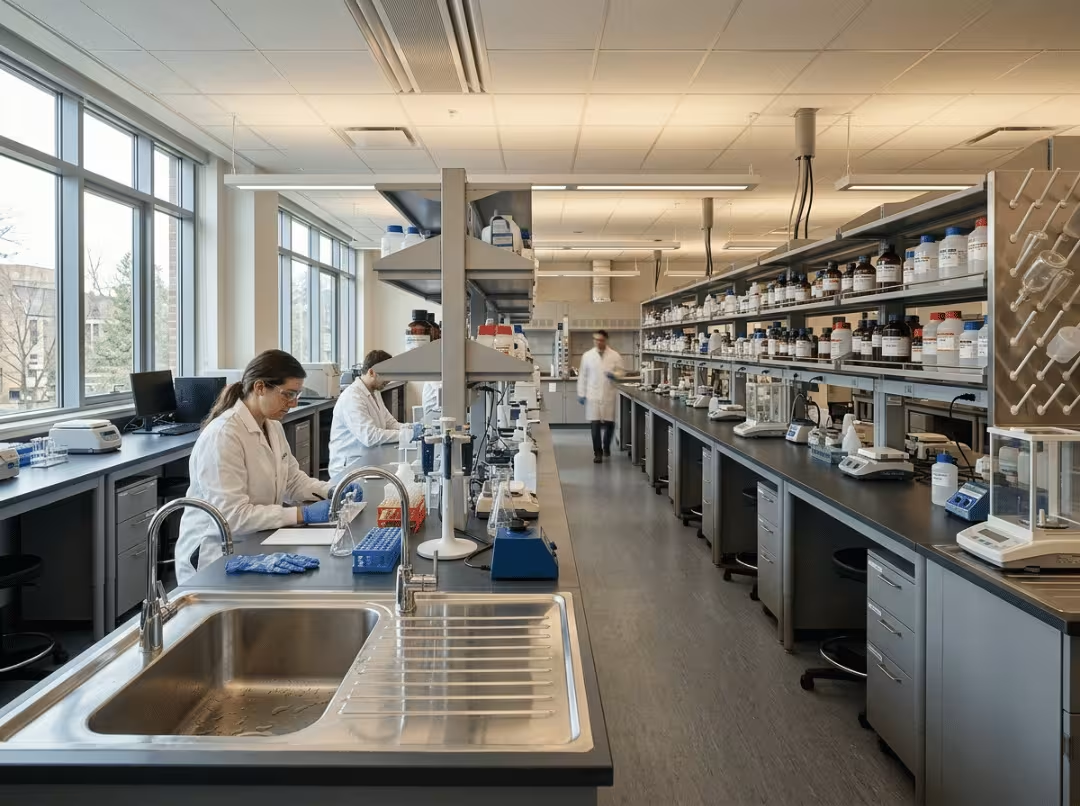
Most labs want to run cleaner and leaner. The hard part is knowing where to start. Teams tend to chase the visible stuff first — swap in LED bulbs, drop a recycling bin by the door — while the systems quietly bleeding the most energy and water keep humming along untouched. Effort scatters, budget drains, and the numbers barely move.
That’s the real trap with lab sustainability. It isn’t a shortage of good intentions. It’s a missing sequence. A typical lab burns through several times more energy and water per square foot than an office, and the worst offenders aren’t the ones you notice from the bench.
This guide sorts out the order. You’ll see which areas to hit first based on actual impact, what to fix now versus what to leave for a renovation, and how decisions like furniture and layout quietly shape a lab’s footprint for a decade. The aim isn’t to do everything at once. It’s about doing the right things in the right order — and skipping the ones that only look green.
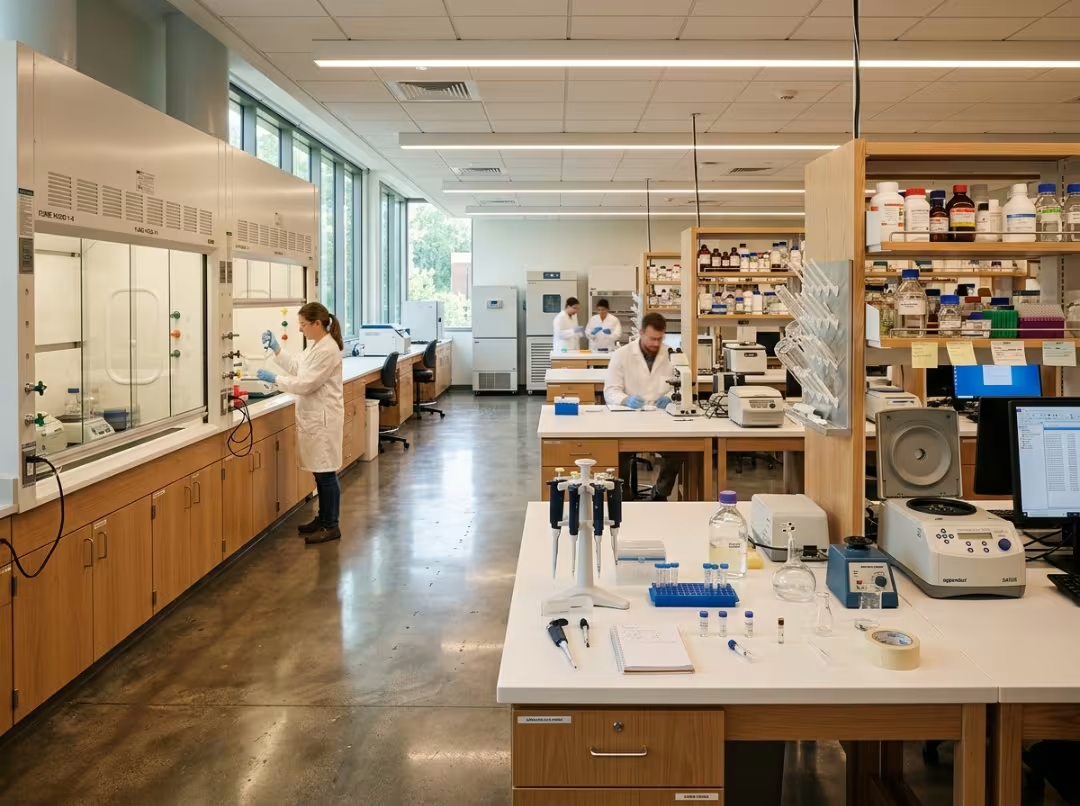
Where to Start With a Sustainable Lab
If you only have bandwidth to look at a few things, look here. In nearly every facility I’ve walked, the highest-impact areas fall in roughly this order:
- Ventilation and fume hoods — constant exhaust of heated or cooled air is usually the single biggest energy sink.
- Always-on equipment, especially ultra-low temperature (ULT) freezers.
- Water-hungry systems, such as single-pass cooling and oversized purification.
- Waste and buying habits — what you throw out usually starts with what you over-ordered.
Here’s the part that surprises people: the fastest wins don’t need a capital project. Closing sashes, nudging freezer setpoints, and tightening how you buy reagents cost almost nothing and pay back fast. The big infrastructure calls matter too, but they come later in the plan — not first.
Why Labs Burn Through So Much
Before you can prioritize, it helps to understand why labs consume the way they do. The demand is baked into how they work, not the result of sloppiness.
Energy: Equipment That Never Clocks Out
Labs run around the clock whether anyone’s in the room or not. ULT freezers, incubators, and analytical instruments maintain state continuously, and HVAC maintains temperature and humidity within tolerances no office would ever bother with. A single ULT freezer can pull as much electricity as an average household — one appliance, one house. Add fume hoods that draw conditioned air straight out of the building, and heating and cooling loads climb quickly. Each always-on system makes the next one work harder, and the bill compounds.
Water: The Consumer Nobody Sees
Water use gets underestimated because most labs simply can’t see it. Single-pass cooling runs fresh water through equipment and sends it straight down the drain, with no second use. Autoclaves, glassware washers, and reverse-osmosis purification all draw steadily in the background. Without a meter on the line, that consumption stays invisible until the utility bill lands — and by then it’s a year of waste, not a moment of it.
Waste and Chemicals: Volume Plus Complexity
The issue isn’t only how much a lab discards. It’s how tangled the streams are. Single-use plastics pile up next to hazardous chemical waste, expired reagents, and biological material, and each one demands separate handling. High disposal costs and messy segregation nudge busy teams toward the least sustainable default there is: everything into general waste, sort it out never.
Name these drains, then keep moving. The value isn’t in confirming that labs use energy — it’s in what you do about it.
The Places Labs Lose Ground First
Not every fix deserves equal attention, and treating them as equals is how sustainability plans stall. Rank the work by impact against effort, and a clear order shows up.
Ventilation and Fume Hoods: Usually the Biggest Single Lever
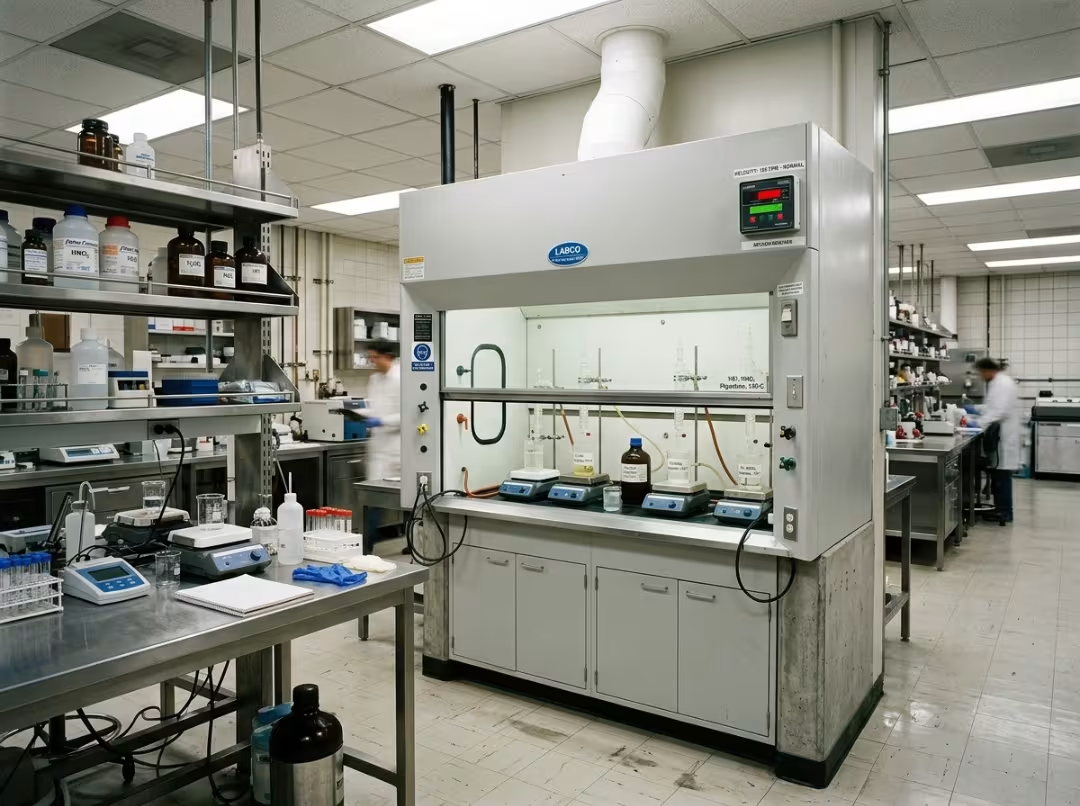
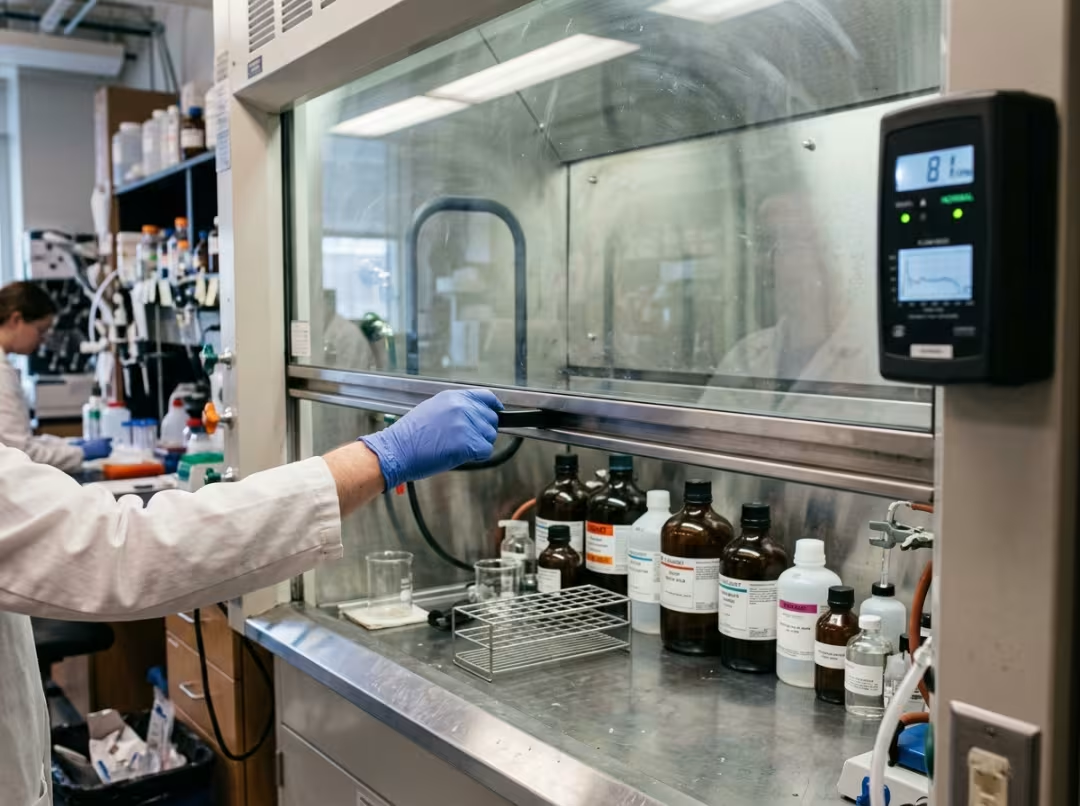
Fume hoods exhaust conditioned air continuously, making them the largest energy line item in many labs. That’s precisely why they sit at the top — heavy impact paired with fixes you can actually reach. Variable air volume (VAV) systems throttle airflow to actual demand rather than running wide open all day. Auto-sash closers and plain sash discipline cut waste the moment you adopt them. In a busy chemistry lab, keeping sashes down when hoods sit idle can shave energy noticeably without anyone touching an instrument.
Always-On Equipment, Starting With ULT Freezers
Freezers are the second big lever, and the effort here is moderate rather than daunting. Raising ULT setpoints from −80°C to −70°C meaningfully reduces energy draw while keeping the vast majority of samples perfectly safe — check your sample requirements first, but for most collections it’s a free win. Regular defrosting, consolidating half-empty units, and retiring aging freezers in favor of more efficient models add to that. A lab running six older ULTs can often consolidate to four newer ones and cut freezer energy by a real margin.
Water-Hungry Systems
Swapping single-pass cooling for recirculating chillers is one of the strongest water paybacks on the table because those systems reuse water rather than dumping it. Point-of-use purification often beats an oversized central RO system that quietly wastes water maintaining capacity nobody actually draws on. If your RO unit is sized for a lab you no longer are, that’s a leak hiding in plain sight.
Waste, Chemicals, and the Purchase Order
Waste reduction starts upstream, at the purchase order — and this is the part most sustainability plans never connect. Over-ordering reagents guarantees expired chemicals and disposal costs later. Tighten buying discipline, improve segregation at the source, look into solvent recovery, and redistribute surplus instead of trashing it. Fix the ordering habits and the waste stream shrinks on its own, no bins or posters required.
An Action Plan by Time Horizon
Sustainability isn’t one project you finish and file away. It’s a run of decisions that fit different budgets and timelines. Sort them by horizon so your team acts on what’s actually doable now instead of waiting for a budget cycle that never quite arrives.
Do This Now (Weeks, Little to No Money)
These deliver real savings without a project, a vendor, or a signature on a PO.
- Close fume hood sashes whenever hoods aren’t in active use.
- Review ULT setpoints and move from −80°C to −70°C wherever samples allow.
- Tighten waste segregation at the source so recyclables no longer ride along as hazardous waste.
- Run an inventory clean-up and drag the expired and surplus chemicals into daylight.
- Enforce shutoff discipline for idle equipment, water baths, and lighting.
None of these need capital approval, and most show up on the very next utility bill. If someone tells you sustainability requires a big check to get started, they’re selling you something.
Do This Soon (Months, Moderate Spend)
Once the free wins are locked in, go after upgrades with clear payback.
- Replace single-pass cooling with recirculating chillers.
- Retire aging freezers in favor of efficient, right-sized models.
- Add water-efficient glassware washers and autoclaves.
- Improve chemical storage and reorganize the workspace to cut wasted movement and redundant equipment.
Lead with whatever pays back fastest — usually cooling and freezer replacements. Chase the ROI, not the brochure.
Do This When You Build (Renovation or New Construction)
The decisions with the longest reach happen on paper, before a single wall goes up. Ventilation strategy, workflow-driven layout, daylighting, and durable, reconfigurable furniture lock in efficiency for a decade or more. Choosing modular casework and long-life materials on day one is cheap in the design phase and painfully expensive to retrofit later. This is where sustainable laboratory design earns its keep — get the bones right, and the space runs efficiently by default rather than through constant effort.
New Lab vs. Existing Lab: Two Different Games
Where you sit in the project cycle changes the whole playbook. The advice that fits a working lab rarely fits a build still on the drawing board, and vendors who hand you one generic checklist for both aren’t paying attention.
Optimizing a Lab You Can’t Shut Down
If rebuilding isn’t on the table, aim for low-disruption wins. Behavioral change, equipment reviews, and targeted upgrades let you improve while the science keeps running. Start with sash discipline and freezer setpoints, then phase in chillers and efficient equipment as budget frees up. The real skill here is sequencing improvements around live research so nothing important stops mid-experiment.
Planning Sustainability Into a New Build
A new build is where the leverage actually lives. Ventilation design, efficient layout, daylighting, and durable, adaptable furniture are cheap to specify early and costly to bolt on later. Decisions made during laboratory design and planning set energy and water use for the life of the facility. Get the airflow strategy and casework right on paper, and you sidestep years of workarounds that never fully fix the problem.
What Applies to Both
A few things hold no matter your stage: disciplined buying, engaged staff, and simple measurement. Whether you’re optimizing or building from scratch, these habits keep every other improvement from quietly sliding backward.
How Furniture, Storage, and Layout Move the Needle
Sustainability isn’t only equipment and utilities. A lab’s physical bones — its casework, storage, and layout — drive waste and efficiency over the long haul, and this is the part most sustainability articles wave past in a single sentence.
Durable Furniture Is Waste You Never Generate
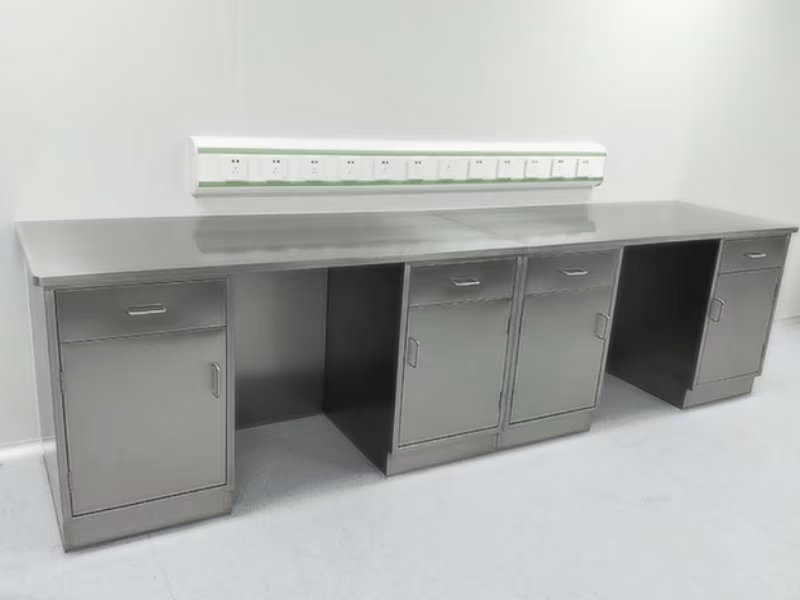
The most sustainable bench is the one you never have to replace. Cheap casework that warps, corrodes, or fails in a few years sends far more to the landfill than a well-built system that lasts for decades. Longevity is a sustainability metric, full stop, and it starts with material quality. Specifying durable, sustainable laboratory furniture lowers lifecycle costs and long-term waste in one move.
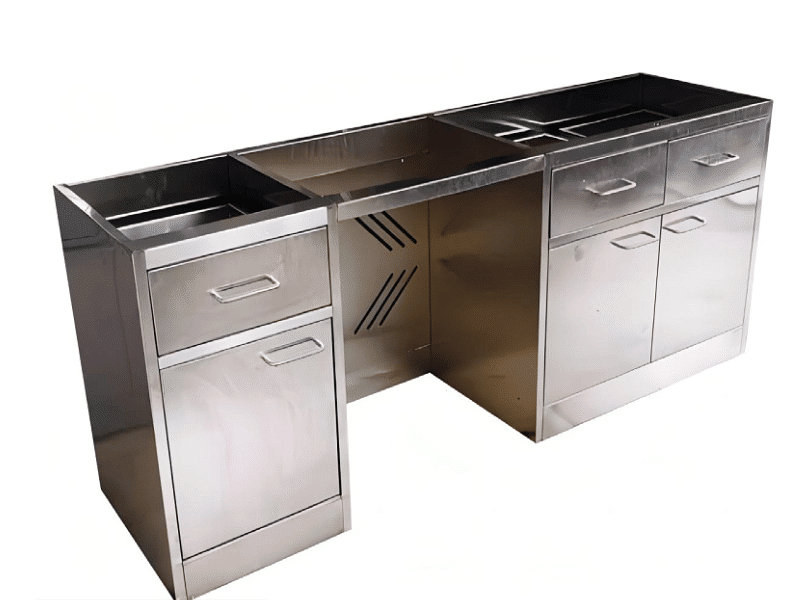
Modular Casework Adapts Instead of Getting Torn Out
Research needs shift — that’s the one constant. When workflows change, modular casework reconfigures rather than heading to the dumpster. That’s a genuine circular-economy advantage, and it’s exactly the kind of point that never makes it into a glossy sustainability pledge.
Smart Storage Kills Expired Chemicals and Double-Ordering
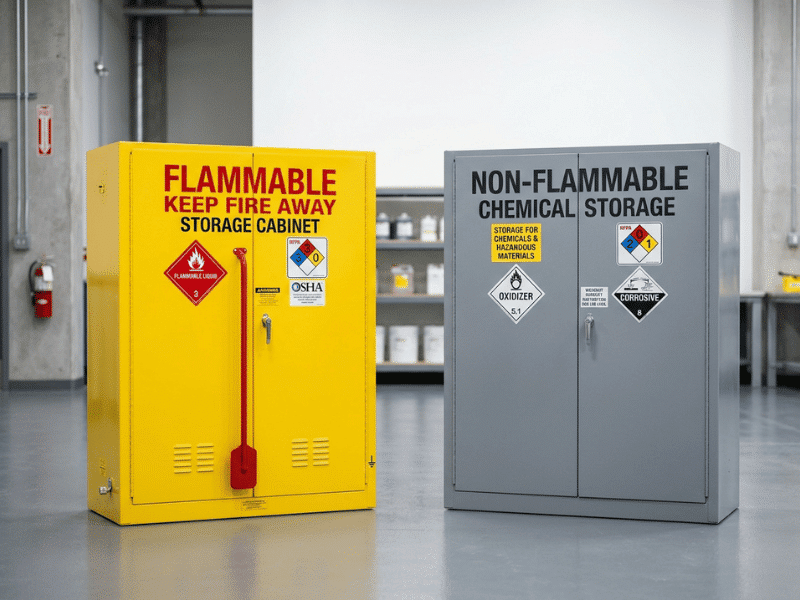
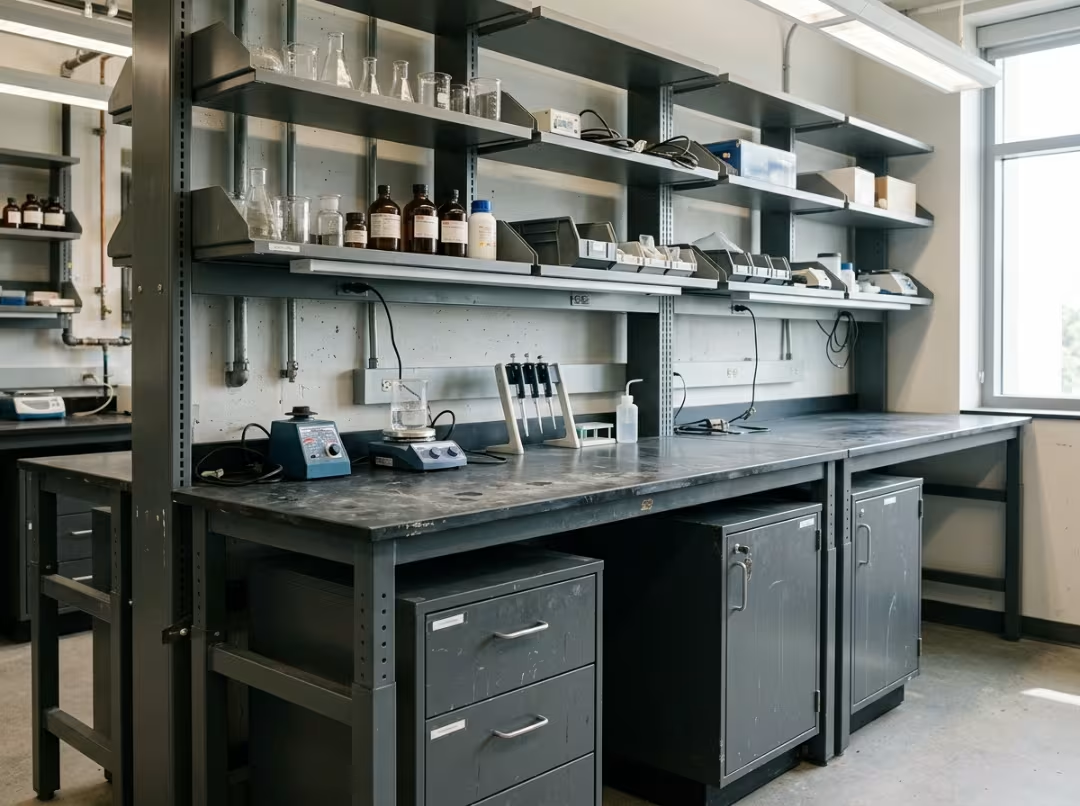
Good storage does more than tidy a room. Clear, well-organized laboratory storage cabinets give teams honest visibility into their chemical inventory, which reduces duplicate purchasing and forgotten reagents that eventually become hazardous waste. You can’t over-order what you can plainly see you already have.
Layout Does Sustainability Work Every Day
Thoughtful placement trims wasted movement, heads off redundant equipment, and keeps energy-hungry instruments where they run most efficiently. A layout built around real workflow quietly does sustainability work every single day, without anyone stopping to think about it. That’s the best kind — the kind that doesn’t rely on discipline to keep paying off.
The Green-Optics Trap: When “Sustainable” Backfires
Not everything wearing a green label earns it. Some well-meaning choices generate more waste, cost, or risk than the practices they replace — and here’s what most vendors won’t tell you, because they’re the ones selling the swap.
Trading Durability for a Better Label
A material marketed as eco-friendly that quits in three years leaves behind more waste than a conventional one that runs for fifteen. Durability is a sustainability metric in its own right. Judge a product on its full service life, not on the sourcing story printed in the catalog.
Ripping Out Systems That Still Work
Retiring a functional freezer or fume hood for a “greener” model can have a larger overall footprint once you account for the manufacturing and disposal of the old unit. More often than anyone admits, the greener move is to optimize what already works rather than buy new. Run the math before you sign off on the replacement — the numbers occasionally embarrass the pitch.
Green Swaps That Ignore Safety
A substitution that overlooks chemical resistance or containment isn’t sustainable. It’s a liability wearing a green sticker. Swap a material or a reagent without checking compatibility and you invite corrosion, failure, or exposure — and cleaning up any of those buries whatever you thought you saved. Sustainability that undercuts safety always costs more in the end.
The point isn’t to do less. It’s to hold every “green” choice to the same standard you’d hold any other spec: does it actually perform?
Measuring Progress Without Drowning in It
Measurement should kick off action, not replace it. Plenty of sustainability efforts collapse under an exhaustive audit that consumes six months and produces a binder nobody opens again.
Start light. Set rough baselines for energy, water, and waste — enough to see where you stand and spot the worst drains. You don’t need a perfect dataset to know a bank of decade-old freezers is a problem.
Then track a handful of metrics that actually mean something: ULT freezer energy, waste diversion rate, and water use make a solid starter set. Report them plainly and consistently so the team can track the line.
Recognized frameworks like My Green Lab add useful structure once you’ve got momentum, but treat them as scaffolding, not a gate. The best measurement system is lean enough that it never becomes the excuse for not starting the work.
Frequently Asked Questions
What is a sustainable lab?
A sustainable lab is designed and run to minimize its environmental footprint — energy, water, waste, and chemical use — without giving up safety or research quality. It pairs efficient equipment and thoughtful design with durable infrastructure and everyday habits that cut resource use over the long term. Both the structure and the behavior have to be there.
What should a lab fix first to get more sustainable?
Start with fume hood ventilation, since constant exhaust of conditioned air is usually the biggest energy drain. Next, tackle always-on equipment like ULT freezers, then water-heavy systems and buying habits. Knock out the low-cost behavioral fixes first — they pay back quickly and buy you goodwill before any capital request.
How much energy do fume hoods and ULT freezers really use?
Both are heavy hitters. A single ULT freezer can use roughly as much electricity as an average household. Fume hoods exhaust heated or cooled air continuously, which sharply increases HVAC loads. Together they often account for a large slice of a lab’s total energy footprint — which is exactly why they top the priority list.
What’s the difference between sustainable lab design and green lab practices?
Design decisions are structural — ventilation strategy, layout, and durable furniture chosen during a build or renovation. Green lab practices are daily behaviors like closing sashes and shutting off idle equipment. Design locks in efficiency for years; practices sustain it day to day. Skip either one and the other underdelivers.
Does sustainable lab furniture cost more?
Sometimes more upfront, usually less over its life. Durable, modular casework shrugs off wear, adapts to changing workflows, and dodges the replacement waste and cost of cheaper alternatives. Once you factor in service life and reconfiguration, quality furniture is often the cheaper and more sustainable call — not the pricier one.
How do you make an existing lab more sustainable without renovating?
Focus on low-disruption wins: sash discipline, raising ULT setpoints, shutting off idle equipment, tightening waste segregation, and cleaning up chemical inventory. Then phase in moderate upgrades, such as recirculating chillers, as the budget allows. None of it requires stopping research or opening up walls.
Can a lab be sustainable without giving up safety or durability?
Yes — and it should never trade one for the other. Real sustainability accounts for full service life and chemical compatibility. A choice that compromises containment or fails early isn’t green; it just creates more waste and risk down the line. The most sustainable options tend to be the safest and longest-lasting ones anyway.
Pulling It Together
Building a sustainable lab is a run of smart decisions, not one grand project you cut a ribbon on. Keep these takeaways in front of you:
- Hit the biggest drains first — ventilation and fume hoods, then ULT freezers, water systems, and waste.
- Sequence by time horizon — grab the free behavioral wins now, phase in equipment upgrades, and save the structural calls for a build or renovation.
- Treat new builds and working labs differently — the leverage lives in the design phase, while running labs reward low-disruption fixes.
- Let durable, adaptable furniture do the quiet long-term work — the bench you never replace is the greenest one you own.
- Hold every “green” choice to a real standard — durability, safety, and compatibility are sustainability metrics too.
Work through these in order and the whole thing stops feeling overwhelming. It turns into a plan.
Plan Your Next Step
Every lab starts somewhere different — a working facility hunting for quick wins, or a new project where the biggest decisions are still on paper. Both come out ahead by getting the sequence right instead of guessing.
If you’re weighing where to put the first dollar, our team can help you think through the trade-offs: which upgrades pay back fastest, how durable and reconfigurable furniture lowers long-term waste, and how storage and layout choices support efficiency and safety at once. Reach out for a lab planning conversation or guidance on furniture and storage built to last. We’d rather help you specify once and specify well than watch you replace a shortcut a year from now.
This article is for general educational purposes only and does not constitute engineering, safety, or compliance advice. Sustainability measures, equipment specifications, and applicable standards vary by facility and jurisdiction. Always verify requirements for your specific lab, chemicals, and local regulations before making changes.