


Choosing a lab bench sounds straightforward until you realize how badly the wrong material choice plays out. A strong acid eats through a phenolic top that was specified for solvents. Daily bleach decontamination degrades an untreated surface within months. A frame sized for glassware buckles under a centrifuge. By the time the damage is visible, you’re already looking at replacement costs, downtime, and—in containment labs—a compliance headache.
The root cause is almost always the same: the material was chosen by habit or by price, not by workload.
This guide takes a different approach. Rather than walking through every possible bench type at equal depth, it focuses on the decisions that actually determine whether a bench survives five years or twenty. That means going deep on the comparisons that matter most—epoxy versus phenolic, 304 versus 316 stainless, when ceramic is worth the cost, when modular is smarter than fixed—and then mapping those choices to the lab environments where each decision has real consequences.
If you work in a chemical lab, a biological lab, a pharmaceutical cleanroom, a teaching facility, or a QC testing lab, you’ll find specific guidance for your setting below.

What Chemical and Biological Labs Actually Need from a Lab Bench
Chemical and biological labs have different priorities, and mixing them up is one of the most common specification mistakes.
Chemical laboratories are primarily concerned with surface durability under corrosive attack. The bench top has to resist the specific reagents in use—not just “acids” in the abstract, but the actual pH levels, concentrations, and contact times your team works with daily. A surface that holds up against dilute hydrochloric acid may not survive concentrated sulfuric acid or strong oxidizers. Chemical labs also tend to generate heat and need surfaces that handle thermal shock without crazing.
Biological laboratories have a different concern at the top of the list: decontamination. Surfaces must be non-porous enough to prevent microbial harborage, smooth enough to wipe clean without leaving residue, and chemically stable enough to withstand repeated disinfection cycles using bleach, isopropanol, or quaternary ammonium compounds. Biosafety cabinet (BSC) integration is also a live issue—the bench needs to allow proper airflow, support the BSC footprint, and meet containment guidance.
Understanding that distinction before you even look at bench types will save you from the most common over-specification and under-specification errors.
How to Choose a Lab Bench: Key Criteria Before You Compare Products
Before you look at price or lead time, work through these criteria. They cut the candidate list significantly.
Chemical Compatibility
The bench top must resist the chemicals that contact it most often. Check the manufacturer’s chemical compatibility chart for your specific reagents, not just general categories. “Acid resistant” means different things for dilute acetic acid versus concentrated nitric acid. If you can’t get a compatibility chart, that’s already a red flag about the supplier.
Decontamination and Biosafety Requirements
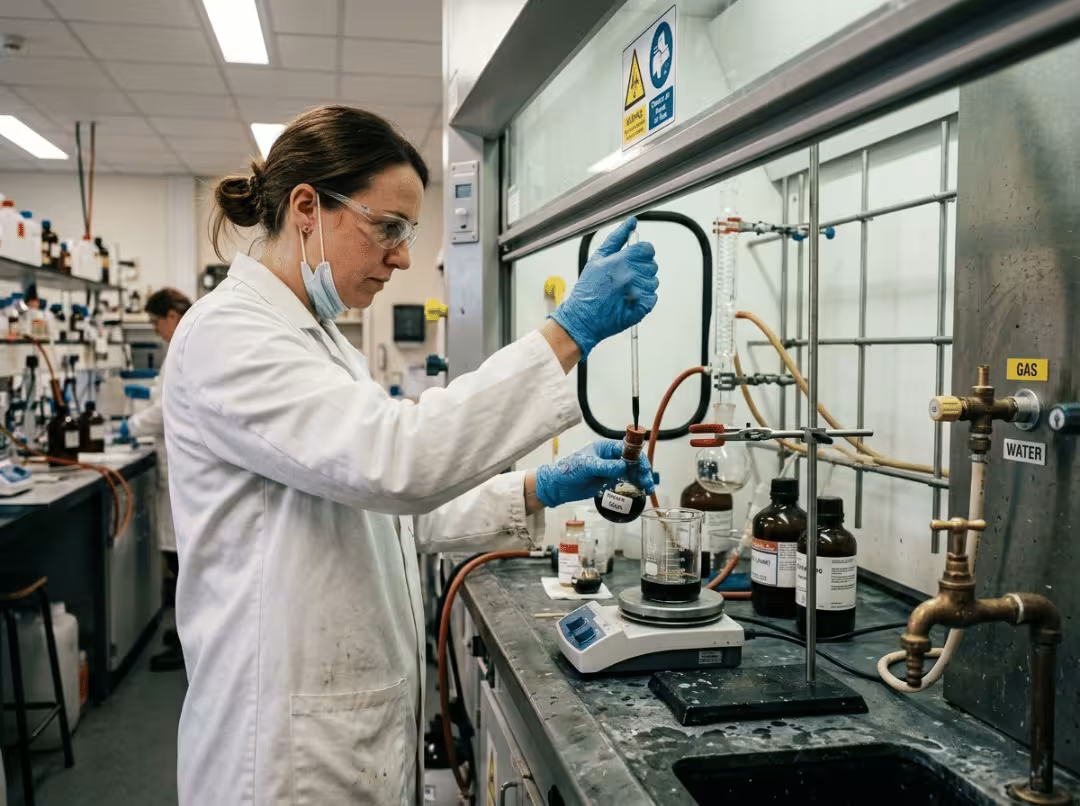
If your lab runs regular decontamination protocols, every surface material, joint, and edge detail matters. Non-porous materials—epoxy, stainless steel, sealed resin—are far easier to decontaminate thoroughly than surfaces with visible grain or mechanical joints. For containment work at BSL-2 or above, bench design should align with CDC BMBL guidance, including sealed penetrations for utilities and smooth, coved surfaces where walls meet the benchtop.
Load Capacity
Lab benches fail structurally more often than most buyers expect, especially when instruments are added after commissioning. Confirm kilogram-per-linear-meter ratings, ask for point-load data if you’re mounting centrifuges or large analyzers, and verify that the frame—not just the top—is rated for your heaviest equipment configuration.
Ergonomics
Standard fixed-height benches (typically around 900 mm) work for most general tasks but are genuinely problematic for long pipetting sessions, microscopy, or any precision work done seated at a stool. Height-adjustable benches cost more, but the return in reduced fatigue and error rates is measurable in high-throughput labs. If the work shifts between standing and seated staff, electric adjustment is worth the premium.
Modularity and Utility Access
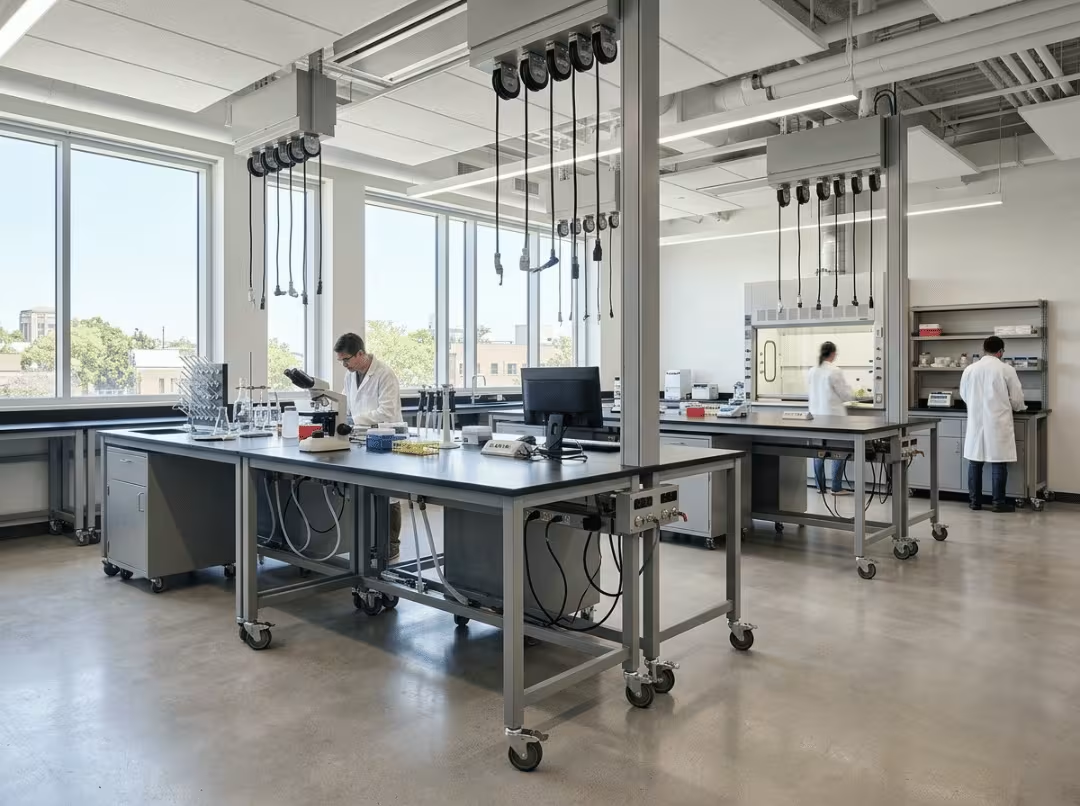
Utility routing—gas, vacuum, DI water, power, and data—is far easier to plan before installation than to retrofit afterward. If your lab’s workflow is likely to change within five years, fixed casework with hard-plumbed utilities is a liability. Modular systems with service columns make reconfiguration far cheaper.
Compliance Documentation
Request actual test reports, not just certificates. ISO 9001 manufacturing certification tells you the supplier has a quality system. ASTM chemical-resistance test data tells you the surface works. CDC BMBL or ISO 14644 compatibility notes tell you the bench is appropriate for your containment or cleanroom context. If a supplier can’t provide this documentation on request, factor that into your risk assessment.
Total Cost Over the Bench’s Life
A bench that costs 30% less but needs replacement in six years is more expensive than one that lasts fifteen. Include maintenance cost, downtime risk, and likely replacement in your comparison, not just the purchase price.
The Most Decision-Critical Bench Types—and When Each One Makes Sense
The ten bench types below are not equally important for every lab. The first five carry the majority of real-world purchasing decisions in chemical and biological settings. The remaining five address specific scenarios.
1. Epoxy Resin Bench
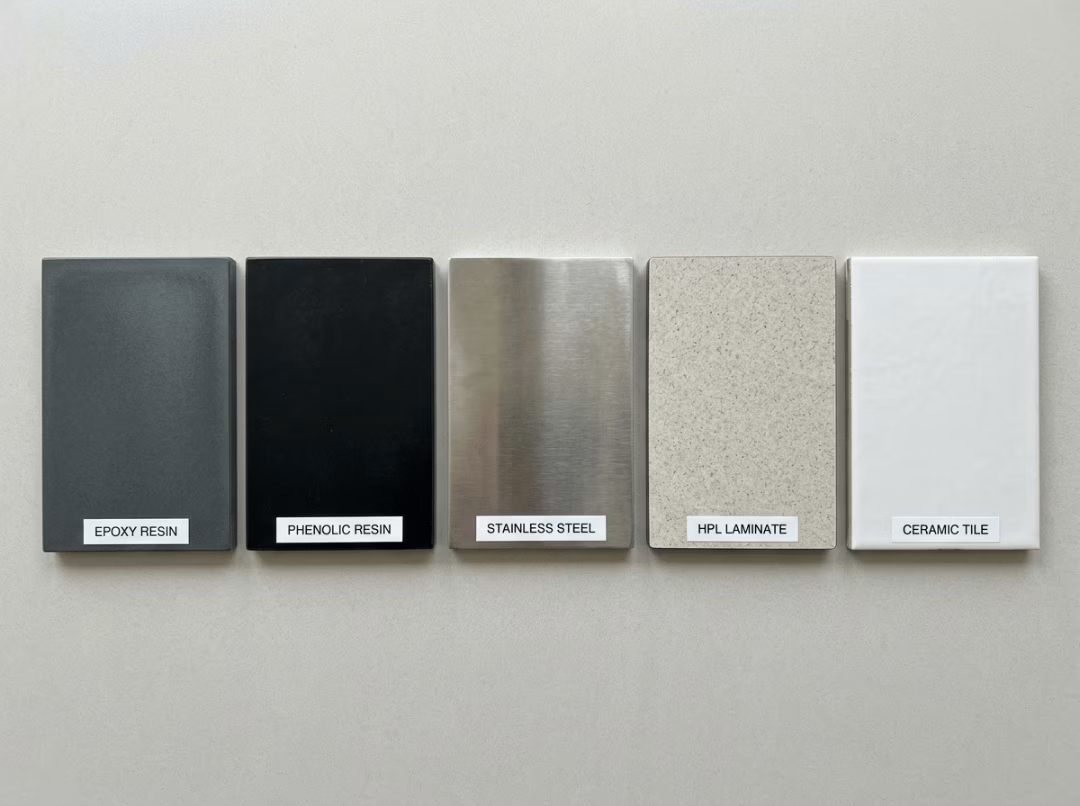
Epoxy resin is the most widely used bench top material in working chemical labs, and for good reason. It’s a non-porous, solid surface that resists a broad spectrum of acids, bases, and organic solvents. It handles thermal shock reasonably well and, uniquely among lab surfaces, can be repaired when damaged rather than replaced entirely.
The decision to choose epoxy over phenolic is often framed as a cost question, but it’s really a durability question. Epoxy costs more upfront. Over a decade of daily acid exposure, it almost always costs less.
Where it works: Synthesis labs, analytical chemistry labs, general wet chemistry, any setting where reagent contact is frequent and varied.
Where it’s overkill: Low-contact prep areas, admin-adjacent spaces, teaching labs with light chemistry programs. In those settings, you’re paying for resistance you’ll never need.
The one thing buyers miss: Epoxy resin is heavier than phenolic. For large bench runs or upper-shelf applications, that weight matters structurally. Specify the frame to match.
2. Phenolic Resin Bench
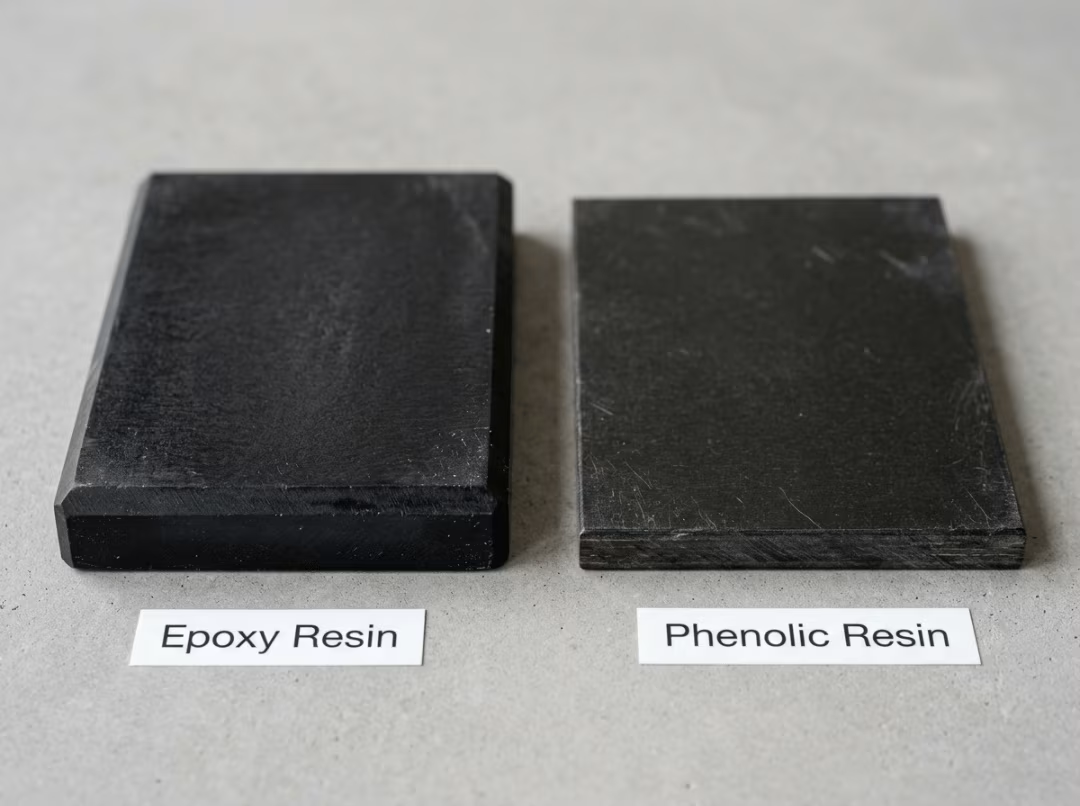
Phenolic resin is manufactured by compressing layers of resin-impregnated paper under heat, producing a dense, reasonably chemical-resistant surface at a lower cost and weight than epoxy. It handles solvents and moderate acids well. Its weakness is strong oxidizers and sustained exposure to high concentrations of corrosive reagents—which is why specifying it for serious chemical labs often leads to early failure.
Epoxy vs. phenolic—the practical decision: If your lab runs strong acids or oxidizers regularly, the cost savings from phenolic will be consumed by early replacement. If your lab handles general chemistry, pH-neutral work, or organic solvents at moderate concentrations, phenolic performs well and saves real money. The error is choosing phenolic because it’s cheaper without checking what chemicals actually hit the surface.
Where it works: Teaching and university labs, general purpose wet labs, instrument prep areas with modest chemical exposure.
One maintenance note: Phenolic panels should be moisture-sealed at the edges, particularly in humid lab environments or near sinks. Unsealed edges absorb moisture and delaminate.
3. Stainless Steel Bench
Stainless steel is the default surface for biological work, sterile processing, and tissue culture—and it earns that status. It’s non-porous, doesn’t shed particles, resists a wide range of biological agents, and supports the frequent disinfection cycles that containment labs require. Components can be autoclave-compatible. The surface is visually easy to inspect for contamination.
The grade question—304 versus 316—matters more than many buyers realize. Both grades resist general biological contamination and routine disinfectants. The difference appears under sustained exposure to chlorides and corrosive chemicals. 316 stainless contains molybdenum, which significantly improves pitting resistance in those conditions.
304 vs. 316—when the upgrade matters: If your bench is used purely for biological work with standard disinfection protocols, 304 is adequate and meaningfully cheaper. If your lab uses chloride-heavy disinfectants, handles corrosive reagents, or operates in a saline-heavy environment (marine biology, certain pharmaceutical applications), 316 is worth the additional cost. Pitting in 304 under chloride exposure is real and irreversible.
For a deeper look at grades, durability factors, and buying considerations for stainless steel in lab settings, see our guide to stainless steel lab tables.
Where stainless steel is not the answer: Cell culture labs where budget is genuinely tight and epoxy resin sealed tops are acceptable, or any setting where cost pressure is real and contamination risk is low. Stainless costs more than resin, and not every biological lab needs the premium.
4. Ceramic / Tile Composite Bench
Vitrified ceramic is the right answer in a narrow but important scenario: labs that routinely handle extremely corrosive chemistry that would attack or stain epoxy over time. That includes concentrated oxidizing acids, aggressive halogen compounds, and certain specialty reagents used in materials science and industrial testing.
When ceramic is worth the cost: If your reagents fall into that category and you need a surface that simply will not react, ceramic earns its premium. It’s not a “better epoxy”—it’s a different solution for chemistry that pushes epoxy to its limits.
The limitation you must plan for: Ceramic is brittle. It cracks under impact, and cracked tiles create contamination traps in labs that require clean surfaces. The substructure must be rigid and well-supported, and the lab team needs to understand that it’s not a general-purpose worksurface. For labs that occasionally handle harsh acids alongside normal chemistry, epoxy is usually the better practical choice.
5. Modular Steel Frame Bench Systems
Modular steel frame systems deserve more consideration than they typically get in initial specifications. The core value proposition isn’t any single feature—it’s future flexibility. A modular bench run can be reconfigured, extended, or partially replaced as workflows change, without ripping out fixed casework and replumbing utilities from scratch.
When modular makes sense: Research facilities where project types rotate, shared core labs serving multiple groups, and any setting where the instrument mix or team size is expected to change within the bench’s service life. The upfront planning investment pays off significantly over time.
When fixed is better: Dedicated, single-purpose labs with stable workflows and well-defined utilities. In those environments, the modularity premium isn’t buying you much.
6. BSC-Friendly Containment Bench
Biological containment labs working at BSL-2 or higher have specific bench requirements that generic lab furniture doesn’t always meet. A bench integrated with a biosafety cabinet needs to support the BSC footprint and weight, maintain proper airflow patterns, provide sealed utility penetrations, and present a surface that can be thoroughly decontaminated—including the junctions between bench, wall, and floor.
Getting this wrong isn’t just an inconvenience; it’s a compliance issue. CDC BMBL guidance is specific about containment bench requirements, and a bench that doesn’t meet those requirements creates problems during safety audits.
Practical note: Specify these benches in conjunction with your BSC manufacturer’s documentation. The airflow requirements and footprint dimensions vary by BSC class and model, and the bench design needs to match.
7. High-Pressure Laminate (HPL) Bench
HPL has a clear and legitimate role in lab settings: prep areas, admin-adjacent workspaces, storage counters, and any zone where chemical contact is genuinely minimal. It’s affordable, available in a wide range of finishes, and performs well for its intended use.
The specification mistake is extending HPL into chemical or biological work areas to save money. The surface delaminates under repeated chemical exposure and has no meaningful resistance to the reagents common in working labs. Use it where it belongs and it’s a sensible choice. Use it where it doesn’t and you’ll replace it early.
8. Height-Adjustable / Ergonomic Bench
If your lab involves sustained precision work—pipetting, microscopy, cell counting, PCR setup—fixed-height benches create real ergonomic problems over time. Height-adjustable benches, particularly electric models, allow one station to serve multiple operators at different heights and shift between seated and standing configurations without manual effort.
The cost is higher than fixed benches, and the moving components require maintenance. For high-throughput labs where operator fatigue directly affects error rates, the investment is justified. For general-use benches with varied tasks, it’s worth evaluating per station rather than specifying universally.
9. Anti-Vibration Bench
Precision instruments—analytical balances, atomic force microscopes, high-resolution optical equipment—are sensitive to vibration that lab staff usually can’t perceive. An anti-vibration bench isolates the instrument platform from building and foot-traffic vibration, stabilizing readings and extending instrument calibration intervals.
This is a specialized purchase for specific instrument requirements, not a general bench upgrade. If your instrumentation specifications call for vibration isolation, treat it as a non-negotiable. If they don’t, a standard bench is adequate.
10. Mobile and Island Bench
Mobile benches and island configurations add layout flexibility that fixed casework can’t match. For teaching labs that reconfigure between sessions, multi-use core labs, and any setting where the physical arrangement changes regularly, wheeled benches with lockable casters offer practical advantages.
Utility access is the main planning challenge. A mobile bench that needs gas or vacuum requires flexible connections or repositionable service drops. Plan that infrastructure before you specify the furniture, not after.
Lab Bench Material Comparison
|
Bench Type |
Top Material |
Chemical Resistance |
Heat Resistance |
Cleanability |
Impact Resistance |
Cost Range |
Best Use Case |
Key Trade-off |
|---|---|---|---|---|---|---|---|---|
|
Epoxy Resin |
Epoxy resin |
High |
High |
High |
High |
Mid |
Chemical synthesis, wet chemistry |
Heavier, higher upfront cost |
|
Phenolic Resin |
Phenolic resin |
Medium–High |
Medium |
High |
Medium |
Low–Mid |
Teaching labs, general wet labs |
Weak against strong oxidizers |
|
Stainless Steel |
304 or 316 SS |
Medium–High (316 higher) |
High |
Very High |
High |
Mid–High |
Biological labs, sterile work |
Chloride pitting; higher cost |
|
HPL Laminate |
HPL over core |
Low–Medium |
Low–Medium |
Medium |
Medium |
Low |
Admin-adjacent, low-chemical prep |
Degrades under chemical exposure |
|
Ceramic / Tile |
Vitrified ceramic |
Very High |
High |
High |
Low |
High |
Extreme corrosive chemistry |
Brittle; cracks under impact |
|
Modular Steel Frame |
Steel frame + chosen top |
Varies by top |
Varies by top |
Varies by top |
High |
Mid–High |
Flexible research and core labs |
Depends entirely on top choice |
|
Height-Adjustable |
Various tops |
Varies |
Varies |
Varies |
Medium |
Higher |
Long-duration precision work |
Moving parts require maintenance |
|
Anti-Vibration |
Isolation platform |
Varies |
Varies |
Medium |
High |
High |
Balances, microscopes, AFM |
Narrow, instrument-specific use |
|
Mobile / Island |
Various tops |
Varies |
Varies |
Medium |
Medium |
Mid |
Flexible teaching and multi-use |
Utility routing requires planning |
|
BSC-Friendly Containment |
Sealed resin or SS |
Medium–High |
Medium–High |
Very High |
High |
High |
Microbiology, virology, cell culture |
Compliance-dependent; careful design required |
Bench Selection by Lab Type
Chemical Laboratories
In working chemical labs, material selection is not a general preference—it’s a chemical engineering decision. Start by cataloging the reagents in active use: their concentrations, pH levels, and typical contact durations. Then match those parameters to published compatibility data, not general product descriptions.
For broad-spectrum chemical duty, epoxy resin is the workhorse. It handles most acids, bases, and organic solvents in concentrations typical of synthetic and analytical chemistry. For labs running concentrated oxidizers, fuming acids, or aggressive halogen compounds on a routine basis, ceramic is the appropriate surface.
The frame and under-bench storage also matter. Chemical waste and reagent containers stored in under-counter cabinets should comply with relevant flammable or corrosive storage requirements. Don’t specify a compliant bench top and then ignore the cabinet below it.
Biological and Microbiology Laboratories
Cleanability and containment drive all surface decisions here. Every seam, joint, and penetration is a potential contamination site if not properly sealed. Bench tops should be non-porous and smooth. Junctions with walls, sinks, and floors should be coved where possible.
Stainless steel is the most common choice for a reason: it’s non-porous, chemically stable against biological agents, easy to inspect, and durable under repeated disinfection. Sealed epoxy resin tops are a workable alternative at lower cost where the contamination risk level supports it.
For BSL-2 or higher work, BSC-integrated bench configurations are not optional—they’re a containment requirement. The bench must support the BSC properly, maintain airflow, and allow the decontamination protocols defined in your biosafety plan.
Pharmaceutical and Cleanroom Laboratories
ISO 14644 cleanroom classifications determine allowable particle counts, and every surface in the space contributes to that count. Rough surfaces, mechanical joints, and any material that sheds particles are contraindicated. Stainless steel and smooth sealed resin tops are standard.
GMP cleaning validation also applies. The surfaces you specify need to support validated cleaning procedures, which means documented chemical compatibility with your cleaning agents, smooth finishes with no crevices that harbor residue, and surfaces that don’t interact with cleaning chemicals in ways that generate particles or extractables.
Teaching and University Laboratories
Teaching labs present a specific challenge: moderate chemical exposure, high physical wear, and genuine budget pressure. Phenolic resin is the most practical choice for benches that handle general undergraduate chemistry—it performs well under moderate conditions and keeps costs in range.
Mobile bench configurations are worth considering for teaching labs that reconfigure regularly. The flexibility to rearrange stations between sessions or adapt layouts for different course requirements has real operational value.
QC and Third-Party Testing Laboratories
QC labs often handle a wide range of sample types across different industries, which means the bench surfaces need to accommodate varied chemical exposure rather than specializing in one reagent class. Epoxy resin or 304 stainless steel both work well in this context. Modular bench systems offer an advantage when instrument configurations change as new test methods are brought in-house.
Compliance Standards That Affect Bench Specification
CDC BMBL
The CDC Biosafety in Microbiological and Biomedical Laboratories manual defines physical containment requirements for biological work. For bench-level specification, the relevant requirements include surface sealability, decontamination compatibility, and integration with ventilation and BSC systems. Specify benches in biological containment labs by reference to BMBL requirements, and ask manufacturers to confirm compatibility.
ISO 9001
ISO 9001 certification covers the manufacturer’s quality management system—not the product performance directly, but the consistency of manufacturing processes. It’s a baseline expectation for lab furniture procurement, not a differentiator. A supplier without it deserves scrutiny.
ISO 14644
For cleanroom and pharmaceutical labs, ISO 14644 defines allowable particle concentrations by classification level. Surface materials, finishes, and installation methods all contribute to particle generation. Specify surfaces appropriate to your ISO classification and ask manufacturers to confirm compliance.
ASTM Test Methods
ASTM publishes standardized methods for testing chemical resistance, moisture resistance, and surface durability of lab furniture materials. When evaluating suppliers, ask for ASTM test results rather than general claims. Measured performance data is more useful than marketing language.
NFPA Standards
Where under-bench storage includes flammable or combustible liquids, NFPA standards apply to cabinet design and installation. Bench specification and storage cabinet specification should be coordinated—specifying one without the other can create a compliance gap.
Questions to Bring to Supplier Conversations
These questions separate suppliers who know their products from those who are reading from a datasheet:
- What is the chemical compatibility rating for [specific reagent] at [concentration] on this surface?
- Can you provide ASTM test reports for chemical and moisture resistance?
- What load capacity is rated for this frame, and do you have point-load test data?
- Is this surface validated for ISO 14644 cleanroom classification X?
- Does this configuration meet CDC BMBL guidance for BSL-2 containment work?
- What is the expected service life under our described use conditions?
- What does the warranty cover, and what voids it?
If a supplier can’t answer these questions specifically, weight that in your decision.
Common Buying Mistakes
Specifying by material name rather than performance data. “Epoxy resin” covers a range of formulations with different resistance profiles. Ask for test data, not just a material name.
Ignoring utility routing until installation. Fixed utilities are far more disruptive to retrofit than to install correctly the first time. Plan gas, vacuum, power, and data routing before the bench is fabricated.
Underestimating chemical exposure. Labs tend to expand their reagent repertoire over time. A bench specified for current conditions may face different chemistry in three years. Build in some margin.
Treating ergonomics as an optional upgrade. For staff who spend hours at the bench daily, ergonomic specification is a productivity and retention issue, not a luxury.
Evaluating only the upfront cost. A bench that needs replacement in five years is more expensive than one that lasts fifteen, even if the purchase price is lower. Include service life and maintenance cost in your evaluation.
Maintenance and Long-Term Care
Lab bench longevity depends significantly on how surfaces are maintained from day one. For a full material-by-material maintenance protocol, see our lab bench maintenance guide.
The principles that apply across materials: clean spills immediately rather than letting them dwell, use only cleaning agents confirmed compatible with the surface, inspect for damage on a regular schedule, and address minor damage before it becomes a contamination hazard or structural failure.
For stainless steel specifically, avoid chloride-containing cleaners and abrasive pads that damage the passive layer and initiate pitting. For phenolic resin, monitor edge seals in humid environments and reseal as needed. For epoxy, minor surface damage can often be repaired—damaged epoxy benches don’t always need to be replaced, but damage should not be left unaddressed.
In containment labs, replace tops when delamination, cracking, or persistent staining that resists decontamination is present. Certification depends on surface integrity, and a compromised surface in a containment environment is not a maintenance question—it’s a compliance question.
Frequently Asked Questions
When should I choose epoxy resin over phenolic for a chemical lab?
Choose epoxy when your lab handles strong acids, strong bases, or strong oxidizers on a regular basis. Phenolic handles solvents and mild acids well, but breaks down faster under aggressive chemistry. If your reagent list includes anything concentrated enough to be a serious corrosive hazard, epoxy’s broader resistance profile is the more defensible specification. Use your supplier’s chemical compatibility chart to confirm against your specific reagents—don’t rely on general material categories.
Is stainless steel always the right choice for biological labs?
No. Stainless steel is the best choice when sterility, decontamination reliability, and inspectability are top priorities—cell culture suites, tissue processing areas, BSL-2 and above work. For lower-risk biological work, sealed epoxy resin tops are a workable alternative at lower cost. The question to ask is what your decontamination protocol requires and how much tolerance you have for contamination risk in that setting.
What is the actual difference between 304 and 316 stainless steel for lab use?
Both are austenitic stainless steels with good corrosion resistance. 316 adds 2–3% molybdenum, which significantly improves resistance to pitting in chloride environments. If your lab uses bleach-based disinfectants at high concentrations or handles saline or chloride-heavy reagents regularly, 316 is worth the premium. For general biological work with standard disinfection protocols, 304 is adequate and more cost-effective.
When does ceramic bench material make more sense than epoxy?
When the chemistry routinely involves concentrated oxidizing acids—concentrated sulfuric, nitric, or chromic acid, for example—or other reagents aggressive enough to attack or stain epoxy resin over time. For most chemical labs, epoxy covers the range. Ceramic is appropriate when the chemistry specifically pushes past what epoxy handles reliably. The trade-off is brittleness: ceramic cracks under impact and creates contamination hazards if damaged.
How long should a lab bench last?
A well-specified, properly maintained bench should last fifteen to twenty years in normal use. Heavy chemical exposure, poor maintenance, or underspecified materials can shorten that significantly. Factor expected service life into the total cost comparison, not just the purchase price.
What documentation should I request from a lab bench supplier?
ISO 9001 manufacturing certification, ASTM chemical- and moisture-resistance test reports for the specific surface material, load capacity data including point-load ratings, and—for biological or cleanroom applications—confirmation of CDC BMBL or ISO 14644 compatibility. If the application involves pharmaceutical or containment work, ask for additional validation documentation specific to your requirements.
Can existing benches be upgraded for new chemicals or containment requirements?
Sometimes. Modular bench frames can often accept new top materials, and utility routing can frequently be extended with service columns or bench-mounted panels. However, upgrading a surface material for new chemical or biosafety requirements often means full top replacement rather than surface treatment—the underlying construction may not meet the new requirements even if the visible surface is changed.
Choosing the Right Bench for Your Lab
Lab bench specification is a purchasing decision that compounds over time—the right choice lowers your total cost and keeps your compliance documentation clean, while a poor choice becomes a recurring problem.
The practical approach: start with your actual workload (reagents, cleaning protocols, instrument loads, layout stability), score candidates against the criteria in this guide, then use the supplier checklist to evaluate documentation quality before committing. The bench types and materials that matter most for your setting are the ones worth spending time on—not an equal review of every option on the market.
For more information on lab benches and workstations or to explore chemical-resistant lab countertops and worktops, Glory Lab Furniture offers custom-configured options for chemical, biological, pharmaceutical, and teaching lab applications. Contact us to request material samples, test documentation, or a project-specific proposal.
