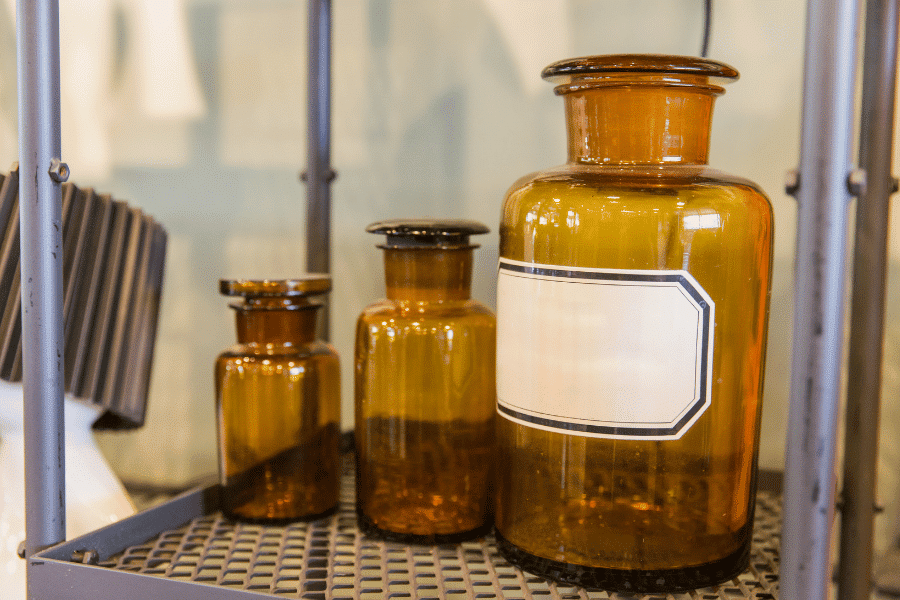
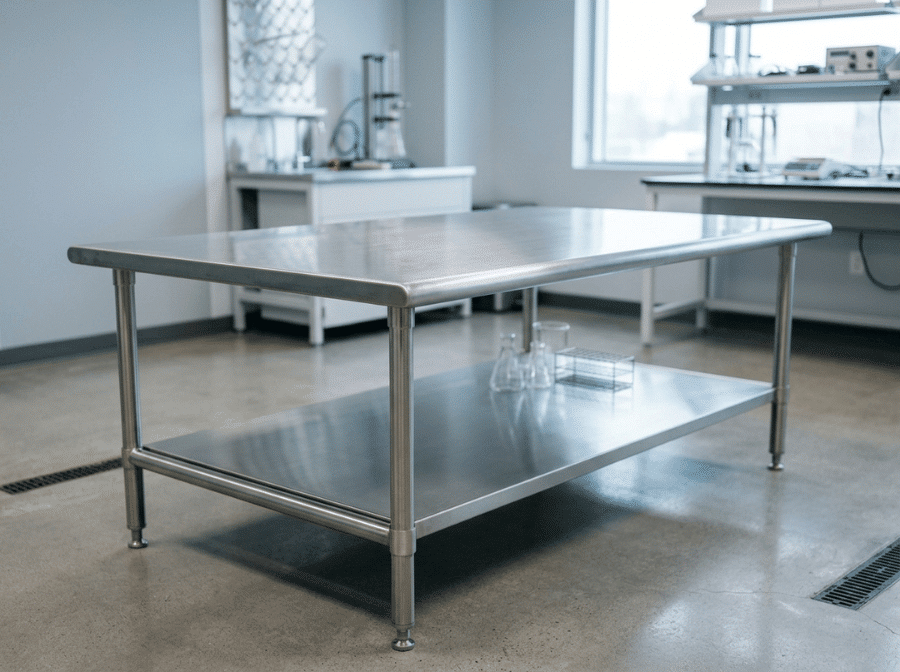
Laboratories are classified by function (clinical, research, analytical, quality control), biosafety level (BSL-1 to BSL-4), workflow type (wet vs. dry), and industry. Each classification directly shapes the furniture materials, surface specifications, containment requirements, and spatial design that a lab project demands.
Getting the classification wrong at the planning stage is expensive. The wrong worktop material degrades under chemical exposure. Undersized containment infrastructure creates compliance problems. Furniture specified for a dry lab gets damaged in a wet one. Laboratory classification isn’t administrative — it’s the foundation that every procurement, fit-out, and design decision builds on.
This guide covers the major laboratory types across four classification frameworks, explains how each type translates into physical design and furniture requirements, and provides a structured decision guide for planners, procurement teams, and fit-out contractors specifying a new or refurbished laboratory.
Why Does Laboratory Classification Matter for Design and Procurement?
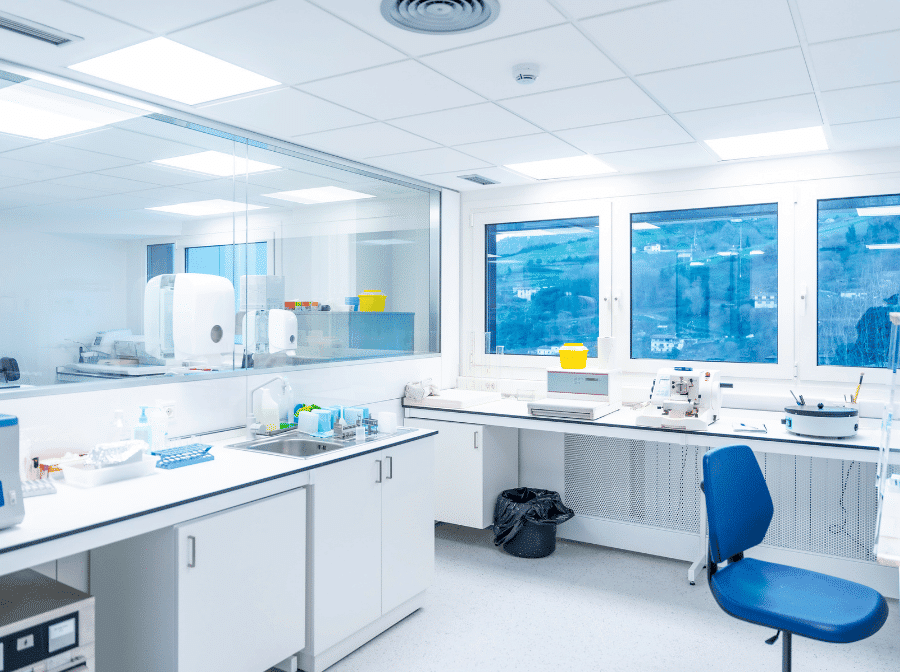
Laboratory classification matters because no single furniture or surface specification works across all lab environments. A biosafety level 3 infectious disease lab and a university chemistry teaching lab share very little in terms of infrastructure, workflow, or material requirements — even though both contain benches, storage, and sinks.
Classification determines:
- Which worktop materials are chemically and mechanically appropriate
- What containment and ventilation infrastructure is required
- Whether stainless steel, epoxy resin, or phenolic resin surfaces are the correct choice
- How furniture must be configured for workflow, safety, and decontamination access
Understanding these connections before procurement begins prevents costly mid-project changes and helps design teams specify with confidence.
What Are the Main Types of Laboratories by Function?
Laboratories organized by functional purpose fall into four primary categories, each with distinct workflow and infrastructure needs.
Clinical Laboratories
Clinical laboratories process biological specimens — blood, tissue, urine — for diagnostic purposes. Found in hospitals, medical centers, and diagnostic facilities, these environments prioritize hygiene, contamination control, and rapid workflow. Surfaces must be non-porous and easy to decontaminate. Stainless steel lab tables are widely used in clinical settings for their smooth, seamless surfaces and resistance to disinfectant chemicals.
Research Laboratories
Research laboratories cover a broad range from university science departments to pharmaceutical R&D facilities. Workflows vary significantly — some days involve wet chemistry, others involve data analysis or sample preparation. Research labs typically require flexible, modular lab benches and workstations that can be reconfigured as projects evolve. Worktop material selection depends heavily on the specific reagents and solvents in use.
Analytical Laboratories
Analytical labs focus on measurement and characterization — testing materials, environmental samples, or food products using instruments such as HPLC, GC-MS, or atomic absorption spectrometers. Vibration-sensitive instruments require stable, heavy-duty bench structures. Anti-vibration tables are common in analytical environments where measurement accuracy is critical. Chemical-resistant surfaces remain important, as solvent handling is routine.
Quality Control Laboratories
Quality control (QC) laboratories operate within manufacturing facilities — pharmaceuticals, food and beverage, electronics, and chemicals — testing products against defined specifications. These labs often run high-throughput, repetitive workflows. Durability, cleanability, and ergonomic layout are prioritized, since technicians work at benches for extended periods. Chemical-resistant laboratory furniture with consistent finish quality is particularly well-suited to QC environments.
How Do Biosafety Levels (BSL-1 to BSL-4) Affect Laboratory Infrastructure?
The biosafety level framework, established by organizations including the U.S. Centers for Disease Control and Prevention (CDC) and the World Health Organization (WHO), classifies laboratories that work with biological agents according to the containment measures required. Each level up introduces additional infrastructure and furniture requirements.
BSL-1: Basic Laboratory
BSL-1 laboratories handle well-characterized biological agents not known to cause disease in healthy adults. Standard laboratory practices apply. Furniture requirements are straightforward: durable benches, chemical-resistant surfaces, and accessible handwashing facilities. Most educational and general research labs operate at this level.
BSL-2: Standard Containment
BSL-2 laboratories work with agents that pose moderate risk — such as Staphylococcus aureus or Hepatitis B. These environments require limited access during work, decontamination of all waste before disposal, and personal protective equipment. Bench surfaces must resist disinfectant agents. Seamless, non-porous worktop materials — including epoxy resin and stainless steel — are preferred because they prevent microbial accumulation.
BSL-3: High Containment
BSL-3 laboratories handle agents that can cause serious or potentially lethal disease through respiratory transmission, such as Mycobacterium tuberculosis. This level commonly involves reinforced containment infrastructure: sealed surfaces, coved flooring-to-wall junctions, and furniture designed to minimize harborage points. Stainless steel benching with fully welded, smooth-radius joints is a common design choice in these environments because it supports thorough decontamination. It is worth noting that specific construction standards for BSL-3 vary by country and institution — the design principles described here reflect broadly adopted practice rather than universal mandated requirements.
BSL-4: Maximum Containment
BSL-4 laboratories work with the most dangerous known biological agents, including Ebola and Marburg viruses. These facilities require complete personnel isolation, including positive-pressure suits or Class III biological safety cabinets. Every material and fitting must withstand aggressive chemical decontamination protocols. Furniture is typically all-welded stainless steel with no exposed fasteners, open joints, or porous surfaces. BSL-4 laboratory projects involve close coordination between biosafety consultants, facility engineers, and furniture manufacturers — design requirements are highly project-specific and institution-defined.
What Is the Difference Between Wet Labs and Dry Labs?
The wet lab versus dry lab distinction is one of the most practically important in laboratory design, because it directly determines plumbing, drainage, surface selection, and structural loading requirements.
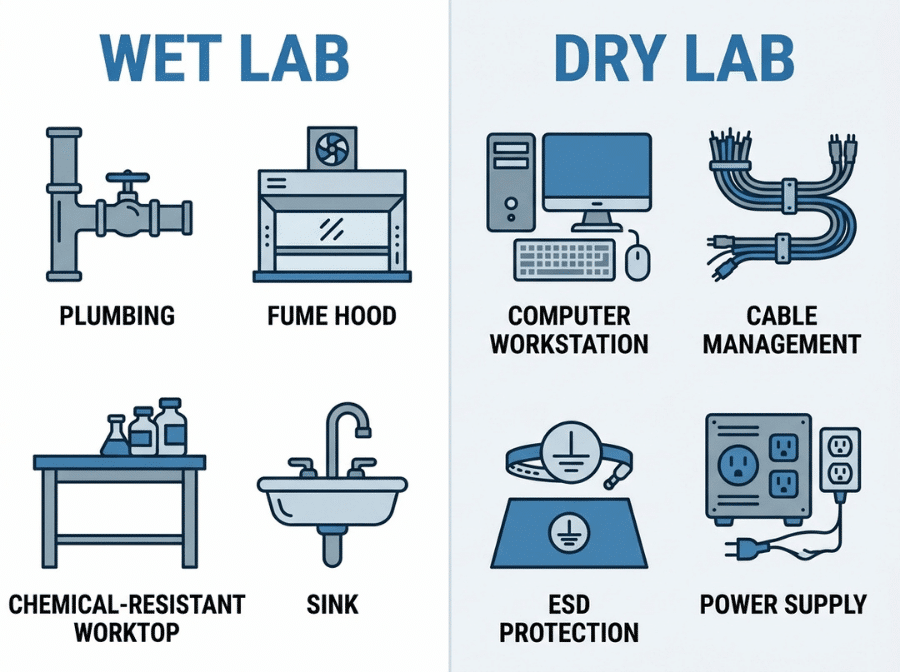
Wet laboratories involve liquids, chemicals, biological samples, or gases. They require plumbing, drainage, fume hoods, chemical-resistant surfaces, and dedicated lab sinks. Worktop materials such as epoxy resin and phenolic resin are widely specified in wet labs for their resistance to acids, solvents, and moisture. Stainless steel benching is also a common wet lab choice, particularly in areas requiring frequent washdowns or decontamination.
Dry laboratories house computers, analytical instruments, and data systems. They do not involve liquid reagents or chemical handling. Dry labs prioritize cable management, electrostatic discharge (ESD) control, stable power supply, and ergonomic workstation layouts. Standard laminate or HPL surfaces are appropriate in many dry lab contexts, though equipment load-bearing capacity remains an important specification consideration.
Many modern research facilities include both wet and dry zones within the same building — sometimes within the same room — requiring clear spatial separation during the design phase.
What Are the Design Requirements for Specialized Laboratory Environments?
Cleanrooms
Cleanrooms are controlled environments in which airborne particulates, temperature, humidity, and pressure are maintained within defined limits. They are classified according to ISO 14644-1 standards, with ISO Class 1 representing the most stringent particle control and ISO Class 9 the least. Cleanrooms are common in semiconductor manufacturing, pharmaceutical production, and medical device assembly.
Cleanroom furniture must be designed to minimize particle generation and support easy decontamination. This means:
- Smooth, non-porous surfaces with no exposed fasteners or crevices
- Stainless steel or powder-coated steel construction
- Minimal horizontal surfaces where particles can accumulate
- Perforated or slotted shelving to support airflow
Standard laboratory furniture is not suitable for cleanroom use. Particle-generating materials, exposed wood components, and open-thread fasteners are incompatible with cleanroom protocols.
Containment Laboratories
Biological and chemical containment laboratories — including BSL-3 and BSL-4 facilities, as well as chemical agent labs — require that every surface, fitting, and furniture component supports the decontamination strategy for that environment. Gaskets, seals, floor-to-wall coves, and pass-through chambers are infrastructure features that interact directly with bench and casework specifications.
In practice, containment lab furniture projects require close collaboration between the end user’s biosafety team, the facility architect, and the furniture manufacturer to ensure that every component meets the facility-specific containment design criteria.
What Types of Laboratories Exist Across Different Industries?
Laboratory environments span a wide range of sectors, each with characteristic requirements:
|
Industry |
Common Lab Types |
Key Design Priorities |
|---|---|---|
|
Pharmaceutical |
R&D, QC, stability testing |
GMP compliance, cleanability, chemical resistance |
|
Healthcare & Diagnostics |
Clinical, pathology, microbiology |
Hygiene, contamination control, workflow speed |
|
Food & Beverage |
Analytical, QC, sensory |
Cleanability, durability, compliance with food safety standards |
|
Environmental |
Analytical, field sample processing |
Chemical resistance, instrument stability |
|
Education |
Teaching, general science |
Flexibility, safety, durability under high-use conditions |
|
Electronics & Semiconductor |
Cleanroom, ESD-controlled |
Particle control, ESD safety, precision |
|
Chemical & Petrochemical |
Process chemistry, analytical |
Solvent and acid resistance, ventilation |
Each industry category generates its own specification norms, regulatory framework, and procurement requirements. Furniture specified for a pharmaceutical GMP environment, for example, typically demands full documentation traceability and material compliance certificates — considerations that do not apply to a school science lab.
How Does Lab Type Determine the Right Furniture, Surfaces, and Equipment?
Laboratory type is the primary driver of furniture specification. The table below summarizes how key lab classifications translate into material and design decisions.
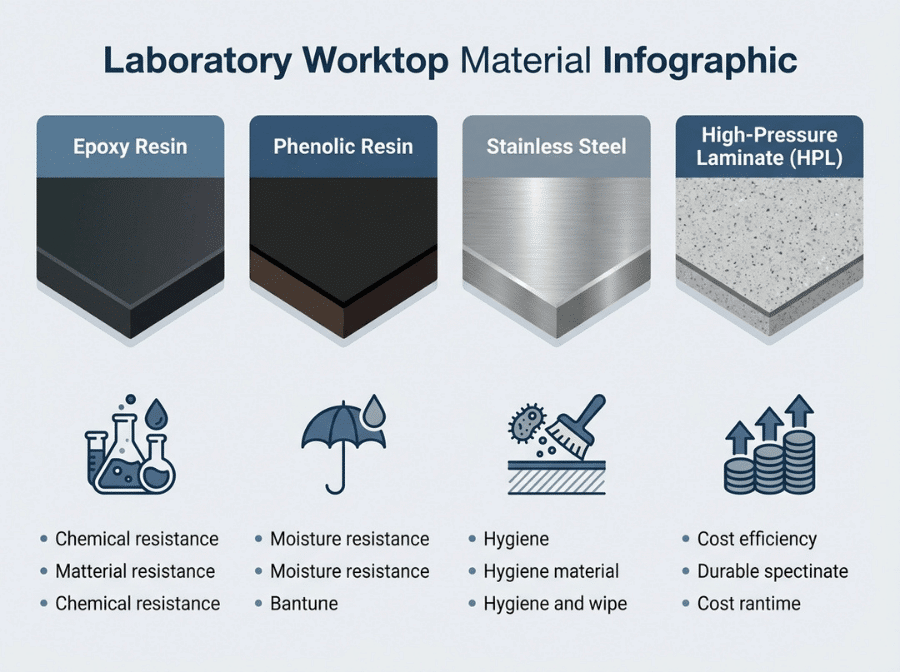
How do different lab surface materials compare for each lab type?
- Epoxy resin worktops offer strong resistance to acids, alkalis, solvents, and moisture. They are well-suited to chemistry, pharmaceutical, and wet research lab environments. Epoxy and phenolic resin surfaces are among the most widely specified laboratory worktop materials globally.
- Phenolic resin worktops provide good chemical and moisture resistance with slightly greater impact resistance than epoxy resin. They are common in educational and general research settings.
- Stainless steel worktops are the preferred choice where hygiene, decontamination, and washdown capability are the primary requirements — clinical labs, BSL-3 environments, food labs, and cleanrooms. Fully welded stainless steel benching offers no joints or seams where biological or chemical contamination can accumulate.
- HPL (high-pressure laminate) worktops are appropriate for dry labs, instrument rooms, and low-chemical-exposure environments where cost efficiency is a priority.
The structural system — steel frame casework, stainless steel all-welded benching, or modular systems — should match both the load requirements of the equipment and the maintenance demands of the environment.
How to Choose the Right Laboratory Setup: A 6-Step Decision Guide
Step 1: Define the laboratory’s primary function and biosafety classification
Start with the science. What biological, chemical, or physical processes will take place in this lab? If biological agents are involved, determine the required biosafety level early, as this shapes every downstream decision.
Step 2: Identify the chemical and biological exposure profile
List the primary reagents, solvents, and disinfectants in use. Match this list against the chemical resistance data for each worktop material under consideration. A surface that performs well against mild acids may degrade under prolonged halogenated solvent exposure.
Step 3: Determine wet or dry workflow requirements
Confirm whether the lab requires plumbing, drainage, fume hoods, or gas services. Wet lab infrastructure requires coordination between the furniture system and the building services design. Dry lab environments have different spatial and electrical infrastructure needs.
Step 4: Assess decontamination and hygiene requirements
For clinical, containment, cleanroom, and high-biosafety environments, decontamination access is a design requirement — not an afterthought. Select furniture systems with minimal harborage points, smooth sealed surfaces, and configurations that allow full surface access during cleaning protocols.
Step 5: Consider the regulatory and compliance framework
GMP environments, ISO-classified cleanrooms, and containment laboratories operate under formal regulatory requirements. Procurement teams should confirm what documentation, material certification, and traceability records are required before specifying furniture.
Step 6: Coordinate furniture specification with the overall laboratory layout
Furniture selection should align with room dimensions, workflow direction, ventilation strategy, and equipment placement. Submitting a room layout or technical drawing to a furniture manufacturer at the early design stage allows for review of fit, configuration, and any custom dimension requirements before production begins.
Comprehensive Comparison Table: Lab Types at a Glance
|
Lab Type |
Typical Sector |
Worktop Material |
Bench System |
Key Design Feature |
|---|---|---|---|---|
|
Clinical |
Healthcare |
Stainless steel, epoxy resin |
All-welded stainless or steel-frame |
Seamless, decontaminable surfaces |
|
Research |
University, pharma, biotech |
Epoxy resin, phenolic resin |
Modular steel-frame |
Flexibility, reconfigurability |
|
Analytical |
Environmental, industrial, pharma |
Epoxy resin, HPL |
Heavy-duty, vibration-stable |
Instrument stability, chemical resistance |
|
Quality Control |
Manufacturing |
Epoxy resin, phenolic resin |
Durable fixed or modular |
High throughput, ergonomics |
|
BSL-1 |
Education, basic research |
Phenolic resin, HPL |
Standard steel-frame |
General durability, accessibility |
|
BSL-2 |
Medical, university |
Epoxy resin, stainless steel |
Steel-frame, easy-clean |
Non-porous surfaces, waste management |
|
BSL-3 |
Infectious disease, veterinary |
Stainless steel, sealed epoxy |
Fully sealed, coved |
No harborage points, decontamination access |
|
BSL-4 |
National reference labs |
All-welded stainless steel |
Custom sealed systems |
Maximum containment, no exposed fasteners |
|
Wet Lab |
Chemistry, biology, pharma |
Epoxy resin, stainless steel |
Steel-frame with sink integration |
Chemical resistance, drainage |
|
Dry Lab |
Data analysis, electronics |
HPL, ESD laminate |
Modular, cable-managed |
ESD control, instrument stability |
|
Cleanroom |
Semiconductor, pharma |
Stainless steel, powder-coated steel |
Perforated, particle-minimizing |
ISO-class particle control |
Frequently Asked Questions
What is the most important factor when choosing laboratory furniture for a specific lab type?
The chemical and biological exposure profile is the most critical factor. Selecting a worktop material that is incompatible with the reagents in regular use leads to surface degradation, shortened furniture lifespan, and potential contamination risk. Match material specifications to actual usage conditions before procurement.
What is the difference between a BSL-2 and a BSL-3 laboratory in terms of furniture requirements?
BSL-2 laboratories require non-porous, disinfectant-resistant surfaces and good general hygiene standards. BSL-3 laboratories typically go further, with furniture design that eliminates harborage points entirely — fully welded joints, sealed surface edges, coved junctions, and configurations that permit thorough chemical decontamination. These are commonly adopted design principles, though specific requirements vary by institution and national regulation.
When should stainless steel be specified over epoxy resin for laboratory worktops?
Stainless steel is the preferred choice when decontamination frequency is high, when the environment involves frequent liquid washdowns, or when the lab classification requires seamless, fully non-porous surfaces — such as clinical, food, BSL-3, and cleanroom settings. Epoxy resin is a strong choice where chemical resistance to acids and solvents is the primary concern and decontamination requirements are less intensive. The two materials serve different performance profiles, and many projects use both within the same facility.
What laboratory furniture is required for a cleanroom?
Cleanroom furniture must be manufactured from smooth, non-particle-generating materials — typically stainless steel or powder-coated steel — with no exposed fasteners, crevices, or porous components. Perforated shelving supports airflow patterns. Standard furniture with wood components or exposed thread fasteners is not compatible with ISO-classified cleanroom environments.
Can the same laboratory bench system be used in both wet and dry lab zones?
A steel-frame modular bench system can serve both zones if the correct worktop material is specified for each area. Wet lab zones require chemical-resistant surfaces and integrated drainage; dry lab zones may use HPL or ESD laminate surfaces without plumbing. The structural bench system can be consistent, while the worktop and service fittings differ by zone.
How do laboratory furniture requirements differ between pharmaceutical and educational labs?
Pharmaceutical laboratories — particularly those operating under GMP — require material traceability documentation, compliance records, and surface specifications that meet regulatory standards. Furniture must support validation processes. Educational labs prioritize durability under high-use conditions, safety features, and cost efficiency. The structural and material quality overlap, but the documentation and compliance requirements differ significantly.
What should procurement teams submit when requesting a custom laboratory furniture quote?
Submitting room dimensions, a floor layout or CAD drawing, a list of primary chemicals in use, the required worktop material, and any relevant compliance standards gives a manufacturer the information needed to review fit, specify appropriate materials, and produce an accurate quote. Projects with complex configurations benefit from early technical review before production begins.
Specify the Right Laboratory Furniture From the Start
Laboratory type classification is not a formality — it is the technical foundation that connects a lab’s scientific purpose to every furniture, surface, and spatial design decision. Getting this right at the planning stage reduces procurement risk, supports regulatory compliance, and produces a laboratory environment that functions reliably over its full service life.
Glorylab manufactures laboratory furniture and casework for the full range of laboratory environments covered in this guide — from standard educational and research benching to stainless steel workstations for clinical and cleanroom applications. Every product is fabricated in-house at our Jiangsu facility, with direct access to the manufacturing team and no intermediary agents.
For project-based procurement, custom dimensions, material selection guidance, or OEM requirements, submit your project details to Glorylab for a technical review. Initial inquiries receive a response within 12–24 hours.