Key Features
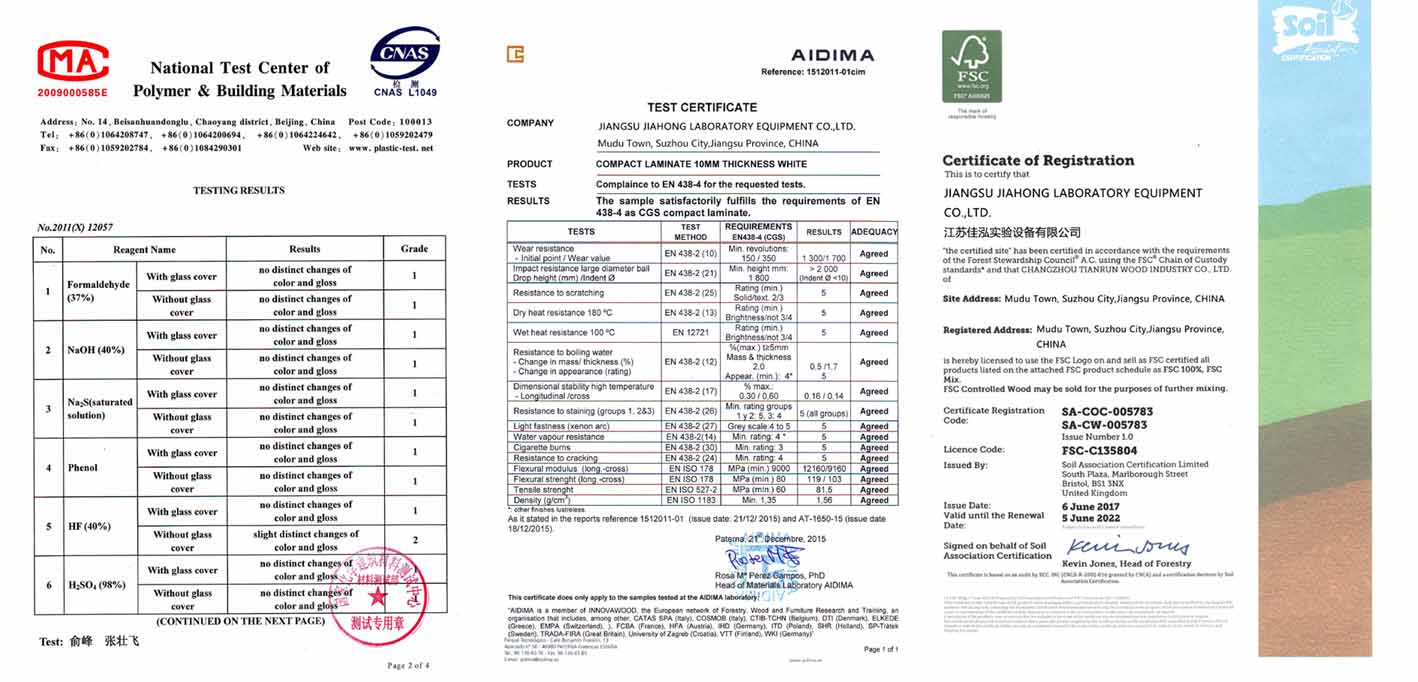
- Strong chemical resistance — Stands up to strong acids, bases, solvents, and corrosive substances common in lab work.
- Heat- and fire-resistant — Handles heat up to roughly 135°C and resists fire and cigarette burns.
- Water- and moisture-proof — A non-porous surface resists moisture, mold, and staining.
- Tough and durable — Resists abrasion, scratches, and impact, and holds its shape without deforming.
- Cost-effective — Offers one of the best price-to-performance ratios among lab countertop materials.
- Hygienic and easy to clean — Anti-biosis, anti-static, and non-toxic, with a smooth surface that wipes clean fast.
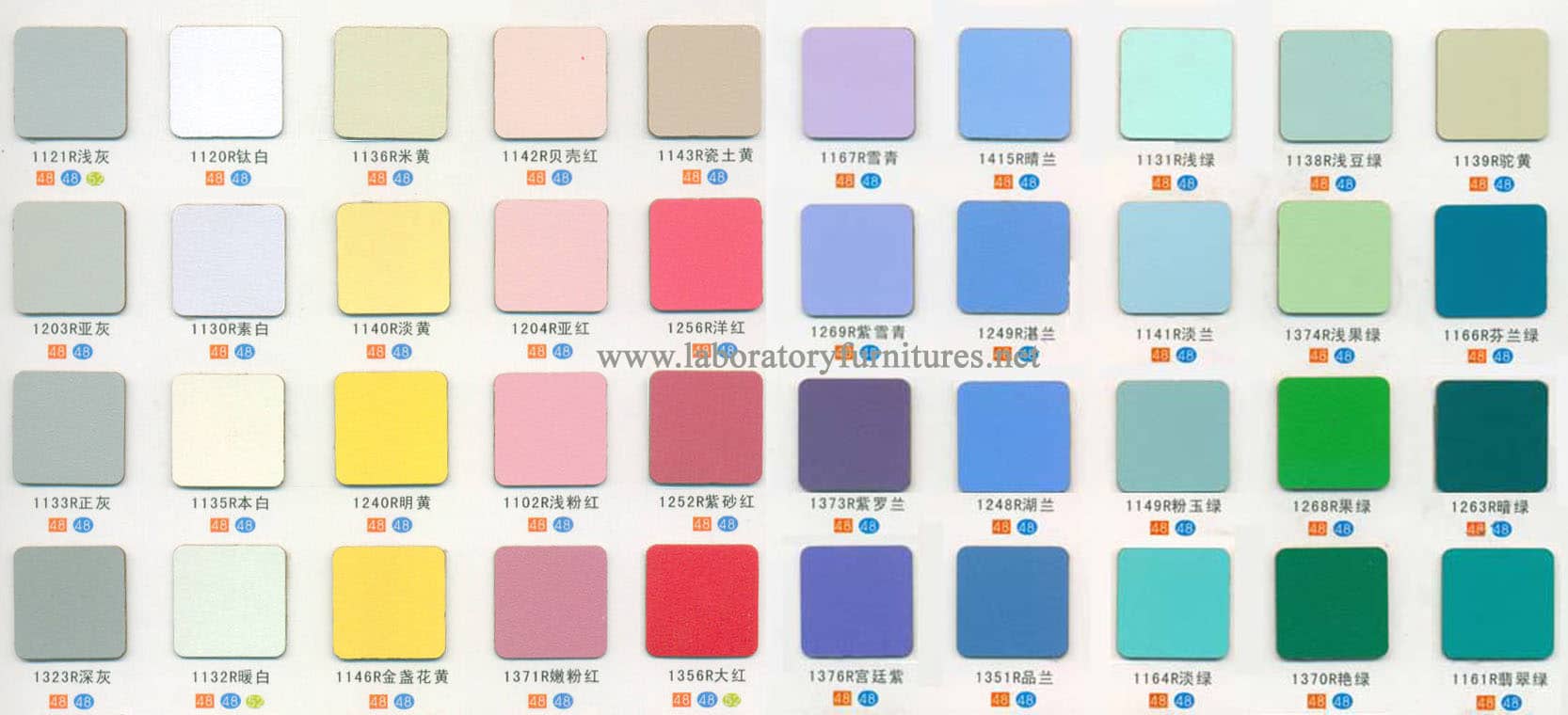
- Wide choice of finishes — Available in multiple colors, patterns, and surface textures to match your lab design.
Material & Construction
The JH-PR phenolic resin work surface is a durable, eco-friendly material with both structural and decorative qualities. It is made by layering melamine-impregnated decorative paper over black or brown phenolic resin kraft paper. These layers are pressed together under high heat and pressure with steel-board support, producing a solid black core and a surface available in a rich range of colors and textures.
- Standard thickness: 12.7 / 16 / 19 / 25 mm (thicknesses from 0.8 mm to 25 mm are available).
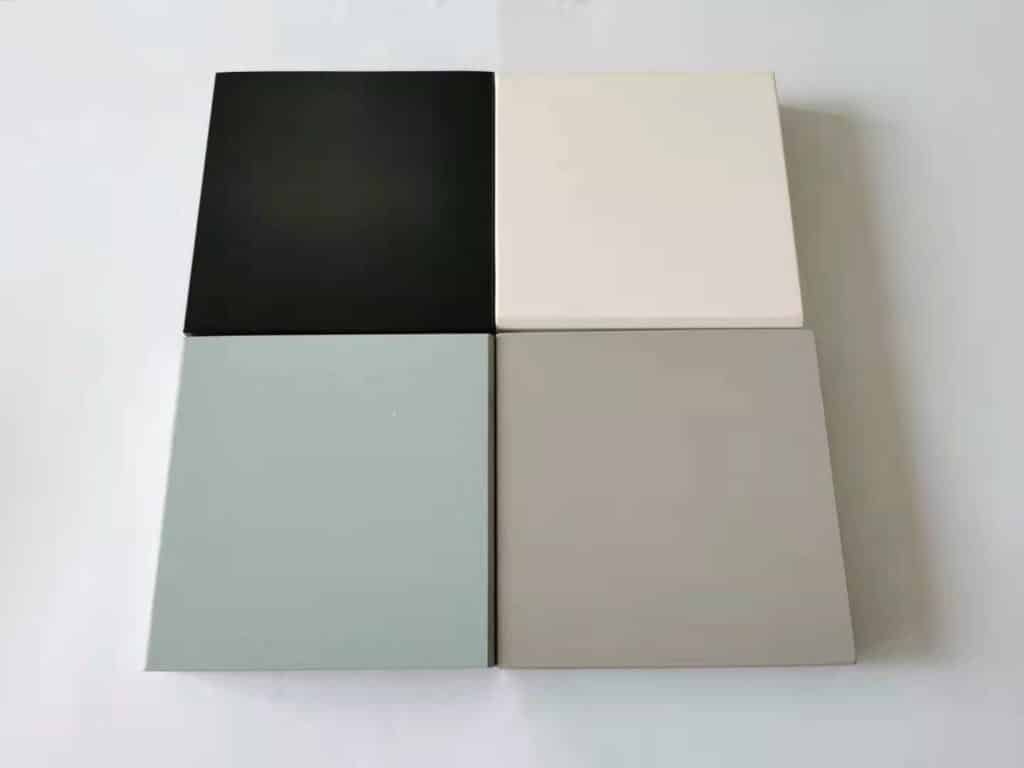
- Standard colors: Light gray, black, and dark green; other colors available on request.
- Standard sheet sizes (mm): 1220 × 1830, 1220 × 2440, 1220 × 3050, 1220 × 3660, 1530 × 3050, 1530 × 3660, and 1830 × 3660.
- Heat resistance: Approximately 135°C — lower than epoxy resin or ceramic, but more than enough for typical laboratory tasks.
- Core structure: Solid black core with a decorative, wear-resistant surface layer.
Sheet size is usually chosen to match the final dimensions of your lab furniture. Selecting the right size optimizes your workspace, reduces material waste, and keeps costs down — giving you both function and budget efficiency.
Advantages
- Water and chemical resistance — Excellent protection against moisture, acids, and chemicals for safe, durable use across many lab settings.
- Best cost-performance ratio — Delivers strong value compared with other lab countertop materials.
- A proven Trespa alternative — Made from similar materials to Trespa, it offers comparable quality at a lower cost.
- Global popularity — Its reliability and affordability make it a top pick for labs at home and abroad.
- Low maintenance — The smooth, non-porous surface stays clean with minimal effort and keeps its appearance over time.
- Flexible shaping — Can be cut into squares, rectangles, rounds, half-rounds, ovals, and other custom shapes.
Applications
The JH-PR phenolic resin countertop suits a wide range of environments:
- Chemical laboratories — Resists corrosive acids and solvents, making it ideal for chemical-heavy work.
- Medical and pharmaceutical labs — Offers a durable, easy-to-clean, hygienic surface where cleanliness matters.
- Educational institutions — Robust and affordable, it’s a popular choice for school and university science labs.
- Quality control and testing facilities
- Industrial and manufacturing labs
Its blend of durability, chemical resistance, and value makes it especially practical for labs working within a set budget.
Customization Options
We supply each countertop to match your project requirements. Available options include:
- Thickness — From 0.8 mm up to 25 mm to suit your bench design and load needs.
- Colors — Light gray, black, dark green, and other colors on request.
- Sheet sizes — Standard sizes or cut-to-size to match your lab furniture dimensions.
- Shapes — Square, rectangular, round, half-round, oval, and other custom shapes.
- Edge finishing — Various edge profiles for safety and a clean look.
- Cutouts — Openings for sinks, taps, and service fixtures.
- OEM and project supply — Support for large-scale and turnkey laboratory projects.
Partial Color Chart of Phenolic Resin Countertop:
Frequently Asked Questions
What is a phenolic resin countertop made of?
It’s made from layers of paper impregnated with phenolic resin, topped with melamine-impregnated decorative paper. The layers are pressed under high heat and pressure to form a solid, durable panel with a smooth, non-porous surface.
How does phenolic resin compare to Trespa?
The JH-PR uses materials similar to Trespa and delivers comparable quality, but at a lower price. It’s an economical alternative for labs that want proven performance without the premium cost.
How much heat can it handle?
The surface resists heat up to roughly 135°C. That’s lower than epoxy resin or ceramic worktops, but it’s more than enough for most everyday laboratory tasks.
Is it resistant to chemicals and moisture?
Yes. It withstands strong acids, bases, solvents, and moisture, and its non-porous surface resists mold and staining, making it reliable in demanding lab conditions.
Which thickness and color should I choose?
Standard thicknesses are 12.7, 16, 19, and 25 mm, and standard colors are light gray, black, and dark green. The right thickness depends on your bench design and load needs — we’re happy to help you match the countertop to your application.
Can the countertop be cut to custom sizes and shapes?
Absolutely. We supply cut-to-size sheets and custom shapes — including squares, rectangles, rounds, half-rounds, and ovals — along with edge finishing and cutouts for sinks and fixtures.
Request a Quote
Ready to plan your lab surfaces? Contact us for specifications, customization options, or a quotation for your laboratory project. Send us your dimensions or requirements, and our team will prepare a tailored phenolic resin countertop solution for you.