Key Features
1. Exceptional Chemical Resistance
This chemical-resistant lab worktop withstands nearly all laboratory reagents, including strong acids, bases, and solvents. The only known weakness is hydrofluoric acid. That makes it a dependable choice for corrosive and high-risk applications.
2. Superior Heat Tolerance
As a heat-resistant laboratory worktop, the ceramic surface withstands temperatures up to 800°C and direct contact with open flames, all without deforming. You get reliable stability in heat-intensive experiments and processes.
3. Hygienic and Eco-Friendly
The worktop is produced from natural, non-toxic materials and contains no formaldehyde. Its antibacterial surface inhibits microbial growth, supporting cleaner, safer conditions in sterile and sensitive lab spaces.
4. Durable and Design-Friendly
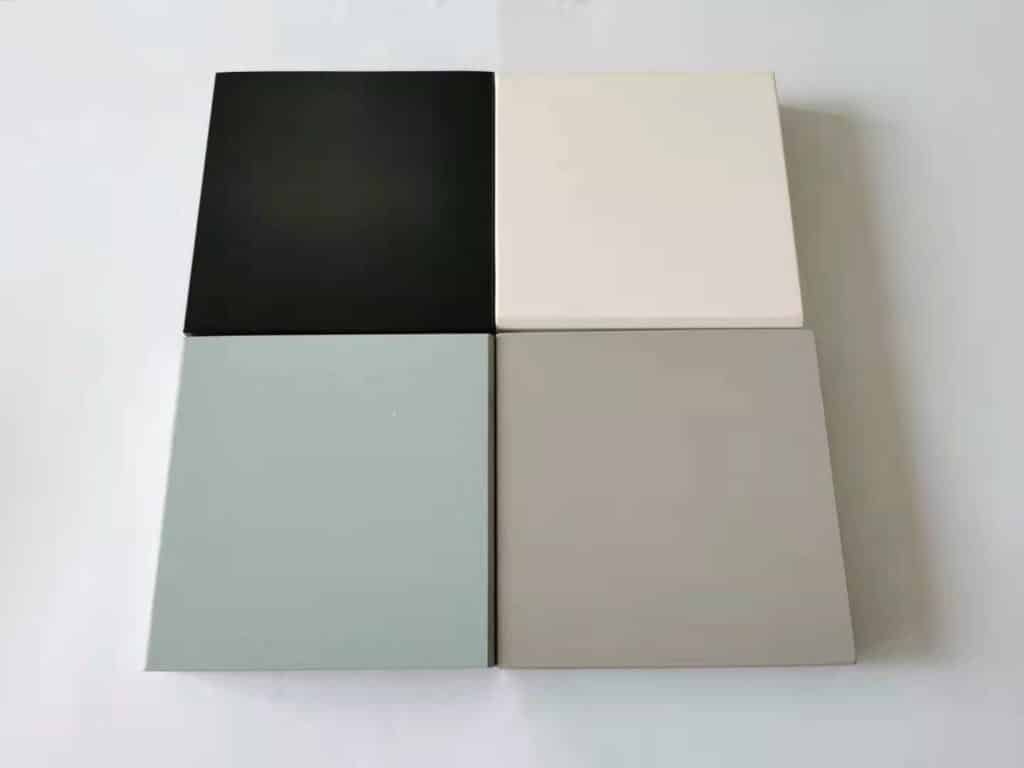
The dense ceramic body resists scratches, abrasion, and staining, so it looks and performs well over a long service life. A range of color options lets you match the worktop to any modern laboratory design.
Technical Specifications
| Specification | Detail |
|---|---|
| Model | JH-CW |
| Material | Natural silicate ceramic |
| Standard Size | 1800 × 900 × 20 mm |
| Thickness | 20 mm |
| Marine Edge | Available, custom sizing on request |
| Max Heat Resistance | 800°C |
| Chemical Weakness | Hydrofluoric acid only |
| Surface Finish | Smooth, non-reactive, easy-clean |
Applications
Fume Hood Surfaces
Ideal for fume hood countertops thanks to strong chemical resistance and tolerance up to 800°C. It keeps operators safe during corrosive and high-heat work.
Central and Wall Benches
A durable, scratch-resistant, easy-to-clean surface for everyday laboratory operations and general bench work.
High-Temperature and Instrument Tables
Well-suited to high-heat equipment, analytical instruments, and precision workstations where stability and zero deformation are essential.
Performance Comparison of Laboratory Worktops
| Material | Composition | Max. Long-Term Heat | Chemical Resistance | Chemical Weakness | Thickness |
|---|---|---|---|---|---|
| Ceramic | Natural silicate | 800°C | Strong against solvents, bases, oxidants, and most acids | Hydrofluoric acid | 20 mm |
| Epoxy Resin | Epoxy resin, quartz sand, catalysts, curing agents, pigments | 300°C | Strong against solvents, bases, and most oxidants | Sulfuric acid, nitric acid, hydrofluoric acid, and potassium permanganate | 16 / 19 / 25 mm |
| Stainless Steel | Stainless steel | 180°C | Strong against solvents, bases, oxidants, and organic acids | Mineral acids (hydrochloric, sulfuric, nitric, phosphoric, hydrofluoric) | 20 mm |
| Trespa TopLab | Refined wood fiber, phenolic resin | 180°C | Strong against solvents, bases, and oxidants | Hydrofluoric acid | 12.7 / 16 / 19 mm |
| Phenolic Resin Laminate | Chemical-resistant film, overlay paper, decor paper, kraft paper | 135°C | Strong against solvents, oxidants, and many acids | Sulfuric acid, nitric acid, sodium hydroxide | 12.7 / 16 / 19 mm |
| Polypropylene | Propylene, ethylene | 110°C | Strong against bases, most oxidants, and hydrofluoric acid | — | 15 mm |
Among these materials, ceramic offers the highest heat resistance and the broadest chemical protection, making it the premium choice for the most demanding lab environments.
Manufacturing Process
Every JH-CW worktop is produced with precision CNC machining and strict quality control to guarantee flatness, chemical resistance, and safe edges.
- Inspection & Calibration – Each ceramic sheet is checked for cracks and warpage, then measured against cutting specs.
- CNC Cutting – Diamond cutting tools shape the sheet to the exact required dimensions.
- Slotting & Drilling – Sink openings, faucet holes, and cable slots are machined with diamond core drills.
- Edge Grinding & Polishing – Sharp edges are ground into beveled or rounded profiles for safe handling.
- Surface Finishing – Burrs are removed to achieve a smooth, chemical-resistant surface.
- Cleaning & Quality Check – Every unit is cleaned and verified for flatness and stability before shipment.
Customization Options
We manufacture ceramic worktops to your exact project requirements:
- Custom sizes to fit any bench or fume hood layout
- Edge options, including flat and marine (raised) edges
- Sink cutouts shaped to your specified basin
- Faucet and fixture holes drilled to your drawings
- Color choices to match your lab design
Request a Quote
Ready to specify ceramic worktops for your next laboratory project? Send us your dimensions, cutout requirements, and quantities, and our team will prepare a tailored quotation.
Frequently Asked Questions: JH-CW Ceramic Laboratory Worktop
Q: Is the ceramic worktop resistant to hydrofluoric acid?
A: No. Hydrofluoric acid is the only chemical that damages the JH-CW ceramic worktop. It resists nearly all other laboratory reagents, including strong acids, bases, oxidants, and solvents. For applications involving hydrofluoric acid, we recommend a polypropylene or dedicated HF-resistant surface instead.
Q: What temperatures can the ceramic worktop withstand?
A: The JH-CW worktop tolerates temperatures up to 800°C and direct contact with open flames without deforming. This makes it the highest heat-resistant option in our worktop range. It is well-suited to high-heat experiments, burners, and hot equipment.
Q: Can you customize the size and sink cutouts?
A: Yes. We manufacture worktops to your exact project dimensions and machine sink cutouts, faucet holes, and cable slots to your drawings. Just send us your specifications or bench layout, and we will produce the worktop to match.
Q: What thickness is available?
A: The standard JH-CW ceramic worktop is 20mm thick. This thickness provides the structural stability and durability needed for demanding lab benches and fume hood surfaces. The standard flat worktop size is 1800 × 900 × 20 mm.
Q: What edge options are available?
A: The worktop is available with a flat edge or a marine (raised) edge to contain spills. Edges are ground into beveled or rounded profiles for safe handling. Marine-edge worktops are produced to custom sizing on request.
Q: Is the ceramic worktop suitable for fume hoods?
A: Yes. Its strong chemical resistance and 800°C heat tolerance make it a reliable choice for fume hood work surfaces. It keeps operators safe during corrosive and high-heat procedures while staying easy to clean.
Q: Is the worktop antibacterial?
A: Yes. The dense ceramic surface inhibits microbial growth, supporting cleaner and safer conditions in sterile lab spaces. It is made from natural, non-toxic silicate materials and contains no formaldehyde.
Q: How does ceramic compare to epoxy resin or phenolic resin worktops?
A: Ceramic offers the broadest chemical protection and the highest heat resistance of the three. It handles up to 800°C, compared with roughly 300°C for epoxy resin and 135°C for phenolic resin laminate. Ceramic is the premium choice for the most demanding labs, while epoxy and phenolic remain cost-effective options for standard applications.
Q: What material is the worktop made from?
A: The JH-CW worktop is made from natural silicate ceramic. This dense, non-reactive material resists scratches, abrasion, staining, and warping over a long service life. Its smooth finish makes cleaning and maintenance simple.
Q: How do I request a quote for a lab project?
A: Send us your required dimensions, edge type, cutout details, color preference, and quantities. Our team will prepare a tailored quotation based on your specifications. For large projects, share your bench or fume hood layout so we can confirm the full scope.