Key Benefits
- Durable 304 stainless steel — A rigid, long-lasting board that handles daily wash-up use without bending or wearing out.
- Easy-to-clean, hygienic surface — The smooth steel wipes down quickly and stays sanitary in humid, splash-prone drying areas.
- Good everyday moisture resistance — withstands water, humidity, and routine cleaning agents around the sink.
- Space-saving single-faced design — Mounts against a wall or panel to free up valuable bench area.
- Detachable pegs — Reposition pegs in minutes and lift them out for a deeper clean.
- Clean, controlled drainage — A tray drainage hole routes runoff away so water doesn’t pool on the bench.
Features
304 Stainless Steel Construction
The JH-PB004 is made from 304 stainless steel, chosen for its structural strength, hygienic surface, and good resistance to water, moisture, and routine cleaning agents. It withstands the humid, splash-prone conditions of a drying station without rusting during everyday use. The smooth steel surface also wipes clean quickly, which helps keep the drying area sanitary. Stainless steel is valued here for durability and cleanability rather than broad chemical resistance — for heavy or aggressive chemical exposure, a PP board is usually the better fit.
Single-Faced Design
The single-faced layout carries pegs on one side and mounts against a wall or panel. This keeps the board compact against the bench and frees up worktop space beside the sink. If you need two-sided drying capacity for open or island benches, a double-faced version is available as a separate option — tell us your bench type, and we’ll point you to the right one.
Detachable Pegs for Fast Reconfiguration
The pegs attach and detach easily, so you can rearrange the board in minutes to suit your glassware mix. They hold beakers, flasks, and test tubes securely as they air-dry, and lift out completely when you need a deeper clean — remove the pegs, clean, and refit.
Tray Drainage Hole
A drainage hole in the tray channels runoff from drying glassware away cleanly, so water doesn’t pool on the tray or bench. It keeps the drying station tidy and makes daily cleanup easier.
Flexible Installation
The JH-PB004 supports both panel-mounted and deck-mounted installation. Fix it to a wall panel to save bench space, or mount it to the deck (worktop) where a freestanding drying point works better. Choose the method that best matches your bench design and available space.
Technical Specifications
| Specification | Detail |
|---|---|
| Model | JH-PB004 |
| Product | Stainless Steel Single-Faced Peg Board |
| Material | 304 stainless steel |
| Configuration | Single face / double face |
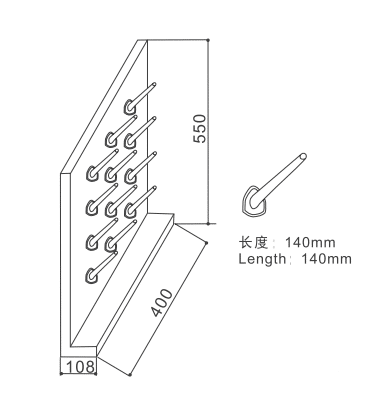
| Drainage | Tray hole for water drainage |
| Pegs | Detachable pegs |
| Installation | Panel-mounted / deck-mounted |
| Corrosion Resistance | Resists moisture, rust, and common cleaning agents |
Overall dimensions, board size, peg count, and peg spacing can be confirmed for your project. Share your bench layout and required capacity, and we’ll advise on exact details before you order.
Stainless Steel vs PP Peg Board — Which Should You Choose?
Both stainless steel and PP peg boards do the same core job: draining and air-drying glassware. The right choice comes down to the environment and what matters most for your station.
- Choose stainless steel (JH-PB004) when durability, a rigid structure, easy cleaning, and a hygienic metallic finish are the priorities. It suits general-purpose wash-up areas, clean-looking lab interiors, and stations where the board sees heavy daily handling but limited exposure to aggressive chemicals.
- Choose a PP peg board (JH-PB001 / PB002 / PB003) when broader chemical resistance is required — for example, where the drying area regularly handles acids, solvents, and stronger cleaning agents. PP handles routine wash-up chemistry better than steel.
In short: stainless steel is about strength, cleanability, and a sanitary finish; PP is about wider chemical resistance. If you’re unsure which fits your wash-up conditions, tell us what chemicals pass through the area, and we’ll recommend the right board.
Applications
The JH-PB004 is best suited to labs that want a durable, easy-clean drying point where chemical exposure stays light to moderate:
- General-purpose wash-up areas — A rigid, sanitary drying board for everyday glassware washing and draining beside the sink.
- Teaching labs — Handles frequent wash-and-reuse cycles during busy class sessions, with a tough surface that withstands heavy handling.
- Sink-side drying stations — Mounts against the wall beside the sink to keep freshly washed glassware off the worktop.
- Labs prioritizing hygiene and appearance — The clean metallic finish suits interiors where a sanitary, professional look matters.
Its primary role is air-drying and short-term staging of freshly washed glassware, keeping the surrounding worktop clear and hygienic.
Installation Notes
The JH-PB004 supports both panel-mounted and deck-mounted installation, so you can match it to your bench design. For a secure, long-lasting result:
- Choose your mounting method — fix it to a wall panel to save bench space, or mount it to the deck (worktop) for a freestanding drying point.
- Confirm the mounting surface can carry the weight of a fully loaded stainless steel board.
- Fit the detachable pegs in the layout that best suits your glassware, seating each one securely before use.
- Position the tray so the drainage hole channels water toward your sink or drain, and keep it clear for free-flowing runoff.
Share your bench layout and preferred mounting method, and we’ll help confirm the right setup for your lab.
FAQ
Why choose stainless steel instead of PP for a pegboard?
Stainless steel is the better pick when durability, rigidity, easy cleaning, and a hygienic metallic finish matter most — ideal for general wash-up areas and heavy daily handling. PP is the better pick when the drying area regularly sees acids, solvents, or stronger cleaning agents, since it offers broader chemical resistance. Tell us what passes through your station, and we’ll recommend the right board.
Is the JH-PB004 single-faced or double-faced?
It’s a single-faced model — pegs sit on one side, and it mounts against a wall or panel to save bench space. If you need two-sided drying for open or island benches, a double-faced version is available as a separate option.
What chemicals is the JH-PB004 suitable for?
The 304 stainless steel construction handles water, moisture, and routine cleaning agents well, so it’s a strong fit for the humid, splash-prone conditions of a drying station. It’s not intended for heavy or aggressive chemical exposure — for that, a PP board is the better choice. If you’re unsure, send us the details, and we’ll confirm the right fit.
What’s the difference between panel-mounted and deck-mounted installation?
Panel-mounted fixes the board to a wall panel, freeing up bench space. Deck-mounted fixes it to the worktop, which works well where wall mounting isn’t practical. Both are supported, so you can match the method to your bench design. Confirm the support surface can carry a fully loaded board before fitting.
How do the detachable pegs work?
The pegs attach and detach easily, so you can rearrange the board in minutes to suit different glassware. They hold beakers, flasks, and test tubes securely as they drain, and lift them out completely for a deeper clean.
How do I clean and maintain the pegboard?
Wipe the board and tray regularly with a mild detergent and a soft cloth, then rinse with water. The smooth 304 stainless steel surface wipes clean quickly and resists staining, so routine care keeps it hygienic and lab-ready. Detach the pegs for a deeper clean, and clear the drainage hole periodically to keep water flowing freely.
How do I request a quote?
Send us your installation method (panel- or deck-mounted), required quantities, and any size or peg-count needs. A bench layout helps us confirm dimensions, peg details, and lead time, and prepare accurate pricing quickly.
Request a Quote
Setting up a new wash-up station or upgrading to a durable stainless steel drying board? Send us your preferred installation method (panel- or deck-mounted), required quantities, and any size or peg-count requirements, and our team will prepare a tailored quotation for your JH-PB004 boards. For larger laboratory projects, share your full bench and wash-up layout so we can confirm configuration, mounting, drainage, scope, and lead time.