Choosing the right lab countertop material is more than an aesthetic decision—it’s about ensuring your workspace can withstand daily chemical exposure, extreme heat, impacts, and frequent cleaning. The wrong choice can lead to premature wear, costly replacements, and even downtime that interrupts critical operations.
This guide focuses not on listing every material option but on helping you find the one that matches your lab’s specific performance demands and long-term value. Whether you’re managing a chemistry lab, a cleanroom, or a teaching environment, understanding how materials perform under stress—and calculating their true cost of ownership—will help you make an informed, durable investment.
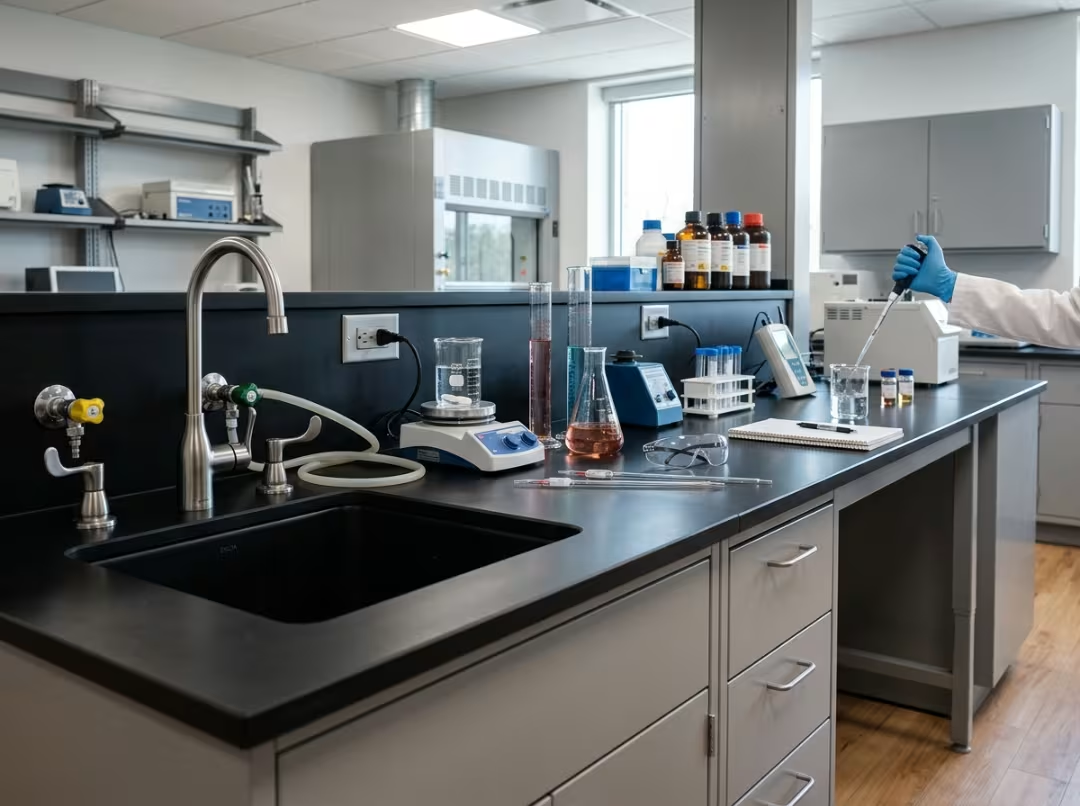
Define Your Lab’s Performance Requirements First
The durability and effectiveness of a laboratory countertop hinge on five critical performance factors: chemical exposure, heat resistance, impact resistance, moisture and water exposure, and hygiene. A clear assessment of these stressors ensures your material choice aligns with the demands of your workspace, reducing the risk of premature failure and costly replacements.
Start by evaluating chemical exposure:
- Identify all chemicals used daily, including their concentration, temperature, and frequency of use.
- Determine if spills are promptly cleaned or if there’s potential for prolonged exposure, as acids, solvents, or bases can wear down some surfaces over time without the right protective finish.
Next, assess heat resistance:
- Catalog heat sources such as Bunsen burners, hot plates, ovens, or autoclaves.
- Distinguish between short-term exposure (like setting down a heated beaker for a moment) and sustained heat (as with high-temperature equipment continuously in use).
Examine impact resistance and physical wear:
- What heavy equipment or tools sit on the countertop permanently or are moved frequently?
- How often are glassware, pipettes, or heavy instruments dragged or bumped on the surface? Regular abrasion and sudden impacts limit the longevity of certain materials.
Consider moisture and water exposure:
- Evaluate whether your lab qualifies as a “wet lab” (requiring constant water use) or experiences only minimal exposure.
- Note areas like sink surrounds or high-humidity environments, as some materials swell, crack, or weaken after prolonged moisture contact.
Finally, prioritize hygiene and cleanability:
- For sensitive environments, such as clinical labs, ensure the surface can handle frequent disinfecting without degrading.
- Seamless countertops with non-porous finishes better prevent bacterial growth and contamination than grout-lined or porous surfaces.
Answer these foundational questions to narrow your material choices and tailor configurations. For example, labs with high chemical use but low physical impacts may prioritize epoxy resin, while labs with lighter exposure but high hygiene standards could lean toward stainless steel. Align these performance demands with your lab’s surrounding setup, like lab benches and workstations, which provide critical support to the countertop under similar stresses.
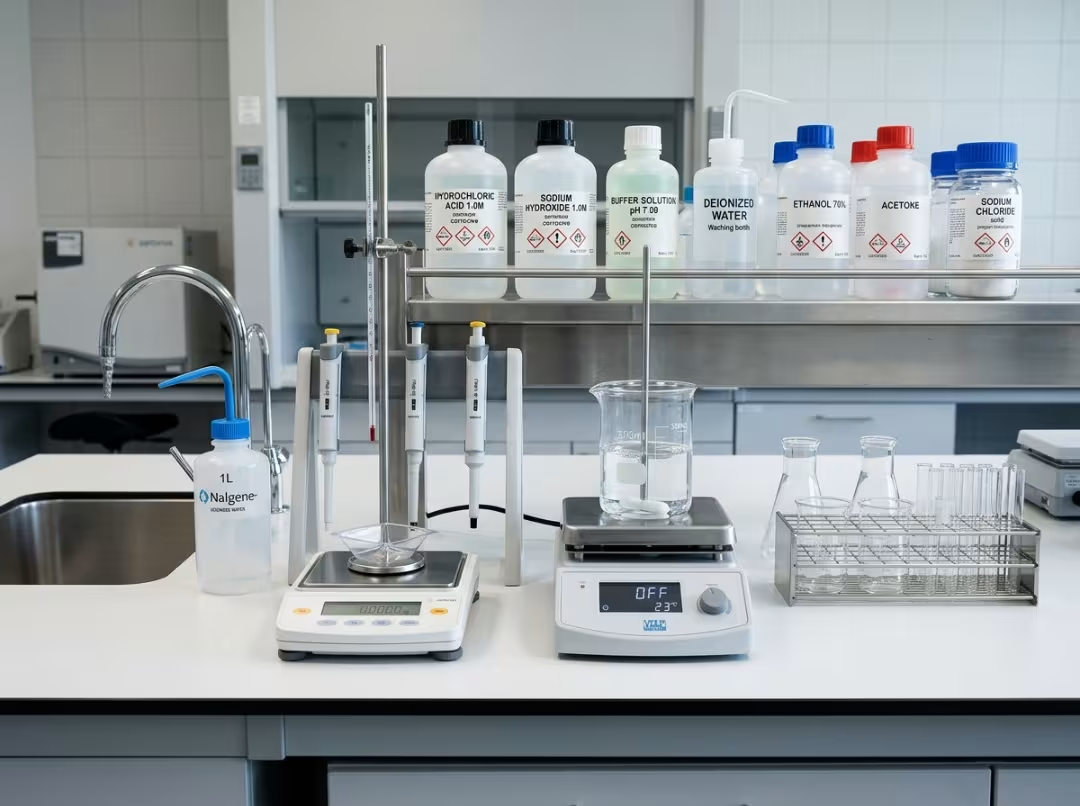
Before comparing materials, get specific about what your lab countertop needs to survive. Five stress factors determine whether a laboratory worktop lasts a decade or fails within a few years: chemical exposure, heat resistance, impact resistance, moisture and water exposure, and hygiene or cleanability.
Skipping this step is the number one reason labs end up replacing countertops well before they should. A school buys HPL because it’s affordable, then finds it blistering under Bunsen burner heat within a year. A research lab installs a surface with no through-body construction, then discovers it can’t be refinished after a solvent spill leaves a permanent stain.
Run a quick self-assessment before you shop:
- What chemicals does the lab handle daily, and at what concentration?
- Are Bunsen burners, hot plates, or autoclaves in regular use nearby?
- How much foot traffic and equipment staging does the surface see?
- Does the lab need to meet cleanroom or sterile-processing standards?
The answers point you toward a shortlist of materials — and they also shape the surrounding lab benches and workstations, since a countertop’s stress factors are tied directly to how the bench beneath it is built and used.
Comparing the Main Lab Countertop Materials
When selecting the right countertop material, it’s essential to focus on how well each option performs under the unique requirements of your lab. Here’s a clear breakdown of the four primary materials—epoxy resin, phenolic resin, stainless steel, and HPL—and their strengths, weaknesses, and best use cases:
Epoxy Resin:
This material is often the gold standard for chemical-heavy laboratories due to its unmatched durability and resistance. Cast as a seamless, monolithic slab, epoxy resin can handle high exposure to harsh chemicals, powerful reagents, and temperatures up to 300°C. Its through-body construction also allows surface refinishing if it’s scratched or slightly damaged, extending its lifespan significantly. However, this exceptional performance comes at a higher upfront cost, making it most suitable for research labs, analytical spaces, and environments with aggressive chemical demands.
Phenolic Resin:
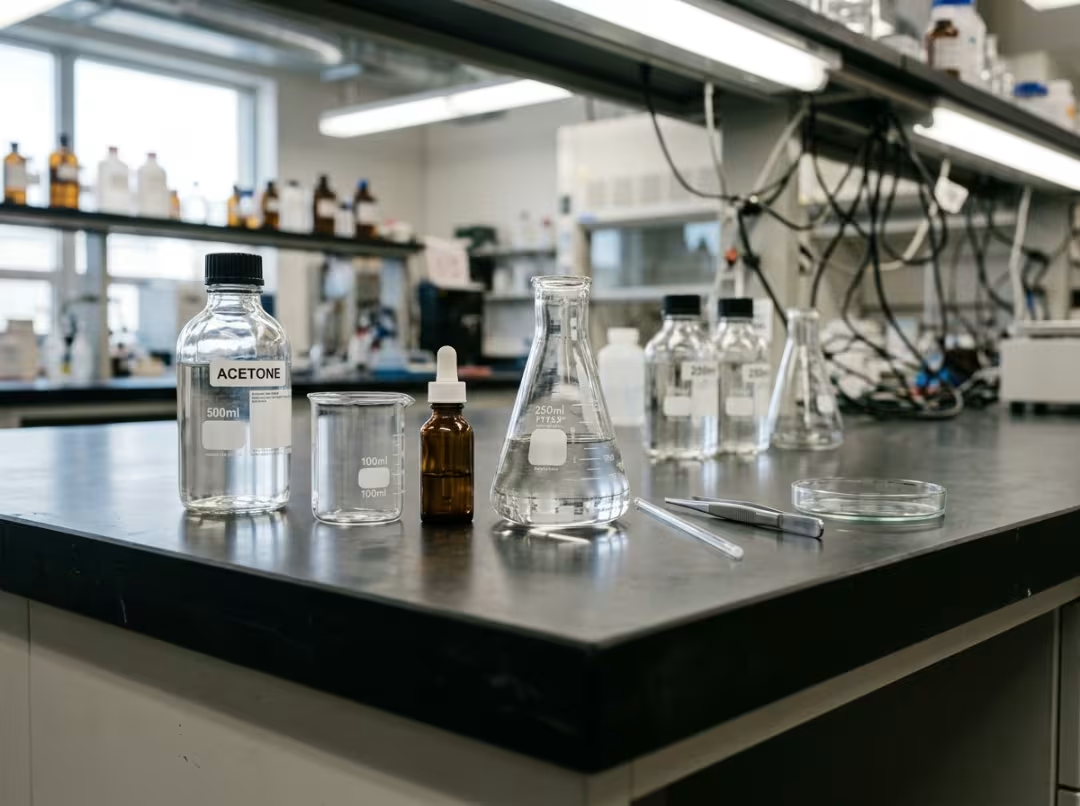
Phenolic resin offers a cost-effective alternative while remaining highly functional for general-purpose labs. Lightweight and moisture-resistant, it holds up well to regular chemical exposure, making it a popular choice for wet labs and teaching environments. However, it lacks the impact and heat resistance of epoxy resin and cannot be resurfaced after damage, which limits its long-term utility in high-stress settings. It’s a practical option for labs with moderate chemical exposure and tight budgets.
Stainless Steel:
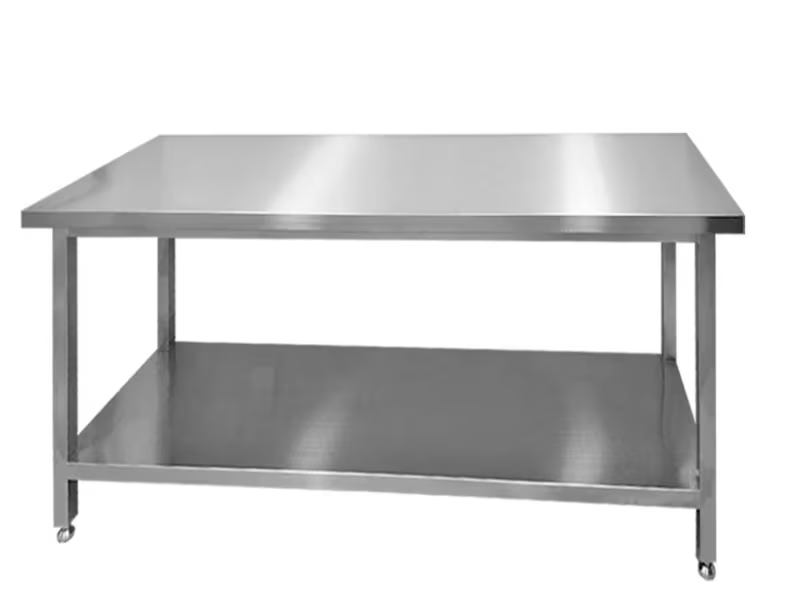
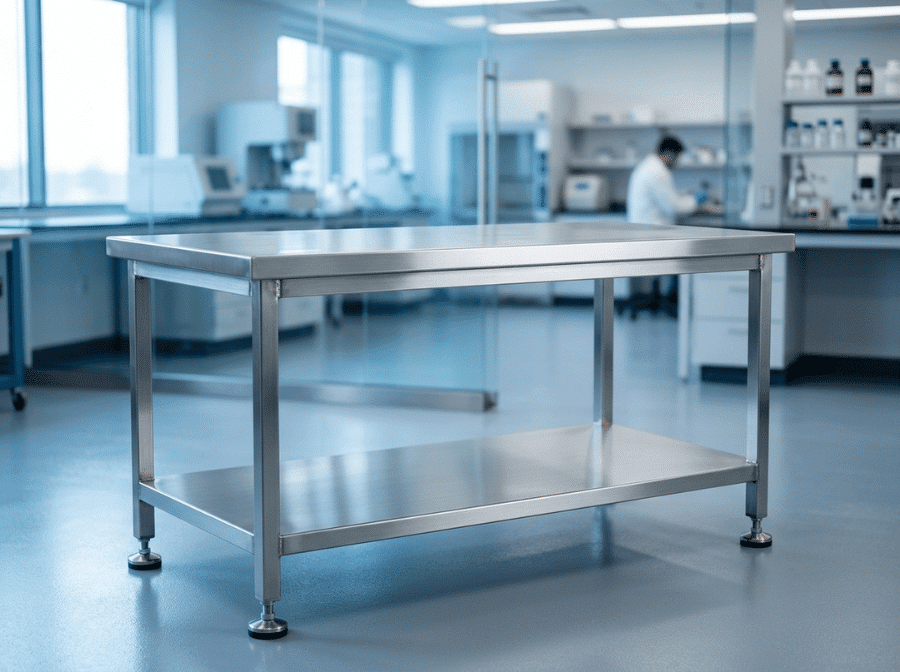
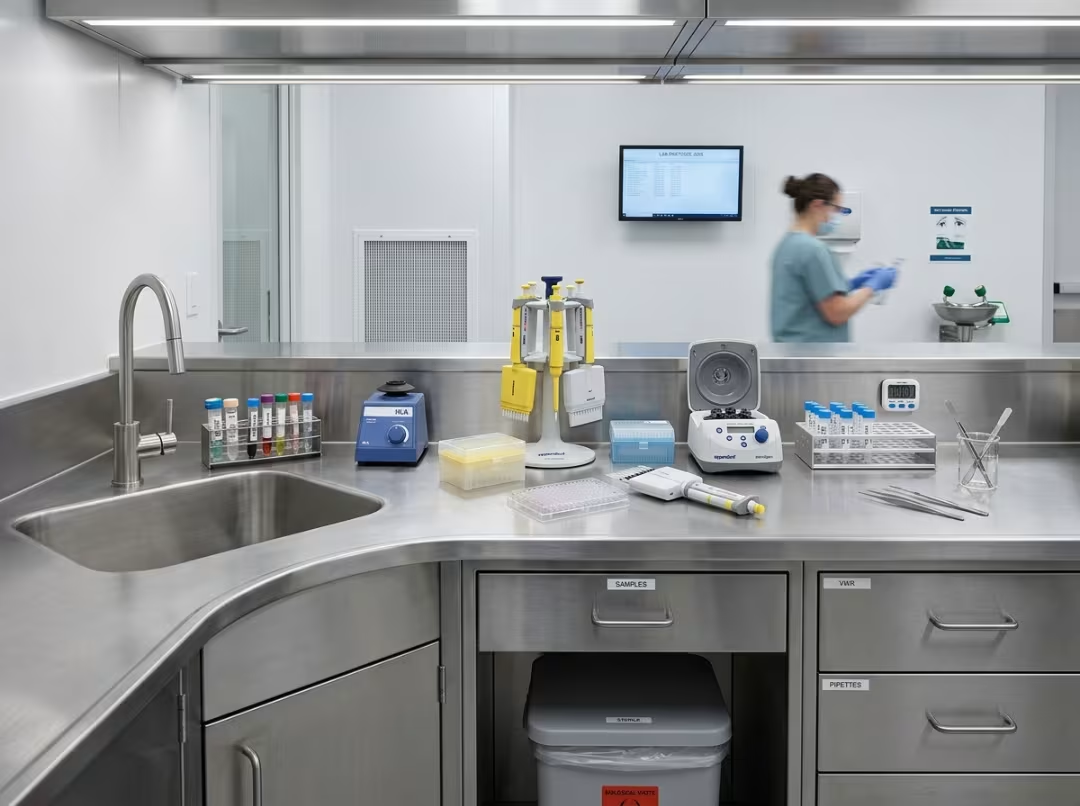
Stainless steel is the top choice in cleanrooms and medical labs where hygiene is critical. Its non-porous, seamless surface allows for easy cleaning and prevents the growth of bacteria or contamination. Additionally, it boasts excellent corrosion resistance, particularly in grades like 316 stainless steel. While durable, it’s prone to scratches and dents, which can affect its appearance over time, and the material’s higher cost makes it less common in general-use labs. Its ideal applications are in clinical, biotech, and pharmaceutical facilities that prioritize sterility and hygiene above all else.
HPL (High-Pressure Laminate):
As the most affordable option, HPL is often found in school labs and light-use environments. It provides reasonable chemical resistance for mild exposure but struggles under sustained heat or heavy impacts. Its limitations mean it often fails prematurely in labs with higher stress requirements, such as chemistry classrooms with open flames. HPL is best reserved for spaces with predictable, minimal demands, like administrative or computer labs.
Comparison Table:
|
Feature |
Epoxy Resin |
Phenolic Resin |
Stainless Steel |
HPL |
|---|---|---|---|---|
|
Chemical Resistance |
Excellent |
Good |
Very Good |
Fair |
|
Heat Resistance |
Up to 300°C |
Up to 135°C |
Up to 180°C |
Low |
|
Impact Resistance |
High |
Moderate |
Moderate |
Low |
|
Hygiene / Cleanability |
Excellent |
Good |
Excellent |
Fair |
|
Relative Cost |
High |
Moderate |
High |
Low |
Epoxy resin and stainless steel often dominate in labs with the highest chemical or hygiene demands, while phenolic resin offers a balance of durability and cost for general use. HPL provides an entry-level option but should only be considered for lower-stress environments to avoid premature replacement and cost overruns.
Four materials account for most procurement decisions in laboratory fitouts: epoxy resin, phenolic resin, stainless steel, and HPL. Two secondary options — solid surface and natural stone — appear occasionally but carry far less weight in most buying decisions.
Epoxy resin is the closest thing to an industry standard for chemical-heavy labs. It’s cast as a solid, monolithic surface with no paper core, which means it resists moisture, delamination, and a wide range of laboratory reagents. It also tolerates heat up to roughly 300°C — enough for most bench-top thermal work — and because it’s solid through-body, a damaged surface can be sanded and refinished rather than replaced. The tradeoff is upfront cost, which runs higher than laminate options.
Phenolic resin is a laminated panel built from layers of resin-impregnated paper pressed under heat and pressure. It’s lightweight, holds up well against moisture and everyday chemical exposure, and costs considerably less than epoxy. It’s a strong fit for wet labs and general research benches, though it doesn’t match epoxy’s impact resistance or its ability to be refinished after damage.
Stainless steel delivers hygiene and corrosion resistance that no other material on this list can match, which is why it’s the default in biotech and cleanroom settings. Its seamless, non-porous surface simplifies sanitization protocols. The downsides are practical: it shows scratches and dents with regular use, tends to be noisier under impact, and carries one of the higher price tags in the category.
HPL (High-Pressure Laminate) is the budget entry point. It offers decent chemical resistance for light-use labs and comes in at a lower cost than any other material here. Its limitation is tolerance — HPL doesn’t hold up well under sustained heat or heavy impact, which makes it a common mismatch when schools select it specifically for chemistry classrooms with open-flame use. It’s a better fit for labs with lighter, more predictable use patterns.
Solid surface and natural stone show up occasionally in specialized applications, but they see far less volume in standard lab fitouts and are worth a brief mention rather than a full breakdown.
|
Feature |
Epoxy Resin |
Phenolic Resin |
Stainless Steel |
HPL |
|---|---|---|---|---|
|
Chemical resistance |
Excellent |
Good |
Very good |
Fair |
|
Heat resistance |
Up to ~300°C |
Up to ~135°C |
Up to ~180°C |
Low |
|
Impact resistance |
High |
Moderate |
Moderate (dents/scratches) |
Low |
|
Hygiene / cleanability |
Excellent |
Good |
Excellent |
Fair |
|
Relative cost |
High |
Moderate |
High |
Low |
For labs weighing the full range of options — including ceramic and specialty panels — the complete lab countertops and worktops lineup breaks down every material by heat tolerance, chemical resistance, and customization options.
If your lab leans toward chemical-intensive work, an epoxy resin countertop is worth a closer look — it’s built as a solid slab rather than a laminate, which is precisely why it holds up under sustained exposure. For general-purpose benches on a tighter budget, a phenolic resin countertop delivers solid performance without the premium price tag.
Total Cost of Ownership, Not Just Sticker Price
Opting for the cheapest countertop might seem budget-friendly upfront, but it often ends up costing more in the long run. A smarter approach evaluates the cost-per-year-of-service rather than focusing solely on the initial price.
Durable materials like epoxy resin and stainless steel typically have higher purchase costs but excel in longevity, often outlasting more affordable options like HPL or laminate by a decade or more. For instance, an epoxy resin countertop priced at $3,000 with a 15-year lifespan costs significantly less per year than an HPL countertop costing $1,200 but requiring replacement every 4 to 5 years, particularly in high-stress environments.
Use this framework to assess total cost:
(Material cost + installation + expected repairs) ÷ expected lifespan = true annual cost
Beyond purchase price, consider hidden costs such as downtime during countertop replacement, disposal fees for worn materials, and compliance re-certifications in regulated labs. Labs operating under intense chemical exposure or frequent high-impact usage often find that investing in premium materials upfront—like epoxy resin or stainless steel—delivers long-term savings and more consistent performance. Durable options reduce disruptions, offering greater reliability and cost efficiency over their lifecycle.
The cheapest quote rarely produces the cheapest countertop. A more useful comparison looks at cost-per-year-of-service rather than the number on the initial invoice.
Materials like epoxy resin or stainless steel often carry a higher purchase price, but they routinely outlast cheaper HPL or laminate surfaces by a decade or more — especially in labs with daily chemical exposure. A simple framework makes the comparison concrete:
(Material cost + installation + expected repairs) ÷ expected lifespan = true annual cost
Run that calculation and a $3,000 epoxy resin countertop lasting 15 years can easily beat a $1,200 HPL surface that needs replacing every 4 to 5 years under heavy use.
There are hidden costs, too, that rarely make it onto a quote: downtime while a lab is out of commission during replacement, disposal costs for a failed surface, and — in regulated environments — the re-certification work that follows any material change. Factor those in, and the total-cost picture usually favors the more durable material for any lab running high-frequency or high-exposure work.
Matching Materials to Your Lab Type
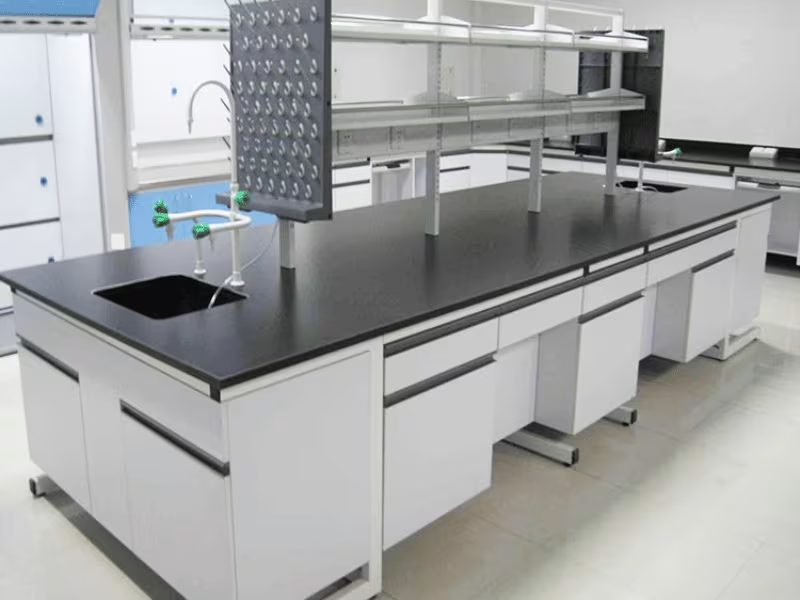
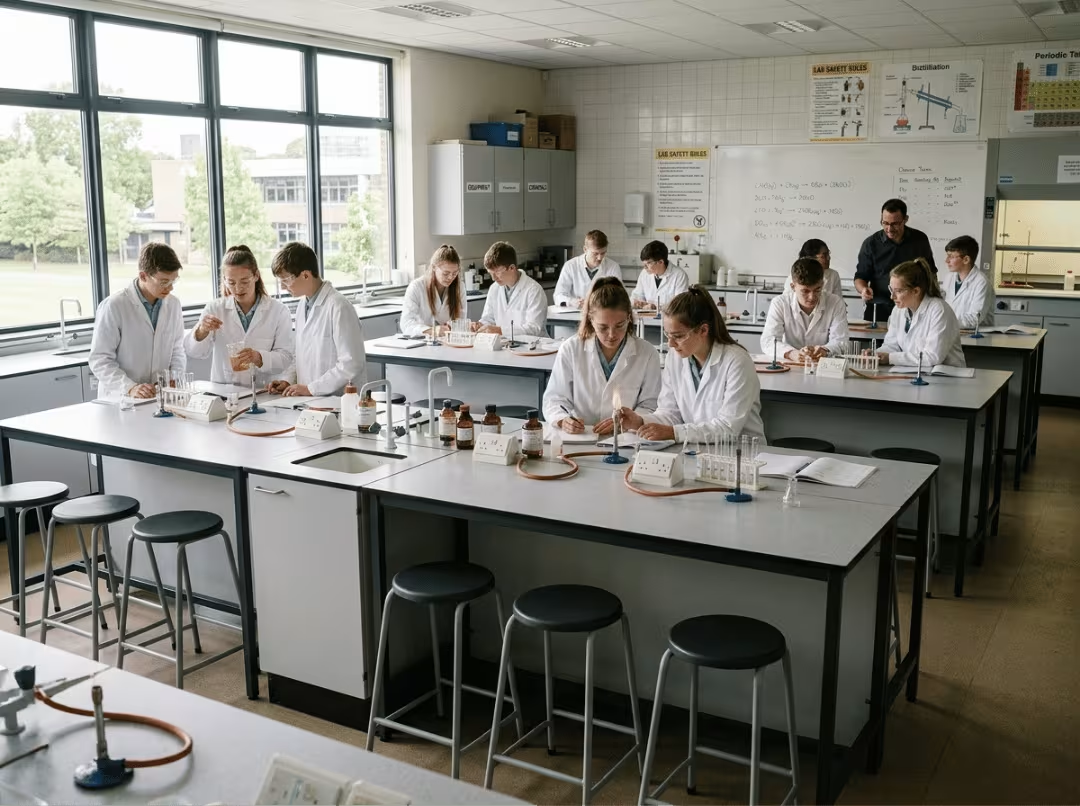
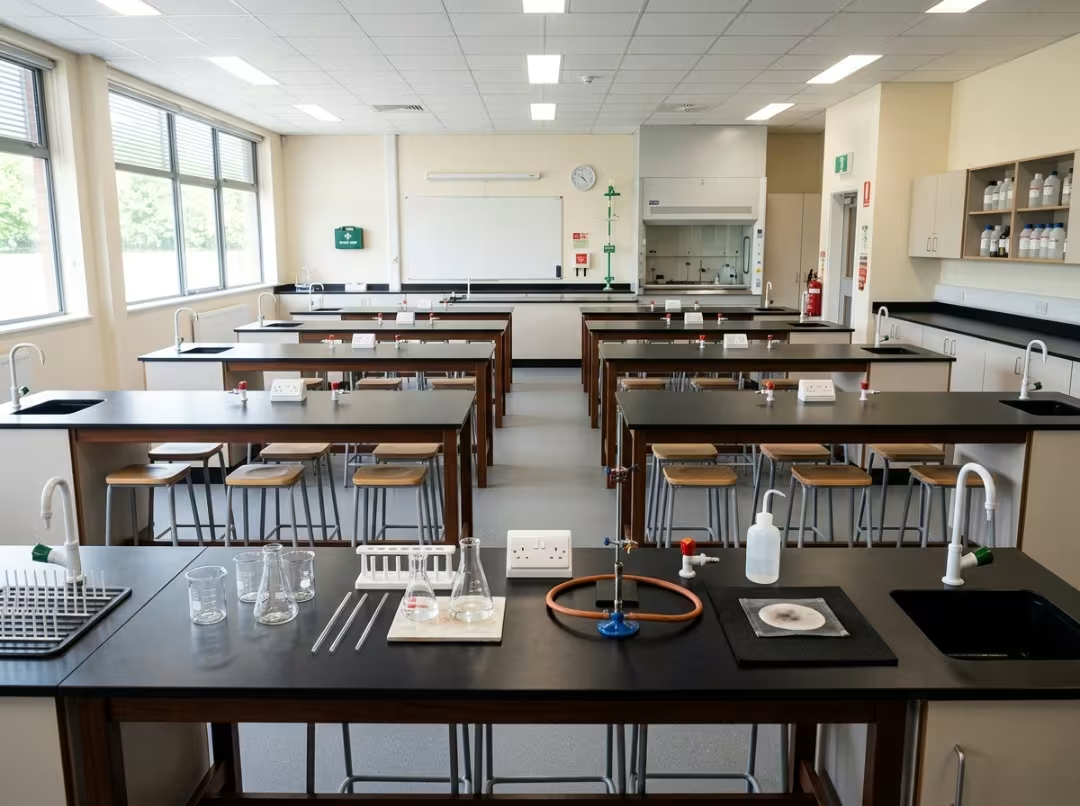
School and Teaching Labs: Classrooms and teaching labs often face moderate chemical exposure but operate under tight budgets. HPL or solid surface materials are typically sufficient for general use, balancing cost and functionality. However, in chemistry classrooms where visibility and stain resistance are critical, black science lab countertops—commonly finished in epoxy resin—are a superior choice, even at a higher upfront cost. They handle moderate spills, resist staining, and offer a professional look tailored to student use.
Research Labs: With frequent handling of aggressive chemicals and exposure to high heat, research labs demand robust solutions. Epoxy resin is the gold standard for settings where sustained heat, powerful reagents, or heavy equipment create high stress. For labs with more moderate conditions or tighter budgets, phenolic resin provides strong chemical resistance and durability at a lower cost, making it a practical alternative for most bench setups.
Clinical and Medical Labs: The priority in clinical and medical environments is maintaining hygiene and cleanability. Stainless steel stands out here, with its seamless, non-porous surface that resists bacteria and meets strict sanitation protocols. Non-porous solid surface materials are also viable, particularly for zones with lighter use or limited exposure to corrosive agents—offering a balance between sterility and aesthetic flexibility.
Industrial Labs: Heavy impact, constant equipment staging, and demanding workflows define industrial lab environments. Both epoxy resin and stainless steel excel under these conditions. Epoxy resin’s ability to endure sustained chemical loads and physical stress makes it a top choice for large work surfaces. Stainless steel provides unmatched durability in high-impact areas and zones exposed to extreme temperatures or corrosive substances.
When selecting a material, use a clear decision rule: focus on your lab’s dominant stress factor. For example, even in a lab with 90% light usage, a workspace that occasionally handles concentrated acids or high-heat equipment still needs a surface built to withstand those peak requirements. Prioritize long-term durability and match the material to your lab’s most critical performance needs.
School and Teaching Labs: Moderate chemical exposure and tight budgets usually make HPL or solid surface sufficient for general classroom use. Where visibility and stain-hiding matter — particularly in chemistry classrooms — black science lab countertops, typically finished in epoxy resin, remain a popular choice despite the higher cost.
Research Labs: High chemical and heat exposure, combined with frequently changing equipment, make epoxy resin or phenolic resin the standard specification. Choose epoxy if the work involves aggressive reagents or sustained heat; phenolic resin covers most general research benches at a lower cost.
Clinical and Medical Labs: Hygiene and cleanability aren’t optional here. Stainless steel or non-porous solid surface options top the list, given their resistance to bacterial growth and ease of repeated sanitization.
Industrial Labs: Heavy impact and constant equipment staging call for durability above all else. Epoxy resin or stainless steel both hold up under continuous physical stress in ways that laminate materials simply can’t.
The decision rule that cuts through most of this: match the material to your lab’s dominant stress factor, not its average use case. A lab that’s 90% light use and 10% concentrated acid work still needs a surface built for that 10%.
FAQ
What is the most chemical-resistant lab countertop material?
Epoxy resin is widely regarded as the top choice for chemical resistance. It withstands exposure to strong solvents, oxidants, and most acids with minimal degradation. However, the level of resistance can vary based on the chemical’s concentration and duration of exposure. For extremely aggressive reagents, frequent testing may be necessary to confirm compatibility.
How long does an epoxy resin lab countertop last?
With proper care, an epoxy resin countertop can last 15–20 years or more. Its solid through-body construction allows for refinishing if the surface becomes scratched or worn, extending its useful life far beyond laminated alternatives. Regular maintenance, such as cleaning up chemical spills promptly, helps preserve its durability.
Are black science lab countertops always epoxy resin?
No, black countertops are not exclusively made of epoxy resin, though the finish is most commonly associated with this material due to its superior stain resistance and durability. Other materials, like phenolic resin or HPL, can also be produced in black finishes, but they may not offer the same level of performance for high-stress labs.
Is stainless steel worth the extra cost for a lab counter?
If your lab prioritizes hygiene, corrosion resistance, and ease of sterilization—such as in clinical, biotech, or pharmaceutical environments—stainless steel is typically worth the investment. While it has a higher initial cost, its seamless, non-porous surface and long lifespan contribute to a lower total cost of ownership over time.
Can damaged lab countertops be repaired, or do they need replacement?
Repair feasibility depends on the material. Epoxy resin countertops can often be sanded and refinished to remove scratches or minor damage. Phenolic resin and stainless steel may also allow for localized repairs. In contrast, materials like HPL or natural stone typically require full replacement if damaged due to their structural limitations.
What is the most chemical-resistant lab countertop material?
Epoxy resin generally offers the broadest chemical resistance among the four primary materials, standing up to solvents, oxidants, and most acids without degrading. That said, resistance depends on concentration and exposure duration — even epoxy resin has limits with certain highly aggressive or prolonged chemical contact.
How long does an epoxy resin lab countertop last?
With reasonable maintenance, epoxy resin countertops commonly last 15 years or more. Because the material is solid through-body rather than laminated, surface damage can often be sanded and refinished rather than requiring full replacement, which extends usable life well beyond materials that can’t be repaired.
Are black science lab countertops always epoxy resin?
Not always. Black is a common finish for epoxy resin countertops because it hides stains and chemical residue effectively, but other materials can be finished in black as well. The color signals a preference for stain-hiding, not a guarantee of a specific material.
Is stainless steel worth the extra cost for a lab counter?
It depends on what the lab prioritizes. Run the total-cost-of-ownership calculation: if hygiene, corrosion resistance, and sterile processing are non-negotiable — as in clinical or biotech settings — stainless steel’s durability and cleanability typically justify the higher upfront cost over the life of the installation.
Choosing the Right Countertop for Your Lab
Selecting the ideal countertop for your lab isn’t just about aesthetics—it’s about meeting the unique demands of your workspace while ensuring long-term durability and value. To make the best decision, start by identifying the key stress factors your lab faces: chemical exposure, heat, impact, moisture, and hygiene requirements. Then, evaluate how the top materials—epoxy resin, phenolic resin, stainless steel, and HPL—perform against those specific demands. Finally, calculate the true cost of ownership to weigh upfront price against longevity and maintenance costs.
Focus on the materials that align directly with your lab’s needs, whether you’re designing a high-chemical-use research facility, a hygiene-critical clinical lab, or a budget-sensitive teaching space. The right countertop not only protects your workspace but ensures smooth operations for years to come.
Ready to customize your workspace? Explore the full range of Lab Countertops & Worktops or reach out with your project specifications for expert material recommendations tailored to your lab.
The decision comes down to four steps: define your lab’s dominant stress factors, compare the main materials against those specific demands, calculate true cost of ownership rather than sticker price, and match the result to your lab type.
Skip the encyclopedic tour of every material on the market. Focus on the handful that actually drive procurement decisions in labs like yours, and the right choice tends to become obvious fairly quickly.
Ready to move forward? Review the full Lab Countertops & Worktops range, or submit your project specifications directly for tailored material guidance.