Picture a routine morning at the bench. A technician tips a beaker, and concentrated sulfuric acid splashes across the surface. Two feet away, a hot plate has been running since 8 a.m. Later, someone sets down a heavy reagent jar a little too hard. The worktop takes all of it — the acid, the heat, the impact — without complaint, or it doesn’t. That difference is decided long before the spill, at the moment you choose the surface material.
Phenolic resin and epoxy resin dominate lab worktop specifications, and for good reason. Both resist chemicals, shrug off water, and outlast wood or laminate by years. But they’re built differently, and they fail differently. Choose the wrong one, and you’re looking at early replacement, a safety gap, or budget spent where it wasn’t needed.
This post breaks down how each material is made, how they compare where it counts, which labs suit each one, and a simple way to settle the decision. By the end, you’ll be able to match the surface to what your lab actually does every day.
How Each Worktop Is Made — and Why It Matters
The manufacturing method explains almost everything about how these surfaces behave. You don’t need a materials degree, just the parts that affect your purchase.
Phenolic resin is a layered, pressed material. Sheets of kraft paper or fiberglass are saturated with phenolic resin, stacked, then fused under high heat and pressure into a dense, hard panel. For lab use, it typically runs about 1 to 1.25 inches thick. The result is a strong, non-porous surface that’s noticeably lighter than epoxy — which lowers shipping cost and makes installation simpler, especially on upper floors.
Epoxy resin is cast, not layered. A mineral-filled resin blend is poured into a mold and cured into one solid, homogeneous slab, usually 1 to 1.5 inches thick. Because the color runs all the way through the body, scratches and light wear stay far less visible. That same solid casting is heavy and rigid, so it sits rock-stable once installed — but it demands a sturdy under-structure to carry the weight.
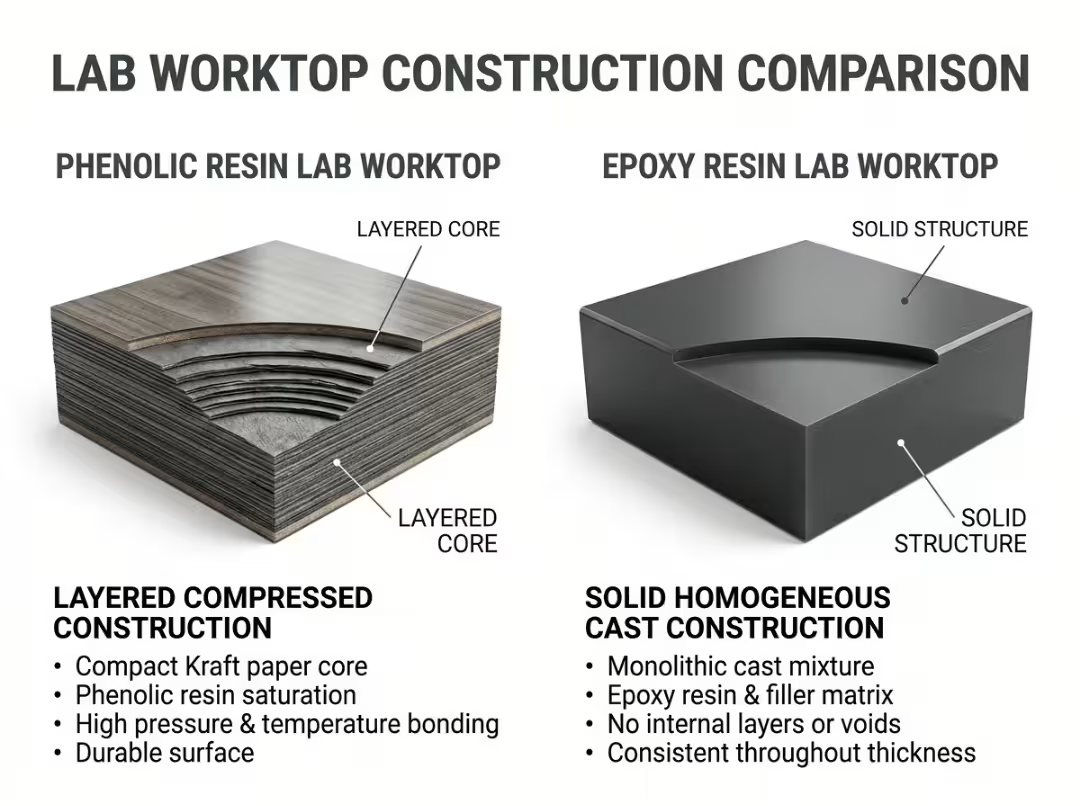
Two facts do most of the work here. Epoxy is a solid block you can sand into; phenolic is a layered panel you generally cannot. Keep that in mind — it drives the repairability difference later.
Head-to-Head: Where Each Material Wins
Both materials perform well. The real question is where each one pulls ahead.
Chemical Resistance
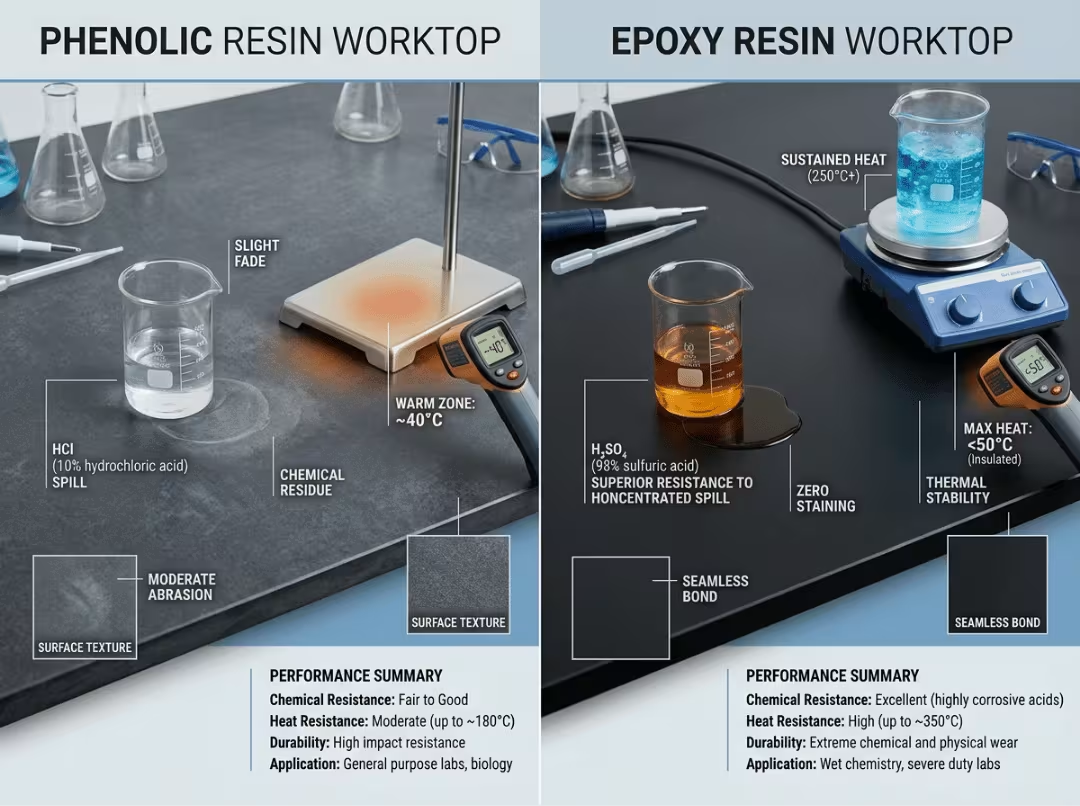
Phenolic handles everyday lab chemistry comfortably. Dilute acids, bases, solvents, and common reagents wipe off without staining or etching. For most teaching and general-purpose work, that’s more than enough.
Epoxy goes further. It resists a broader range of concentrated acids and bases, and it holds up under prolonged, aggressive exposure. Think undiluted nitric acid, repeated sulfuric spills, or sodium hydroxide sitting on the surface. Phenolic can tolerate these occasionally, but constant contact with harsh reagents wears it down over time. If aggressive chemistry is a daily event, epoxy is the safer specification.
Heat Resistance
This is where the gap widens. Phenolic tolerates brief contact with hot equipment, but a hot plate or crucible left in one spot can blister or delaminate the layered surface. The layers are its strength for impact — and its weakness under sustained heat.
Epoxy absorbs continuous heat far better. It only softens or discolors at extreme, prolonged temperatures well beyond typical bench work. The distinction that matters isn’t the peak number on a spec sheet — it’s brief contact versus continuous exposure. A lab running open flames, ovens, or hot plates all day should lean epoxy.
Repairability
When damage happens, the materials part ways sharply. Epoxy is a solid slab, so a technician can sand out a scratch or fill a gouge with epoxy paste and level it flat. The through-body color helps the repair blend in, extending the surface’s life in demanding rooms.
Phenolic can’t be refinished the same way. You can fill minor chips with a compatible compound, but more serious damage usually stays visible because there’s no solid body to sand into. In a high-abuse environment, that difference adds up over the years.
Matching the Worktop to Your Lab
The right choice depends less on which material is “stronger” and more on what your lab does daily. Here’s how the decision tends to break down by setting.
- School and teaching labs usually point to phenolic. Students rotate through, budgets are tight, and the chemistry is mostly diluted. Phenolic delivers solid resistance for that workload at a lower price, and its lighter weight makes installation easier in older buildings with limited access.
- Clinical and diagnostic labs often favor epoxy. High-volume processing means frequent disinfection, and bleach or oxidizing agents can dull phenolic surfaces over time. Epoxy maintains its finish through repeated cleaning cycles, keeping benches looking and performing well for longer.
- Industrial and QC labs also lean toward epoxy. Testing concentrated chemicals, running digestions, or working at sustained high heat is exactly where epoxy’s chemical and thermal edge pays off. Food and beverage labs that rely on regular hot-water washing tend to specify it for the same reasons.
- Research labs and cleanrooms frequently choose phenolic for its smooth, non-porous surface and low particle retention. Seamless fused joints reduce contamination points, which matters in controlled environments. That said, an acid-digestion or radioisotope lab in the same building may still spec epoxy where the safety data sheets demand maximum chemical resistance. Many facilities mix both, matching each room to its work.

If you’re weighing these against other surfaces too, our lab countertops and worktops range lays out the full set of options with heat and chemical ratings side by side.
A Simple Decision Framework
Most choices come down to two questions:
- What chemicals hit the surface daily? Occasional dilute reagents lean phenolic. Concentrated acids, bases, or bleach lean epoxy.
- How much heat does it see? Brief, occasional contact is fine for phenolic. Sustained heat from hot plates or ovens calls for epoxy.
The rule of thumb: aggressive chemicals plus continuous heat points to epoxy; moderate, mixed use on a tighter budget points to phenolic.
Before you commit, run a quick audit of three loads — chemical, thermal, and physical. List the harshest reagents, the hottest continuous source, and the roughest handling the surface will face. Then request small sample panels and test your actual reagents against each material. Confirm thickness, edge treatment, and warranty terms with the fabricator too, since these vary by supplier.
For a closer look at construction and specifications, compare the phenolic resin countertop directly with the epoxy resin countertop — the material details make the trade-offs concrete.
Frequently Asked Questions
Can you combine phenolic and epoxy worktops in the same lab?
Yes, and many facilities do. It’s common to spec epoxy for a chemistry or acid-digestion bench and phenolic for general prep, teaching, or write-up areas. Matching each surface to the work in that specific zone controls cost without compromising performance where it counts.
Which material handles bleach and disinfectants better?
Epoxy. Repeated exposure to bleach and other oxidizing cleaners can gradually dull a phenolic surface, whereas epoxy retains its finish even with frequent disinfection. For clinical and diagnostic labs with strict cleaning protocols, epoxy is usually the more durable choice.
Are both suitable for fume hood worktops?
Both can be used, but the fume hood’s workload should decide. Fume hoods often host aggressive chemistry and heat, which favors epoxy — or ceramic for the most extreme acid and high-temperature work. Phenolic can serve as a lower-intensity hood, but confirm compatibility with your specific reagents.
Can an epoxy worktop be repaired if a heavy object cracks it?
Minor damage, yes. Because epoxy is a solid slab, scratches and small gouges can be sanded, filled with epoxy paste, and then leveled. A deep crack from a severe impact is harder to fully hide, but the surface can still be restored to function far more easily than phenolic.
Does phenolic weigh less than epoxy?
Yes, noticeably. Phenolic’s layered construction is lighter, reducing freight costs and simplifying installation — a real advantage on upper floors or in buildings with tight access. Epoxy’s density makes it more stable once set but heavier to move and mount.
The Bottom Line
Phenolic and epoxy aren’t competing to be the stronger surface — they’re built for different workloads. Phenolic is a durable, pressed composite that fits general-purpose and teaching labs on a controlled budget, especially where chemistry stays moderate. Epoxy is a cast mineral slab built for heavy chemical exposure, sustained heat, and demanding daily use, with the bonus that it can be sanded and refinished.
The cost picture follows the same logic. Epoxy costs more upfront and for installation, but it can be the cheaper option over time in harsh environments. Phenolic delivers strong value wherever conditions stay reasonable.
Start by auditing what your lab handles every day — the chemicals, the heat, and the physical wear — then let that evidence guide your choice of material. Testing a sample panel with your own reagents is the fastest way to buy once and avoid a surface you’ll regret.