Key Features
- High-density PP construction — Good resistance to many common lab acids, alkalis, and cleaning agents for reliable daily drying.
- Single-face or double-face — Match capacity to your bench: wall-side drying or higher-volume double-sided access.
- Central drainage hole — Positioned in the bottom tray to route runoff away and keep the bench dry.
- Knock-down pegs with lock function — Reposition pegs easily; lock them in place to hold glassware securely.
- Panel-mounted or deck-mounted — Fix to a wall panel to save bench space, or mount to the worktop where a freestanding point suits better.
- Easy to clean — The smooth PP surface wipes down quickly, keeping the drying area hygienic.
Why You’ll Choose It
Glassware drying is a daily, high-traffic task, and a drying rack has to keep up without corroding or needing constant upkeep. The JH-PB001 is built for exactly that: a rugged PP board that resists routine wash-up chemicals, holds glassware at the right drain angle, and clears water through a central tray outlet.
Its knockdown peg system lets you reconfigure the layout as your glassware mix changes — no tools, no fuss. Pick single-face for compact, wall-side setups or double-face for open and island benches that need more drying capacity at once.
Technical Specifications
| Specification | Detail |
|---|---|
| Model | JH-PB001 |
| Product | Laboratory PP Pegboard & Drip Rack |
| Material | High-density polypropylene (PP) |
| Configuration | Single face / double face |
| Drainage | Water drainage hole in the middle of the bottom tray |
| Pegs | Knock-down pegs with a lock function |
| Installation | Panel-mounted / deck-mounted |
| Chemical Resistance | Good resistance to many common lab acids, alkalis, and cleaning agents |
Overall dimensions, tray size, peg count and spacing, and drain outlet size vary by configuration and single- vs double-face capacity. Share your bench layout and required capacity, and we’ll confirm exact dimensions, peg count, and drain details before you order.
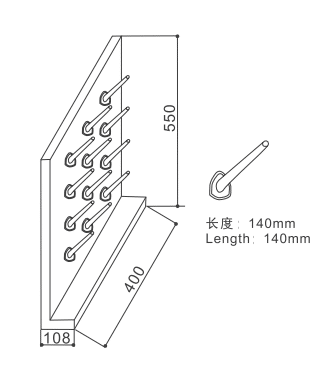
Choosing Your Configuration
Both versions share the same PP construction, drainage, and peg system. The difference is in capacity and mounting:
- Single-face: Pegs on one side, mounted against a wall or panel. Best for compact, space-saving drying beside a sink.
- Double-face: Pegs on both sides for higher drying capacity. Best for open or island benches where glassware is accessed from both sides.
If you’re unsure which fits your throughput, tell us your typical glassware volume and bench type, and we’ll recommend the right setup.
Where It Fits
The JH-PB001 suits any lab that washes and reuses glassware daily:
- Sink-side wall panels — Mount single-face above or beside the wash-up sink to dry glassware without using bench space.
- Island and open benches — Use double-face for two-sided access and higher drying volume in the middle of the lab.
- Teaching labs — Handle frequent wash-and-reuse cycles for beakers, flasks, and cylinders across busy class sessions.
- QC and research labs — Provide a chemical-resistant drying point where glassware is constantly turned over.
Between drying cycles, the board also keeps clean glassware staged and within reach — though its primary role is air-drying, not long-term storage.
Installation Options
The JH-PB001 supports two mounting methods, so you can match it to your space:
- Panel-mounted: Fixed to a wall panel, freeing up valuable bench area. A strong fit for sink-side drying stations with available wall space.
- Deck-mounted: Fixed directly to the worktop (deck), useful where wall mounting isn’t practical or a freestanding drying point works better.
For a clean setup, confirm the mounting surface is sound, position the rack so tray runoff drains toward your intended drainage point, and keep the board clear of tap and faucet swing. Share your bench design and drainage layout, and we’ll help confirm the right mounting method and position.
FAQ
What is high-density PP, and why is it used for lab drip racks?
High-density polypropylene is a tough, low-maintenance plastic with good resistance to many common lab acids, alkalis, and cleaning agents. It stands up to wash-up runoff and residue without corroding, making it a dependable, long-lasting fixture for daily glassware drying.
Which chemicals are the JH-PB001 suitable for?
It offers good resistance to many common laboratory acids, alkalis, and cleaning agents encountered during routine wash-up. For unusually aggressive or specialized reagents, send us the details, and we’ll confirm suitability for your application.
Should I choose single-face or double-face?
Choose single-face for compact, wall-side drying that saves bench space. Choose double-face for higher capacity and two-sided access on open or island benches. Share your typical glassware volume and bench type, and we’ll advise.
How do the knock-down pegs with a lock function work?
The pegs attach and detach easily, and each locks into place to hold glassware securely while it drains. When you need to reconfigure the board for different glassware, the pegs come apart quickly — no tools required.
What does the central drainage hole do?
Set in the middle of the bottom tray, it channels water away as glassware dries, preventing runoff from pooling on the tray or bench. It keeps the drying station tidy and makes daily cleanup simpler.
What’s the difference between panel-mounted and deck-mounted installation?
Panel-mounted fixes the rack to a wall panel, freeing up bench space. Deck-mounted fixes it to the worktop, which works well where wall mounting isn’t practical. Both are supported, so you can match the method to your bench design.
How do I request a quote?
Send us your preferred configuration (single- or double-face), installation method, required capacity, and quantities. A bench layout helps us confirm dimensions, peg count, drain details, and lead time, and prepare accurate pricing quickly.
Request a Quote
Setting up a new wash-up station or upgrading your glassware drying area? Send us your preferred configuration (single- or double-face), installation method, required capacity, and quantities, and our team will prepare a tailored quotation for your JH-PB001 pegboards. For larger projects, share your full bench and wash-up layout so we can confirm configuration, mounting, drainage, scope, and lead time.