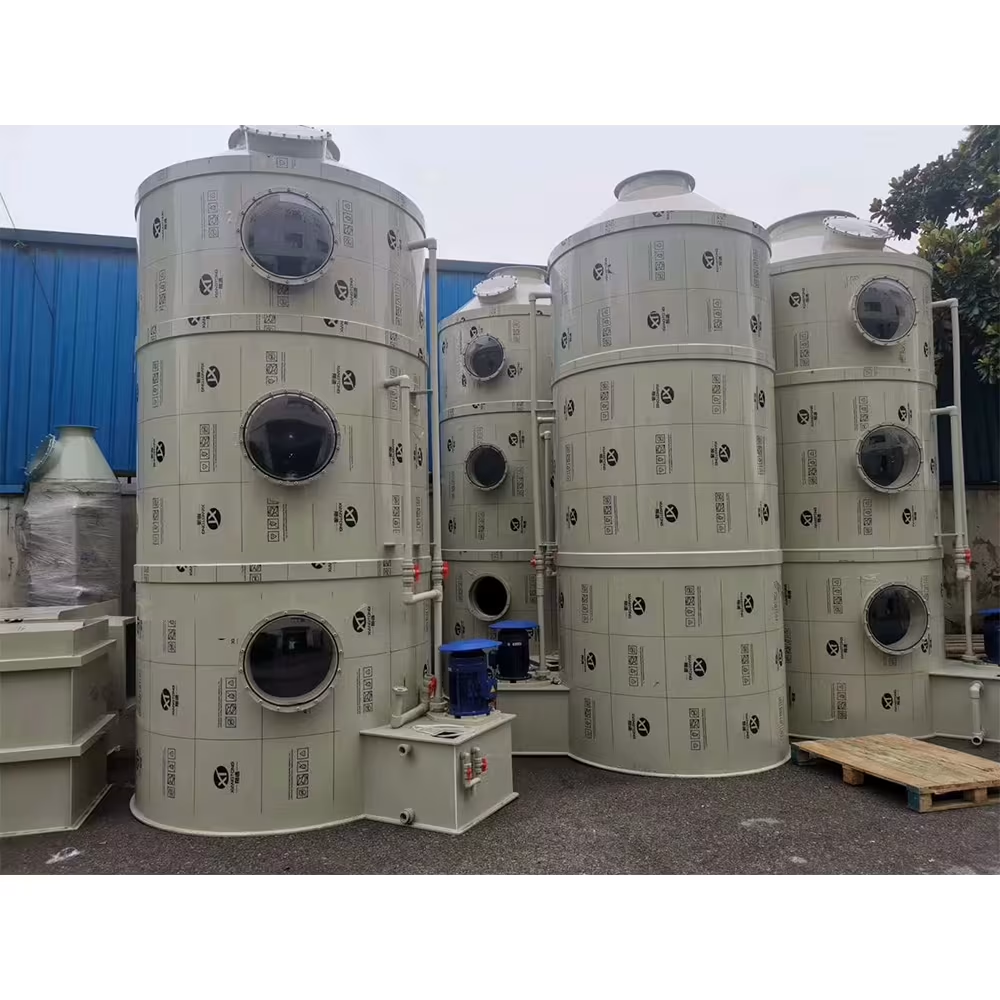
Key Benefits
- Built for corrosive operating conditions — an 8 mm/10 mm PP body resists the acidic, wet environments that degrade standard metal equipment and shorten service life.
- Covers broader exhaust systems — suited for treating corrosive exhaust from chemical processes, surface treatment lines, and multi-source lab exhaust, not just single-point acid mist.
- Configurable control and replenishment — choose between automatic and manual fresh water replenishment; an optional automatic chemical dosing system reduces hands-on intervention.
- Compact vertical installation — a space-efficient footprint fits in facilities with tight installation space without compromising treatment performance.
- Material options to match your exhaust chemistry — available in PP, FRP, or stainless steel depending on the specific gases and conditions in your process.
Why Treating Corrosive Exhaust at the System Level Matters
Point-source acid mist capture handles a specific fume hood. But when corrosive gases come from multiple process points — pickling tanks, dosing stations, surface treatment lines — the exhaust problem is a system problem, not a localized one.
Untreated corrosive exhaust degrades ductwork, exhaust fans, and rooftop equipment from the inside out, often faster than facilities expect. The repair and replacement costs accumulate quietly until a visible failure forces action. Corrosive emissions also carry regulatory exposure that grows harder to manage as facility output scales up.
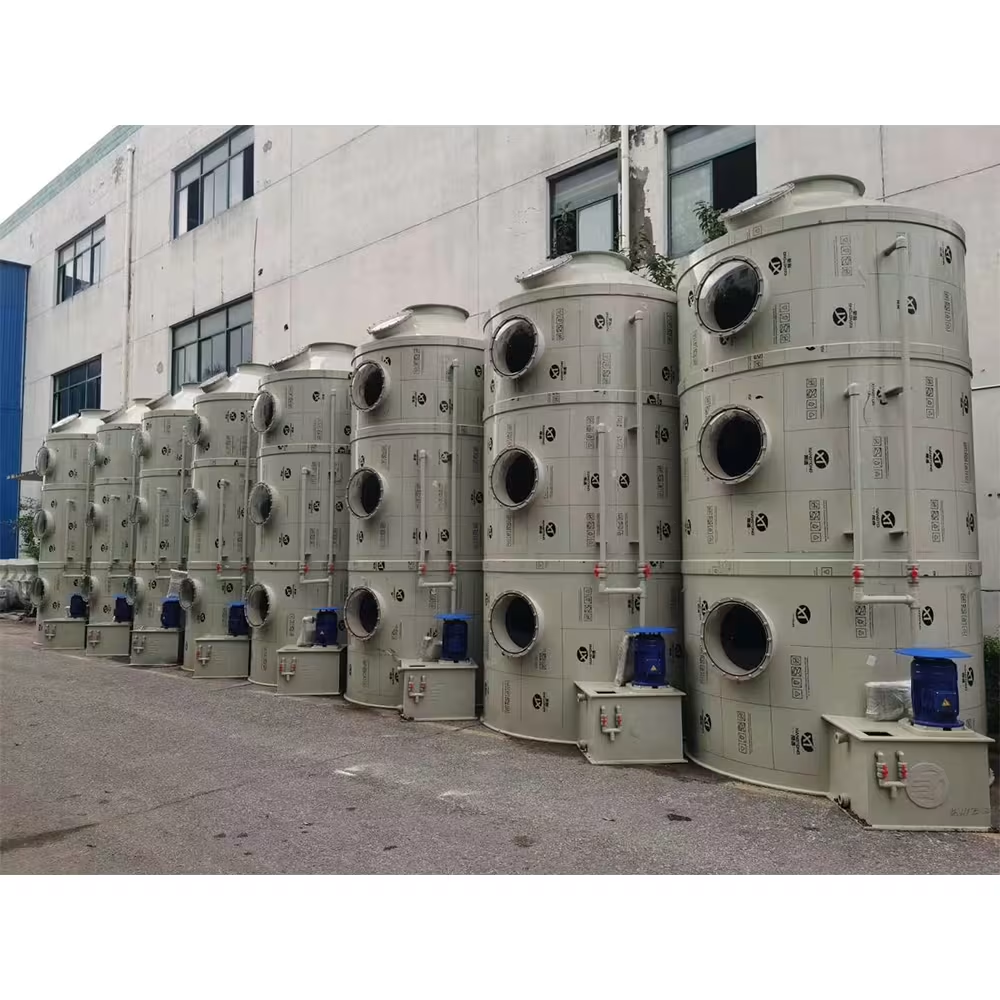
The JH-FSP002 addresses this at the source. Its multi-stage spray section and PP hollow ball packing layer maximize gas-liquid contact across a broader exhaust stream, neutralizing corrosive compounds before they move downstream. PP construction means the scrubber itself doesn’t become a corrosion casualty—it maintains its structure and performance through continuous wet, acidic operation.
For facilities running continuous or high-volume corrosive processes, that combination of upstream treatment and durable construction is what keeps maintenance costs predictable and compliance manageable.
Applications
The JH-FSP002 suits facilities where corrosive gas is generated across a process rather than from a single exhaust point:
- Chemical process exhaust lines — continuous or batch processes discharging acidic or corrosive gases that require treatment before release.
- Surface treatment and electroplating facilities — pickling, anodizing, etching, and related processes that generate corrosive fume streams at multiple stations.
- Laboratory exhaust systems — multi-hood or centralized exhaust systems where corrosive fume load exceeds what a single scrubber at the source can handle.
- Chemical manufacturing plants — process exhaust requiring consistent treatment across production lines.
- Any facility with multi-point corrosive gas emissions — wherever a process generates corrosive exhaust at more than one location and a system-level solution is needed.
Key Features
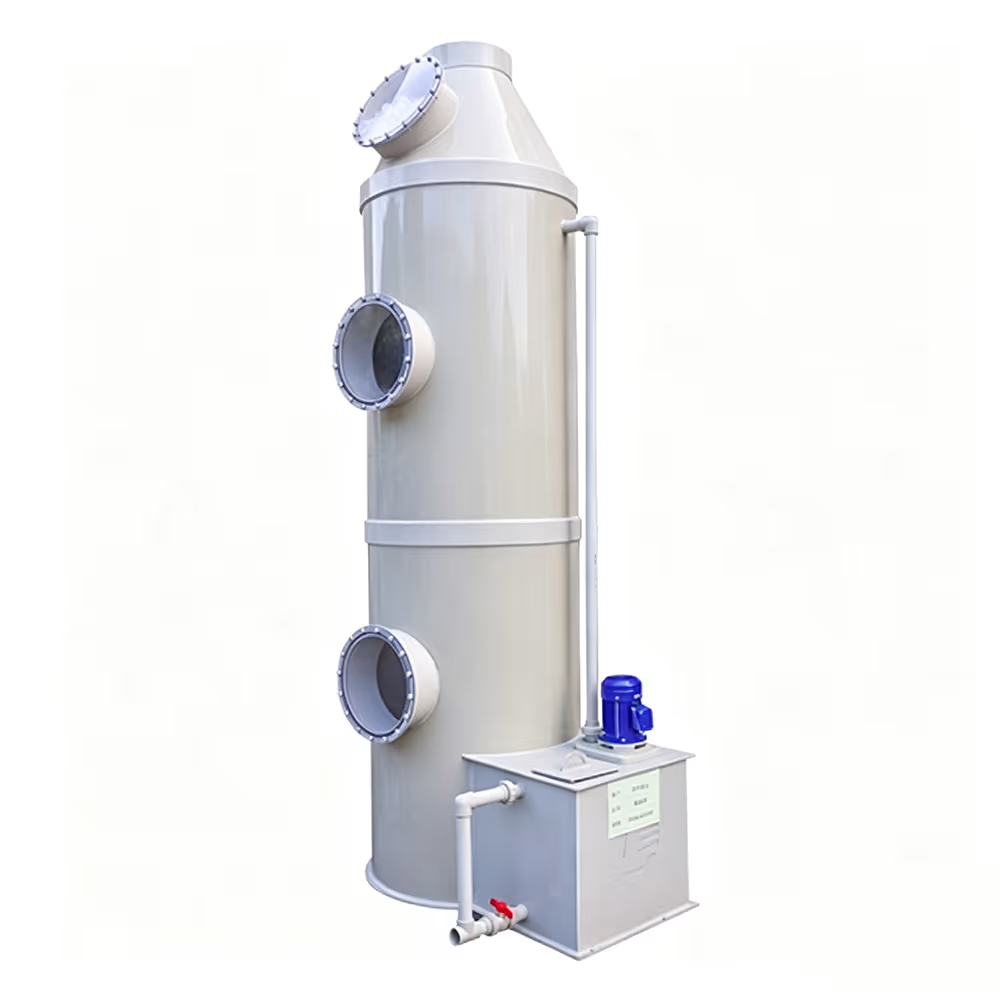
- PP body construction (8 mm/10 mm sheet thickness) — polypropylene sheet built to resist corrosion from continuous acid mist and wet exhaust conditions, in a thickness designed for long-term structural integrity.
- Multi-stage spray section with nylon ball sprinkle sinks — three rows of spray distribution maximize contact between exhaust gas and scrubbing solution across the tower.
- PP hollow ball packing layer — polyhedral PP media creates the surface area needed for effective gas-liquid absorption through the packed section.
- Circulation tank and water distribution system — keeps scrubbing solution flowing evenly and continuously for consistent treatment performance.
- Level indicator and dual inspection windows — allow visual monitoring of liquid levels and internal conditions without interrupting operation.
- Level controller and overflow outlet — maintain safe operating liquid levels and provide a controlled overflow path.
- Chemical-resistant circulation pump with pressure gauge — circulates scrubbing solution reliably through aggressive chemical conditions; pressure gauge supports monitoring without disassembly.
- Automatic and manual fresh water replenishment — configurable for automatic top-up or manual control, depending on your operational preference.
- DELIXI electrical control system — reliable control components supporting continuous operation.
- Optional automatic chemical dosing system — for facilities that need automated neutralizing chemical addition rather than manual dosing.
Technical Specifications
|
Specification |
Detail |
|---|---|
|
Model |
JH-FSP002 |
|
Product |
PP Wet Gas Scrubber System |
|
Application |
Corrosive process exhaust and air pollution control |
|
Body Material |
Polypropylene (PP) |
|
Sheet Thickness |
8 mm / 10 mm |
|
Scrubbing Type |
Wet scrubbing/spray tower |
|
Spray Section |
Multi-stage, three rows, nylon ball sprinkle sinks |
|
Packing Media |
Polyhedral PP hollow ball |
|
Circulation System |
Chemical-resistant pump with spray distribution |
|
Pump |
Chemical-resistant circulation pump with pressure gauge |
|
Water Replenishment |
Automatic or manual |
|
Monitoring |
Level indicator, dual inspection windows, level controller, overflow outlet |
|
Electrical Components |
DELIXI brand |
|
Max Operating Temperature |
50°C |
|
Pressure Drop |
≤500 Pa |
|
Optional System |
Automatic chemical dosing system |
|
Material Options |
PP (standard), FRP, stainless steel |
|
Customization |
Tower size, airflow capacity, pump configuration, and control options available |
We can confirm tower size, airflow capacity, and configuration for your project. Share your exhaust gas type, volume, and site conditions, and we’ll advise on the right setup before you order.
Material Options: PP, FRP, and Stainless Steel
The right body material depends on your exhaust chemistry, operating environment, and project requirements. Here’s how to choose:
Polypropylene (PP)
The standard build for the JH-FSP002. PP resists a wide range of acids and corrosive chemicals, holds up in continuous wet operating conditions, and is cost-effective for most laboratory and light industrial applications. If your exhaust stream is acid mist or general corrosive gas, PP is the baseline choice.
FRP (Fiberglass Reinforced Plastic)
An alternative when added structural rigidity is needed —larger installations, outdoor setups, or applications that combine chemical resistance with higher mechanical demands. FRP suits projects where PP’s chemical resistance is sufficient but greater structural strength is also a requirement.
Stainless Steel
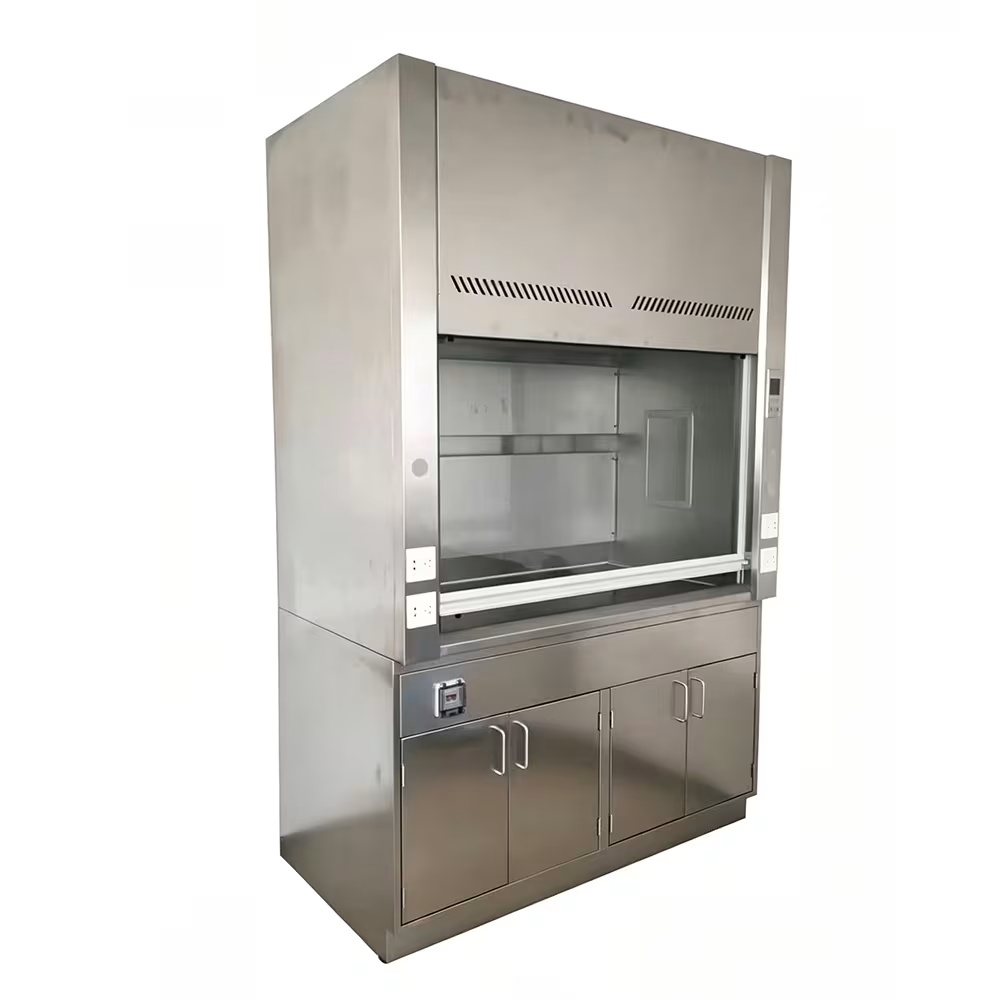
For applications where facility standards, mechanical load, or specific gas profiles require a metal build. Stainless steel grade selection matters here — not all grades resist acidic exhaust equally, so confirm the specific corrosive agents with our team before specifying.
If you’re unsure which material fits your process, share your exhaust gas type and operating conditions when you request a quote, and we’ll recommend the right option.
How the JH-FSP002 Differs from the JH-FSP001
Both the JH-FSP001 and JH-FSP002 are PP wet scrubbers built on the same core technology. The distinction is in scope and application.
The JH-FSP001 is positioned for laboratory acid mist treatment — specifically for use with fume hood exhaust systems, where the goal is to capture and neutralize acid mist generated at a defined exhaust point.
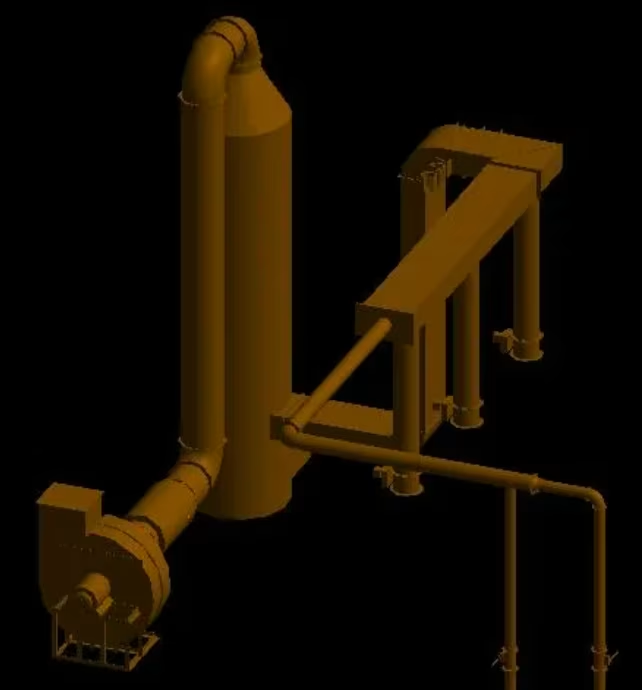
The JH-FSP002 is configured as a broader system for facilities where corrosive exhaust comes from multiple process points or spans a full exhaust line. It’s suited to chemical process exhaust, surface treatment lines, electroplating, and other multi-source applications where exhaust treatment needs to work at a system level rather than at a single fume hood.
If you’re fitting a lab fume hood exhaust system, the FSP001 is the right match. If you’re treating exhaust from a chemical process line, a surface treatment facility, or a multi-point exhaust system, the FSP002 is the right tier.
Frequently Asked Questions
What types of gases can the JH-FSP002 treat?
It’s designed for water-soluble corrosive gases and acid mist — including hydrochloric acid vapor, sulfuric acid mist, nitric acid fumes, and similar corrosive exhaust streams. Removal efficiency depends on gas type, concentration, airflow, scrubbing liquid chemistry, and tower configuration. Share your specific gas stream when requesting a quote, and we’ll advise on the right setup.
How is the JH-FSP002 different from the JH-FSP001?
The FSP001 is built for laboratory fume hood acid mist treatment at a defined exhaust point. The FSP002 is a system-level scrubber designed for facilities where corrosive exhaust comes from chemical processes, surface treatment lines, or multi-source exhaust systems. If your exhaust spans more than a single fume hood, the FSP002 is the appropriate tier.
Can this system handle high-temperature exhaust?
The JH-FSP002 is rated for up to 50°C. For exhaust streams above this temperature, contact our team to discuss alternatives suited to your operating conditions.
Is the automatic chemical dosing system included as standard?
No — it’s an optional configuration. The standard unit supports manual chemical addition. You can add the automatic dosing system for facilities that prefer continuous, hands-off concentration management.
How do I choose between PP, FRP, and stainless steel?
PP suits most acid mist and general corrosive exhaust applications. FRP adds structural rigidity for larger or outdoor installations. Specify stainless steel when facility standards or gas chemistry require a metal build. Share your gas type and site conditions, and we’ll confirm the right material for your project.
What maintenance does the system require?
Day-to-day monitoring is straightforward: check liquid levels through the inspection windows, monitor the pump pressure gauge, and top up the scrubbing solution as needed. The level indicator and controller support routine operation without manual measurement. Periodic inspection of the packing layer and spray section is recommended to check for buildup or blockage.
Can the JH-FSP002 integrate with an existing exhaust system?
Yes. The scrubber is designed to connect into existing laboratory or industrial exhaust lines. We can discuss duct sizing, fan matching, and installation configuration during the quoting process.
Does the system need a dedicated water supply?
Yes. Fresh water replenishment requires a connected water supply and can be configured for automatic or manual top-up, depending on your facility’s setup.
Do you support OEM/ODM and export orders?
Yes. Jiangsu Jiahong Laboratory Equipment Co., Ltd. manufactures the JH-FSP002 in-house and supports OEM and ODM production, custom configurations, and export documentation for international buyers. Factory-direct pricing and volume discounts are available for distributors and system integrators.