Core Benefits
- Verified zero leakage. Independently tested at 0.000 ppm at 0.3 m/s face velocity, giving you documented proof of containment rather than a manufacturer’s claim.
- Lower face velocity, lower energy bills. Operating at 0.3 m/s instead of the industry-standard 0.5 m/s cuts energy consumption by approximately 40%.
- Up to 60% energy savings with VAV. Pairing the hood with a Variable Air Volume (VAV) system compounds the savings by adjusting airflow to actual usage.
- Built for aggressive chemical environments. Lining options in phenolic resin, polypropylene, or ceramic fiber allow you to match the hood’s interior to your specific chemical processes.
- Reduced burden on facility HVAC. Lower required airflow means smaller ductwork loads and less strain on your building’s ventilation infrastructure.
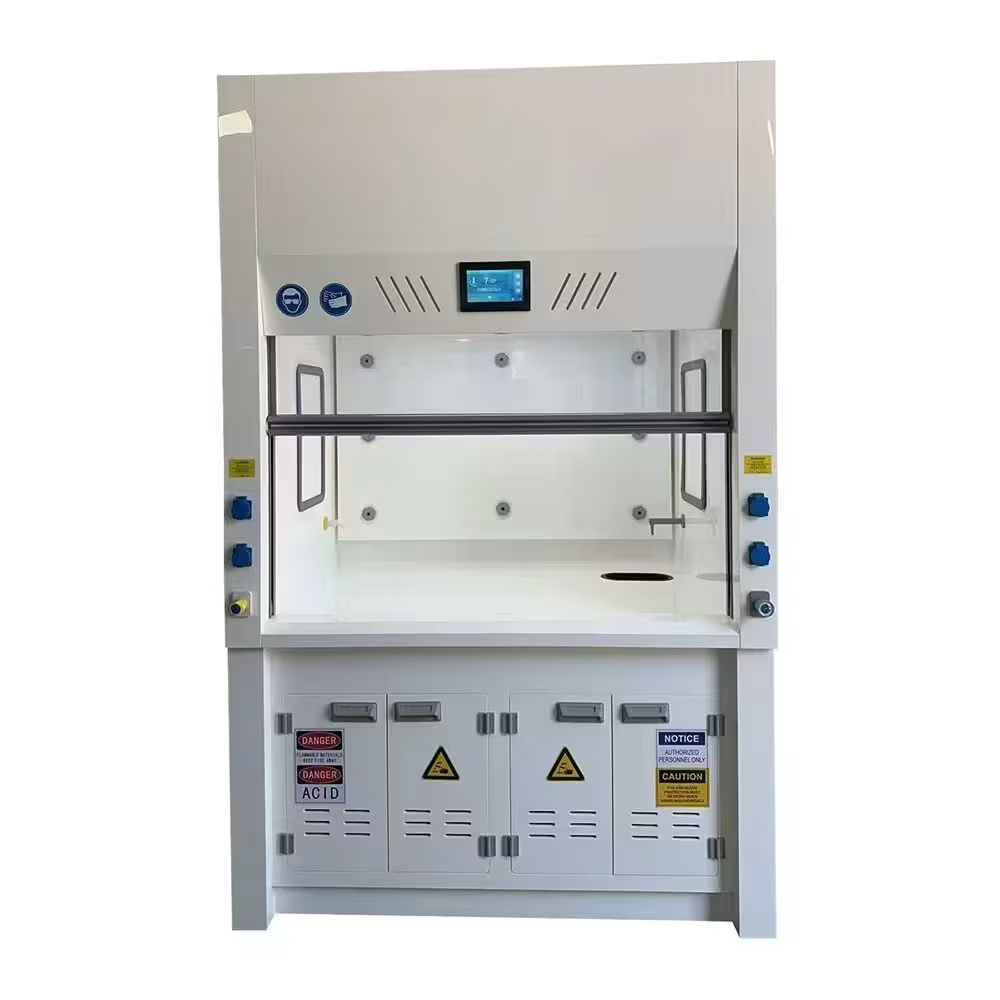
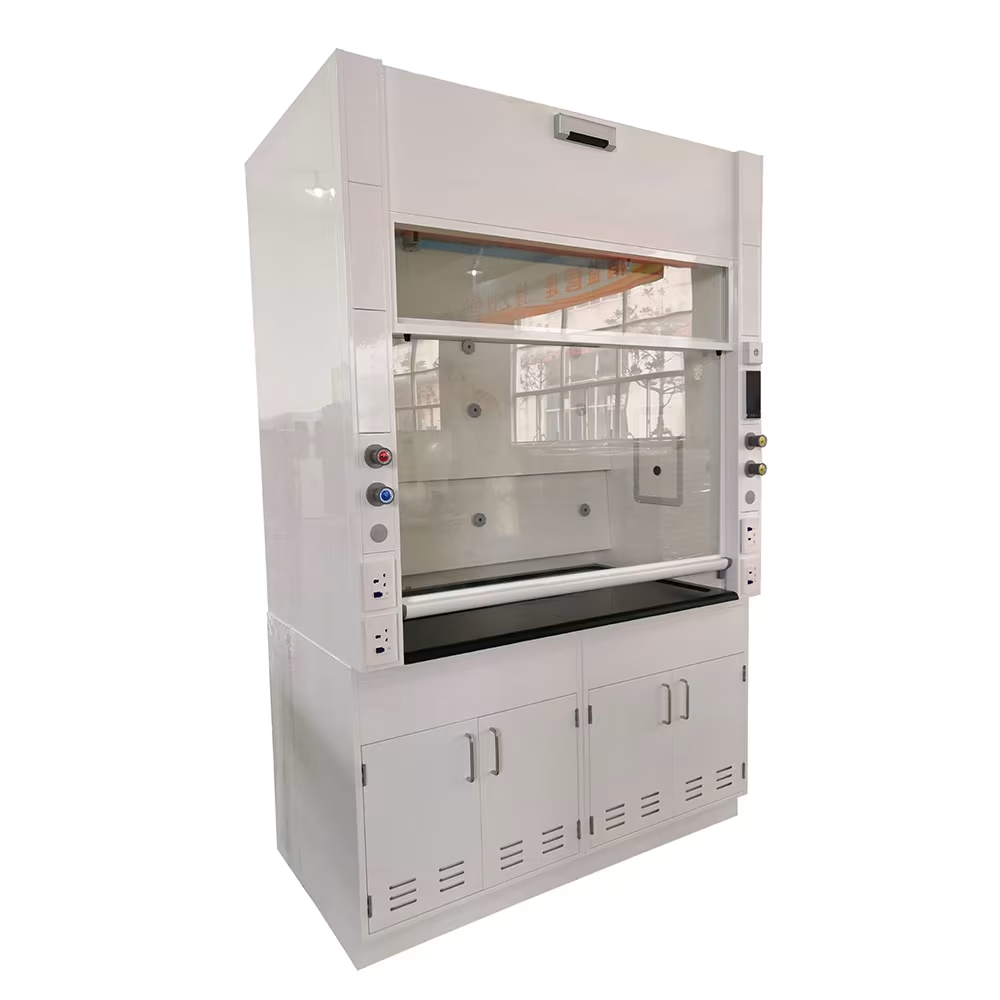
- Everyday usability. An LCD controller and integrated LED lighting keep airflow monitoring and visibility straightforward for lab staff.
Why It Matters
Fume hood safety and energy efficiency are usually treated as opposing goals — you either accept higher airflow for better containment, or you cut airflow and accept the risk. The JH-FC030A’s aerodynamic airfoil and baffle system resolves this trade-off at the design stage. Airflow is shaped so it does not escape at the sash opening, even at reduced velocity. That is what allows the hood to be tested and certified at 0.3 m/s with zero measurable leakage.
This matters beyond the test report. A hood that maintains containment at a lower face velocity requires less conditioned air to be pulled through the lab, which translates directly into lower HVAC operating costs over the life of the equipment. When integrated with a VAV system, the hood adjusts airflow further based on sash position and occupancy, pushing total energy savings toward 60% compared to a standard, unoptimized hood.
Who This Fume Hood Is For
The JH-FC030A is suited to a range of laboratory settings, including:
- University and research laboratories running daily chemical procedures where containment verification is required for safety compliance.
- New lab construction or fit-out projects where facility teams are looking to reduce long-term HVAC and energy costs from the design phase.
- Institutions replacing aging fume hoods that no longer meet current containment or energy efficiency expectations.
- Contractors and distributors sourcing certified fume hoods for multi-room or campus-scale laboratory projects.
Key Features
- EN 14175-3 and ASHRAE 110-2016 certified, SGS tested
- Zero leakage (0.000 ppm) at 0.3 m/s face velocity
- Aerodynamic airfoil and baffle airflow design
- Compatible with VAV (Variable Air Volume) systems
- Chemical-resistant interior lining: phenolic resin, polypropylene, or ceramic fiber
- Choice of worktop materials: ceramic, epoxy resin, or phenolic resin
- Galvanized or cold-rolled steel frame with anti-corrosive powder coating
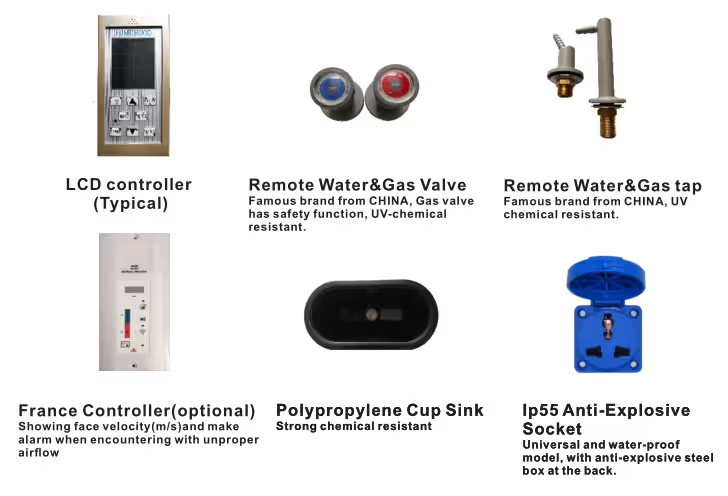
- LCD controller for airflow monitoring
- Integrated LED lighting
- Optional remote water and gas fittings
- Optional VAV damper and motorized sash
Detailed Technical Specifications
|
Specification |
Detail |
|---|---|
|
Model |
JH-FC030A |
|
Certification |
EN 14175-3, ASHRAE 110-2016 (SGS tested) |
|
Face Velocity |
0.3 m/s |
|
Leakage Rate |
0.000 ppm |
|
Energy Savings |
~40% (standard); up to 60% with VAV integration |
|
Frame Material |
Galvanized or cold-rolled steel, anti-corrosive powder coating |
|
Lining Options |
Phenolic resin, polypropylene (PP), ceramic fiber |
|
Worktop Options |
Ceramic, epoxy resin, phenolic resin |
|
Controller |
LCD airflow controller |
|
Lighting |
Integrated LED |
|
Optional Accessories |
Remote water/gas fittings, VAV damper, motorized sash |
Note: Standard and custom sizing available — see Options & Configurations below.
Options & Configurations
The JH-FC030A can be configured to match your lab’s chemical processes and layout requirements:
- Lining material: Choose phenolic resin for general chemical resistance, polypropylene for strong acid and alkali exposure, or ceramic fiber for high-heat applications.
- Worktop material: Select ceramic, epoxy resin, or phenolic resin worktops based on the chemicals and equipment used at the bench.
- Airflow control: Add a VAV damper and motorized sash for automated airflow adjustment and maximum energy savings.
- Utility fittings: Configure remote water and gas fittings to match your lab’s utility layout.
- Custom dimensions: As with all Glorylab furniture, the JH-FC030A can be manufactured to custom sizes at no extra cost to fit non-standard lab layouts.
Choosing the Right Fume Hood
The JH-FC030A is a ducted fume hood, meaning it vents filtered air outside the building through connected ductwork — the standard choice for labs running frequent or high-volume chemical work. If your lab requires flexible placement without ductwork access, ask our team about ductless alternatives within the Glorylab range.
If you’re unsure whether phenolic, PP, or ceramic lining is right for your application, our team can review your chemical processes and recommend the most suitable configuration before you order.
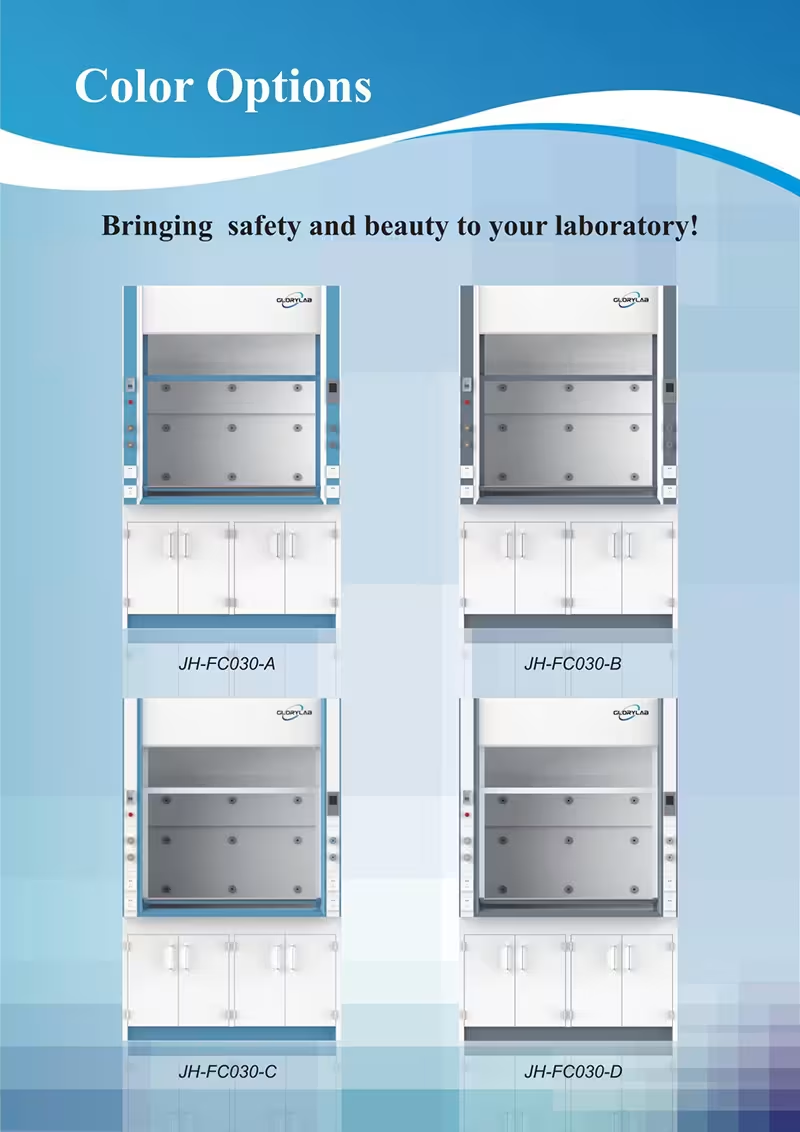
Color Options:
Lab Accessories of Fume Cupboard:
FAQ
What does “zero leakage at 0.3 m/s” actually mean for lab safety?
It means that during independent SGS testing, no measurable containment loss (0.000 ppm) occurred even at a reduced face velocity of 0.3 m/s — well below the 0.5 m/s commonly required by older fume hood designs. This confirms the hood keeps hazardous fumes contained even while operating more efficiently.
How much can I realistically save on energy costs?
Operating at 0.3 m/s instead of a standard 0.5 m/s face velocity typically reduces energy consumption by around 40%. When the hood is integrated with a VAV system, which further adjusts airflow based on real-time usage, total savings can reach up to 60%.
Which lining material should I choose?
This depends on the chemicals used in your lab. Phenolic resin suits general chemical resistance, polypropylene is best for strong acids and alkalis, and ceramic fiber is recommended for high-heat processes. Our team can help you confirm the right choice based on your specific procedures.
Can this fume hood be manufactured to custom dimensions?
Yes. Custom sizing is part of our standard manufacturing process at no additional cost, allowing the JH-FC030A to fit non-standard lab layouts and casework.
Do you provide documentation for procurement and compliance?
Yes. We provide the EN 14175-3 and ASHRAE 110-2016 SGS test reports along with full production traceability documentation to support your procurement and compliance requirements.